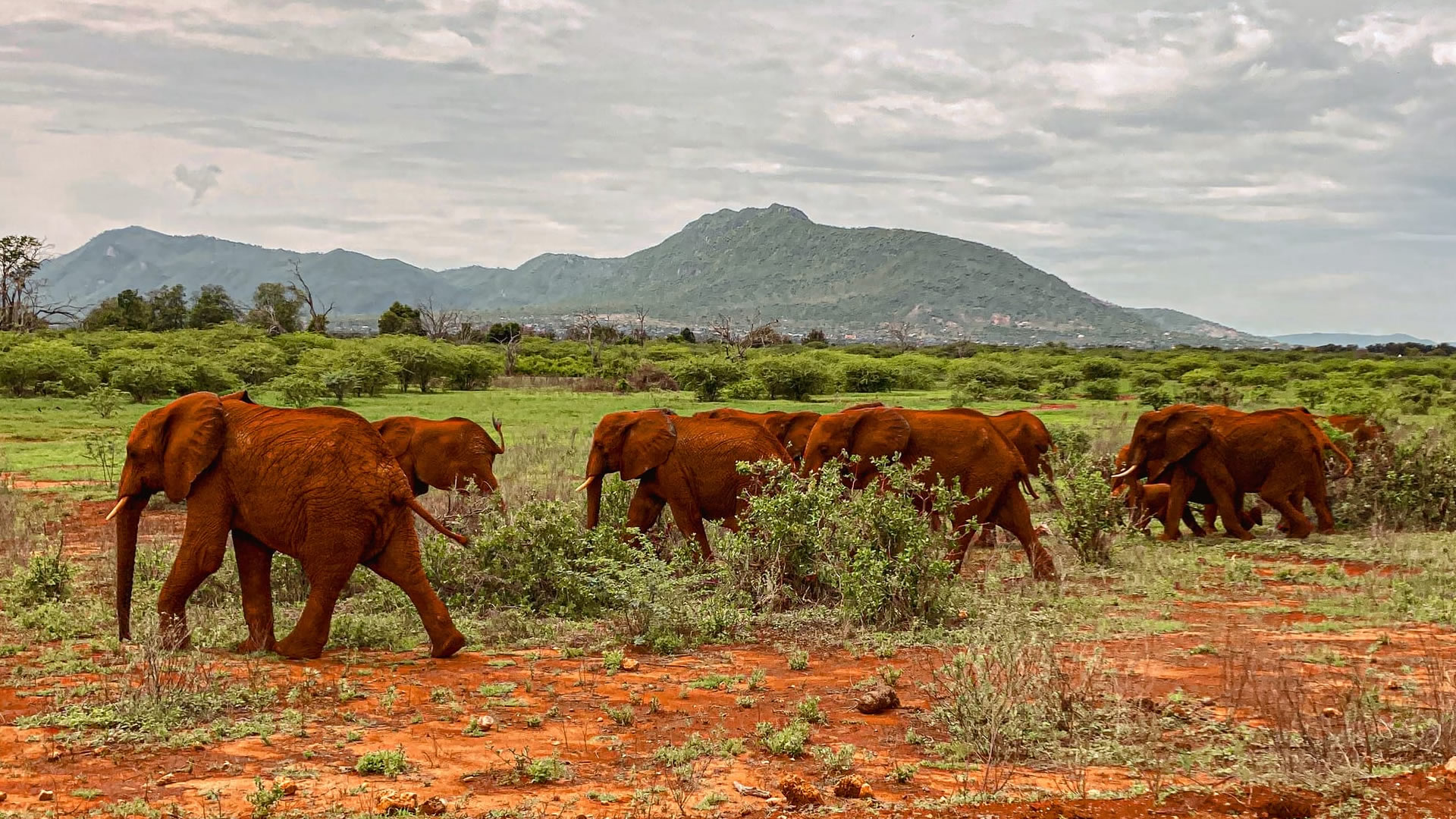
Red elephants dusted with Tsavo's crimson earth, the descendants of the legendary man-eating lions, and a wilderness the size of a small country — all reachable in a single day from the coast.
Tsavo East is the most popular safari day trip from the Kenya coast, and once you have been there you understand why. At 13,747 square kilometres, it is Kenya's largest national park — a vast, semi-arid wilderness of red laterite plains, acacia scrubland, baobab trees, and the palm-lined Galana River. It is raw, open, and unmistakably African in a way that smaller, more manicured parks cannot replicate.
The day begins before dawn. Pick-up from your Diani or Mombasa hotel is typically between 04:30 and 06:00, and the drive to Bachuma Gate takes 1.5 to 2.5 hours depending on your starting point. Entering the park at first light is part of the magic — the bush is cool, the sky is pink, and the animals are at their most active. Your driver-guide knows this park intimately: where the lion prides hold territory, where the elephant herds cross in the morning, and which waterholes are drawing game this season.
The game driving takes you through classic Tsavo terrain: open plains where you scan for lion, cheetah, and herds of zebra and wildebeest; riverine bush where elephants come down to drink, their hides stained rust-red from the laterite dust that gives them their famous colour; and the Aruba Dam, a permanent waterhole that acts as a magnet for wildlife, especially during the dry season. Buffalo, giraffe, waterbuck, impala, Lesser Kudu, dik-dik, warthog, and over 500 bird species complete the picture. After a morning of game drives, lunch is served at a park lodge or picnic site before an afternoon drive and the journey back to the coast.
Kenya's largest park, its most famous elephants, and a bush landscape that defines what safari means.
Tsavo's elephants are instantly recognisable — their hides stained rust-red from rolling in the park's laterite dust. Seeing a herd of these crimson giants crossing the open plains or drinking at Aruba Dam is one of Kenya's most iconic wildlife moments.
In 1898, two lions terrorised the construction of the Kenya–Uganda railway, killing an estimated 35 workers. Their descendants still roam Tsavo's plains. The story is part of the park's legend and your guide will tell it in full while you scan the bush for their modern-day pride.
At 13,747 square kilometres, Tsavo East is larger than some countries. The scale is the point — vast, open, and uncrowded. You can drive for an hour without seeing another vehicle. This is bush safari stripped back to its essence.
Tsavo East is home to all of the Big Five — lion, leopard, elephant, buffalo, and rhino (the latter in a protected area). A day trip gives you a realistic chance of seeing four of the five, with elephant and buffalo almost guaranteed.
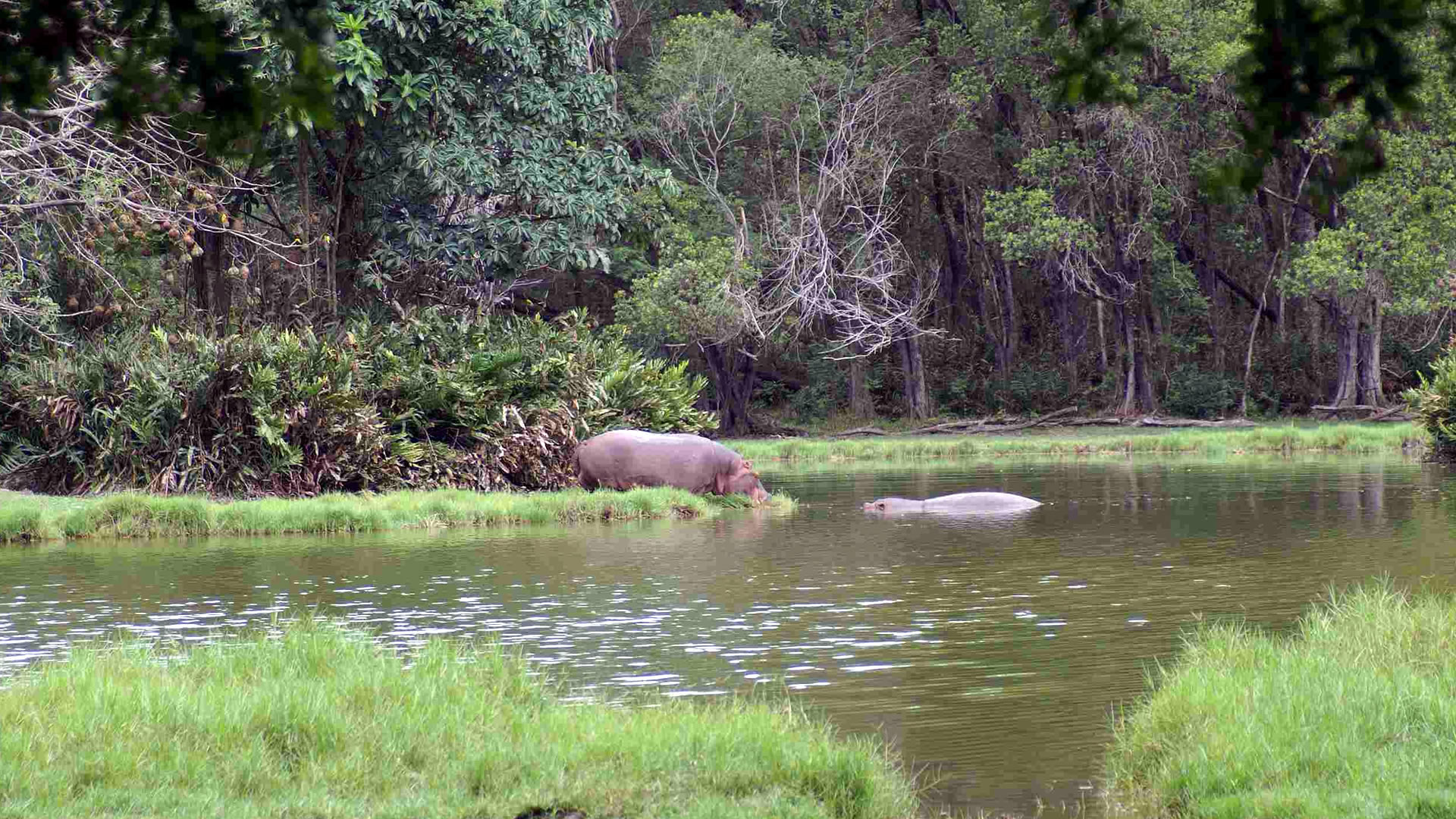
This permanent waterhole is the park's wildlife gathering point — elephants, buffalo, hippo, crocodile, and a rotating cast of plains game come to drink throughout the day. During the dry season, a single hour at Aruba Dam can yield more sightings than an entire morning of driving.
Unlike the Mara or Amboseli, Tsavo East is driveable from the coast in under 2.5 hours. No domestic flights, no airport transfers, no extra nights — just a pre-dawn drive, a full day of game viewing, and back at the beach by evening.
A long, rewarding day — here is everything you need to prepare.
Binoculars and camera with a zoom lens are essential. Neutral-coloured clothing (khaki, olive, beige). Hat, sunglasses, and sunscreen. A light fleece or jacket for the pre-dawn drive — early mornings are surprisingly cool. Snacks for the road. A fully charged phone or camera battery.
Entirely seated in the safari vehicle — no walking, no hiking. The day is long (10–13 hours door to door) with an early start, so come rested. The roads inside the park are unpaved and can be bumpy. If you have back problems, mention this when booking so we can seat you accordingly.
All ages are welcome with no KWS restrictions. However, the very early start (as early as 04:30) and the long day may be tiring for children under 5. Children aged 5 and above generally handle the day well and love the wildlife sightings. A private vehicle gives families more flexibility for stops and pacing.
Remain in the vehicle at all times during game drives — Tsavo's wildlife includes lions, buffalo, and elephants at close range. Follow your driver-guide's instructions. All vehicles carry first-aid kits and VHF communication. KWS rules are strictly enforced and your guide will brief you before entering the park.
Shared vehicles carry 6–7 guests with guaranteed window seats. Private vehicles (2–7 pax) offer more flexibility — you can linger at a sighting, adjust the route, and stop for photos whenever you like. For families or groups of 4+, private often works out close in cost to shared per person.
A day trip gives you a genuine taste of Tsavo, but if time allows, the 2-day Tsavo East and Tsavo West overnight safari is the complete experience — crossing between the two parks via the Mzima Springs and Shetani Lava Flows, with a night in a bush lodge. Ask us about upgrades when booking.
Year-round destination — dry seasons concentrate wildlife around water; green seasons bring birds and lush landscapes.
The best months for game viewing. Vegetation is sparse, visibility is excellent, and animals concentrate around Aruba Dam and the Galana River. Elephants come to water in large herds. Lion sightings peak as prey is more visible on the open plains. This is when Tsavo shows its full hand.
The landscape transforms after the rains — red earth turns green, wildflowers bloom, and migrant birds arrive in huge numbers. Game is more dispersed and harder to spot in the thicker vegetation, but the scenery is beautiful and visitor numbers are lower. Photographers who want dramatic skies and lush landscapes prefer this window.
Your KWS park entry fees directly fund the Tsavo Conservation Area — one of Africa's largest and most important protected ecosystems. The fees support anti-poaching patrols, ranger operations, veterinary interventions, community ranger programmes, and infrastructure maintenance across Tsavo East and West. Tsavo's elephant population has recovered significantly from the poaching crisis of the 1970s and 1980s thanks to sustained conservation investment. By visiting, you are directly contributing to the protection of one of Kenya's most vital wildlife landscapes.
Tell us your dates, group size, and whether you want shared or private — we'll handle every detail from the pre-dawn pick-up to the sunset drive home.
Book This SafariTsavo East is home to all Big Five — lion, leopard, elephant, buffalo, and rhino. On a day trip you have a realistic chance of seeing elephant (almost guaranteed), buffalo (very common), and lion (frequent, especially in the dry season). Leopard are present but elusive and sightings are a bonus rather than an expectation. Rhino are in a protected area that is not always accessible on a day trip. If seeing all five is a priority, a 2-day Tsavo East and West overnight safari significantly increases your chances.
Tsavo's elephants are the same species as elephants elsewhere in Kenya — African bush elephants. Their distinctive red-orange colour comes from the park's laterite soil, which is rich in iron oxide. The elephants dust-bathe and wallow in this red earth, and over time their hides take on the colour permanently. It is one of Tsavo's most photogenic features and makes the herds instantly recognisable in any wildlife photograph.
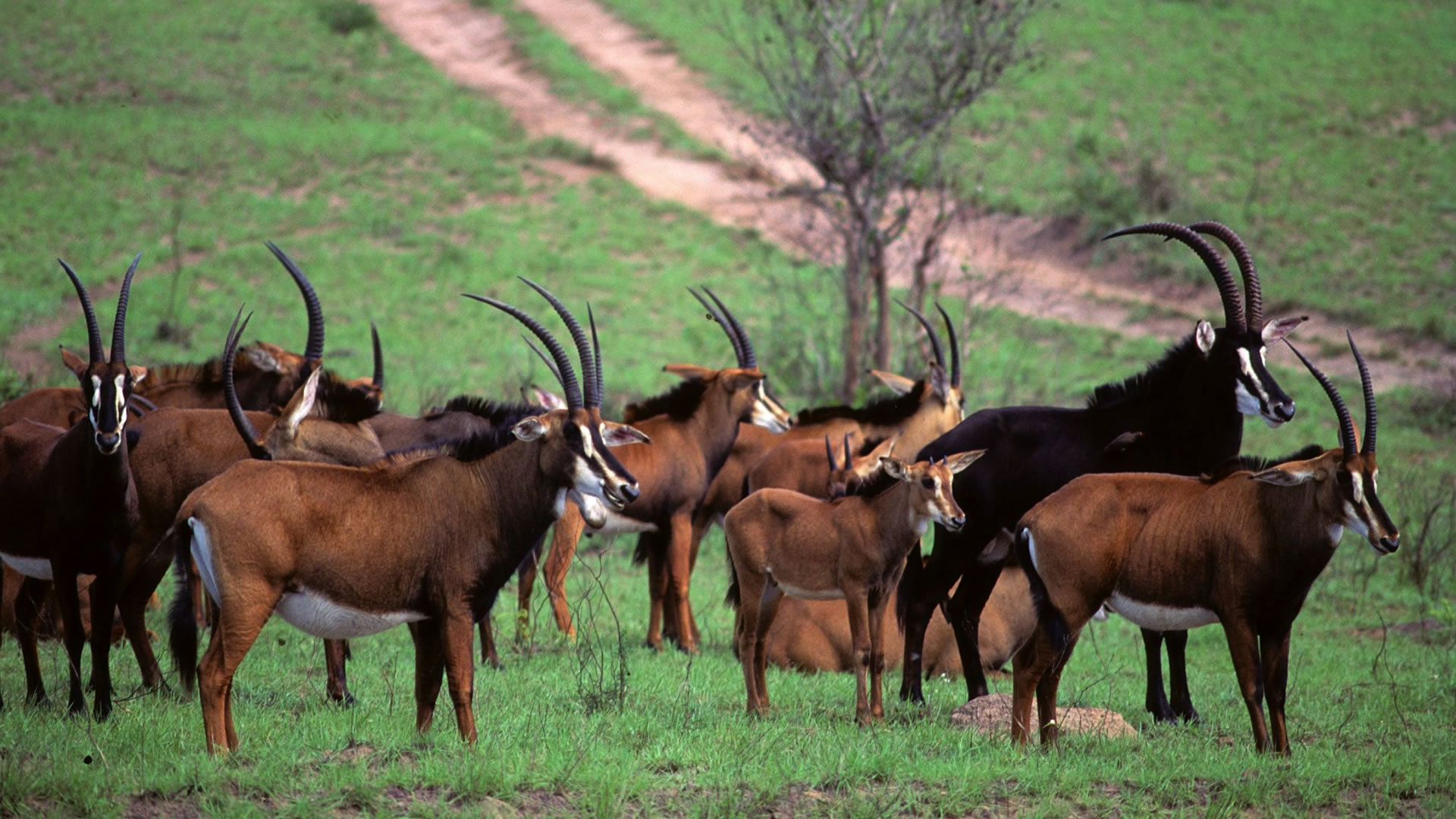
Completely different experiences. Shimba Hills is dense coastal rainforest 30 minutes from Diani — intimate, green, with unique species like the Sable antelope and Sheldrick Falls. Tsavo East is vast, open, semi-arid savannah 2–2.5 hours from Diani — epic in scale, with classic Big Five game driving on red-earth plains. Shimba works as a half-day; Tsavo is a full-day commitment. Many guests do both on separate days for the full contrast.
Pick-up is early: 04:30–05:30 from Diani, 05:00–06:00 from Mombasa. You enter the park at or shortly after the 06:00 gate opening. Game drives run through the morning, with lunch around midday, and an afternoon circuit before exiting the park by 16:00–17:00. Return to your hotel is typically 17:00–19:00 depending on your base. It is a long day — come rested and prepared.
A day trip gives you a full, satisfying safari experience — 6–8 hours of game driving inside the park with a professional guide. You will see serious wildlife and get a genuine feel for Tsavo. That said, the 2-day overnight adds considerably: you cross into Tsavo West for a completely different landscape (Mzima Springs, Shetani Lava Flows), enjoy a night in a bush lodge, and get both evening and dawn game drives when predator activity peaks. If your schedule allows, the overnight is the better experience. Ask us about options when booking.
Yes. The 04:30–05:30 departure is not arbitrary — it gets you through the park gates at first light when wildlife is most active, temperatures are cool, and the morning light is best for photography. Lions and cheetah hunt in the early hours. Elephants move to water at dawn. By mid-morning the heat drives many animals into shade and sightings slow. The early start maximises your game-driving time and the quality of what you see. Every experienced safari guide will tell you the same thing: the first and last hours of light are worth more than the rest of the day combined.