
Rwanda's only Big Five savannah park — a mosaic of open grassland, acacia woodland, and papyrus-fringed lakes along the Tanzanian border, where lions and black rhinos have been brought back from the brink and one of Africa's great conservation turnaround stories unfolds in real time.
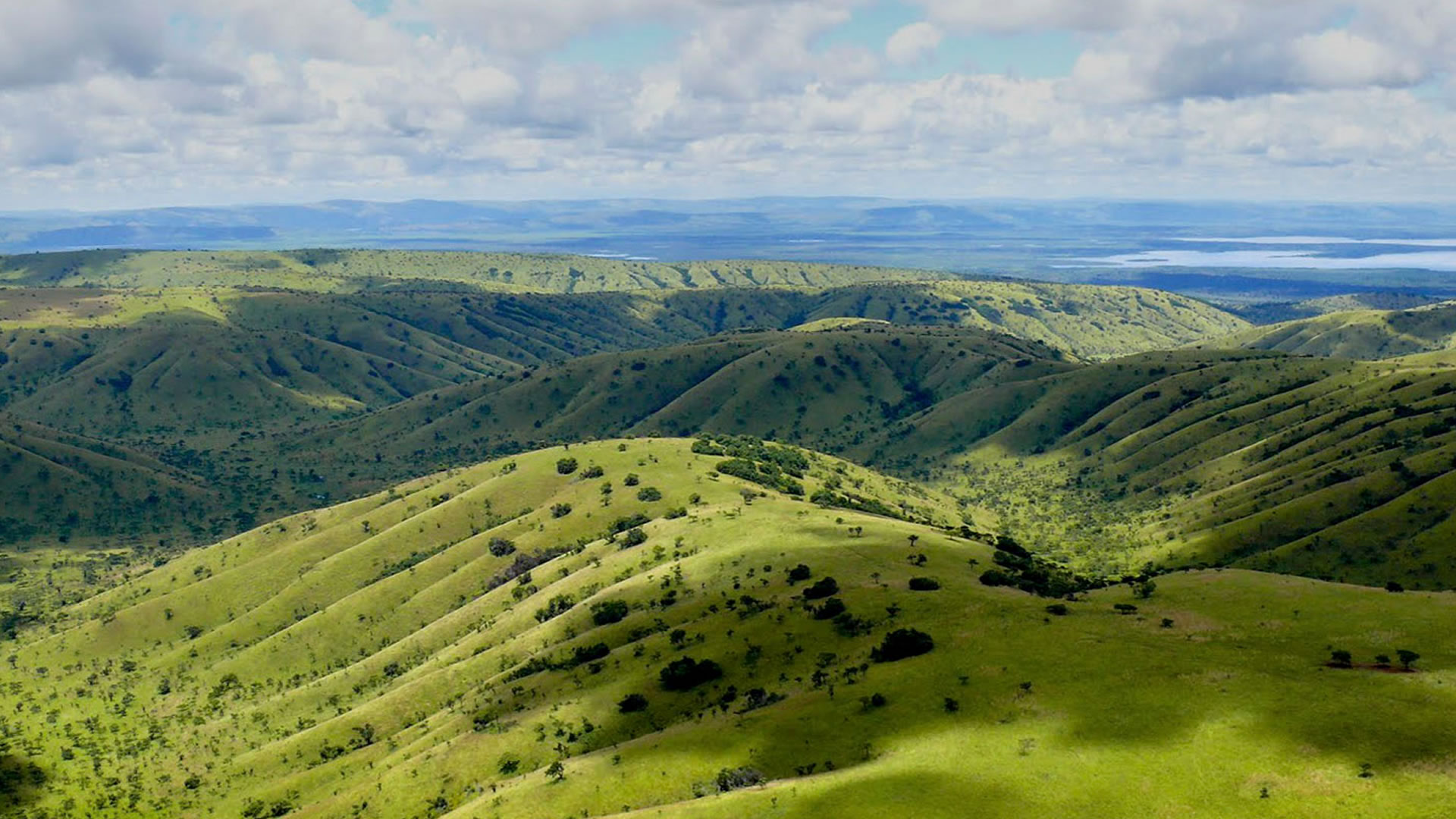
Akagera National Park occupies the low-lying savannah and wetlands of eastern Rwanda, along the border with Tanzania. Named after the Akagera River — whose serpentine course feeds a chain of papyrus-fringed lakes through the park — it protects a landscape that bears no resemblance to Rwanda's densely farmed, mountainous interior. Here, the terrain is flat, open, and hot: rolling savannah dotted with acacia, patches of dry woodland, rocky ridgelines, and the vast green wetlands of the Akagera valley itself. It is, ecologically, an extension of the East African savannah — the westernmost edge of the Serengeti-Mara ecosystem's influence.
Akagera's modern story is one of devastation and remarkable recovery. By the early 2000s, the park had lost its lions (poisoned), its rhinos (poached to local extinction), and more than half its original area (settled by returning refugees after the genocide). What remained was heavily encroached, poorly funded, and written off by most tourism operators as beyond saving. In 2010, the Rwanda Development Board partnered with African Parks — a conservation NGO specialising in managing troubled protected areas — and the turnaround began.
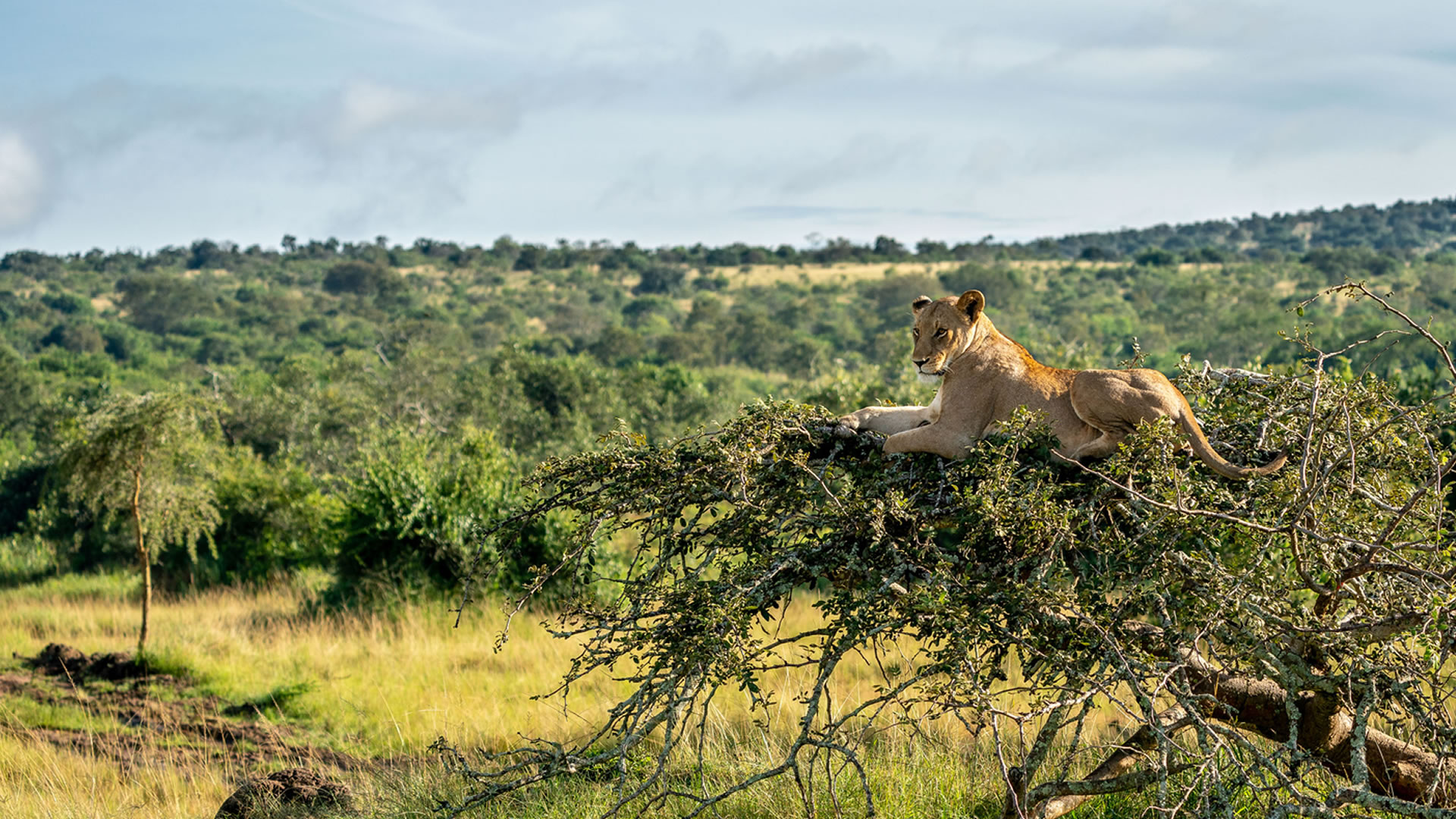
The results have been extraordinary. A state-of-the-art predator-proof fence was erected around the entire park. Lions were reintroduced from South Africa in 2015 — the first in Rwanda in over 15 years — and have bred successfully, growing from an initial seven to over 40. Eastern black rhinos, sourced from European zoos and South African reserves, were reintroduced from 2017 onwards, restoring Rwanda's Big Five status. Poaching has dropped by over 95 percent. Tourism revenue has increased sevenfold. Akagera is now widely cited as one of the most successful park restorations in Africa — a story visitors participate in by being there.
Big Five savannah, boat safaris on Lake Ihema, Africa's great conservation comeback story, and the savannah complement that makes a Rwanda circuit a full safari.
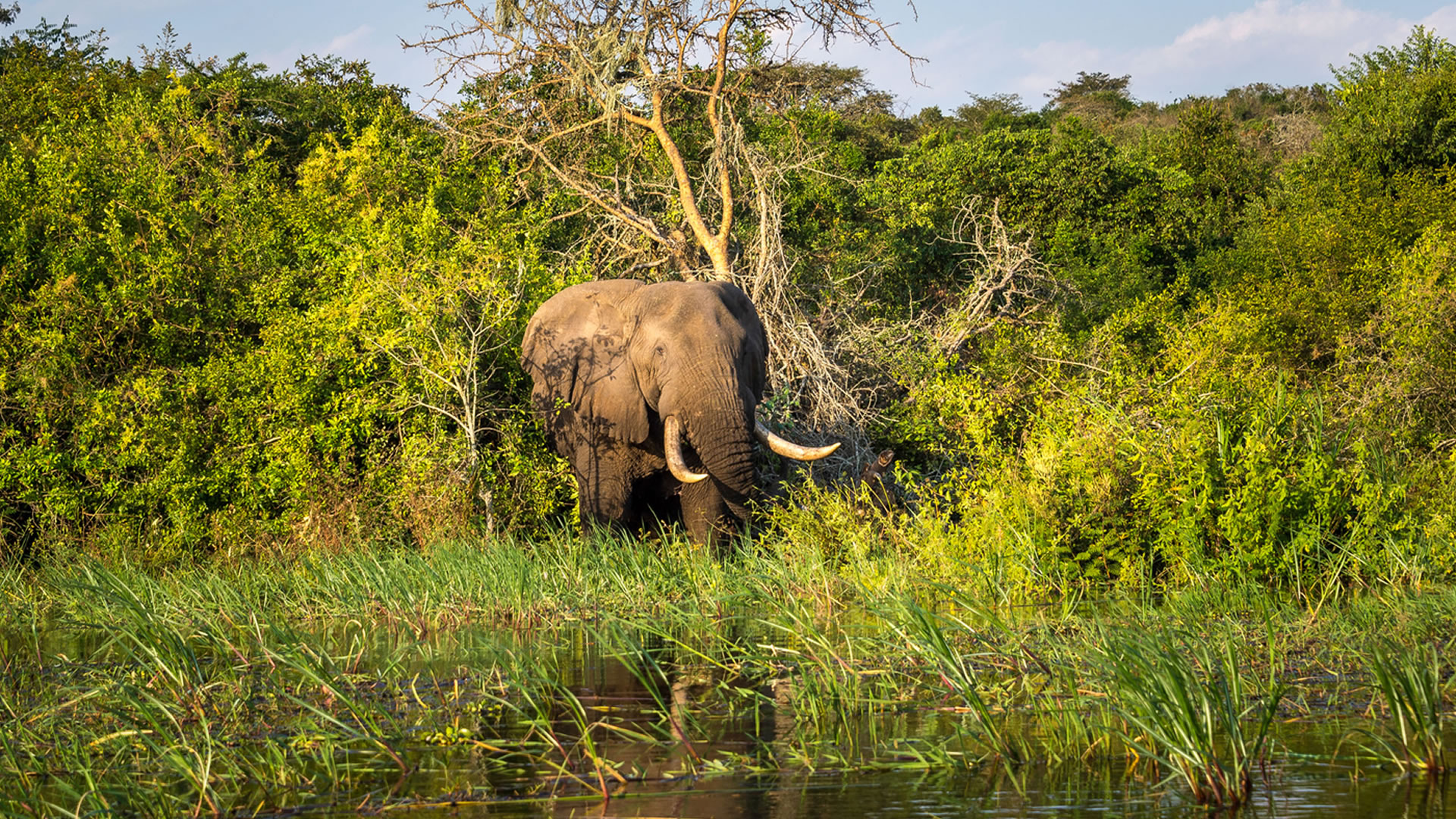
Akagera is the only park in Rwanda where you can see elephant, buffalo, lion, leopard, and rhino — and the fact that two of those species were reintroduced within the last decade makes the experience more meaningful than the checklist suggests. Watching a lion pride that exists because of a deliberate decision to restore what was lost — or scanning the bush for a black rhino that is alive because of a translocation from 6,000 kilometres away — adds a dimension of conservation significance that older, established parks cannot replicate. Every Big Five sighting at Akagera is a sentence in a story still being written.
Akagera's transformation from a poaching-ravaged, half-settled park to a fully fenced, Big Five sanctuary in barely a decade is one of the most remarkable conservation stories in modern Africa. African Parks' management model — combining professional anti-poaching, community engagement, infrastructure investment, and revenue generation — has turned Akagera into both a blueprint and an inspiration. Visitors who understand the backstory are not merely doing a game drive; they are witnessing proof that even the most damaged ecosystems can recover when the will, the funding, and the governance align.
A boat safari on Lake Ihema — the park's largest lake — offers a perspective found at no other point on a Rwanda itinerary. Hippo pods surface metres from the boat. Nile crocodiles line the shoreline. Fish eagles call from dead trees standing in the shallows. Papyrus swamps teem with herons, storks, and jacanas. The lake excursion runs two to three hours and is a highlight for birders and photographers alike. It is also the most relaxing activity in Akagera — a slow, sunlit float through a landscape that feels a continent away from the volcanic forests of the west.
Akagera is one of very few parks in the region offering guided night drives — an activity that transforms the savannah after dark. Spotlights pick out bush babies, civets, genets, white-tailed mongoose, and the eyes of leopards reflecting from acacia branches. Nightjars flush from the road. Hyenas materialise from the darkness. The nocturnal game drive is available to guests staying at the park's lodges and adds an entirely different cast of characters to the Akagera species list — creatures that are invisible by day and completely at home in the dark.
Akagera's combination of savannah, wetland, forest edge, and lakeside habitats produces one of the highest bird counts of any East African park — over 500 species, including the shoebill (rare but present in the papyrus swamps), papyrus gonolek, Ross's turaco, red-faced barbet, and dense raptor populations. The boat safari on Lake Ihema is a birding excursion in its own right. For birders coming from the montane forests of Volcanoes or Nyungwe, Akagera's lowland, water-dominated avifauna is a completely different and complementary species list.
Rwanda's tourism identity is built on gorillas, chimpanzees, and volcanic landscapes — but Akagera provides the savannah experience that rounds a Rwanda itinerary into a complete safari. Without Akagera, a Rwanda trip is a primate-and-forest journey. With it, the itinerary gains open plains, Big Five game drives, boat safaris, and the sundowner-at-the-waterhole experience that defines East African travel. For visitors doing the full Rwanda circuit — Volcanoes, Lake Kivu, Nyungwe, Akagera — it is Akagera that delivers the classic safari chapter.
Akagera National Park lies in eastern Rwanda, stretching along the country's border with Tanzania. The park occupies the low-lying Akagera river valley and the surrounding savannah — terrain that sits at roughly 1,200 to 1,800 metres elevation, significantly lower and hotter than the mountainous interior. The nearest town is Kayonza, on the main Kigali–Tanzania highway. Kigali is approximately 130 kilometres to the west, a drive of roughly 2.5 hours.
Akagera sits at the ecological transition between Rwanda's highland interior and the vast East African savannah systems of Tanzania. The Akagera River — which eventually feeds into Lake Victoria as the Kagera — meanders through the park's eastern flank, creating a chain of lakes, papyrus swamps, and seasonal floodplains that support the park's remarkable wetland biodiversity. The western side of the park is higher and drier — rolling savannah with acacia woodland and rocky outcrops that provide viewpoints across the entire river valley.
From Big Five game drives and boat safaris on Lake Ihema to night drives, guided walks, and behind-the-scenes conservation experiences.
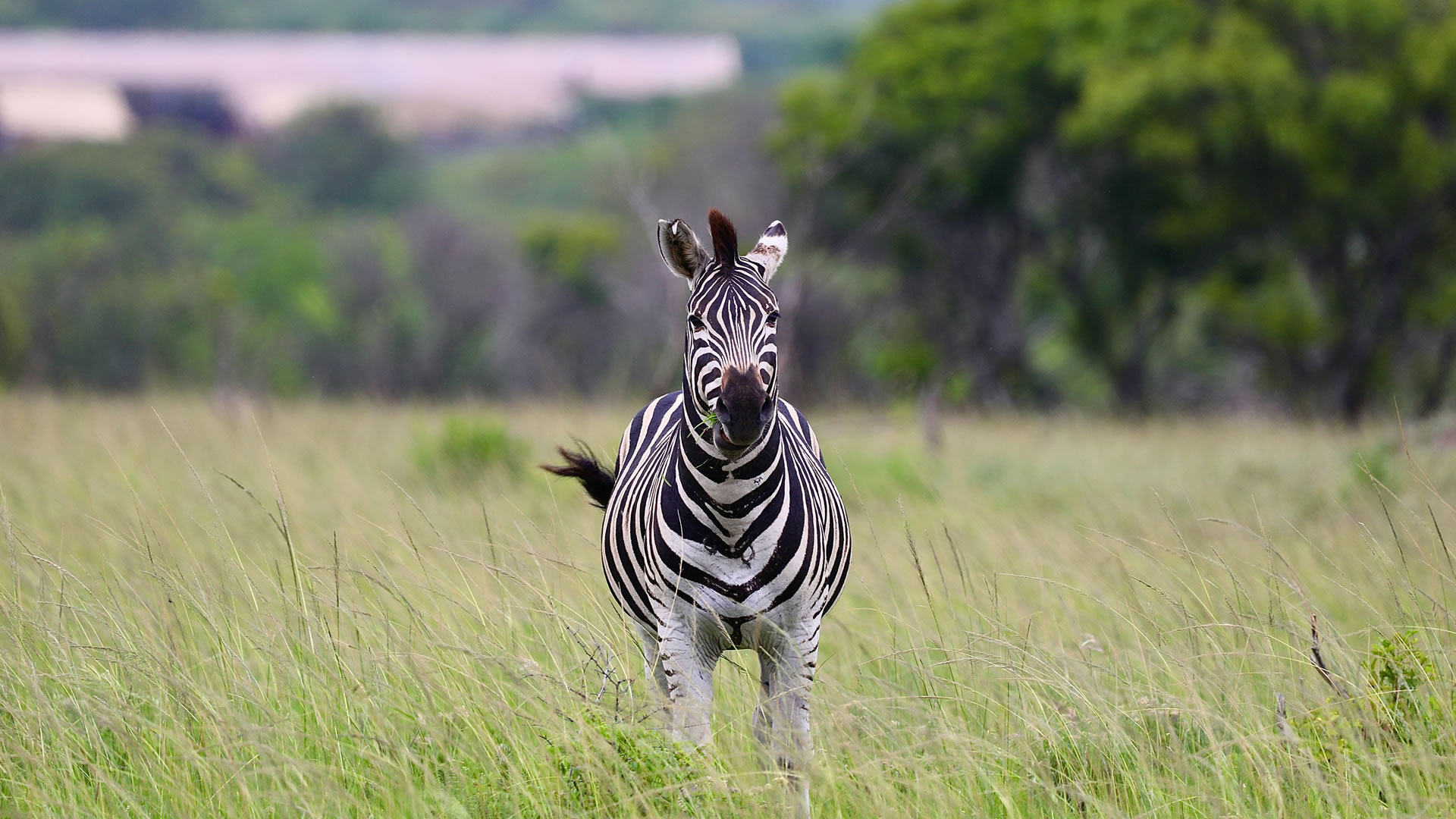
Akagera's game-drive network covers the park's western ridgeline (panoramic views across the lakes), the central savannah (open plains with buffalo, zebra, topi, and eland), and the lakeshores (hippo, crocodile, waterbirds). Elephant herds move between savannah and woodland. The reintroduced lion prides — now over 40 strong — are increasingly visible, and guides know their ranges well. Black rhino sightings are possible but uncommon; the population is small and the bush thick. Morning and afternoon drives offer different light and different animal behaviour across the same landscape.
The two- to three-hour boat excursion on Lake Ihema is one of Akagera's signature experiences. The motorised boat navigates between hippo pods, past crocodile basking sites, and along papyrus-choked channels alive with herons, storks, kingfishers, and fish eagles. The lake is calm and the perspective unique — waterline views of wildlife that is invisible from the shore. Early morning departures offer the best light and the most bird activity. The boat safari is operated from the Akagera Game Lodge or arranged through park reception.
Guided after-dark drives with spotlights reveal the nocturnal species invisible on daytime game drives: bush babies, civets, genets, white-tailed mongoose, side-striped jackal, aardvark (if fortunate), and a cast of nightjars, owls, and coursers. Leopard and hyena are also more active and more visible at night. Night drives typically depart from the park's lodges at dusk and run two to three hours. The activity is exclusive to overnight guests and adds a completely different dimension to the Akagera experience.
Over 500 species across savannah, wetland, forest edge, and lakeside habitats make Akagera one of the richest birding destinations in Rwanda. The papyrus swamps harbour papyrus gonolek, papyrus canary, and — with patience and luck — the elusive shoebill. Lake Ihema concentrates fish eagles, pelicans, open-billed storks, and pied kingfishers. The savannah supports raptors, bee-eaters, and lilac-breasted rollers. The boat safari and morning game drives are the most productive birding sessions, and the species list complements rather than overlaps with the montane forests of the west.
Walking safaris with armed guides explore the park's ridgelines and woodland edges on foot — tracking animal signs, learning the savannah botany, and experiencing the landscape at ground level. The walks are typically two to four hours and are available on the western ridgeline, where the views across the lake system are spectacular. The pace is slow and the focus is on detail: dung beetles, tracks, birdsong, the smell of wild sage. Walking adds an intimacy that the vehicle cannot provide and is recommended for second-time visitors or those with a morning free of game driving.
African Parks' management of Akagera is a model studied worldwide, and the park offers behind-the-scenes experiences that take visitors inside the conservation operation itself. Options include visits to the park's anti-poaching operations centre, meetings with community conservation teams, and explanations of the predator monitoring programme — how the reintroduced lions and rhinos are tracked, protected, and managed. These experiences bring the turnaround story to life with data, faces, and detail that a game drive alone cannot convey.
Akagera's lowland savannah is drier and hotter than the rest of Rwanda — the dry months concentrate wildlife around water and make game drives most productive.
The optimal window. Water levels drop, the savannah dries to gold, and wildlife concentrates around the lakes and remaining water sources. Game drives are most productive. The ridgeline views are sharpest. Roads are in their best condition. January and February are hotter but drier; June to September is the long dry season and offers the most consistent game viewing. Boat safaris on Lake Ihema are excellent year-round but the dry season brings larger concentrations of waterbirds and more visible hippo pods.
The rains green up the savannah and fill the wetlands — beautiful but with more dispersed wildlife and muddier tracks. Birding improves significantly as migratory species arrive and resident species breed in full plumage. The park remains fully operational throughout the rains, and the reduced visitor numbers mean quieter game drives and better lodge availability. Some tracks may be temporarily closed after heavy rain. For visitors combining Akagera with the gorilla parks, the wet-season alignment is similar across Rwanda, so the shoulder months of March and October offer a practical compromise.
An easy 2.5-hour drive east from Kigali on good tarmac — one of the most accessible savannah parks in the region.
Kigali International Airport is the gateway. From Kigali, the drive to Akagera's southern gate takes approximately 2.5 hours on excellent tarmac via Kayonza and Rwamagana. Helicopter transfers can be arranged for those on tight schedules. Some itineraries charter flights to the park's airstrip, though the road transfer is comfortable and efficient enough that most visitors travel overland.
The drive from Kigali heads east on the main highway toward Tanzania, passing through the towns of Rwamagana and Kayonza before turning south to the park gates. The road is tarmac throughout and the journey is smooth. Two gates serve the park: the southern entrance (closest to the Akagera Game Lodge) and the northern entrance. A through-drive from south to north — entering at one gate and exiting at the other — is a popular full-day option that covers the park's full range of habitats.
Akagera is typically the last or first stop on a full Rwanda circuit. A common itinerary runs: Kigali → Volcanoes NP (gorillas, golden monkey) → Lake Kivu (lakeside rest) → Nyungwe Forest (chimpanzees, canopy walkway) → Akagera (Big Five savannah) → Kigali. Placing Akagera at the end of the circuit creates a strong contrast — from the cool mountain forests of the west to the hot, open savannah of the east — and finishes the trip with the classic African safari experience.
Savannah plains, lake systems, reintroduced Big Five, and the park that Africa's conservation community rebuilt.
Two nights is ideal, allowing a full day of game driving (morning and afternoon), a boat safari on Lake Ihema, and a night drive. One night works as a day-trip or transit stop on a tight itinerary — entering at the south gate and exiting at the north (or vice versa) for a full-day through-drive — but it sacrifices the boat safari and the night drive, which are two of Akagera's strongest experiences. Three nights suits dedicated wildlife enthusiasts who want to add a walking safari, repeat a productive game-drive circuit, or spend time with the behind-the-scenes conservation programme.
Akagera's eastern black rhinos are present but not easily seen. The population is still small, the bush is thick, and black rhinos are naturally secretive and predominantly nocturnal. Sightings are possible — particularly on early morning drives and night drives — but they are not predictable. The park does not operate dedicated rhino-tracking excursions. If rhino viewing is a priority, Akagera offers a chance rather than a guarantee. The lion prides, elephant herds, and buffalo are far more reliably encountered.
Not in terms of sheer animal density or the scale of spectacles like the Great Migration. Akagera is smaller, its populations are still recovering, and the game-drive experience is quieter than the Mara or Serengeti. What Akagera offers instead is the story — watching a conservation recovery in progress — and the combination value within a Rwanda itinerary. Visitors doing a full Rwanda circuit add Akagera not to replace the East African savannah giants but to complement the gorilla and chimpanzee experiences with a genuine Big Five chapter. On its own terms, Akagera is a beautiful, rewarding, and increasingly productive savannah park.
Akagera National Park charges USD 50 per non-resident adult per 24-hour period (as of 2024/2025). Boat safaris on Lake Ihema are approximately USD 50 per person. Night drives are approximately USD 40 per person. Guided walking safaris are approximately USD 40 per person. Vehicle entry fees apply for private vehicles. All park fees and applicable taxes on Kuldip's Touring Company itineraries are included in the quoted price.
Yes — Akagera is one of the few parks in Rwanda that permits self-driving. The road network is reasonably well-maintained, junctions are signposted, and the park provides a map at the gate. A 4x4 is recommended, especially during the wet season. However, for visitors unfamiliar with the park, a guided game drive significantly improves the experience — guides know the current lion territories, the rhino hotspots, and the bird concentrations that a first-time visitor would miss. Kuldip's itineraries include a guide and vehicle.
Absolutely. Akagera is one of the most family-friendly parks in Rwanda. There is no minimum age for game drives or the boat safari. The open savannah makes wildlife spotting easy and engaging for children. The boat excursion is exciting — hippos and crocodiles at close range — and the night drive is a genuine adventure for older kids. Lodges within the park cater to families. The park also works well as a contrast for children who may find gorilla trekking too physically demanding — Akagera's game drives are vehicle-based, comfortable, and immediately rewarding.
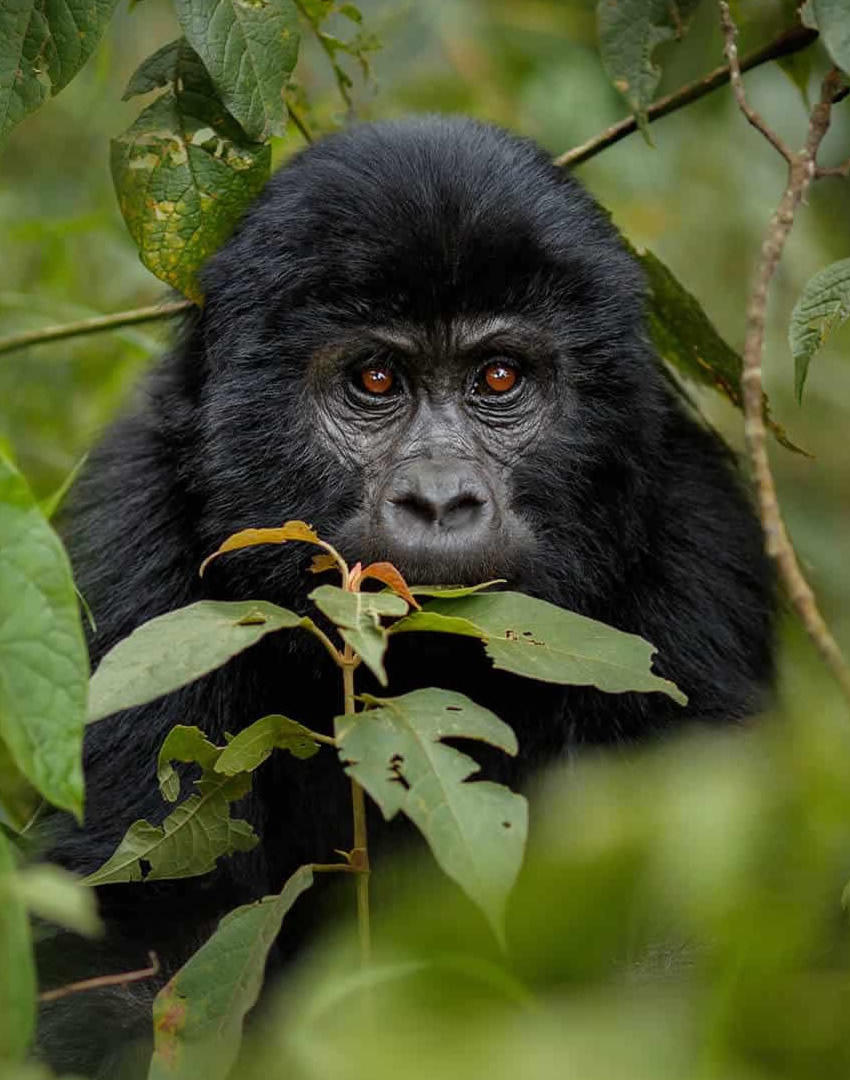
The crown jewel of Rwandan conservation and the original home of Dian Fossey's ground-breaking gorilla research on the Virunga volcanoes.
Explore Volcanoes NP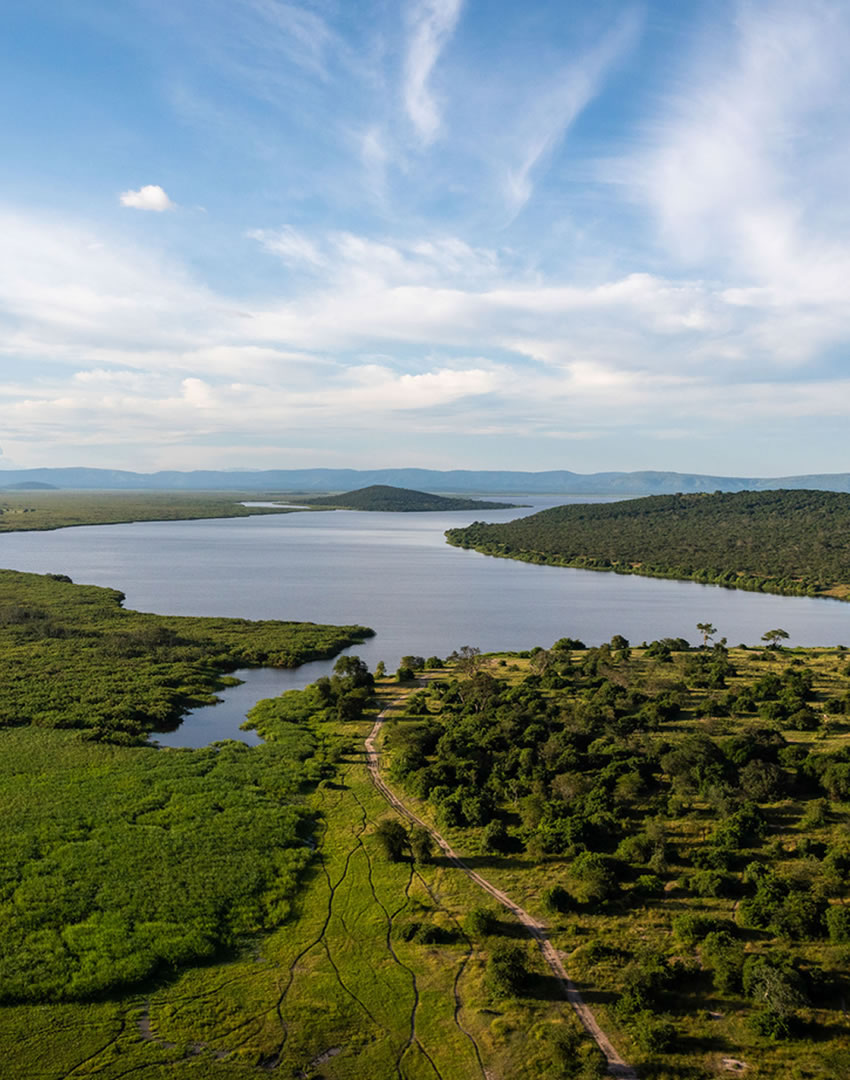
East Africa's greatest conservation comeback — a fully restored Big Five park with lions reintroduced in 2015 and black rhinos in 2017.
Explore Akagera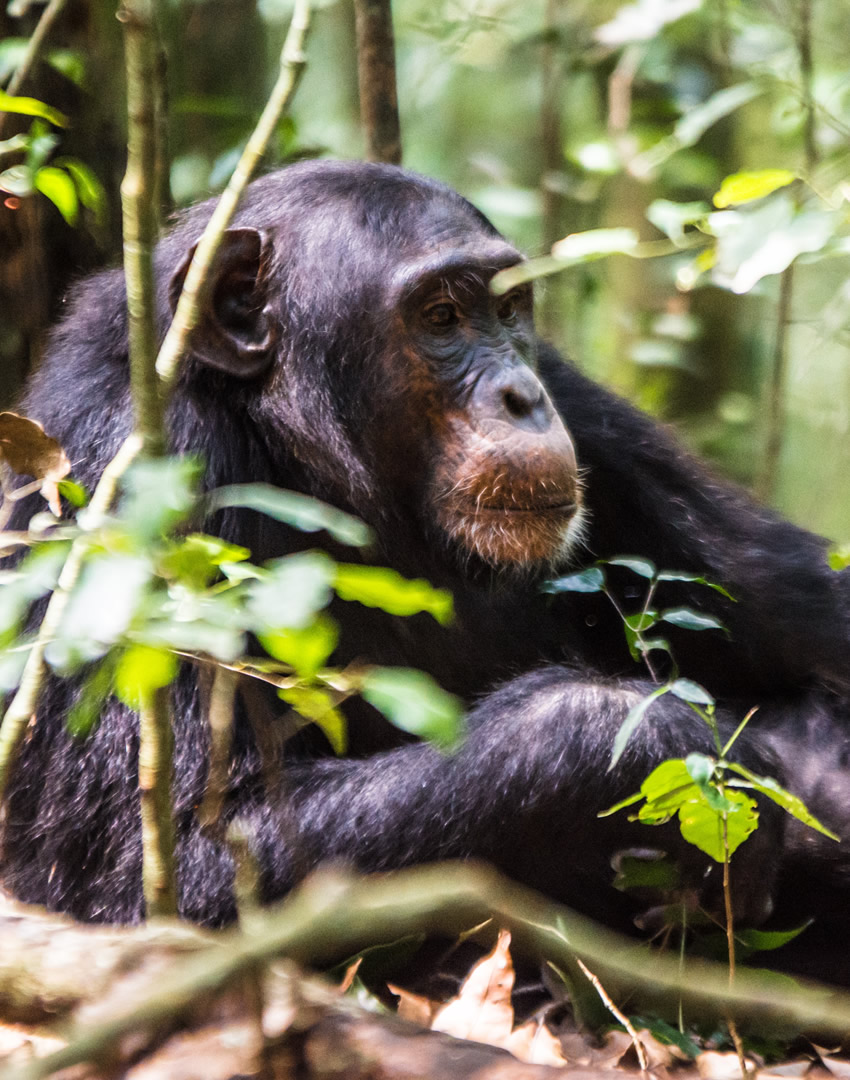
One of the oldest and most biodiverse montane rainforests in Africa. Rwanda's premier chimpanzee tracking destination with a canopy walkway.
Explore Nyungwe Forest
Rwanda's newest national park, home to a recovering population of eastern chimpanzees, golden monkeys and over 230 bird species.
Explore Gishwati Mukura