
Forested peaks rising from the crystal shores of the world's second-deepest lake — one of the most remote and beautiful places in Africa, where wild chimpanzees live in a mountain wilderness that no road has ever reached.
The Mahale Mountains rise abruptly from the eastern shore of Lake Tanganyika in western Tanzania — a steep, forested massif climbing from the lake surface at 773 metres to the summit of Mount Nkungwe at 2,462 metres. The range marks the edge of the Albertine Rift, and its eastern slopes descend through a succession of vegetation zones — lowland tropical forest, montane woodland, bamboo, and alpine grassland — that together harbour one of the most biodiverse assemblages of any protected area in Tanzania.
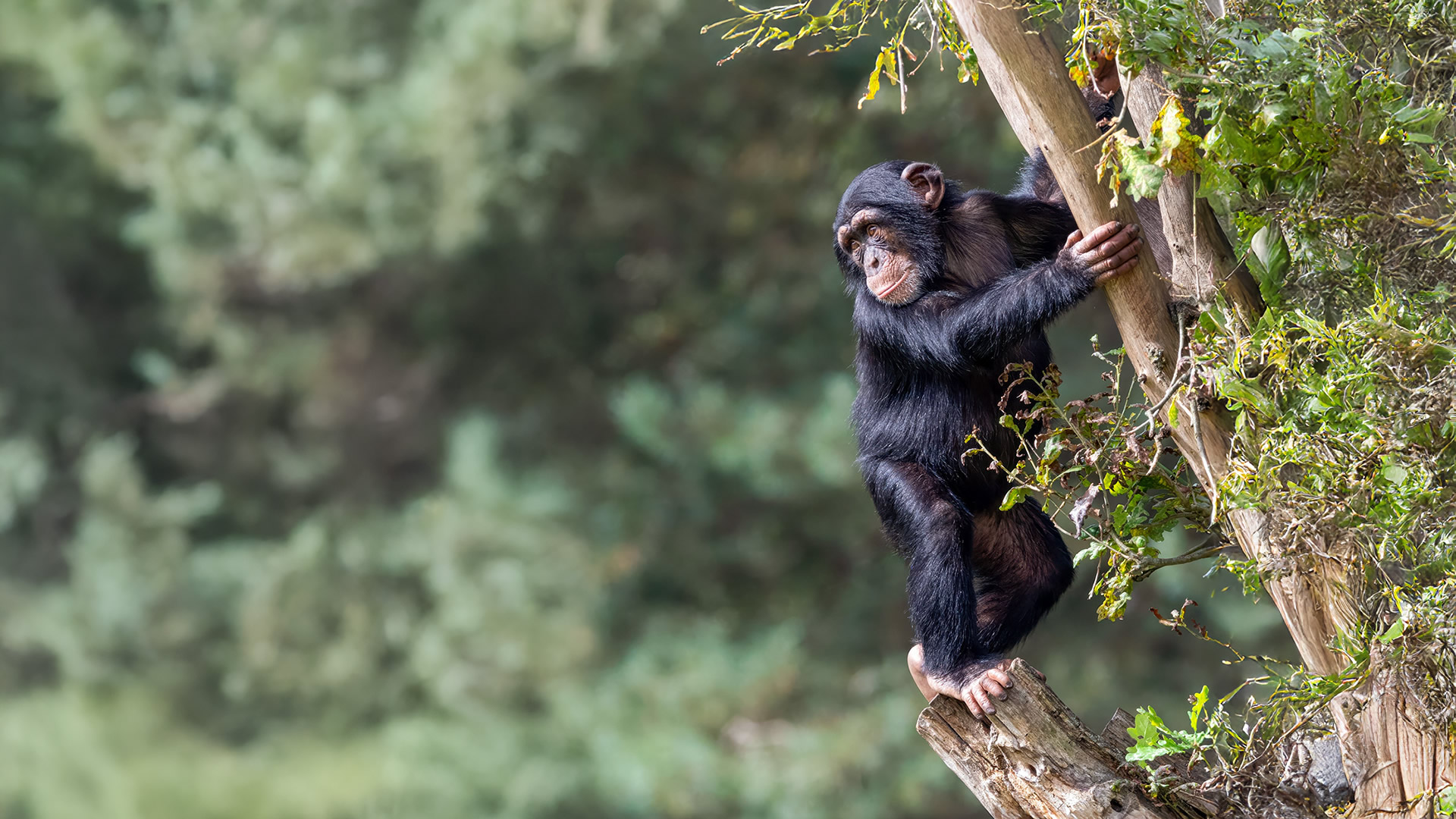
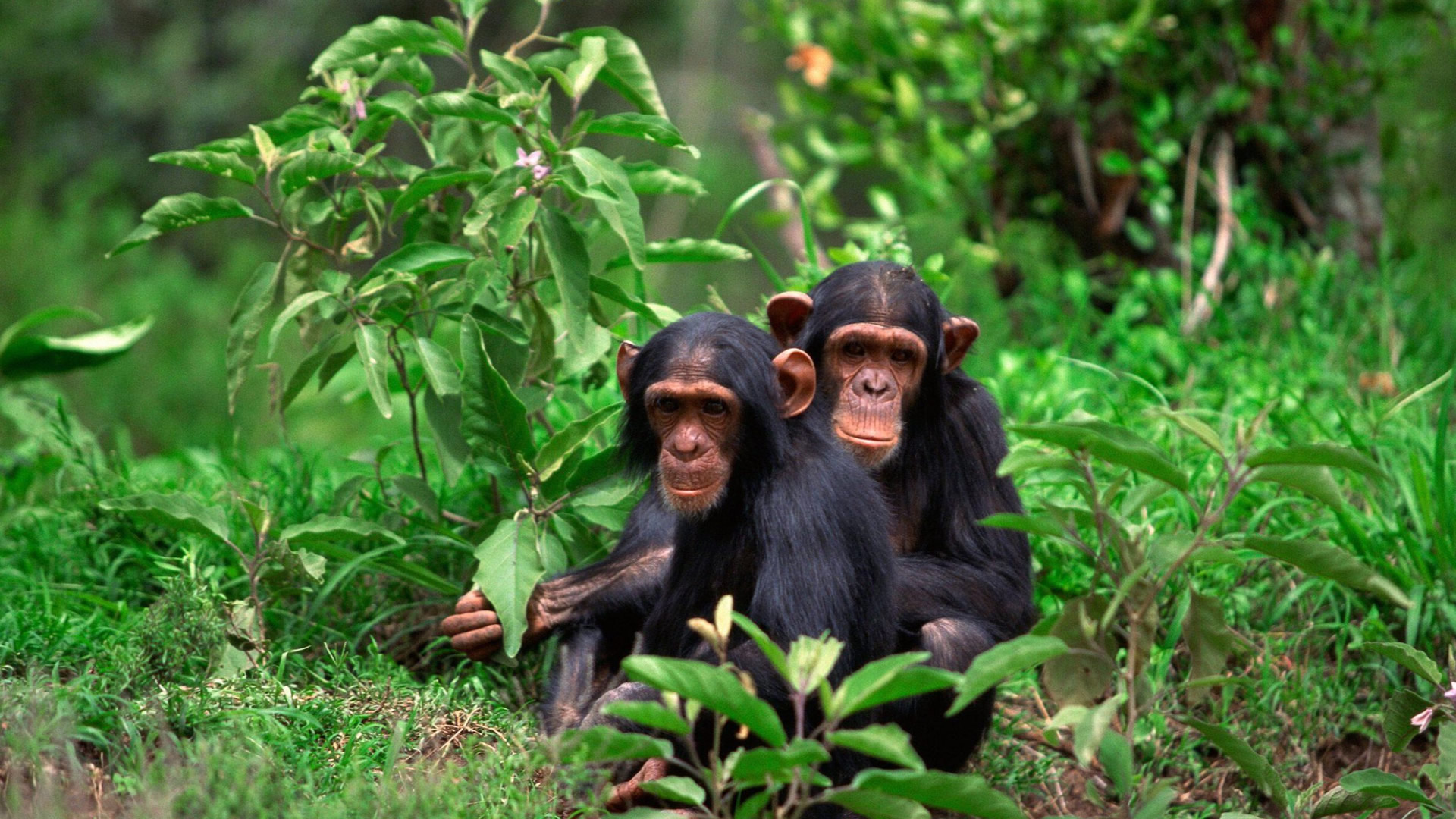
At the heart of Mahale's reputation are its chimpanzees. Japanese researchers from Kyoto University began studying the Mahale chimpanzees in 1965, establishing a research programme that — alongside Jane Goodall's work at Gombe, 150 kilometres to the north — has become one of the two foundational long-term studies of wild chimpanzee behaviour. The M-group community, comprising approximately 60 habituated individuals, is the focus of visitor trekking. These chimpanzees are accustomed to quiet human observers, and encounters in the forest are often extraordinarily close, extended, and deeply moving.
But Mahale is more than chimpanzees. The park is one of the most remote and inaccessible in Africa — there are no roads within its boundaries, no vehicles, and no way to arrive except by boat or light aircraft. Everything happens on foot or from the lake. This isolation has preserved a wilderness of exceptional purity: eight other primate species, 355 bird species, forest elephants in the upper valleys, and a lake teeming with endemic cichlid fish. The combination of mountain forest, white-sand beaches, transparent water, and the intimacy of the chimp encounter makes Mahale one of the most singular destinations on the continent — a place that those who have been consistently rank among the finest wildlife experiences of their lives.
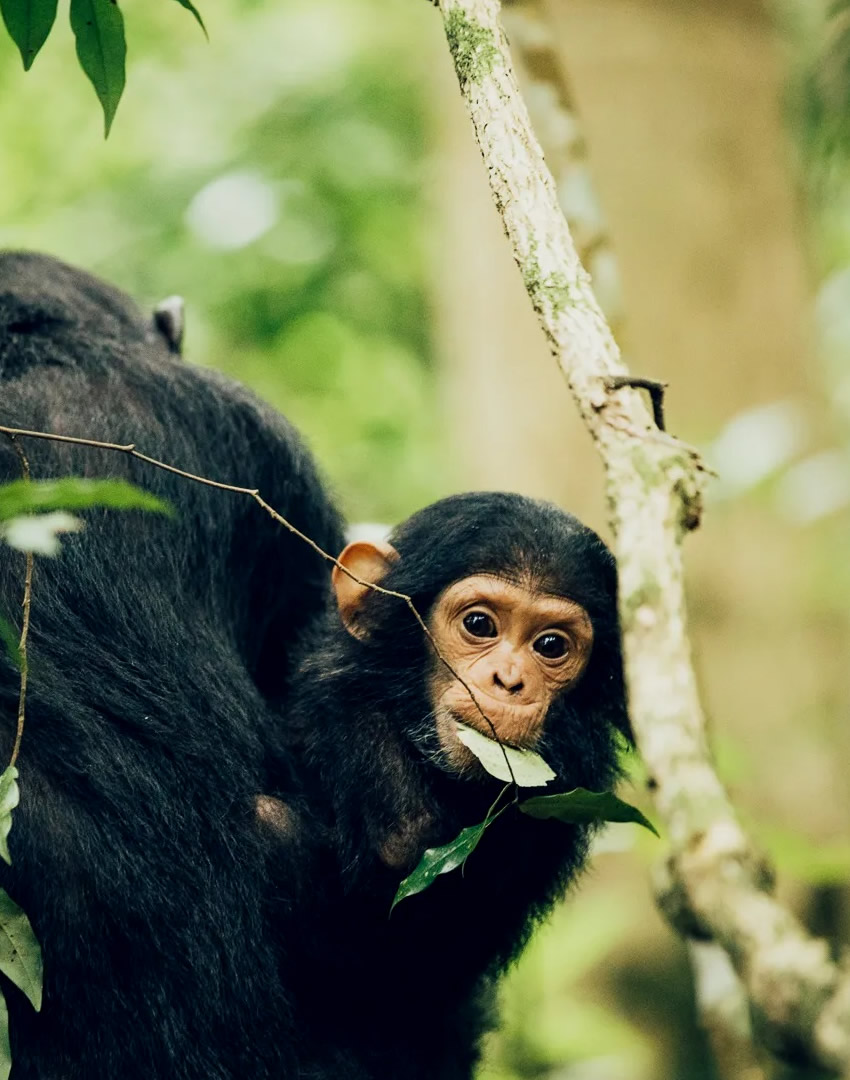
Wild chimpanzees in untouched mountain forest, a lake that doubles as an ocean, no roads, no crowds, and an experience that defies comparison with any other destination in Africa.
The M-group community has been observed continuously since the 1960s — six decades of habituation that produces encounters of startling intimacy. You may sit within arm's reach of a grooming pair, watch a female carry a days-old infant through the canopy, hear the pant-hoots of a displaying male reverberate through the valley, or simply share the forest floor in mutual, unhurried observation. The depth of habituation, the beauty of the setting, and the near-total absence of other visitors make Mahale's chimp encounters among the most profound in Africa.
The Mahale Mountains harbour one of the last remaining tracts of primary tropical forest in western Tanzania — a closed-canopy ecosystem that has never been logged, farmed, or roaded. The forest transitions through altitude from lowland tropical at the lakeshore to montane woodland and bamboo on the upper slopes, supporting a biological diversity that earned the park consideration for UNESCO World Heritage listing. Walking through Mahale's forest is walking through a genuinely unaltered landscape — the trees overhead have been growing for centuries without human interference.
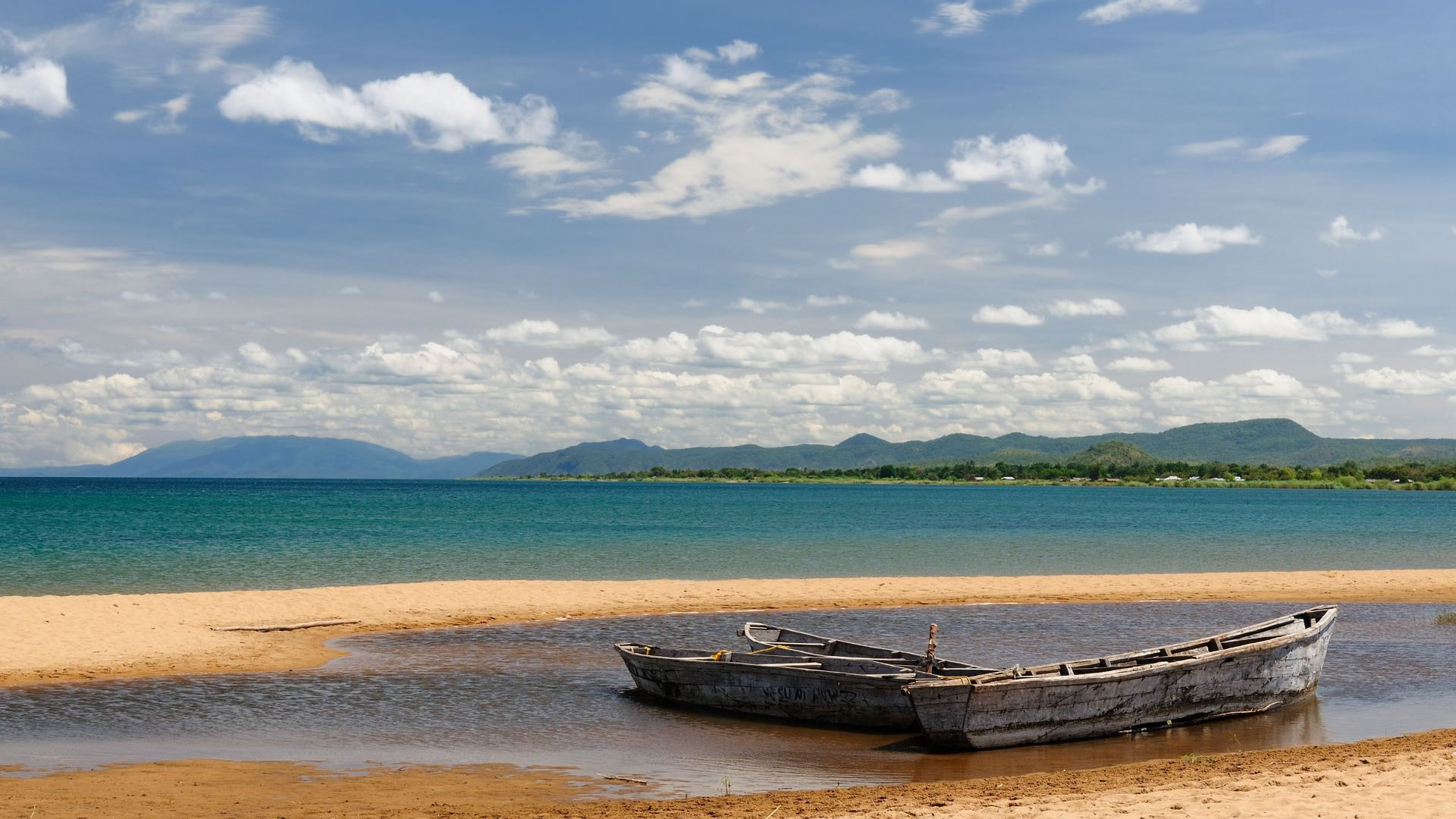
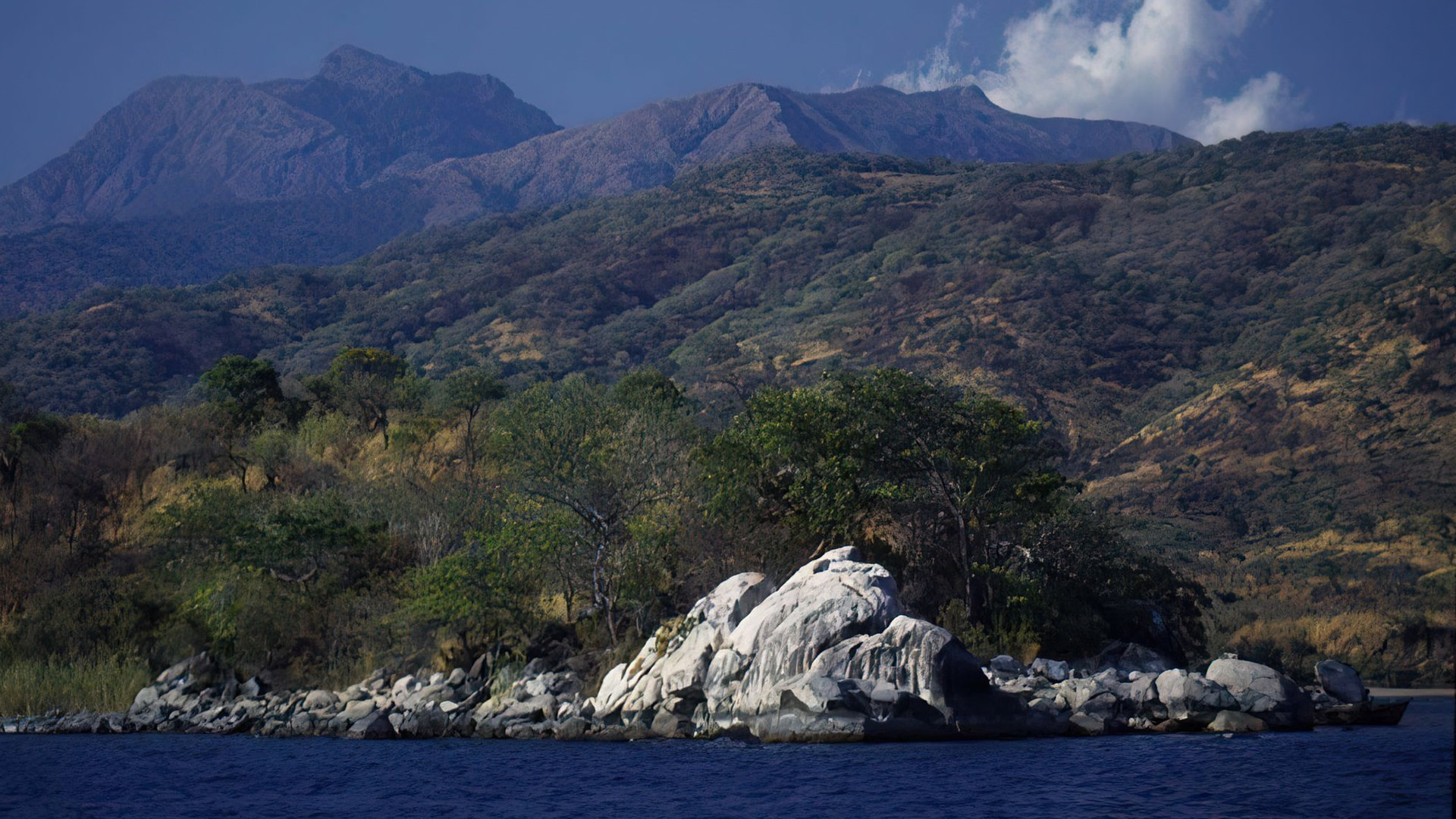
Mahale's western boundary is the shore of Lake Tanganyika — and what a shore it is. White-sand beaches backed by forest, water so clear you can see the bottom at 20 metres, and a horizon that stretches westward to the mountains of the Democratic Republic of Congo. The lake is warm (24–28°C), safe for swimming, and supports over 250 endemic cichlid species visible while snorkelling in the shallows. After a morning in the forest with chimpanzees, an afternoon on the Tanganyika shore is one of the great contrasts in African travel.
Chimpanzees are the headline, but Mahale supports eight additional primate species in an unusually compact area — an overlap of eastern and western African primate communities rarely found at a single site. Red colobus, red-tailed monkey, blue monkey, and yellow baboon are common in the lower forest. Angolan black-and-white colobus inhabit the mid-altitude zones. Bushbabies emerge at dusk. The interactions between species — including chimpanzee predation on red colobus — add complexity and drama to every forest walk.
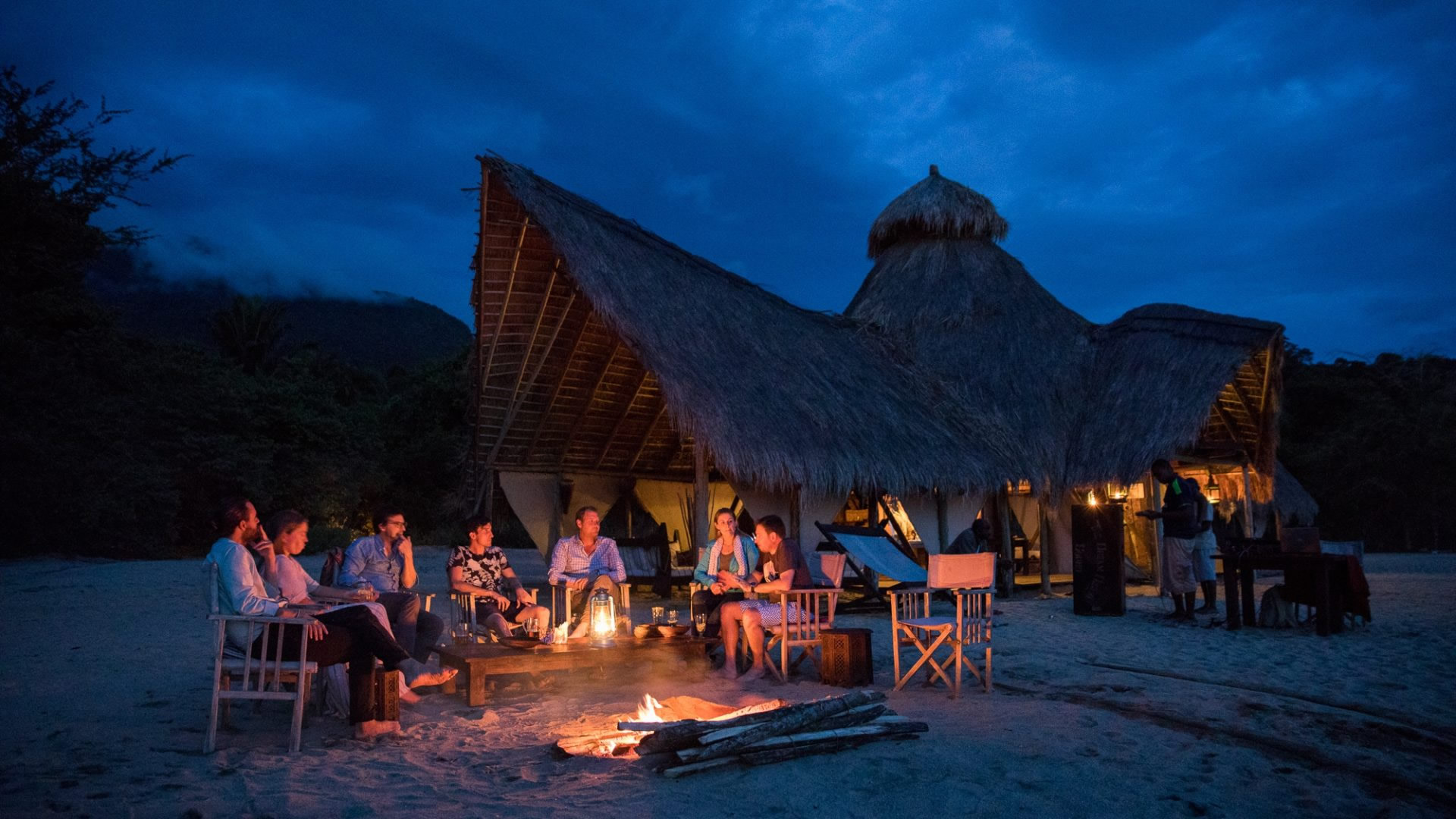
Mahale is home to one of the most celebrated safari camps in Africa — Greystoke Mahale, operated by Nomad Tanzania, built from reclaimed dhow wood on the lake shore beneath the forest canopy. The camp is open-fronted, lantern-lit, and deliberately simple in a way that costs a fortune to achieve. It is consistently ranked among the top wilderness lodges on the continent. The combination of Greystoke's setting, Mahale's chimps, and the lake creates an experience that belongs on any serious list of the world's greatest wildlife destinations.
There is no road to Mahale. No mobile signal. No Wi-Fi (by design at most camps). No vehicle noise, no other tourists on the trail, no reminder of the world outside the forest and the lake. Mahale is one of the few places remaining where the safari experience operates on entirely natural time — sunrise, sunset, the chimps' schedule, the lake's mood. For travellers who have seen the busy parks and seek something fundamentally different, Mahale is the answer. It is not remote by accident. It is remote by nature.
Mahale Mountains National Park occupies a mountainous peninsula on the eastern shore of Lake Tanganyika, approximately 120 kilometres south of Kigoma in western Tanzania. The park lies roughly 1,500 kilometres from Dar es Salaam and over 1,100 kilometres from Arusha — it is, by most measures, the most geographically remote national park in Tanzania.
The Mahale range runs roughly north–south for about 60 kilometres, its western slopes plunging directly into Lake Tanganyika and its eastern flanks descending into the sparsely populated miombo woodland of the Tanzanian interior. The park's isolation is its defining feature: the nearest tarmac road is several hundred kilometres away, and the mountains are surrounded on three sides by lake and on the fourth by wilderness. This remoteness has preserved both the forest and the chimpanzee population in a condition that more accessible parks have long since lost.
From chimpanzee trekking through primary forest to kayaking on Lake Tanganyika and hiking toward the summit of Mount Nkungwe — Mahale operates entirely on foot and water.
Mahale's core experience. Guided by trackers who have followed the M-group for years, you walk into the forest at dawn, following calls, feeding signs, and nesting patterns to locate the community. Once found, you spend up to one hour observing — grooming, feeding, play, dominance displays, and the complex social negotiations of a community whose individual histories span decades of research. The terrain is steep and the forest dense, but the encounters are among the most intimate and moving wildlife experiences in the world.
Mahale's lakeshore is one of the most beautiful freshwater beaches in Africa — white sand, transparent water, and forested mountains rising directly behind. Swimming in Lake Tanganyika is warm (24–28°C), safe, and revelatory: the clarity allows snorkellers to observe the lake's extraordinary endemic cichlid fish in their natural habitat — hundreds of species, many brightly coloured, found nowhere else on Earth. The afternoons belong to the lake, and the contrast with the morning's forest intensity is restorative.
Kayaks at the lakeshore camps allow guests to paddle along the Mahale coastline — following the forest edge, exploring rocky coves, and watching fish eagles and palm-nut vultures from the water. The lake is typically calm in the morning and the paddling is gentle — a meditative complement to the physical intensity of the chimp trek. On clear days, the mountains of the Congo are visible across the water, a reminder of the vast rift system that created this landscape.
For the physically ambitious, guided hikes ascend through Mahale's vegetation zones — from lowland tropical forest through montane woodland and bamboo to the open grassland and rocky ridges of the upper peaks. The full ascent of Mount Nkungwe (2,462 m) is a multi-day undertaking requiring camping. Shorter day hikes into the mid-altitude forest reveal Angolan colobus monkeys, forest birds, and views across the lake that extend for a hundred kilometres. The hiking reveals the vertical dimension of an ecosystem usually experienced only at lakeshore level.
Lake Tanganyika supports several sport-fishing species, and line fishing from a wooden boat on the open lake is one of Mahale's quieter pleasures. The main target is kuhe — a large, hard-fighting lake perch — along with various cichlids and catfish. Fishing trips depart in the late afternoon when the light turns golden and the lake surface smooths to glass. Catches are returned or, at some camps, prepared for the evening meal. It is a sociable, wind-down activity that suits Mahale's unhurried rhythm.
Some camps offer sunset cruises aboard traditional wooden dhows — sailing along the Mahale shoreline as the sun drops behind the Congo mountains across the lake. The light on the water, the silhouette of the Mahale range against the western sky, and the absolute silence of the lake at dusk make this one of the most beautiful evenings in African travel. Drinks are served on board. The only sounds are the water and the occasional call of a fish eagle returning to roost.
Mahale's camps operate seasonally — the forest and lake are at their best from mid-May through October, and some camps extend into the short rains.
The prime window and the period when all camps are fully operational. Forest trails are dry and manageable, the chimpanzees tend to range at lower altitudes where fruiting trees are concentrated, and Lake Tanganyika is at its calmest and clearest. The dry air and blue skies create ideal conditions for swimming, kayaking, and dhow cruises. This is the most popular period and advance booking is essential — Greystoke Mahale's twelve beds sell out months ahead during peak season.
The long and short rains make Mahale's steep forest trails very challenging — slippery, overgrown, and physically demanding. Most camps close from late November through mid-May. The chimps range widely and often high, making tracking longer and encounters less predictable. However, late May and early June — as the rains end and the forest is at its greenest — can be beautiful, and the shoulder weeks offer lower rates and near-total solitude. November is sometimes available and can produce excellent trekking when the weather cooperates.
Mahale is one of Africa's most remote parks — reached by charter flight or a long boat journey from Kigoma. The journey is the beginning of the disconnection.
The most common access is by charter aircraft from Arusha, Dar es Salaam, or Kigoma to the Mahale airstrip on the lakeshore near the park boundary. Charter flight times vary: approximately 3 to 4 hours from Arusha with a fuel stop, or under 1 hour from Kigoma. Scheduled connections via Kigoma (with Auric Air or Precision Air from Dar es Salaam) followed by a charter leg are also available. The airstrip is basic — a grass runway on the lake shore — and transfers to camp are by boat.
The alternative to flying is a boat journey from Kigoma down the eastern shore of Lake Tanganyika — approximately 5 to 6 hours by motorboat, depending on conditions. The journey passes fishing villages, forested headlands, and increasingly remote stretches of shoreline before the Mahale Mountains appear ahead. It is long but beautiful, and some operators offer the boat trip as an experience in its own right, with lunch on board and stops to swim in the lake en route.
Mahale pairs naturally with Gombe National Park — Jane Goodall's research site, 150 kilometres north on the same lake shore. A typical chimpanzee-focused itinerary runs two nights at Gombe followed by three to four nights at Mahale, connected by charter flight or boat via Kigoma. Adding the Serengeti, Ngorongoro, or Zanzibar creates a Tanzania itinerary of extraordinary range — mountain chimpanzees, savannah Big Five, and Indian Ocean beaches in a single trip.
Wild chimpanzees, mountain forest, white-sand beaches, and a lake that stretches to the horizon.
Both parks offer chimpanzee trekking on the shores of Lake Tanganyika, but the experiences are distinct. Gombe is smaller (52 km²), more accessible from Kigoma, and carries the historic weight of Jane Goodall's research. Mahale is larger (1,613 km²), more mountainous, more remote, and offers a more exclusive and luxurious camp experience — particularly at Greystoke Mahale. Mahale's forest is wilder and its setting more dramatic; Gombe's chimps are more intensively studied and the scientific context more prominent. The ideal is to visit both — and many travellers do, combining two to three nights at each.
Three to four nights is ideal. Two chimp treks on consecutive mornings are the core experience, but Mahale's lake activities — swimming, kayaking, snorkelling, fishing, and the dhow sunset cruise — deserve unhurried time. Three nights allows two treks, a forest hike, and full use of the lake. Four nights adds a third trek (sightings vary day to day, and a third visit often produces the best encounter), plus the luxury of a day with no agenda — something Mahale's setting rewards more than almost any other park in Africa.
Moderate to strenuous, depending on where the chimps are. The M-group ranges across steep, forested mountain slopes — trails are narrow, sometimes muddy, and involve significant elevation gain and loss. A reasonable level of fitness and proper hiking boots with ankle support are essential. Treks can take anywhere from one to four hours each way. Trackers find the chimps in advance, so the guides know the approximate distance before departure and can advise on what to expect. The forest floor can be slippery even in the dry season, and the humidity adds to the physical effort.
Greystoke Mahale — the main visitor camp — is one of Africa's most celebrated wilderness lodges: six open-fronted bandas built from reclaimed dhow wood and lake stones, set on the beach beneath the forest canopy. It is deliberately simple in design but deeply luxurious in experience — lantern-lit, barefoot, with the lake lapping at the shore and chimpanzee calls drifting from the forest behind. The park resthouse offers a more basic alternative. There are no other camps currently operating in the park, so capacity is extremely limited and advance booking is essential.
Mahale Mountains National Park charges USD 100.00 per non-resident adult per 24-hour period (as of 2024/2025), which includes the chimpanzee trekking permit. Children aged 5–15 pay a reduced rate. Charter flight and boat transfer costs are substantial given the park's remoteness and are quoted separately by operators. All park fees and applicable taxes on Kuldip's Touring Company itineraries are included in the quoted price.
Mahale is best suited to older teenagers and adults. The chimpanzee trekking requires a minimum age (typically 12 to 15, depending on the camp), and the terrain is physically demanding for younger children. The lake activities — swimming, snorkelling, and kayaking — are family-friendly, but the camp infrastructure is designed for an intimate, adult-oriented experience. Families with teenagers who are physically fit and genuinely interested in wildlife and primatology will find Mahale profoundly rewarding. For families with younger children, Gombe's easier terrain and shorter treks may be a better introduction to chimpanzee trekking.
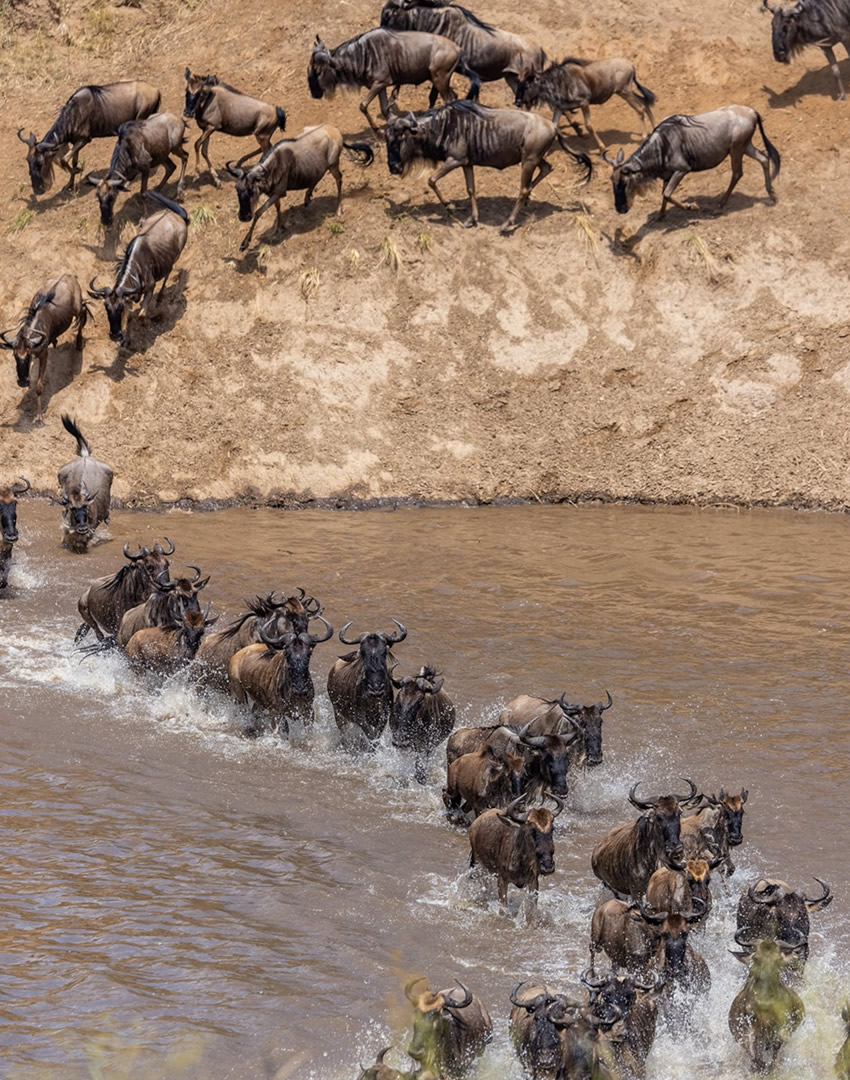
Endless plains supporting the greatest concentration of large mammals on Earth. The stage for the Great Wildebeest Migration.
Explore the Serengeti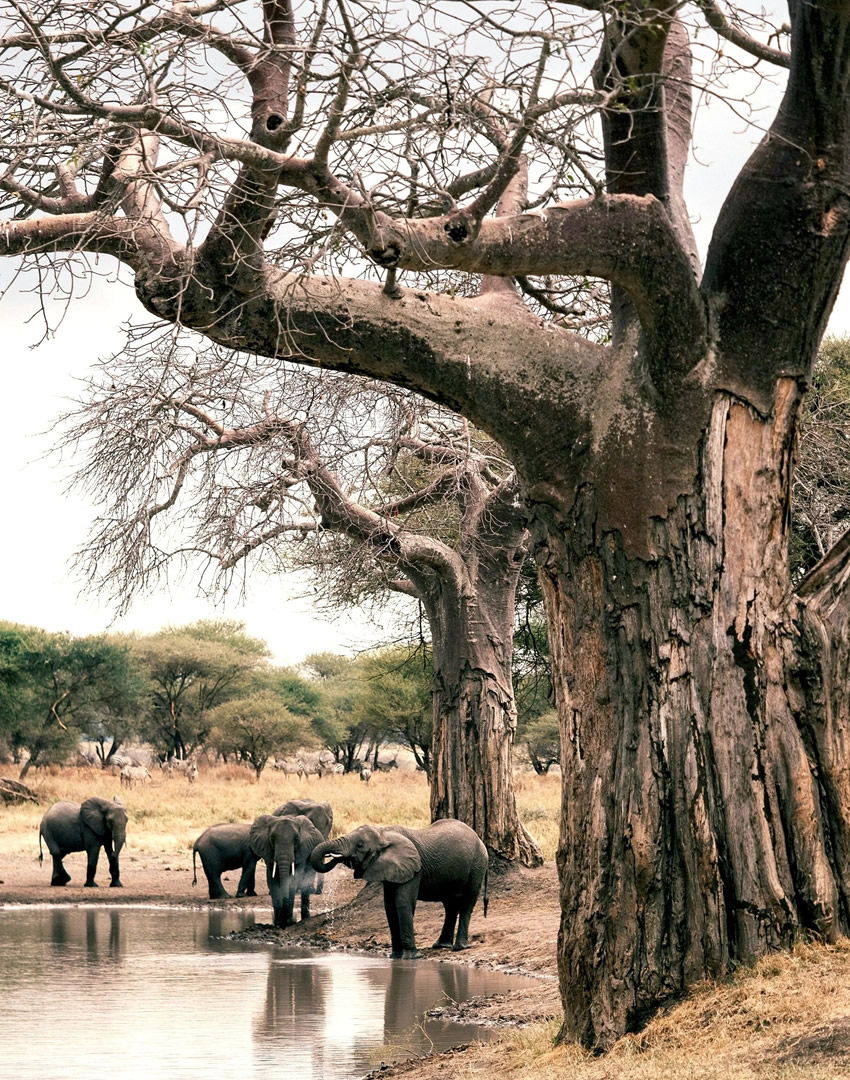
Ancient baobab trees tower over vast herds of elephant that converge on the Tarangire River during the dry season.
Explore Tarangire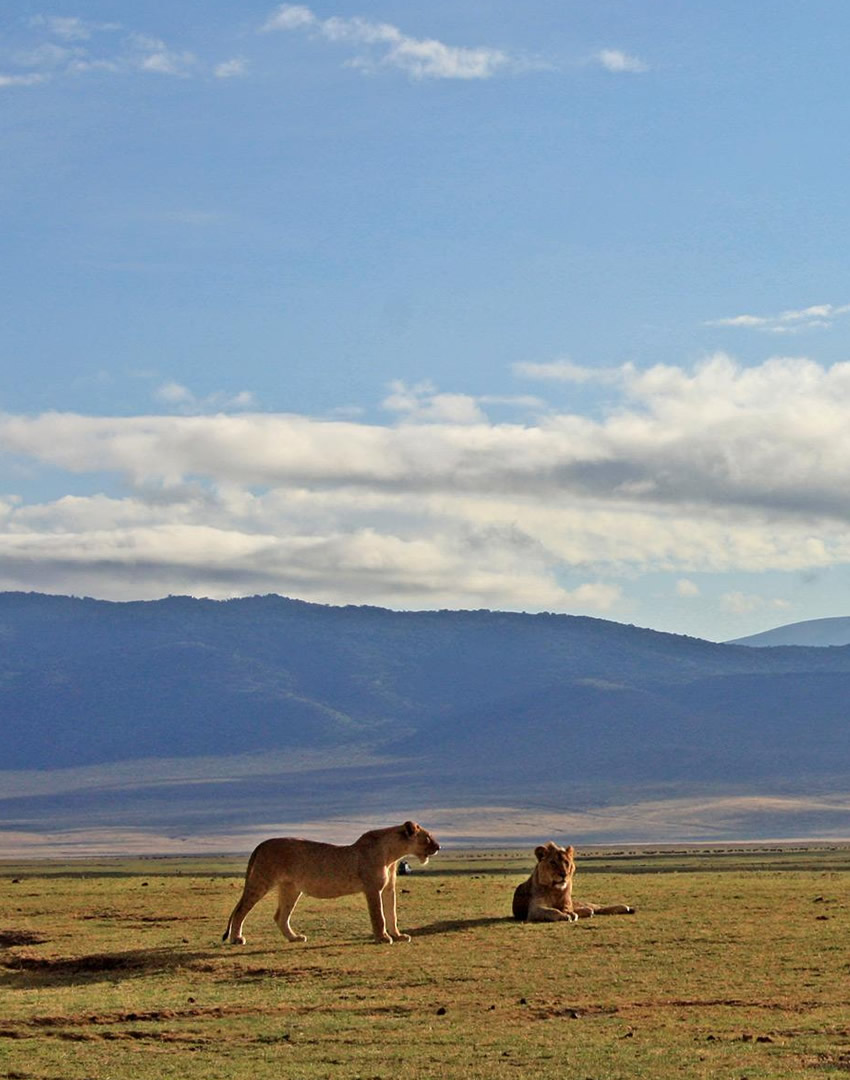
The world's largest unbroken volcanic caldera, sheltering an extraordinary density of wildlife on its lush, 600-metre-deep floor.
Explore Ngorongoro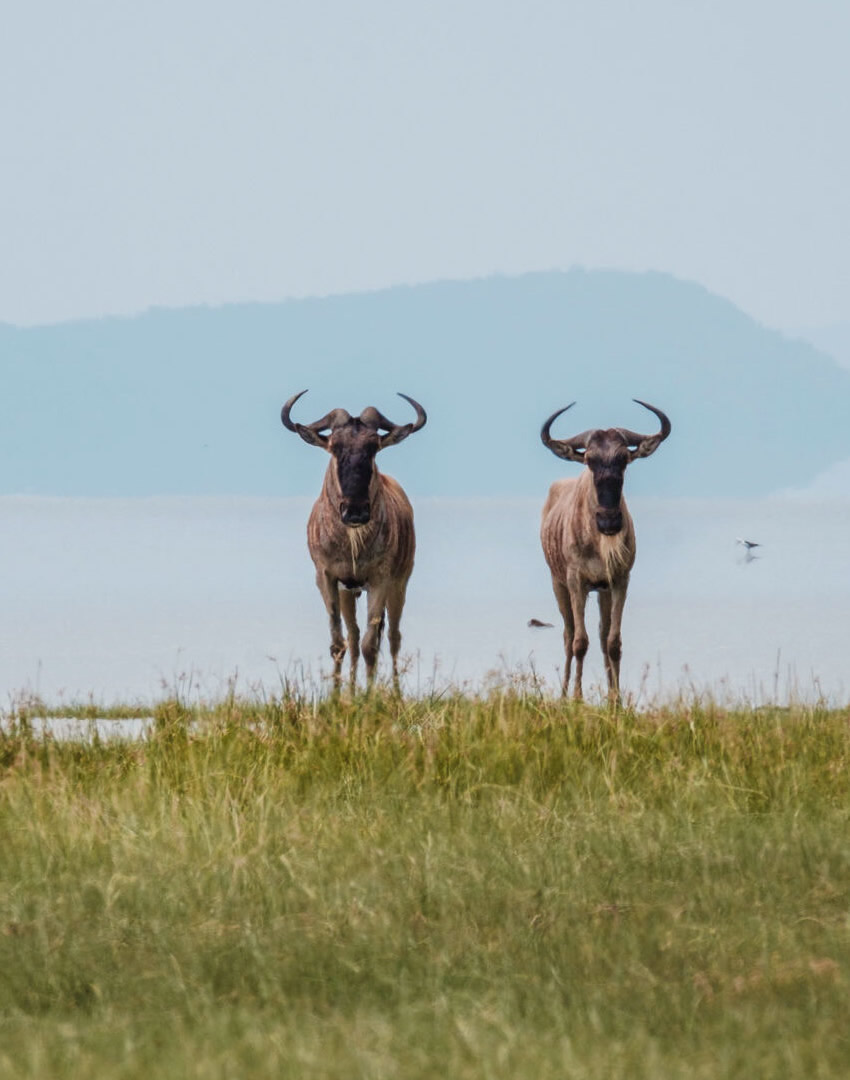
A compact gem at the base of the Great Rift Valley escarpment, famous for its tree-climbing lions in ancient mahogany trees.
Explore Manyara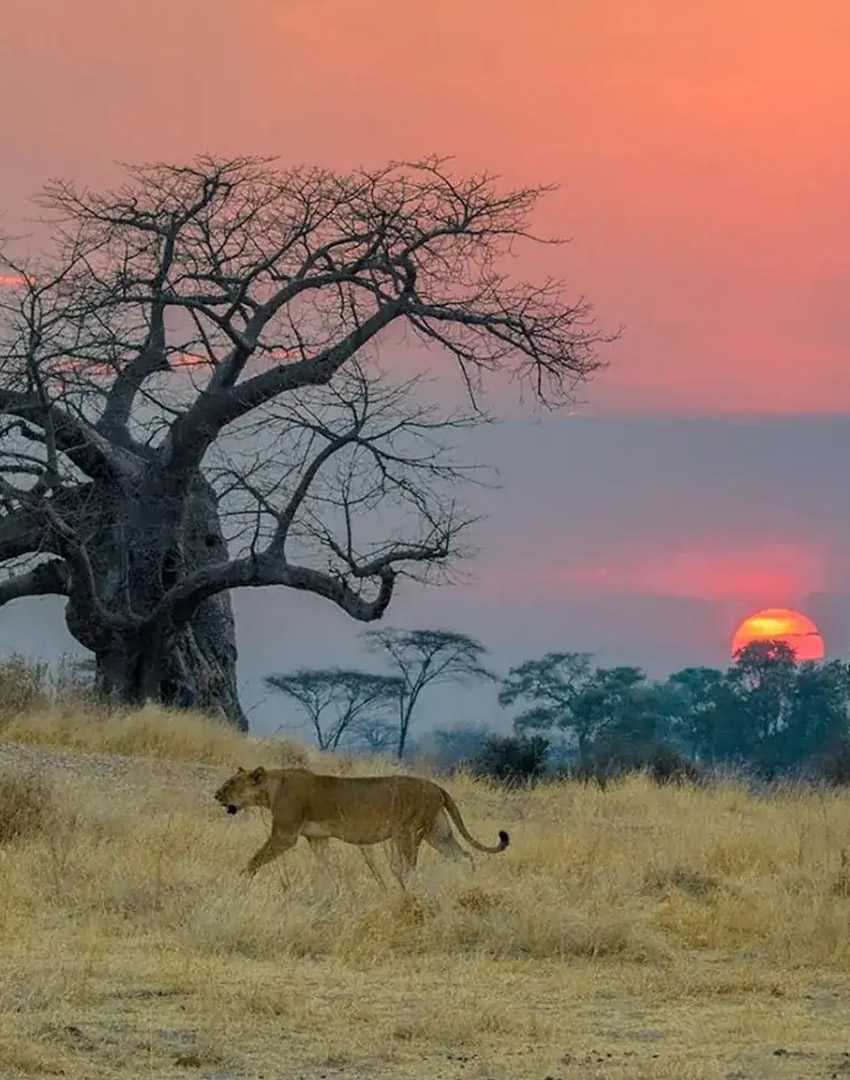
Tanzania's largest national park and one of its best-kept secrets, with one of the largest lion populations in Africa.
Explore Ruaha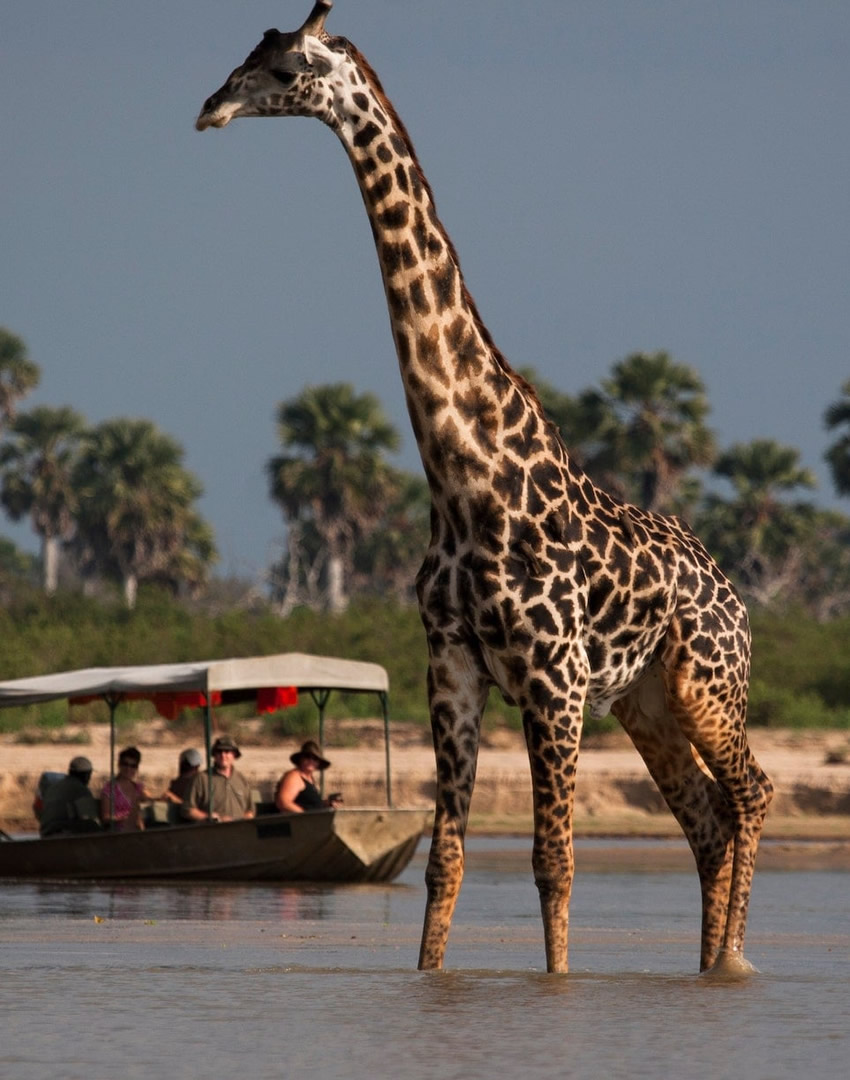
One of the largest protected areas in Africa, defined by the mighty Rufiji River. Boat safaris, walking safaris and fly-camping.
Explore Nyerere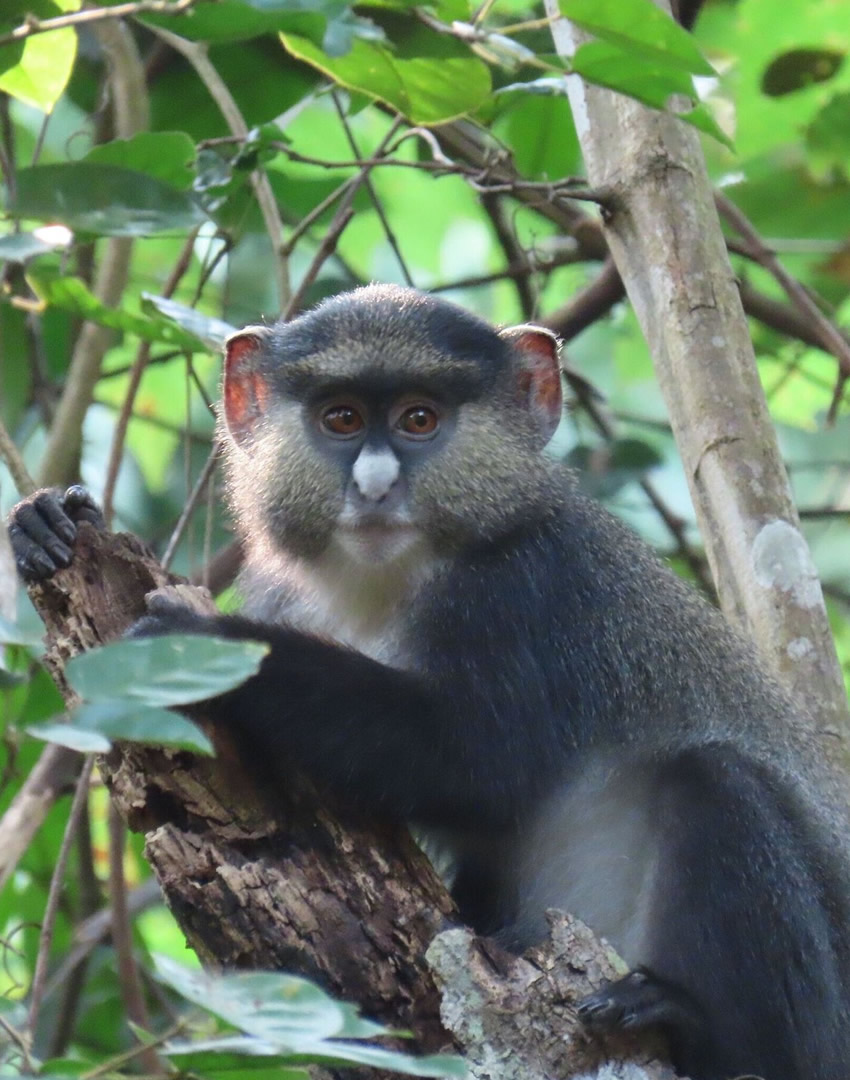
Where Jane Goodall began her groundbreaking chimpanzee research in 1960. Trek through steep forested valleys on the shores of Lake Tanganyika.
Explore GombeRemote, roadless and utterly extraordinary. The Mahale Mountains shelter one of the largest known populations of wild chimpanzees.
Explore Mahale