
A slender ribbon of forest, floodplain, and soda lake pressed against the foot of the Great Rift Valley wall — compact, extraordinarily diverse, and home to the tree-climbing lions that made this park famous.
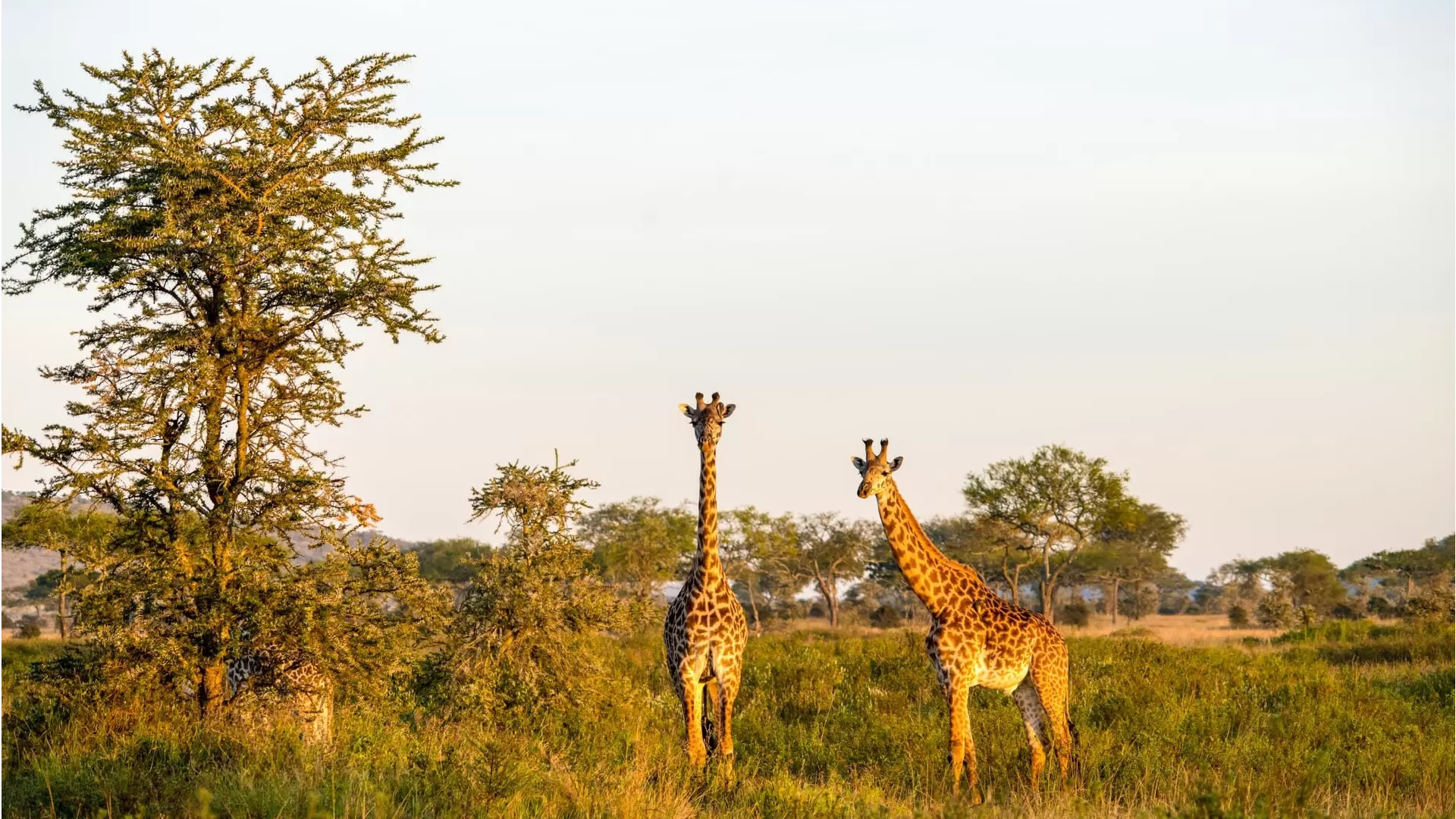
Lake Manyara National Park is one of Tanzania's smallest — yet one of its most ecologically diverse. The park occupies a narrow corridor between the 600-metre wall of the Great Rift Valley escarpment to the west and the shimmering surface of the alkaline Lake Manyara to the east. Within that compressed space, five distinct habitat zones succeed one another in just a few kilometres: dense groundwater forest, open grassland, acacia woodland, seasonal marsh, and the soda-lake shore itself.
This diversity packs an extraordinary range of wildlife into a compact area. Troops of olive baboon and blue monkey move through the mahogany and fig canopy of the groundwater forest — one of the finest examples of its kind in East Africa. Elephants browse the transitional woodland. Hippos crowd the marshy inlets. Flamingos mass on the alkaline flats in pink drifts that can stretch for kilometres. And the park's lions, famously, climb trees — a behaviour that has fascinated researchers and visitors since it was first widely documented here in the 1960s.
The setting itself is dramatic. The Rift Valley escarpment rises vertically behind the park, its face cloaked in thick forest that cascades down to the park boundary. Hot springs bubble up at Maji Moto on the southern shore. The lake — shallow, alkaline, and seasonal in extent — mirrors the sky and the escarpment in the early morning light. Ernest Hemingway, visiting in the 1950s, described Lake Manyara as the loveliest sight he had encountered in Africa. The observation, for once, was not an exaggeration.
Tree-climbing lions, flamingo-filled shores, groundwater forest, and a Rift Valley backdrop that frames every game drive.
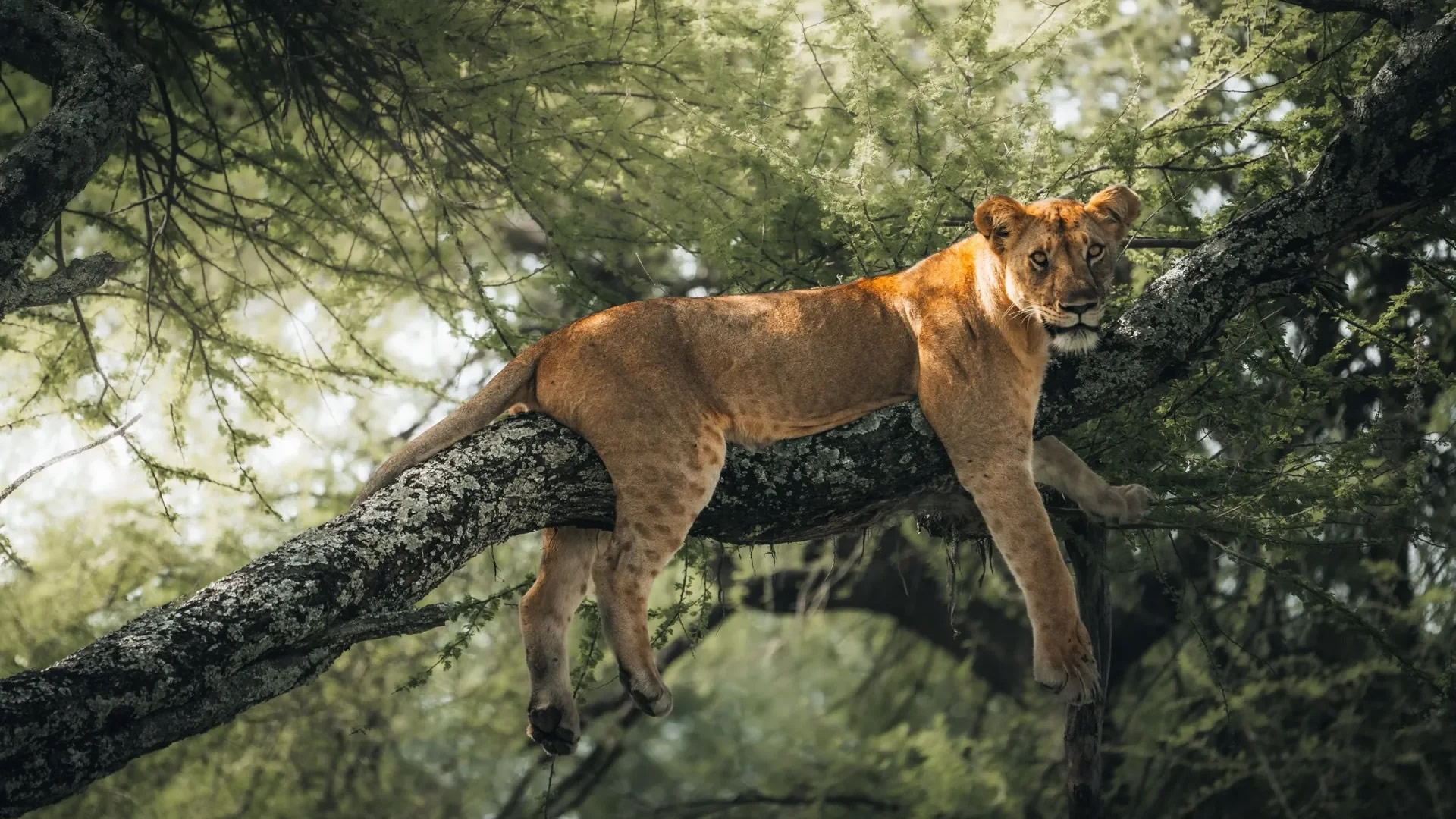
Lake Manyara's lion prides are among the most famous tree-climbers in Africa. The behaviour — draped across the branches of large mahogany and acacia trees, sometimes entire prides at once — was first brought to wide attention here and remains one of the park's signature sightings. The reasons are still debated (escaping biting flies, catching a breeze, gaining a vantage point), but the spectacle itself needs no explanation.
When conditions are right, Lake Manyara's alkaline waters attract tens of thousands of lesser and greater flamingos — turning the shoreline into a shimmering band of pink against the blue-grey lake. The flocks are seasonal and dependent on water levels and algae blooms, but when they arrive the visual impact is extraordinary. Flamingos are best seen between June and October and again from December to March.
The park's northern sector is dominated by a dense, cathedral-like groundwater forest — fed by springs seeping from the base of the Rift Valley wall. Towering mahogany, fig, and sausage trees form a closed canopy overhead, shading a forest floor where blue monkey, olive baboon, bushbuck, and elephant move in dappled light. It is one of the most atmospheric and unusual driving experiences on the northern circuit — a true tropical forest inside a savannah park.
Lake Manyara's extraordinary habitat diversity supports over 400 bird species — a density per square kilometre that few parks anywhere in Africa can match. Waterbirds dominate the lake edge: pelicans, storks, herons, ibises, and Egyptian geese. The forest canopy holds silvery-cheeked hornbill, crowned eagle, and Narina trogon. Raptors patrol the escarpment thermals. The park is a serious birding destination in a package that happens to also include big mammals.
No other park on the northern circuit has a setting like Lake Manyara's. The 600-metre Rift Valley wall rises directly behind the western park boundary — a sheer face of forested rock that dominates the skyline, changes colour with the light, and creates a sense of enclosure and drama that makes game drives here feel unlike anywhere else. The viewpoint at the escarpment rim, overlooking the lake and the park far below, is one of Tanzania's most photographed panoramas.
Lake Manyara's proximity to Arusha (under two hours), its position between Tarangire and Ngorongoro, and the fact that a single afternoon or morning game drive can cover the park's highlights make it an ideal circuit addition. It introduces a completely different ecosystem — forest, lake, and escarpment — without requiring extra days. Many of the finest lodges sit on the escarpment rim, offering views from breakfast that span the entire Rift Valley floor.
Lake Manyara National Park lies at the base of the western escarpment of the Great Rift Valley in northern Tanzania, approximately 130 kilometres south-west of Arusha. The park stretches along the north-western shore of Lake Manyara, a shallow alkaline lake that fills much of the Rift Valley floor in this region. The town of Mto wa Mbu — a lively market town and the gateway to the park — sits just outside the main gate.
The park occupies a strategic midpoint on the northern safari circuit. Tarangire National Park is approximately 70 kilometres to the south-east. The Ngorongoro Conservation Area begins 60 kilometres to the west, where the road climbs the escarpment and crosses the highlands to the crater rim. This positioning makes Lake Manyara a natural stopover between the two — and many itineraries schedule it as a half-day game drive en route to or from Ngorongoro, with an overnight on the escarpment rim.
From forest drives and flamingo shores to canopy walkways, night drives, and the hot springs at the lake's southern end.
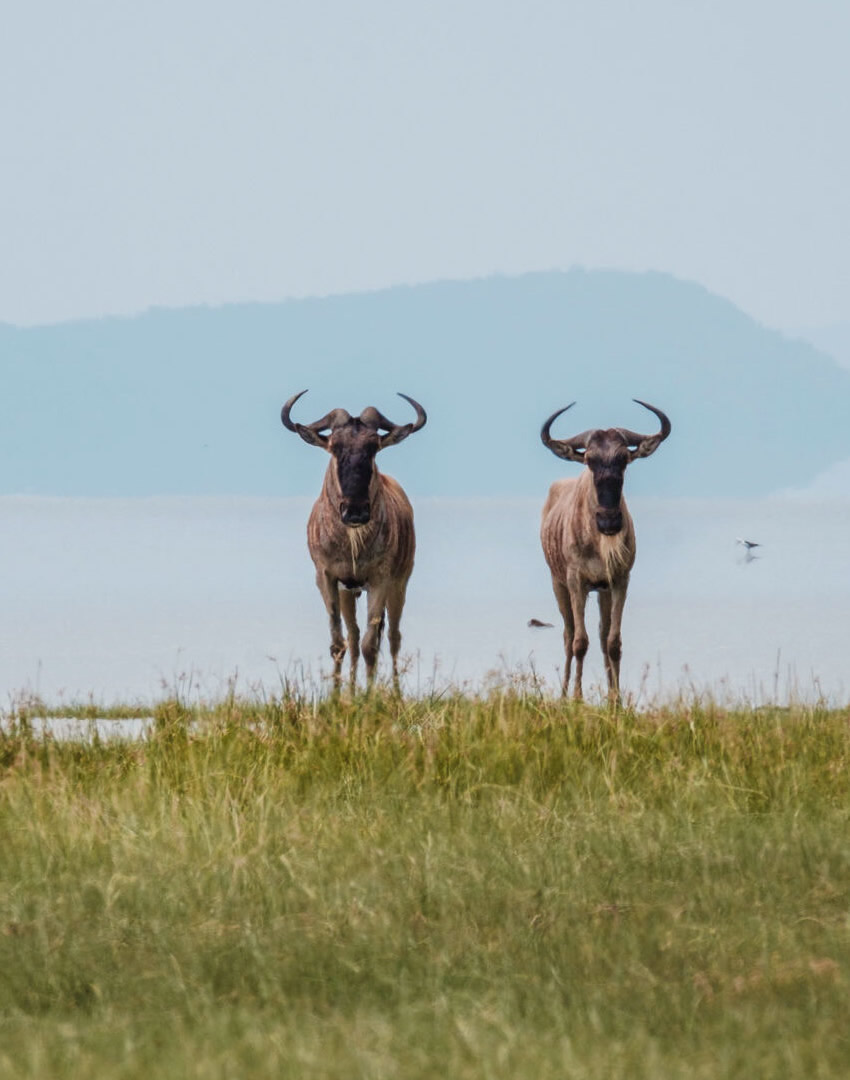
A single game-drive circuit covers the park's remarkable habitat transitions — from the dense groundwater forest at the gate, through open grassland with elephant and buffalo, past acacia woodland where the tree-climbing lions are most often found, to the floodplain and alkaline lake shore where flamingos, pelicans, and hippos share the water's edge. The compact park means every drive is varied, and the escarpment provides a constant, dramatic backdrop.
Lake Manyara is one of the few national parks in Tanzania that permits night drives within park boundaries. After dark, the forest comes alive — genet, civet, bushbaby, porcupine, and African wildcat emerge, and the big cats begin their hunts. The night drive adds an entirely different dimension to the Manyara experience and is particularly rewarding in the drier months when animals concentrate near water.
A canopy walkway suspended above the forest floor provides a bird's-eye perspective on Lake Manyara's groundwater forest. The elevated platform puts visitors at eye level with hornbills, turacos, and monkeys moving through the upper canopy — a perspective impossible from a vehicle. The walkway is a short, guided experience and works well as a complement to a morning or afternoon game drive.
Over 400 species have been recorded in the park — an astonishing count for 330 square kilometres. The lake shore draws flamingos, yellow-billed storks, African spoonbills, and pelicans in massed concentrations. The forest canopy holds silvery-cheeked hornbill, Narina trogon, and crowned eagle. Specialist birding guides can be arranged through lodges, and a full-day birding drive in the park is one of the finest in Tanzania.
At the park's southern end, geothermally heated water rises through the Rift Valley floor to create the Maji Moto hot springs — steaming pools at the edge of the lake, surrounded by mineral deposits and framed by the escarpment above. The springs are a geological curiosity and a reminder that the Rift Valley beneath your wheels is still tectonically alive. The drive to Maji Moto is a rewarding full-day circuit.
The area around Mto wa Mbu — the market town at the park gate — offers guided cycling tours through banana plantations, rice paddies, and local villages representing over 120 ethnic groups. The rides are gentle, sociable, and immersive — a window into the daily life of the communities living alongside the park. Several lodges arrange half-day cycling excursions that pair well with an afternoon game drive.
Lake Manyara is a year-round park — but flamingos, lake levels, and the clarity of the escarpment views shift with the seasons.
Clear skies, receding water levels, and concentrated wildlife along the remaining pools and streams. Flamingos are typically present on the lake. The groundwater forest is at its most accessible — the tracks dry out and the canopy thins enough to let light through. The escarpment is sharp and clear in the morning light. This is also the best period for night drives, when nocturnal animals are most active and the forest paths are dry.
The rains swell the lake and turn the park lush and green. Migratory birds arrive in large numbers, the forest canopy fills out, and the escarpment streams cascade into waterfalls. Some tracks in the southern park may become impassable in the heaviest rains, and flamingo numbers fluctuate with water chemistry. However, the forest remains beautiful, resident wildlife is present, and visitor numbers are significantly lower — offering an intimate, atmospheric experience for those willing to accept the occasional shower.
One of the most accessible parks in northern Tanzania — under two hours from Arusha by road, with escarpment-rim lodges offering views from the moment you arrive.
Lake Manyara airstrip receives scheduled and charter flights from Arusha Airport. Flight time is approximately 30 minutes. Flights can also connect to Tarangire, Ngorongoro, and the Serengeti, making Lake Manyara a convenient waypoint in a fly-in circuit. Most guests, however, reach Manyara by road — the drive is short, scenic, and game-rich enough to justify the transfer.
The drive from Arusha takes approximately 1.5 to 2 hours, descending from the Arusha highlands into the Rift Valley via a tarmac road. The town of Mto wa Mbu sits at the park gate and makes a convenient lunch stop. Escarpment-rim lodges are reached by a paved road that branches off before the descent, offering panoramic Rift Valley views from check-in. The route from Ngorongoro is approximately 1.5 hours via the Karatu highlands.
Lake Manyara sits between Tarangire to the south-east and Ngorongoro to the west, making it a natural midpoint on the northern circuit. A typical itinerary flows Tarangire → Lake Manyara → Ngorongoro → Serengeti, with one night at Manyara — either on the escarpment rim or at a lodge near the park gate. Alternatively, Lake Manyara works as a half-day visit en route between the other two parks, combining a game drive with lunch and continuing the same afternoon.
Tree-climbing lions, flamingo shores, groundwater forest, and the great wall of the Rift behind it all.
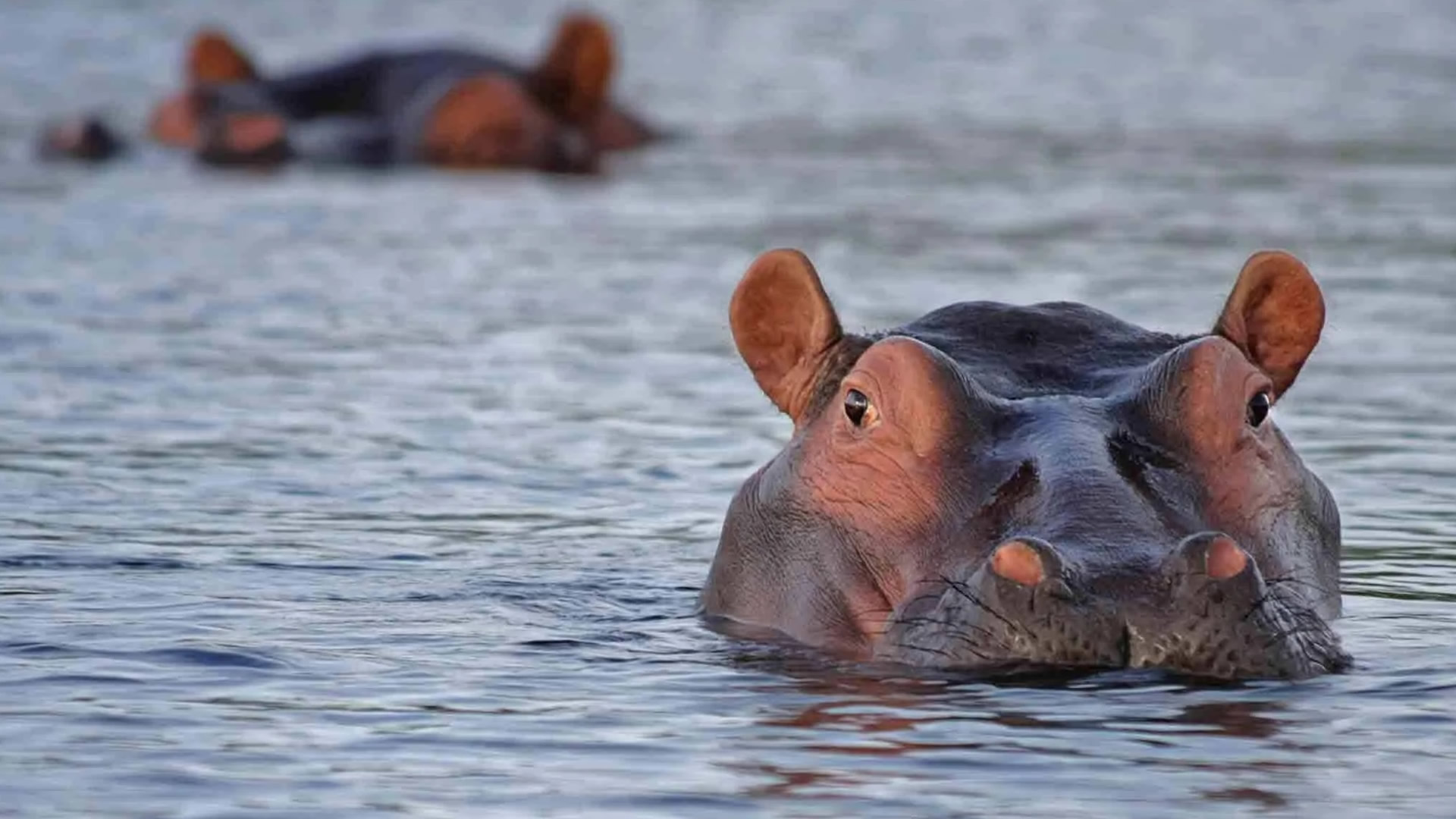
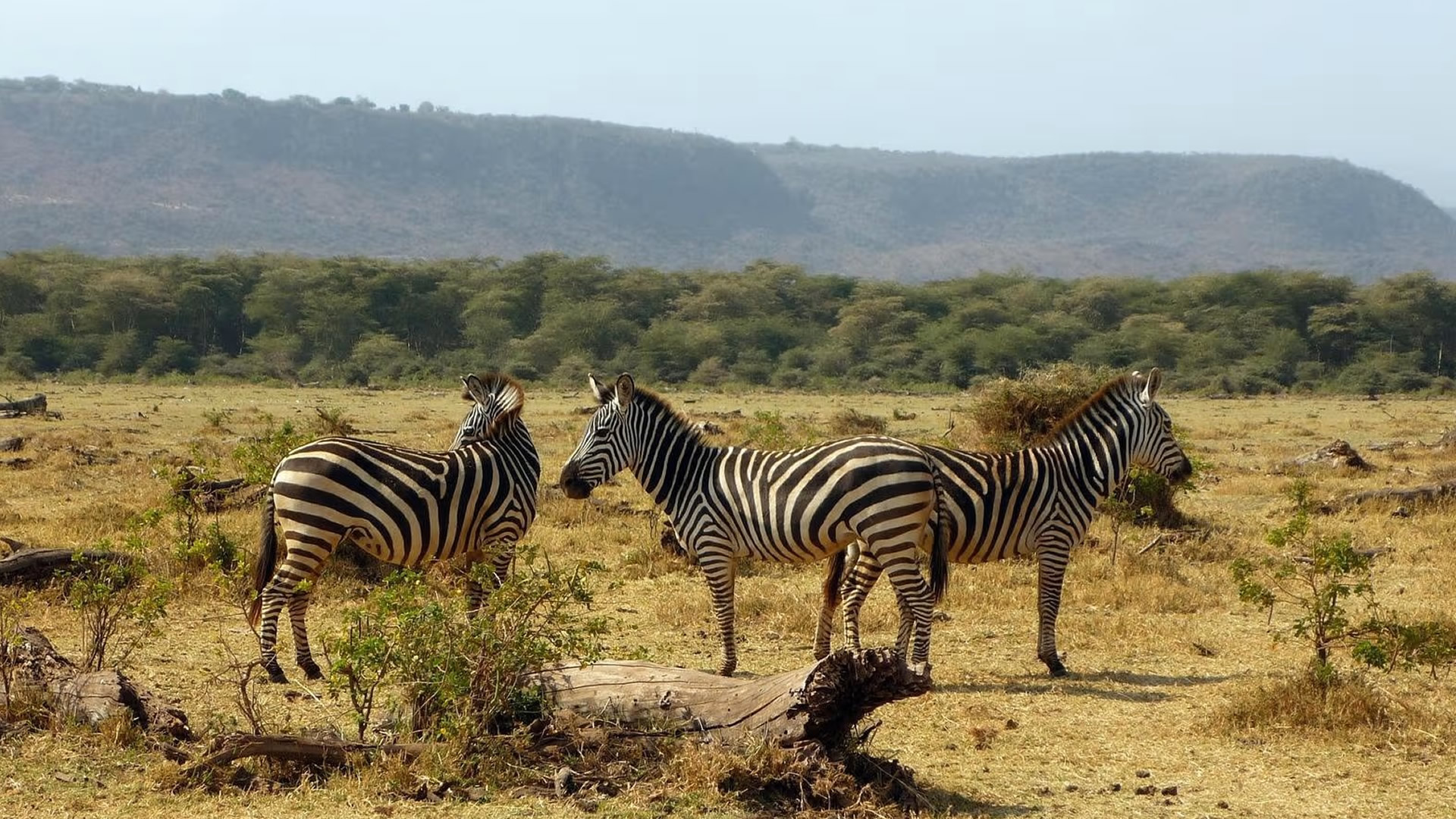
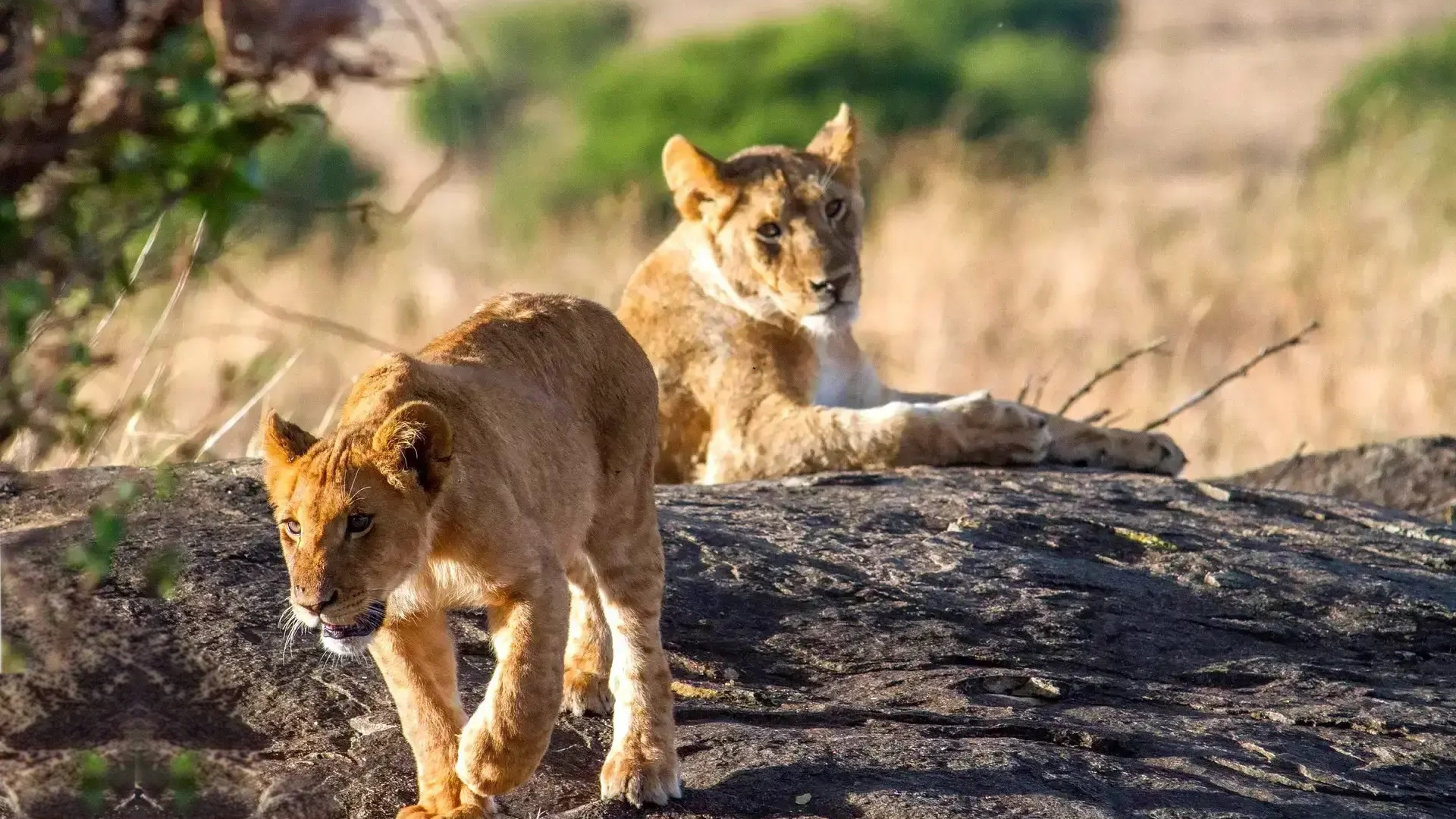
One night is typically sufficient — and is the standard allocation on most northern-circuit itineraries. An afternoon game drive on arrival and a morning drive the next day before departing for Ngorongoro will cover the park's main highlights: the groundwater forest, tree-climbing lion territory, the flamingo shore, and the hippo pools. If you add a night drive or treetop walkway, one full day (two nights) is worthwhile. Lake Manyara rewards quality of attention more than duration — its compact size means you can cover the key habitats without rushing.
Tree-climbing lions are present year-round, but sightings depend on the day. The behaviour is a habit of specific prides rather than a permanent state — the lions climb when conditions suit (heat, flies, vantage) and rest on the ground at other times. Your guide will know which areas the tree-climbing prides currently favour and will prioritise those circuits. Sightings are more frequent in the dry season when the woodland is more open and the lions are visible from the track.
Flamingo numbers at Lake Manyara are seasonal and variable — they depend on water levels, salinity, and the algae blooms that provide food. Large concentrations are most common between June and October (dry season) and again from December to February. In wet years when the lake floods extensively, flamingos may disperse to other Rift Valley lakes. When present, the flocks can number tens of thousands and are visible from the main circuit road along the lake shore.
Yes — Lake Manyara is one of the few Tanzanian national parks that officially permits night game drives. Drives depart after dinner and are conducted by TANAPA rangers using spotlights. The nocturnal cast includes genet, civet, bushbaby, porcupine, African wildcat, spotted hyena, and — with luck — leopard. Night drives must be booked through your lodge or tour operator and are subject to an additional park fee.
Lake Manyara National Park charges USD 53.10 per non-resident adult per 24-hour period (as of 2024/2025), with reduced rates for children aged 5–15. Night drive fees are charged separately. All park fees and applicable taxes on Kuldip's Touring Company safari packages are included in the quoted price.
Very much so — Lake Manyara is one of the best family-friendly parks on the northern circuit. The compact size means game drives are short enough to hold younger attention. The variety of habitats keeps the scenery changing. Baboons and monkeys in the forest are endlessly entertaining for children. The treetop walkway is a gentle adventure, and the cycling tours around Mto wa Mbu provide a break from vehicle-based game viewing. Escarpment-rim lodges with swimming pools make the downtime between drives equally appealing for families.
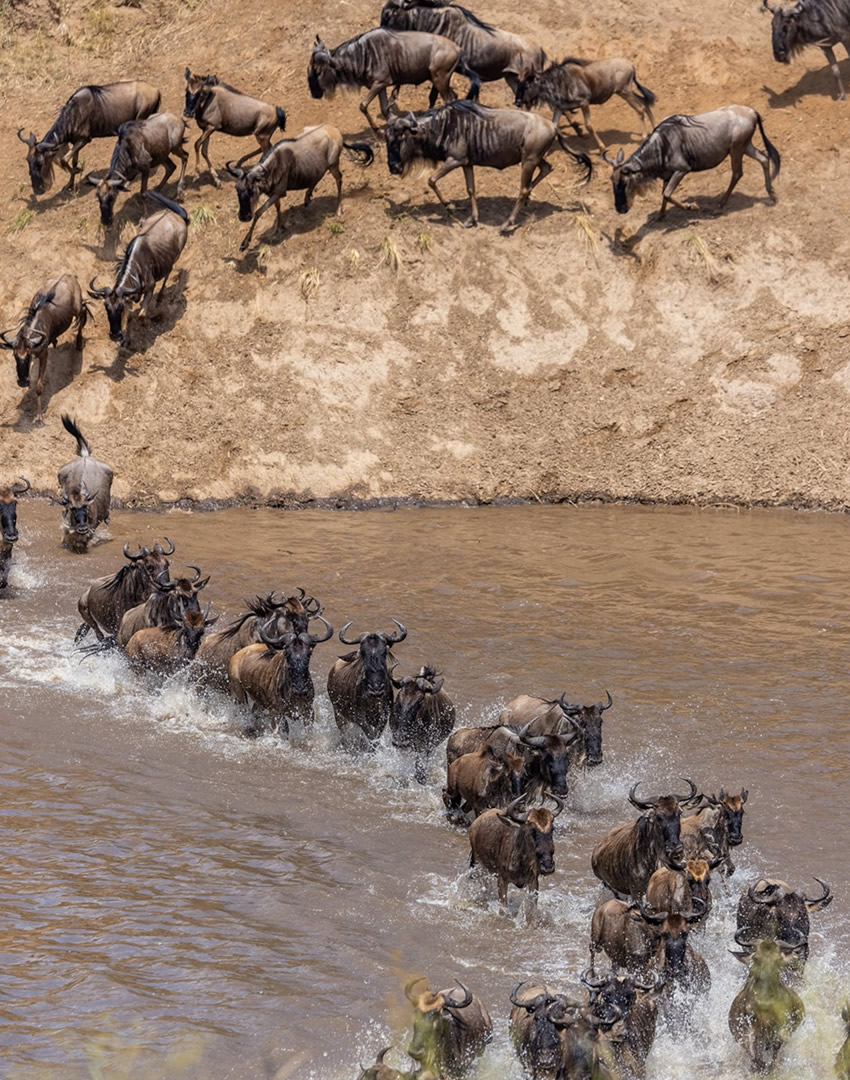
Endless plains supporting the greatest concentration of large mammals on Earth. The stage for the Great Wildebeest Migration.
Explore the Serengeti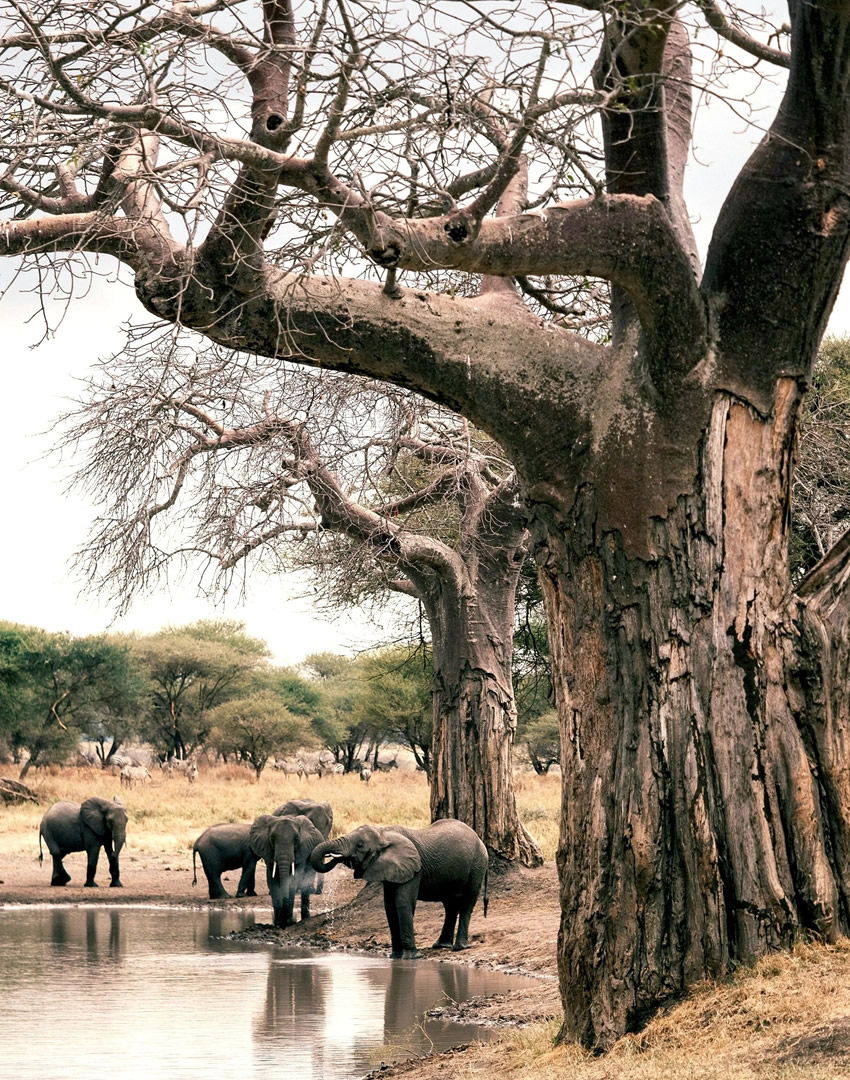
Ancient baobab trees tower over vast herds of elephant that converge on the Tarangire River during the dry season.
Explore Tarangire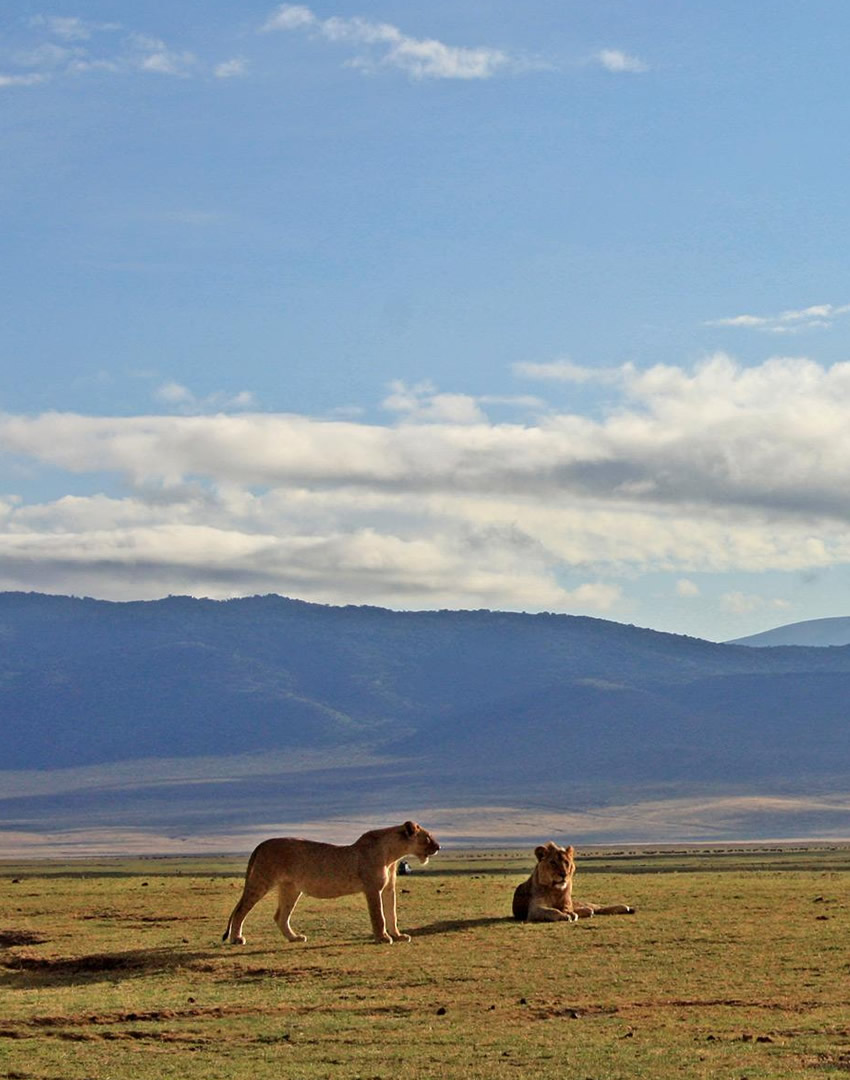
The world's largest unbroken volcanic caldera, sheltering an extraordinary density of wildlife on its lush, 600-metre-deep floor.
Explore NgorongoroA compact gem at the base of the Great Rift Valley escarpment, famous for its tree-climbing lions in ancient mahogany trees.
Explore Manyara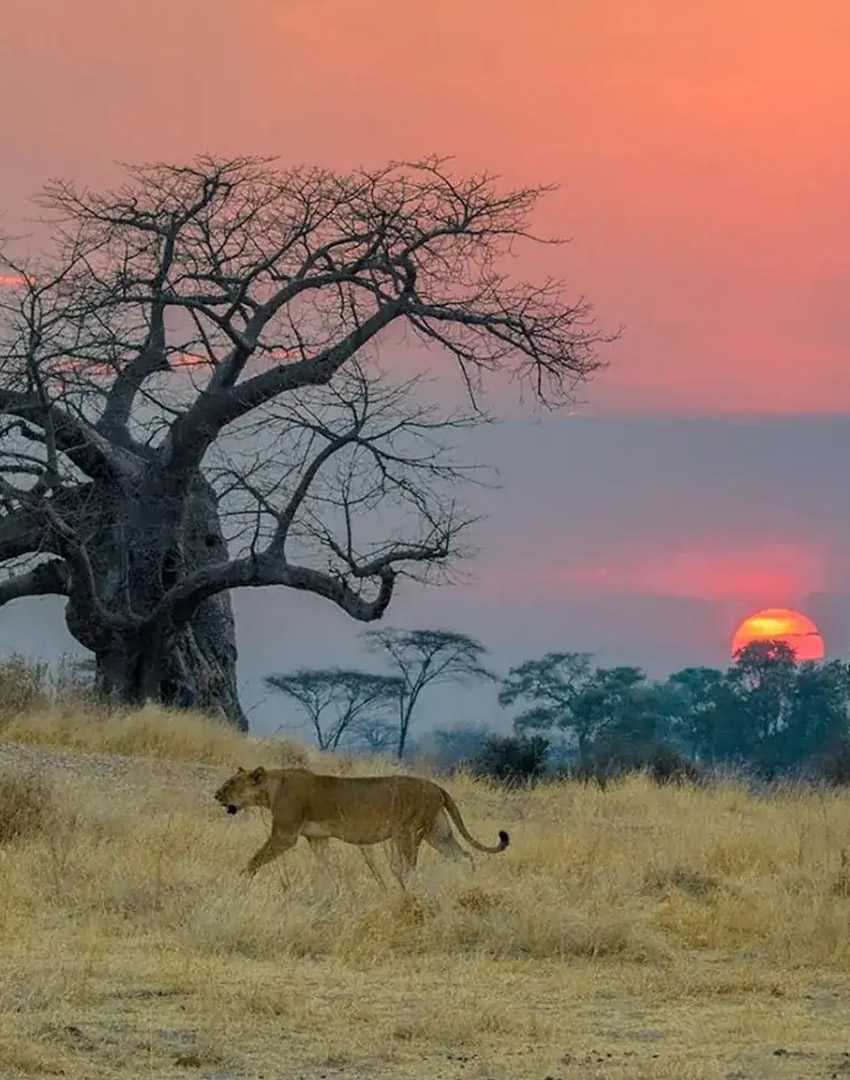
Tanzania's largest national park and one of its best-kept secrets, with one of the largest lion populations in Africa.
Explore Ruaha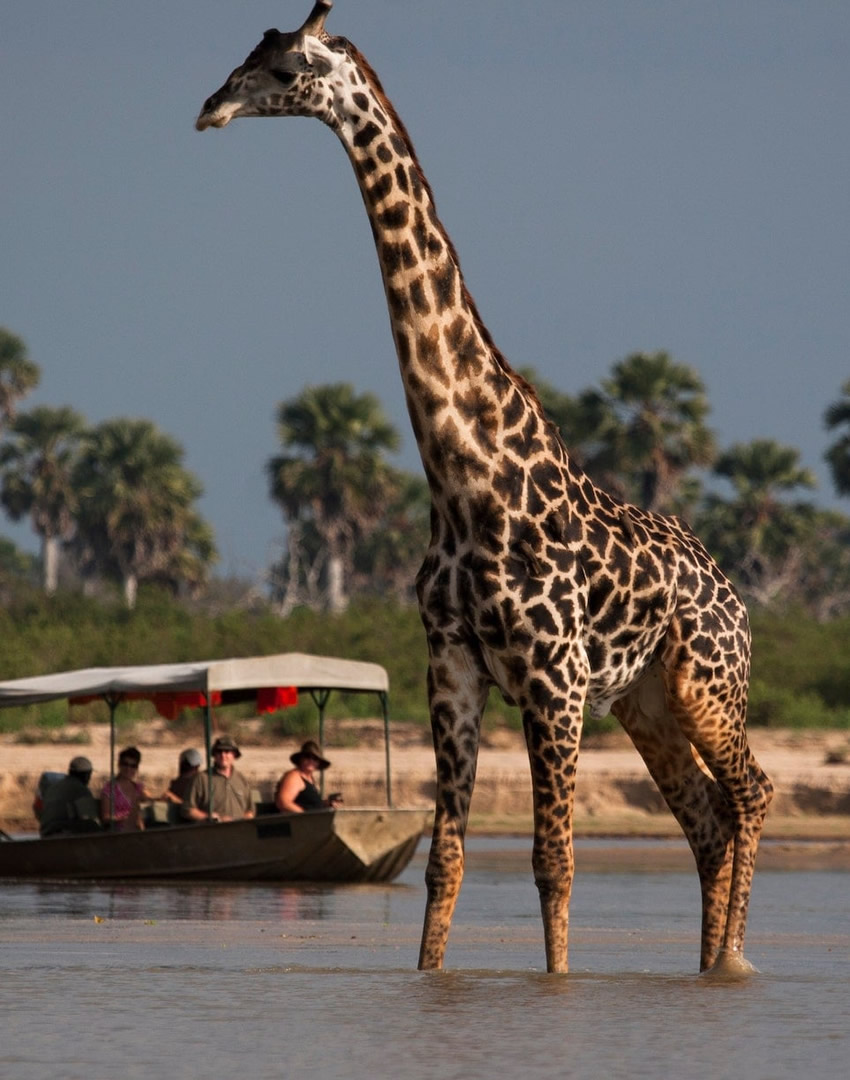
One of the largest protected areas in Africa, defined by the mighty Rufiji River. Boat safaris, walking safaris and fly-camping.
Explore Nyerere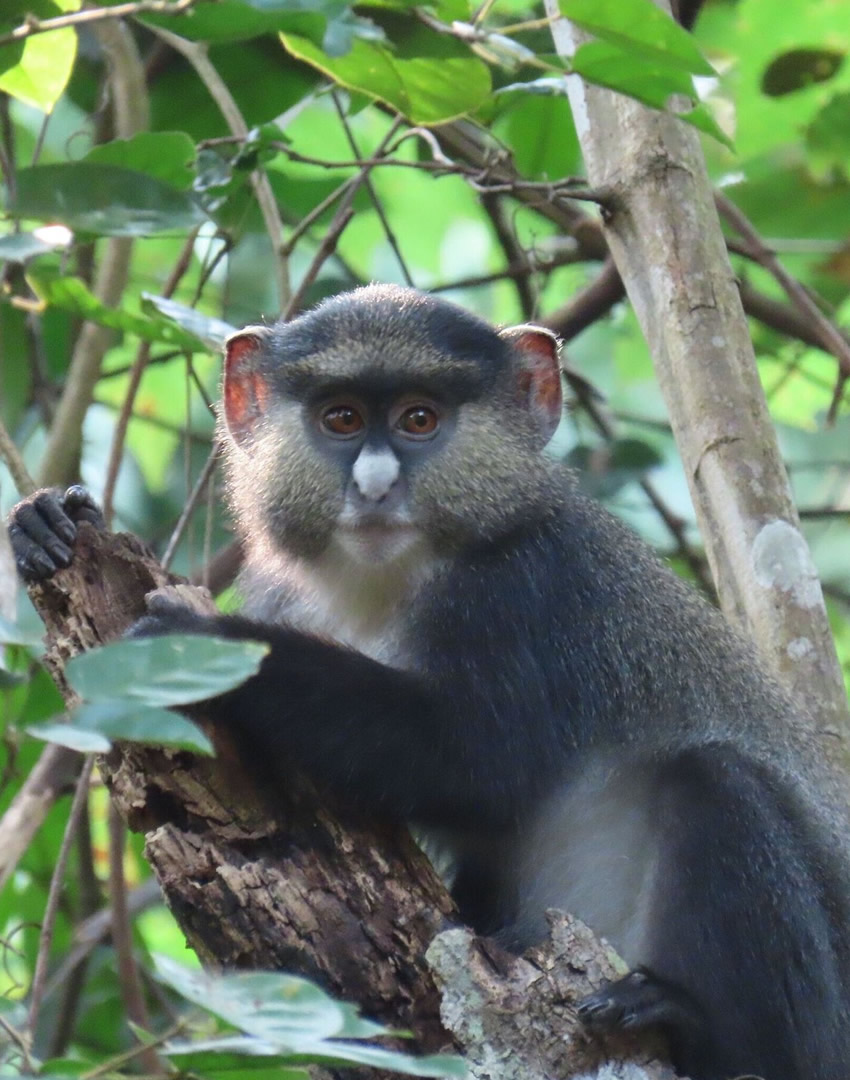
Where Jane Goodall began her groundbreaking chimpanzee research in 1960. Trek through steep forested valleys on the shores of Lake Tanganyika.
Explore Gombe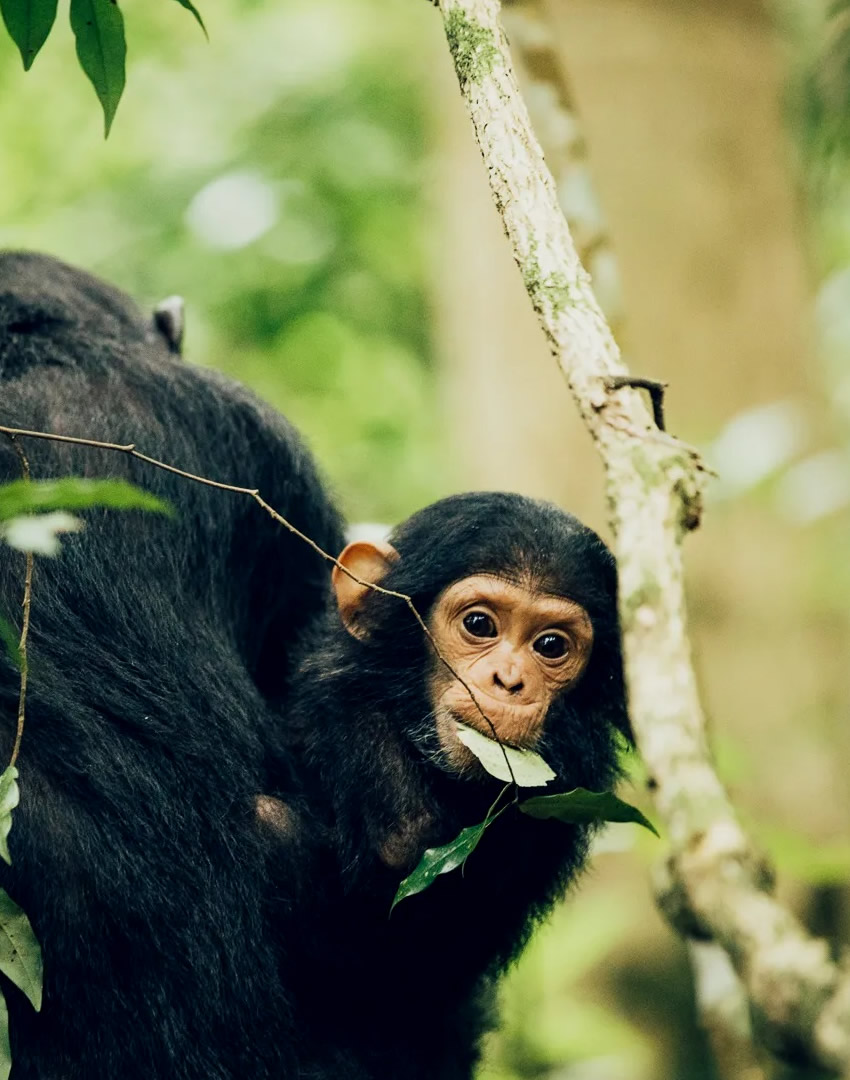
Remote, roadless and utterly extraordinary. The Mahale Mountains shelter one of the largest known populations of wild chimpanzees.
Explore Mahale