
Tanzania's largest national park — a raw, remote wilderness of ancient baobabs, rugged escarpments, and the Great Ruaha River, where enormous elephant herds, dense predator populations, and rare antelope species share a landscape that most safari travellers never see.
Ruaha National Park covers over 20,000 square kilometres of south-central Tanzania — making it the largest national park in the country and one of the largest in Africa. Together with the adjoining Rungwa, Kizigo, and Muhesi game reserves, the greater Ruaha ecosystem encompasses roughly 45,000 square kilometres of protected wilderness. Yet for all its scale, Ruaha receives only a fraction of the visitors that flock to the Serengeti and Ngorongoro. It is Tanzania's best-kept safari secret — a park of Serengeti-quality wildlife in near-total solitude.
The park is defined by the Great Ruaha River, which flows along its south-eastern boundary before emptying into a series of sand rivers and seasonal tributaries that penetrate deep into the interior. During the dry season, the river shrinks to isolated pools — and these pools become the stage for some of the most intense and concentrated wildlife viewing in East Africa. Elephant herds of 100 or more jostle for access. Lion prides stake out the banks. Crocodiles mass in the remaining channels. The drama is raw, unscripted, and largely unwatched.
Ruaha occupies a unique ecological position: it sits at the transition zone where the flora and fauna of eastern and southern Africa overlap. This means species from both systems are present in a single park. Greater kudu, sable antelope, and roan antelope — all southern African species rare or absent in the northern-circuit parks — graze alongside the East African staples of zebra, giraffe, impala, and wildebeest. The result is a species list that is longer and more unusual than any comparably sized area in Tanzania.
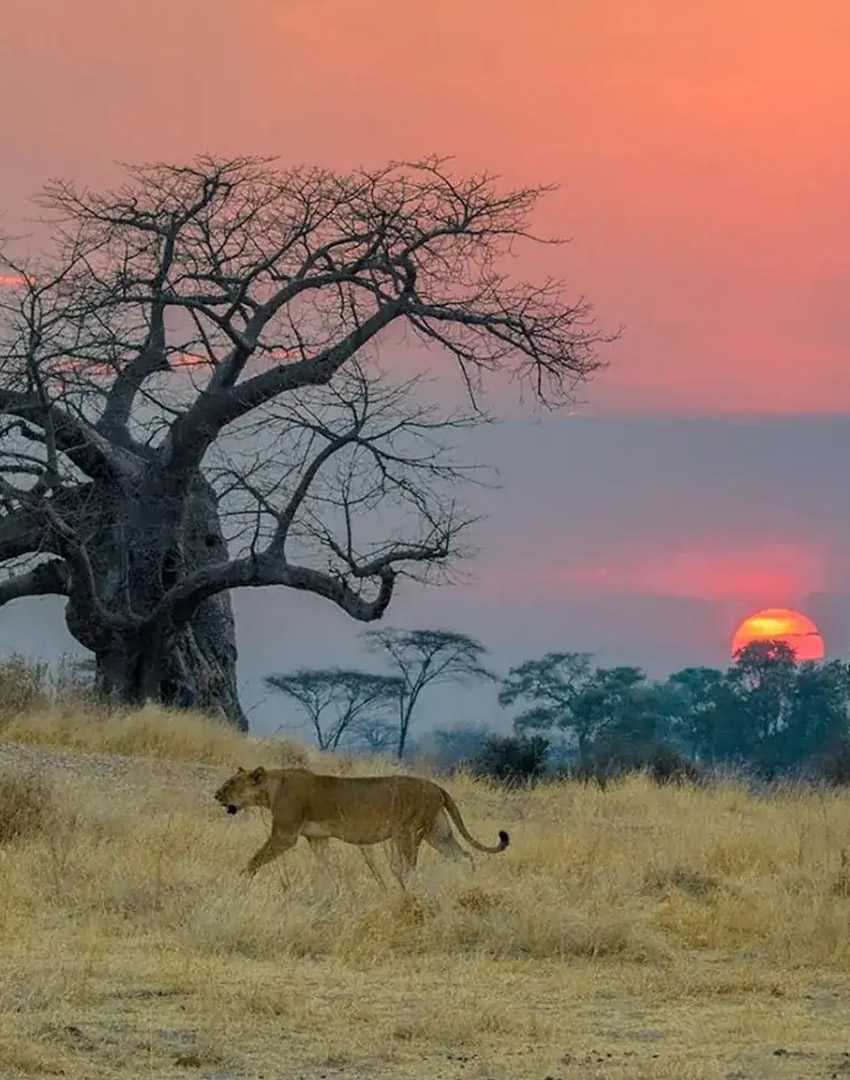
Tanzania's largest park, its densest predator populations, species you will not find on the northern circuit, and a wilderness that feels genuinely untouched.
Ruaha supports one of the largest elephant populations in East Africa — an estimated 12,000 individuals across the greater ecosystem. During the dry season, herds of 100 to 200 animals converge on the Great Ruaha River and its tributaries, creating elephant spectacles that rival Tarangire and the Chobe. Breeding herds, bachelor groups, and massive tuskers share the riverbanks in scenes of extraordinary density, all without another vehicle in sight.
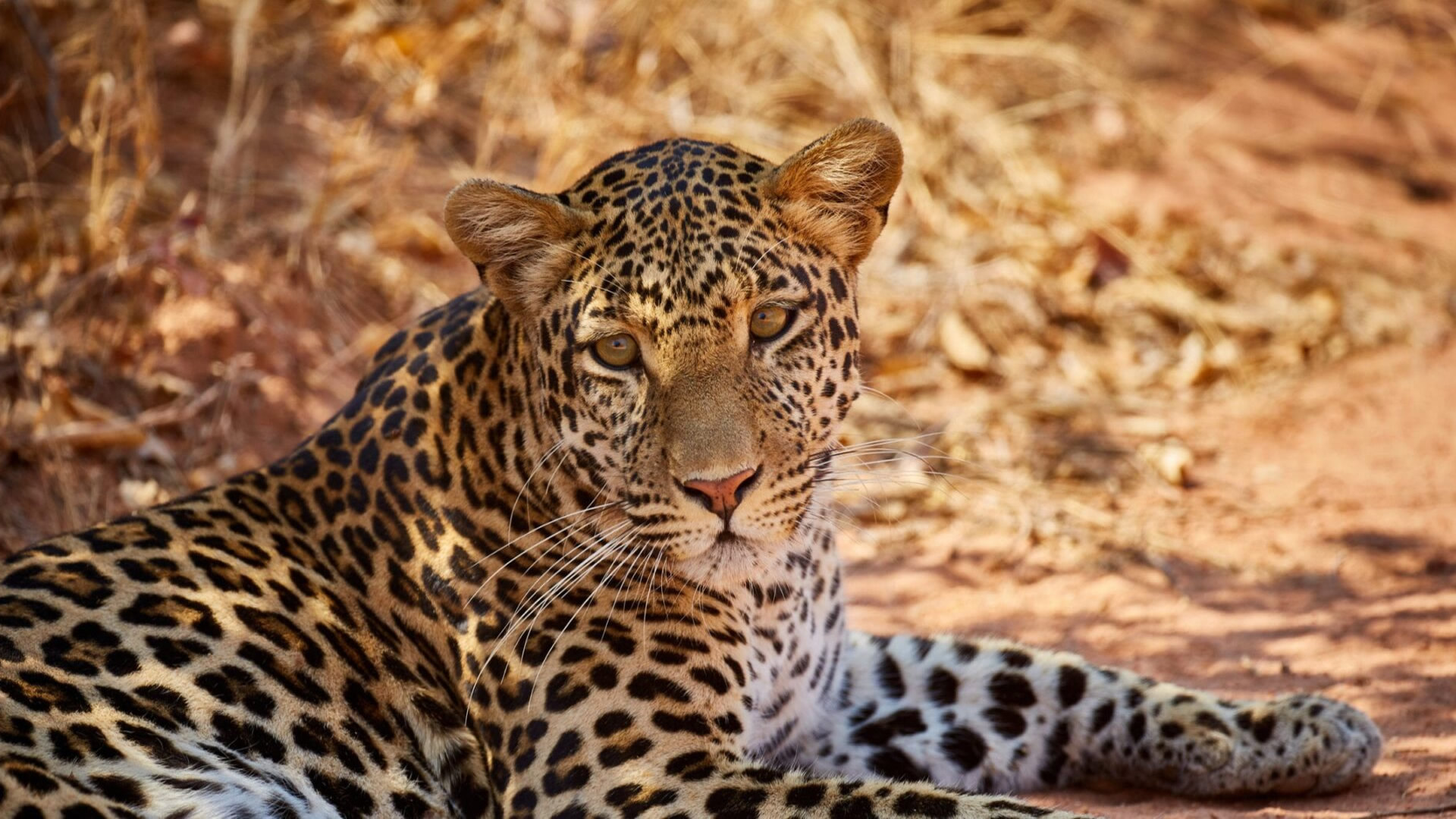
The greater Ruaha ecosystem is estimated to hold approximately ten per cent of Africa's remaining lion population — one of the most important lion strongholds on the continent. Prides here are large and frequently encountered. Leopard sightings are excellent, particularly along the river systems. Cheetah patrol the open grasslands. And Ruaha harbours a significant population of African wild dog — one of the continent's most endangered and most sought-after predators, seen here with a consistency that few parks can match.
Ruaha sits at the overlap between eastern and southern African ecosystems — a biogeographic crossroads that produces a species list unlike any other park in Tanzania. Greater kudu, sable antelope, and roan antelope — all hallmarks of the southern savannahs — share the landscape with East African species such as Grant's gazelle, lesser kudu, and striped hyena. For the safari traveller who has done the northern circuit, Ruaha offers an entirely different cast of characters.
The park's lifeline. During the dry months, the Great Ruaha shrinks to a chain of isolated pools connected by sand, and the concentration of wildlife around these remaining water sources is extraordinary. Elephants dig in the sand for subsurface water. Hippos crowd the deeper channels. Crocodiles line the banks. Predators patrol the fringes after dark. The river circuit during August to November is one of the most consistently dramatic game drives in Africa — a theatre of survival condensed into a few kilometres of waterway.
Ruaha's wild dog population is one of the most viable and visible in East Africa. The park's vast size and low human encroachment provide the enormous territories these wide-ranging pack hunters require. Packs of 15 to 30 animals are regularly encountered, particularly in the dry season when they concentrate near the river systems. Watching a coordinated wild dog hunt — the speed, the teamwork, the explosive success rate — is among the most thrilling predator encounters on any safari.
Ruaha is not on the northern circuit. It is not a day trip from Arusha. It requires a deliberate commitment — a flight, a transfer, a decision to go where most tourists do not. The reward is a wilderness that feels genuinely empty. Game drives encounter other vehicles rarely, if at all. Camps are small and widely spaced. The silence between animal calls is unbroken. For experienced safari travellers seeking the antidote to the Serengeti's popularity, Ruaha delivers what the brochures promise but the northern parks increasingly cannot: solitude.
Ruaha National Park lies in the heart of south-central Tanzania, approximately 130 kilometres west of the town of Iringa and roughly 625 kilometres south-west of Dar es Salaam. The park straddles the transition between the central plateau and the Rift Valley lowlands, with the Great Ruaha River forming its south-eastern boundary and a chain of rocky escarpments defining its western edge.
Ruaha is deliberately remote — that remoteness is its defining quality. The park sits apart from the northern circuit entirely, accessed by scheduled bush flights from Dar es Salaam, Arusha, or the Selous (Nyerere), or by a long overland drive via Iringa. This isolation means that the greater Ruaha ecosystem — the park itself plus the adjoining Rungwa, Kizigo, and Muhesi game reserves — functions as one of the largest and least disturbed wild areas remaining in East Africa, with wildlife populations that have space to range across tens of thousands of square kilometres without encountering a fence, a farm, or a highway.
From river-circuit game drives and walking safaris to fly camping under the stars — Ruaha offers the raw, immersive safari experiences that the busier parks cannot.
Morning, afternoon, and full-day drives along the Great Ruaha River, the Mwagusi sand river, and into the park's interior plateau. The river circuits during the dry season are Ruaha's signature — elephants, hippos, crocodiles, and predators concentrated at shrinking water sources in sustained, high-intensity encounters. The interior drives reveal a different landscape of miombo woodland and open grassland where sable, roan, and kudu graze with virtually no other vehicles in view.
Ruaha is one of Tanzania's finest parks for walking. Guided walks led by armed rangers follow sand riverbeds, track predators by spoor, and cross open ground where the scale of the baobabs and the silence of the bush become overwhelming. Walking in Ruaha is not a soft stroll — the terrain is rugged, the distances real, and the possibility of encountering large animals on foot is genuine. Several camps specialise in multi-day walking itineraries that cover significant ground between mobile fly camps.
Ruaha's wild dog packs are among the most visible in East Africa. Guides track pack movements using local knowledge and radio intelligence, positioning vehicles ahead of the dogs' ranging patterns. A coordinated pack hunt — the dogs fanning out, accelerating to 60 km/h, and bringing down an impala in a burst of organised chaos — is one of the most electrifying wildlife encounters on any safari. The dry season, when packs den near the rivers, offers the best sighting opportunities.
Over 571 bird species have been recorded in Ruaha — a count enriched by the park's position at the junction of eastern and southern African avifaunal zones. Key species include the Ruaha red-billed hornbill (an endemic split), racket-tailed roller, Tanzanian red-billed hornbill, Eleonora's falcon, Dickinson's kestrel, and violet-crested turaco. The riverine forest along the Great Ruaha and the Mwagusi is particularly productive, and the wet season brings an influx of Palearctic migrants that further extends the list.
Several Ruaha camps offer fly-camping experiences — a night spent sleeping in a simple mosquito-net shelter in the open bush, away from the main camp. Dinner is cooked over a fire, the darkness is total, and the night sounds of the African bush — lion calls, hyena whoops, the shuffle of passing elephants — surround you without a wall between. It is the most immersive overnight experience a safari can offer, and Ruaha's remoteness makes it more authentic here than almost anywhere else.
Ruaha's western boundary is defined by a rugged line of rocky escarpments and granite kopjes that rise above the river valleys. These formations support resident klipspringer, rock hyrax, and nesting raptors — including Verreaux's eagle. Several camps arrange sundowner drives to elevated viewpoints along the escarpment edge, where the Great Ruaha River winds through the valley below and the sun sets over a wilderness that stretches unbroken to the horizon.
Ruaha's dry season is legendary for wildlife concentration. The wet months close some camps — but for those that remain open, the landscape transforms.
Ruaha at its most intense. The Great Ruaha River dries progressively from June onwards, concentrating wildlife at the remaining pools in escalating density. By September and October, the river is at its lowest, and the game viewing reaches a peak that is — in terms of raw concentration and predator drama — among the finest in Africa. Wild dog denning season falls within this window. Temperatures rise through October and November, adding urgency to the waterhole scenes. Most camps operate from June through to mid-December.
The long rains transform Ruaha into a lush, green wilderness. The river fills, the baobabs leaf out, migratory birds arrive, and the landscape becomes photogenically dramatic under towering cumulonimbus skies. Wildlife disperses across the broader ecosystem, reducing dry-season concentrations — but resident predators, elephants, and the rare antelope species remain. Many camps close during March to May; those that stay open offer deeply reduced rates and an experience of near-total solitude. January and February are transitional — green, warm, and productive.
Ruaha's remoteness is intentional — and getting there is part of the transition from the everyday world to one of Africa's last great wildernesses.
Scheduled bush flights connect Ruaha to Dar es Salaam (approximately 2 hours), Arusha (via connection), and the Selous / Nyerere National Park (approximately 1 hour). Coastal Aviation and Safari Airlink operate regular services to Msembe and Jongomero airstrips within the park. Flying is the standard and recommended means of access — it eliminates the long overland transfer and delivers guests directly into the heart of the wilderness.
The overland route from Dar es Salaam runs via Iringa — approximately 625 kilometres, or 9 to 10 hours of driving. From Iringa, the park gate is a further 130 kilometres on an unpaved road that crosses the Isimila Stone Age site and descends into the Ruaha valley. The drive is long but rewarding for those who enjoy transitional landscapes. Self-drive is possible but a 4x4 with high clearance is essential, particularly in the wet season.
Ruaha pairs naturally with the Selous (Nyerere National Park) to form Tanzania's southern safari circuit — an alternative to the northern circuit that trades crowds for wilderness and migration spectacle for predator intensity. A typical southern combination runs three to four nights at Ruaha followed by two to three nights at Nyerere, connected by a short bush flight. Adding Zanzibar at the end creates a safari-and-coast itinerary that avoids the northern parks entirely.
Giant elephant herds, wild dog packs, ancient baobabs, and a river that scripts the drama of the dry season.
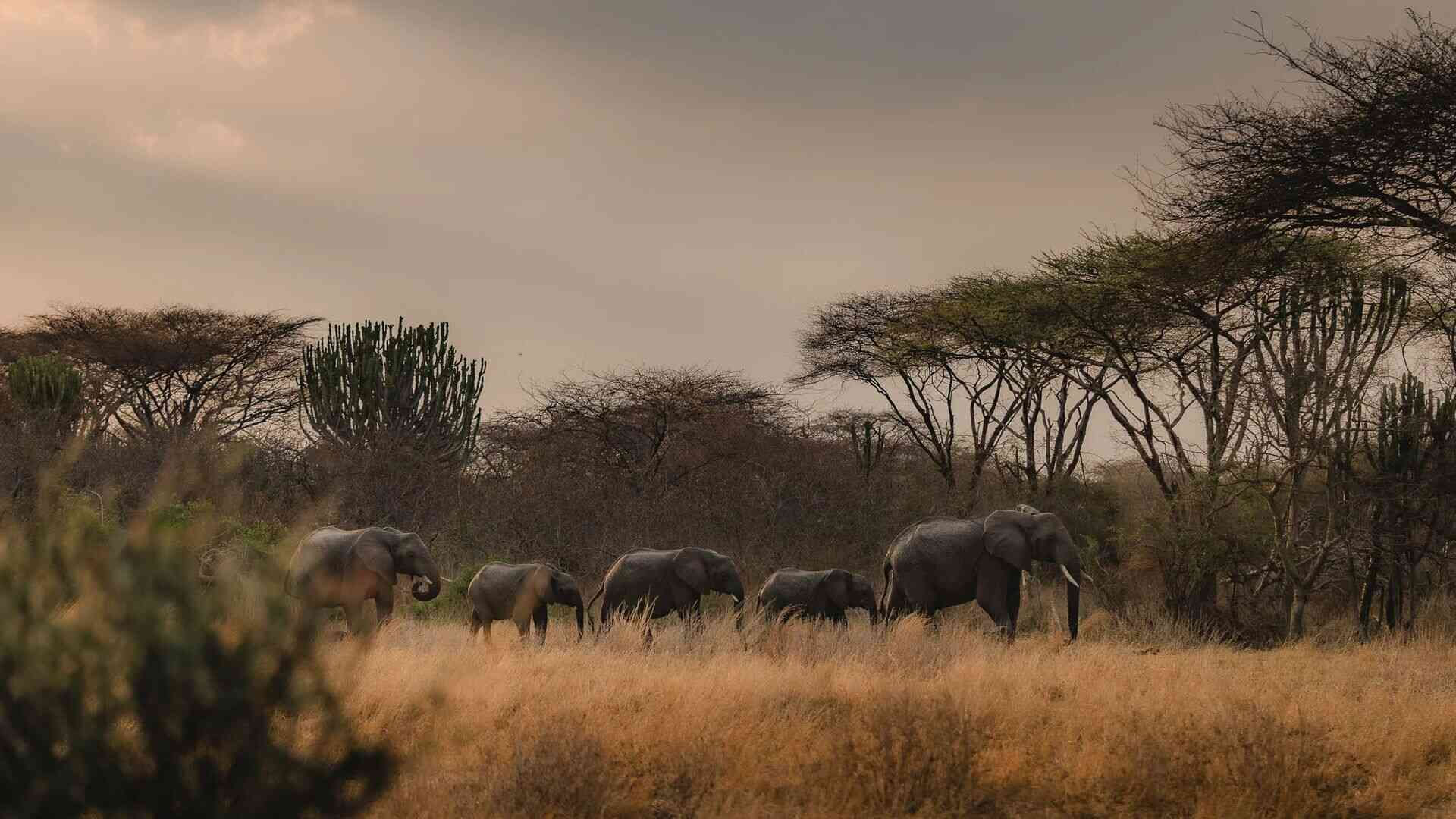
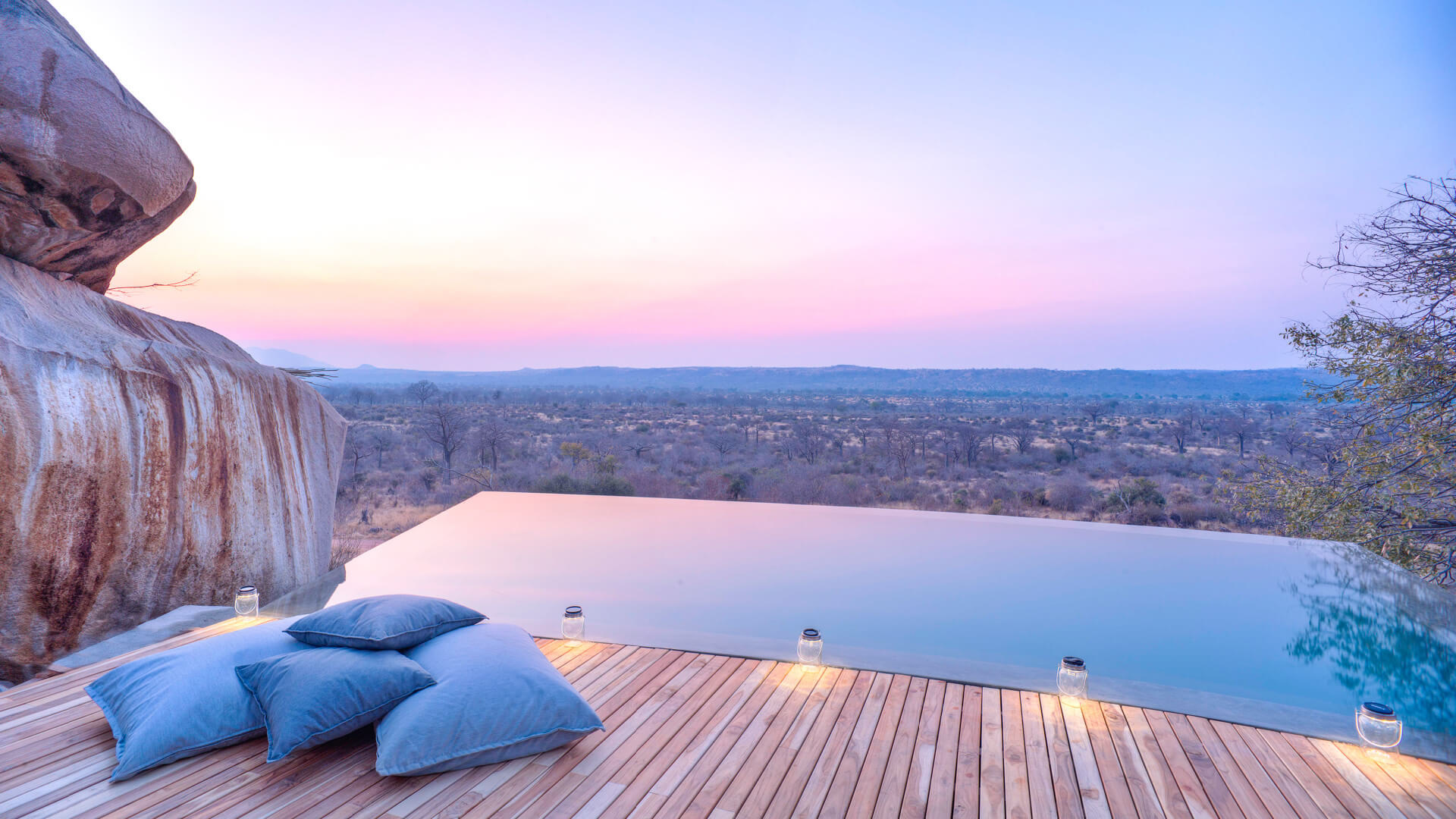
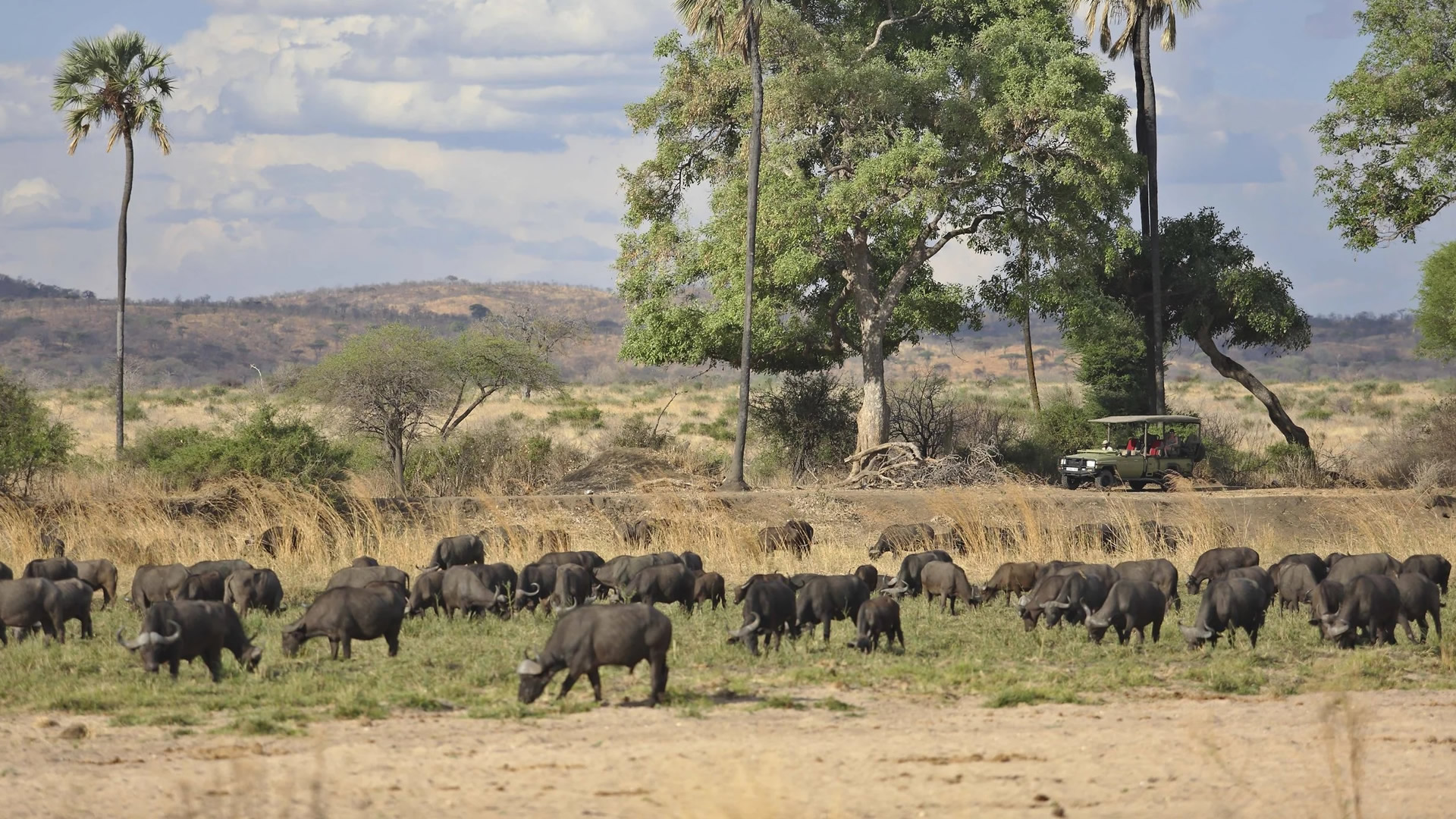
Three nights is the recommended minimum — enough for five to six game drives covering the Great Ruaha River circuit, the Mwagusi sand river, and the interior plateau. Four nights is ideal, allowing time for a walking safari, a fly-camp night, and the unhurried pace that Ruaha's remoteness rewards. Two nights works as a brief introduction when combined with a longer stay at Nyerere, but you will leave wanting more. Ruaha is not a park to rush — its scale and its wildlife density repay every additional day.
Wild dog sightings are possible throughout the dry season (June to November), but the best window is typically August to October, when packs are denning and their movements become more localised and predictable. Denning females stay at the den site while the pack hunts and returns to feed the pups — creating a pattern that guides can follow. Once the pups are mobile (usually by October), the packs resume their wide-ranging behaviour and sightings become more opportunistic.
Ruaha is an outstanding choice for any safari level — first-time visitors will encounter dramatic wildlife in volumes that rival the northern-circuit parks, but without the crowds. The park does require a commitment to get there (a bush flight) and the camps tend to be smaller, more remote, and more exclusive than the large lodges of the Serengeti and Ngorongoro. For first-time travellers who value intimacy and wildness over infrastructure and convenience, Ruaha is exceptional. For those who prefer a more accessible introduction, the northern circuit may be a better starting point, with Ruaha reserved for the return trip.
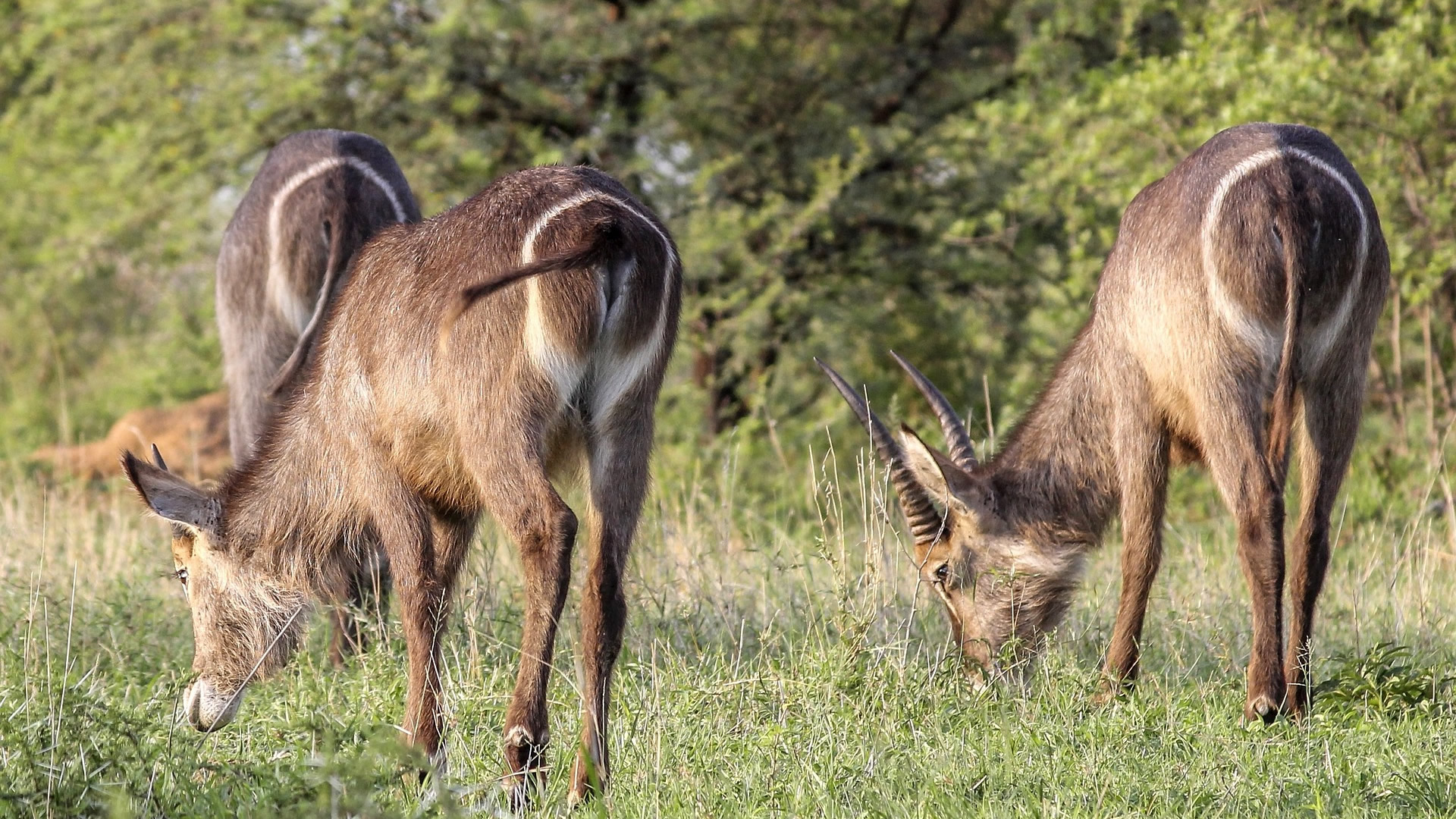
Ruaha's position at the ecological transition between eastern and southern Africa means it supports species that are absent or extremely rare on the northern circuit. Greater kudu — a large, spiral-horned antelope of the southern savannahs — is common here and often the highlight for visitors who have previously safariied in East Africa. Sable antelope and roan antelope are also present, though less frequently seen. These species share the park with the East African regulars: impala, waterbuck, eland, hartebeest, Grant's and Thomson's gazelle, and lesser kudu.
Ruaha National Park charges USD 30.00 per non-resident adult per 24-hour period (as of 2024/2025), with reduced rates for children aged 5–15. Walking safari and fly-camping fees may be charged separately by individual camps. All park fees and applicable taxes on Kuldip's Touring Company safari packages are included in the quoted price.
Yes — though Ruaha and the northern-circuit parks are geographically separate, connecting flights via Dar es Salaam or Arusha make combinations straightforward. A popular itinerary runs the northern circuit (Tarangire, Ngorongoro, Serengeti) followed by a bush flight south to Ruaha for a change of pace and scenery. Alternatively, Ruaha pairs with Nyerere (Selous) as a dedicated southern-circuit safari, with Zanzibar added for beach days. Kuldip's Touring Company can arrange any combination as a single seamless package.
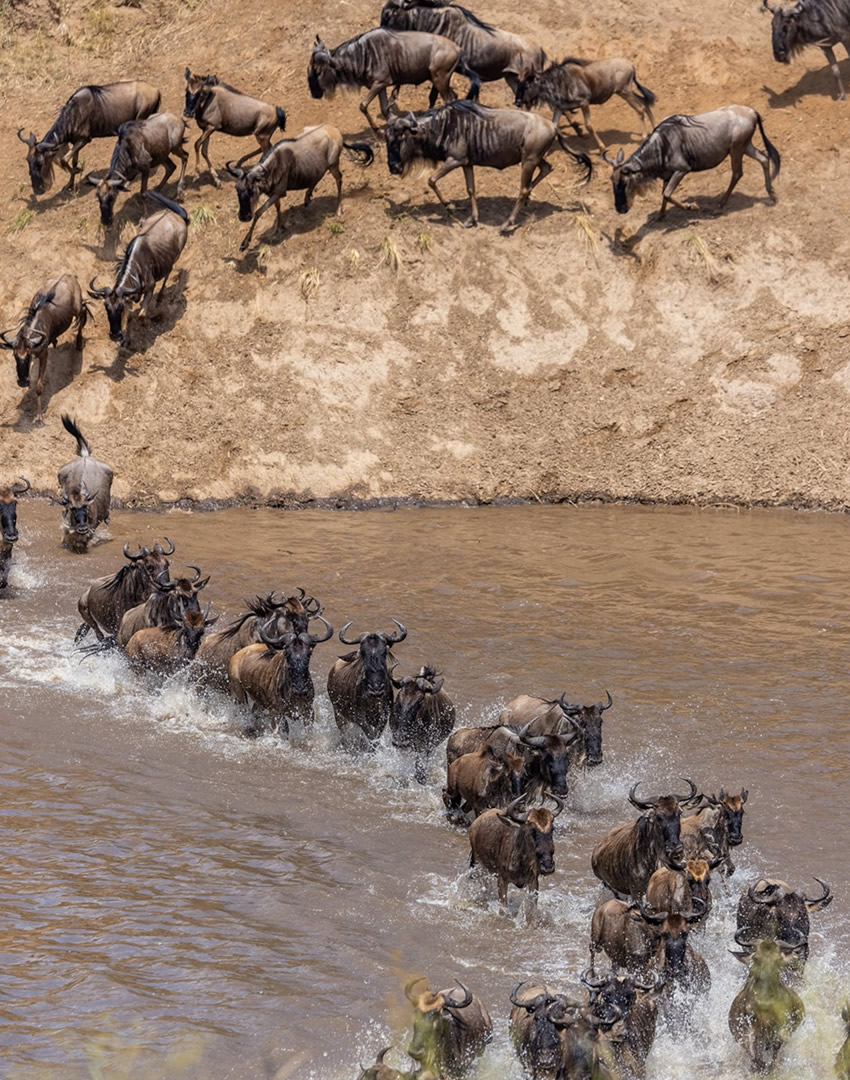
Endless plains supporting the greatest concentration of large mammals on Earth. The stage for the Great Wildebeest Migration.
Explore the Serengeti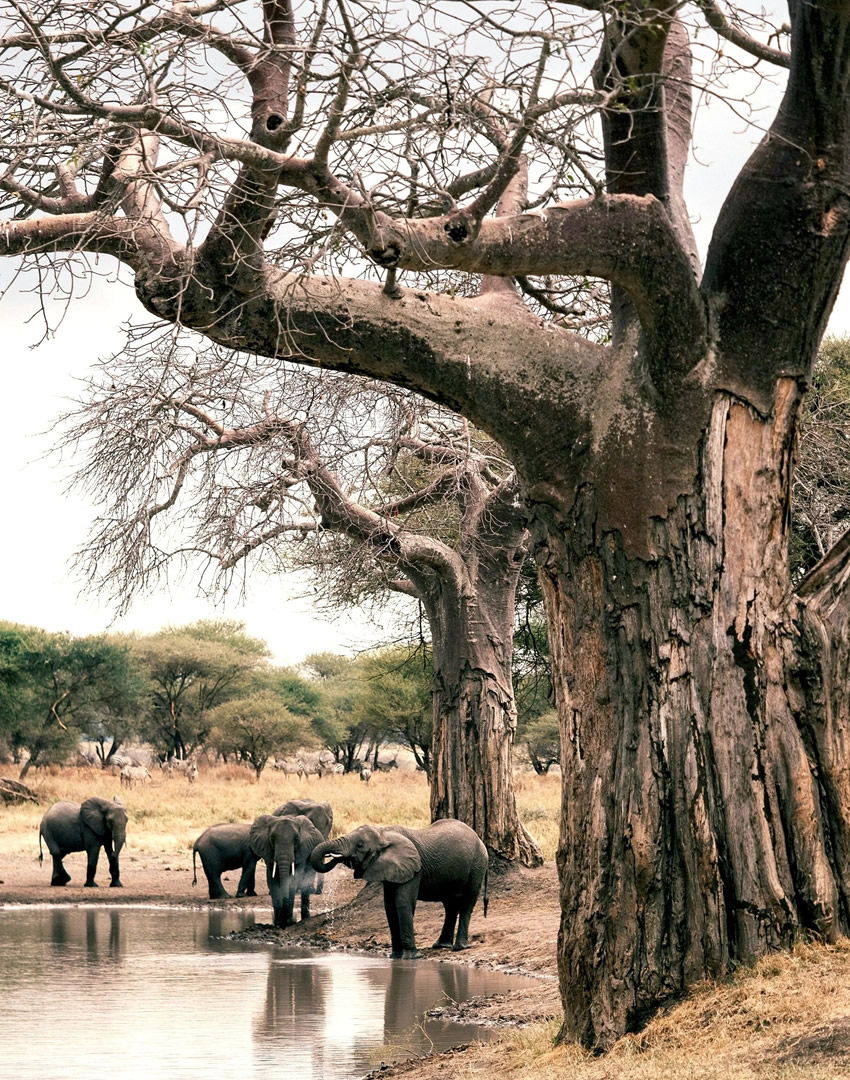
Ancient baobab trees tower over vast herds of elephant that converge on the Tarangire River during the dry season.
Explore Tarangire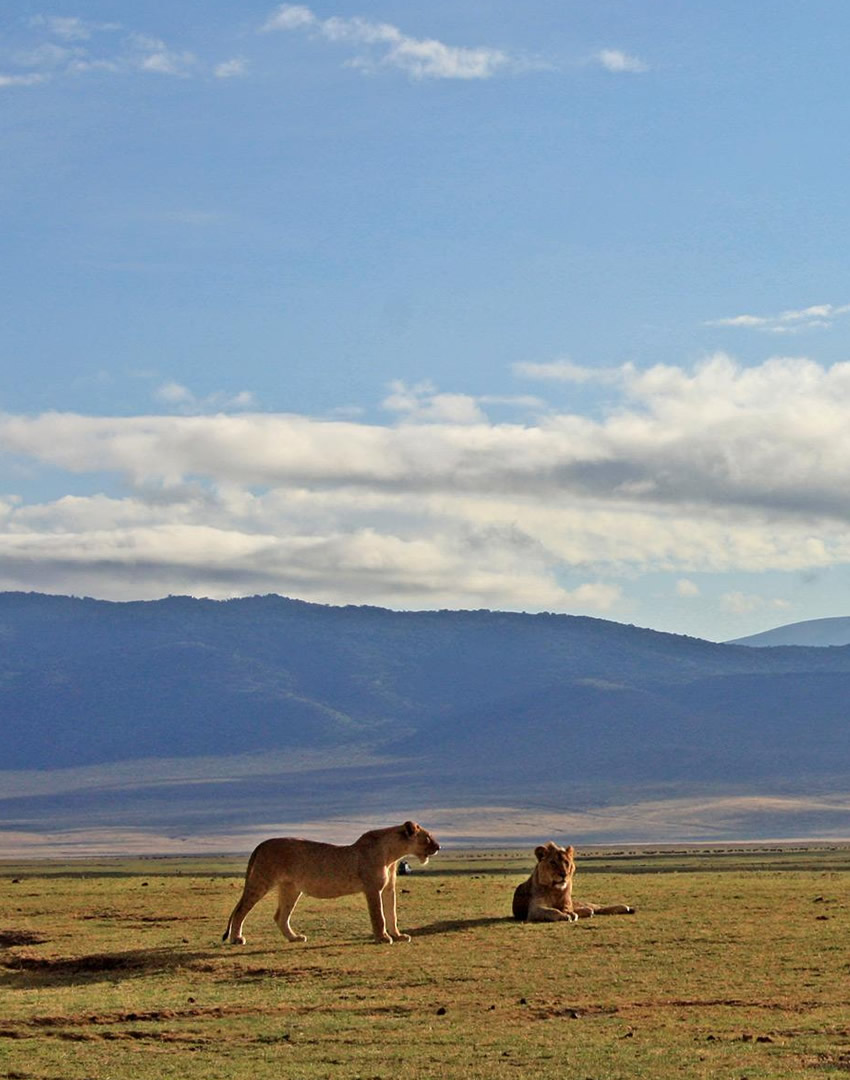
The world's largest unbroken volcanic caldera, sheltering an extraordinary density of wildlife on its lush, 600-metre-deep floor.
Explore Ngorongoro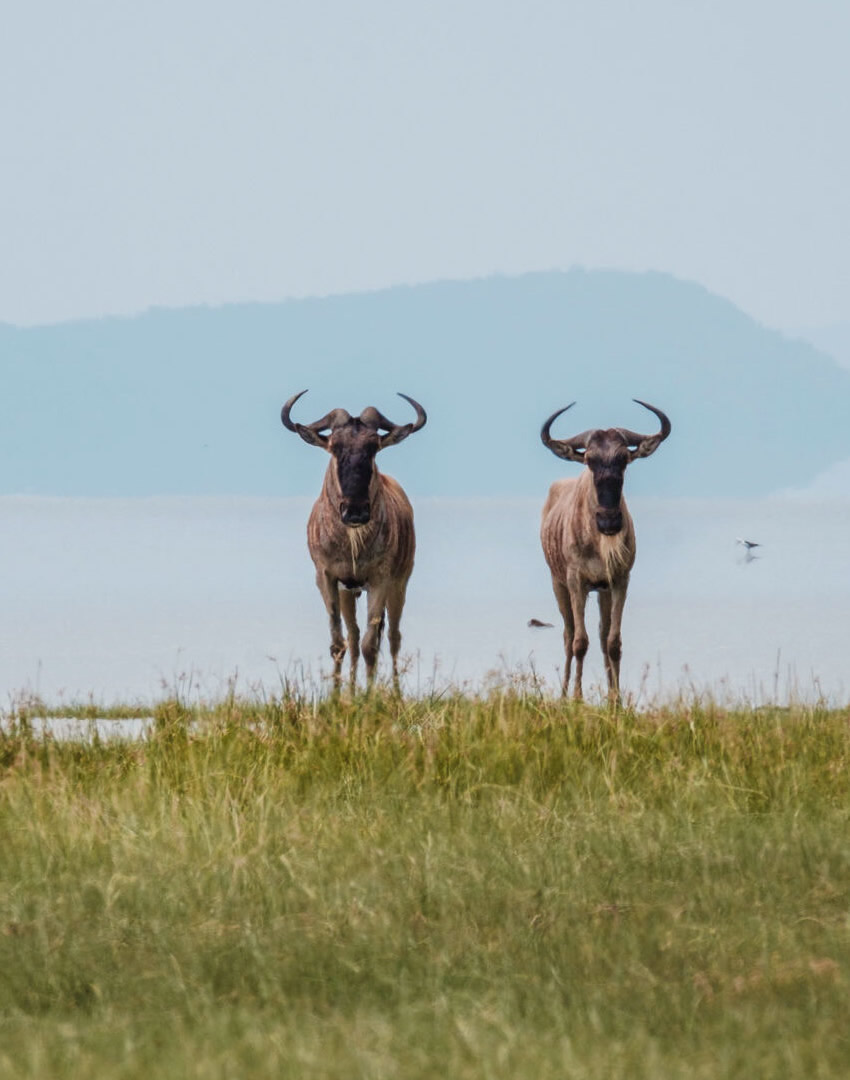
A compact gem at the base of the Great Rift Valley escarpment, famous for its tree-climbing lions in ancient mahogany trees.
Explore ManyaraTanzania's largest national park and one of its best-kept secrets, with one of the largest lion populations in Africa.
Explore Ruaha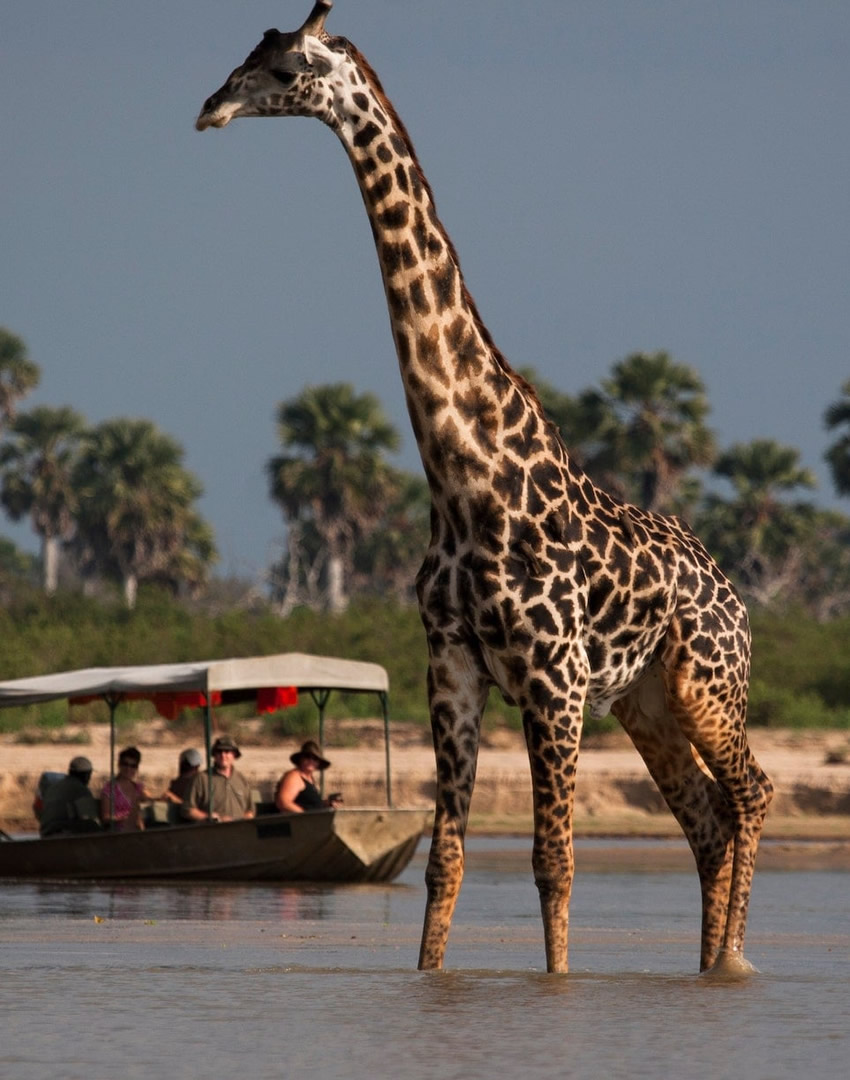
One of the largest protected areas in Africa, defined by the mighty Rufiji River. Boat safaris, walking safaris and fly-camping.
Explore Nyerere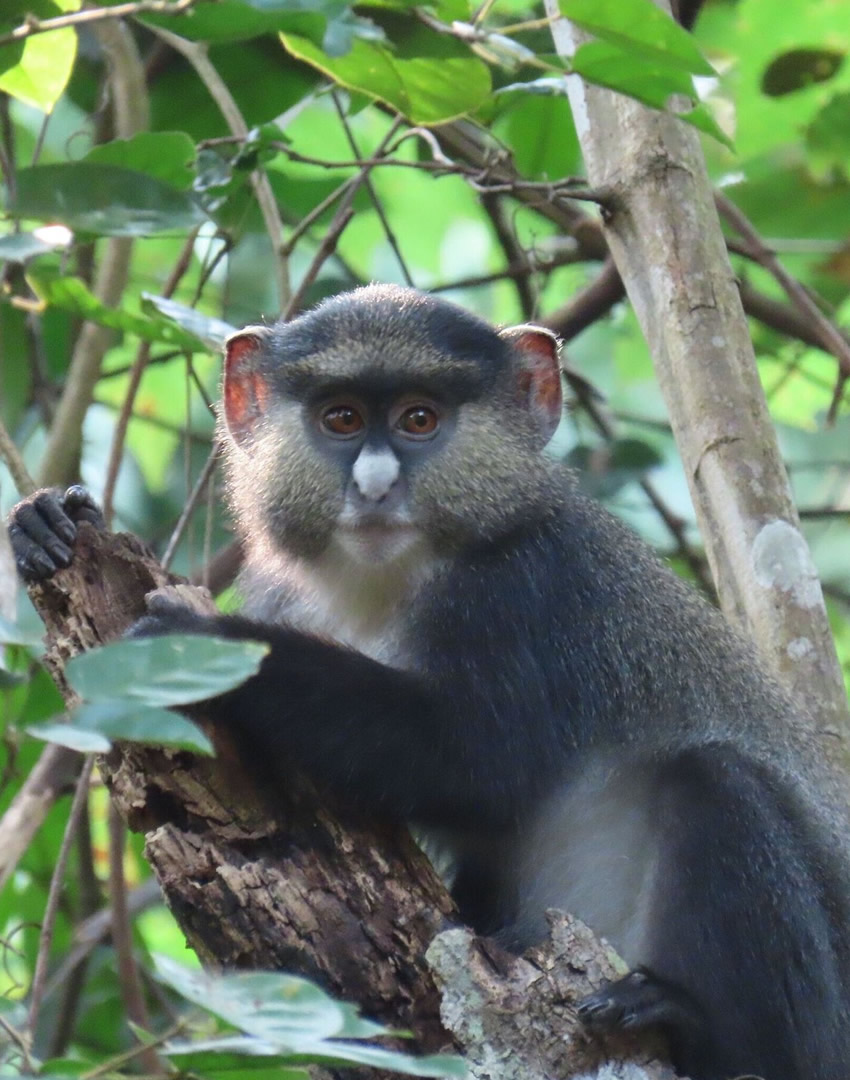
Where Jane Goodall began her groundbreaking chimpanzee research in 1960. Trek through steep forested valleys on the shores of Lake Tanganyika.
Explore Gombe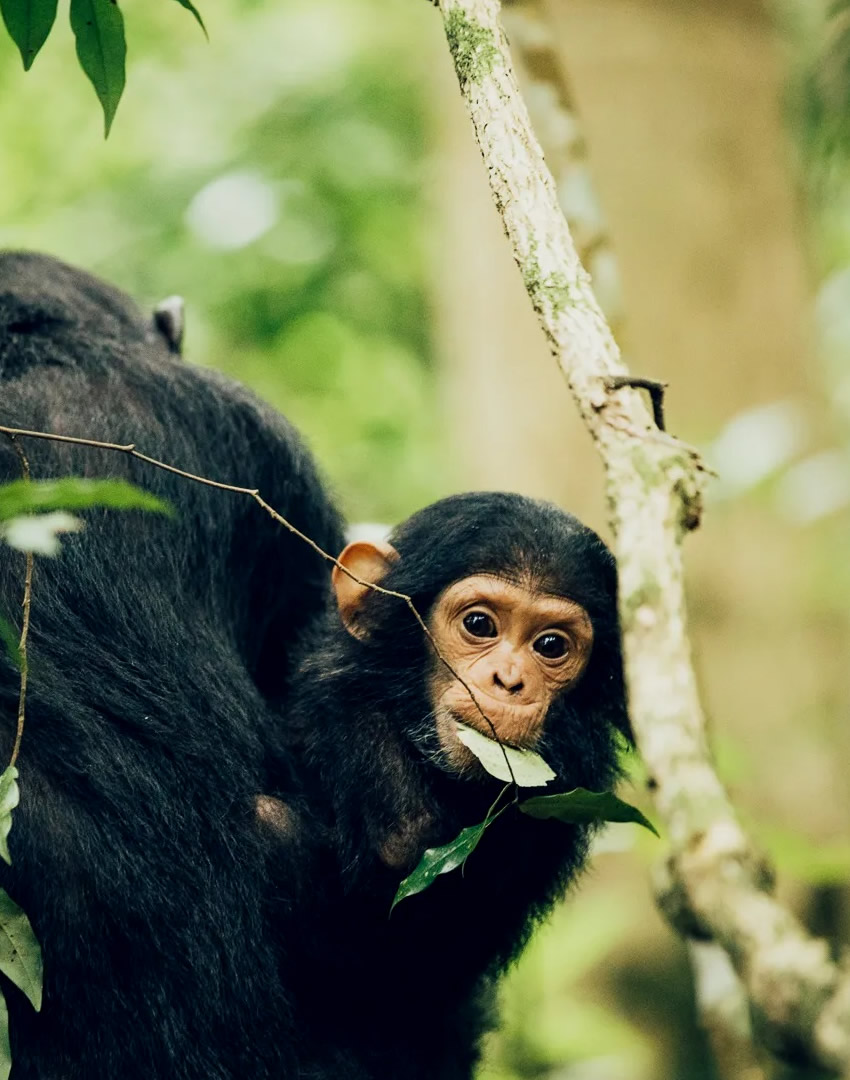
Remote, roadless and utterly extraordinary. The Mahale Mountains shelter one of the largest known populations of wild chimpanzees.
Explore Mahale