
A landscape of ancient baobabs, sweeping savannah, and the largest elephant herds in northern Tanzania — the understated jewel of the safari circuit where the dry season draws wildlife in concentrations that rival the Serengeti.
Tarangire National Park spreads across 2,850 square kilometres of undulating savannah, seasonal swamp, and dense woodland in northern Tanzania, anchored by the Tarangire River — the only permanent water source in the region during the dry season. When the rains stop and the surrounding grasslands parch, wildlife funnels into the park in extraordinary concentrations. Elephant herds of 300 or more gather along the riverbanks. Lion prides hunt in the open. Oryx, gerenuk, and lesser kudu — species rarely seen elsewhere on the northern circuit — move through the acacia scrub in numbers.
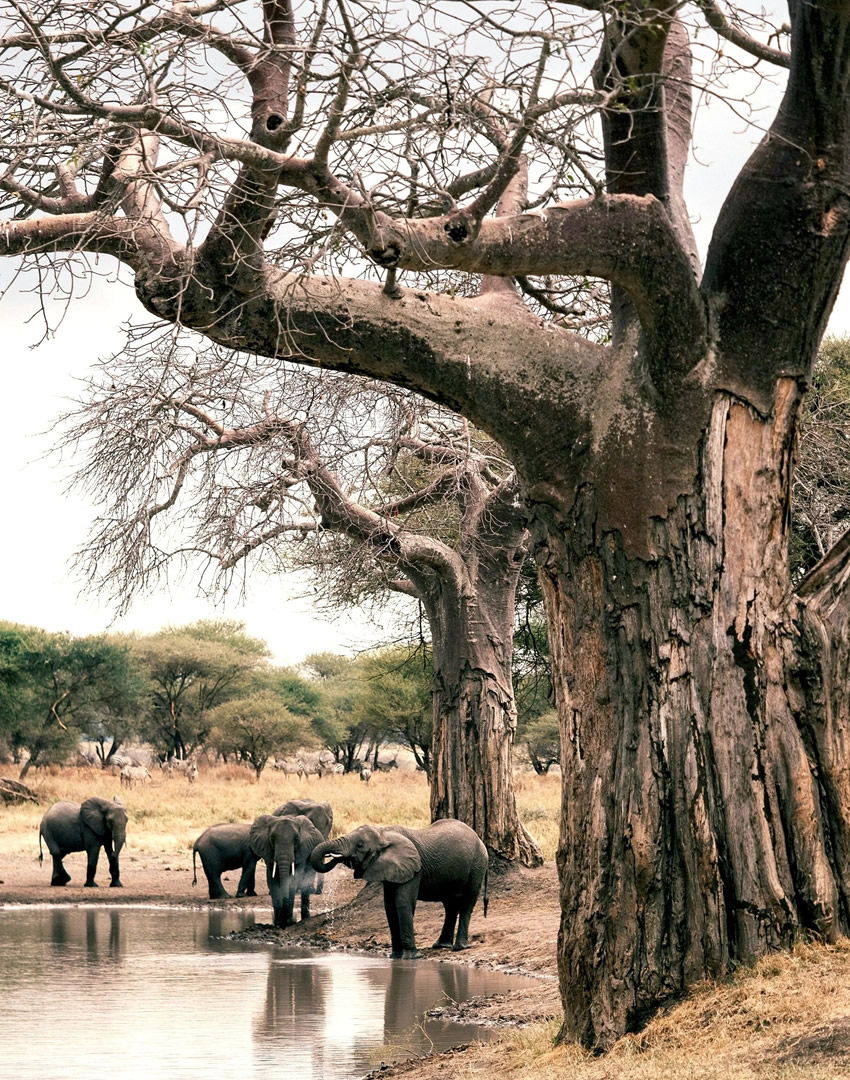
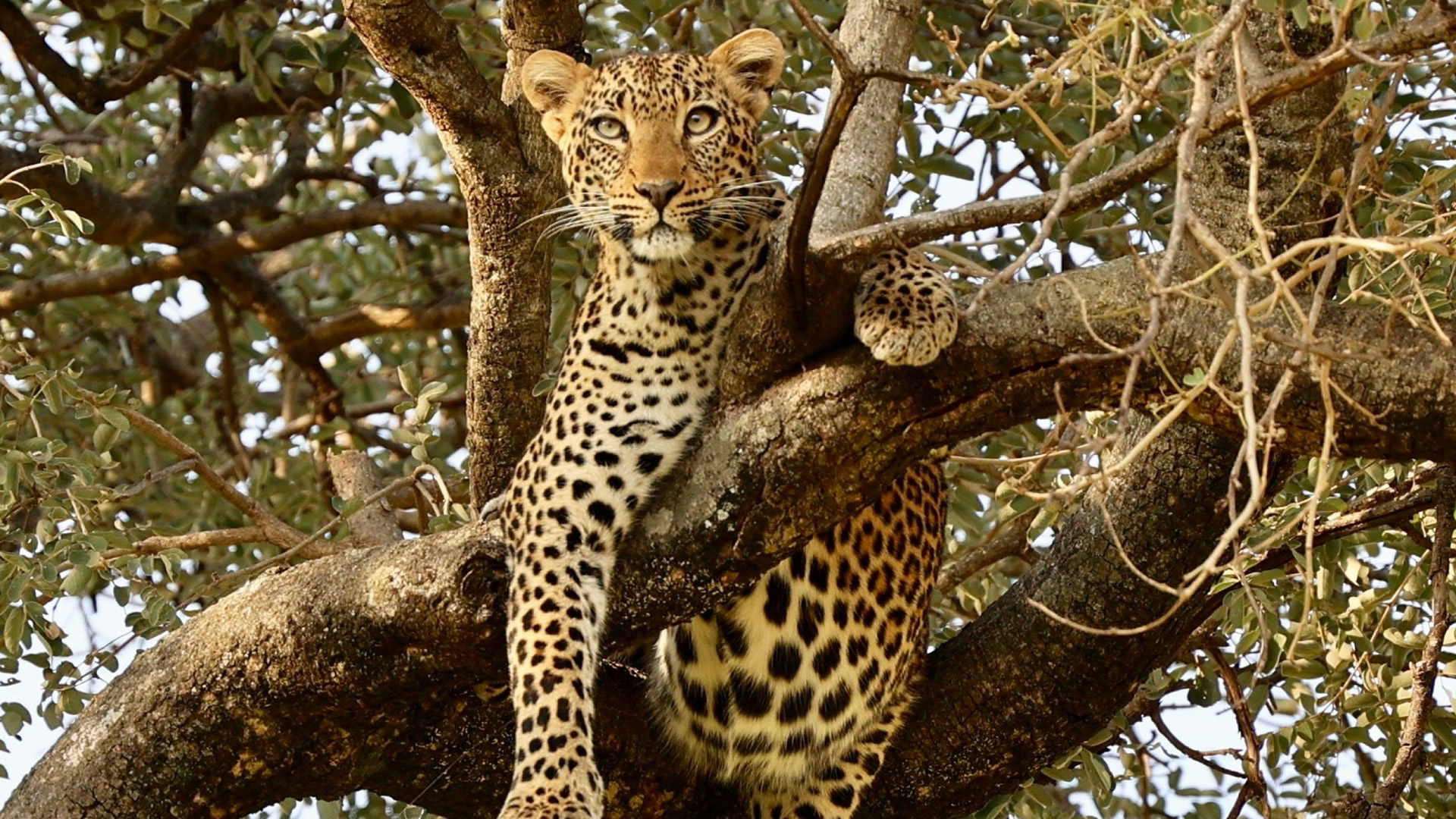
What sets Tarangire apart visually is its baobabs. Enormous, centuries-old Adansonia digitata trees punctuate the landscape, their swollen trunks and bare crowns creating a silhouette unlike any other park in East Africa. Elephants strip the bark, leopards rest in the branches, and at sunset the trees become sculptural monuments against the sky. It is one of the highest densities of baobab in Tanzania, and for many visitors the defining image of the park.
Tarangire is also one of the finest birding destinations in Tanzania. Over 550 species have been recorded — more than in any other single Tanzanian park. The seasonal Silale and Gursi swamps attract vast numbers of waterbirds, including breeding colonies of yellow-collared lovebird (endemic to northern Tanzania), rufous-tailed weaver, and ashy starling. In the wet months, the swamps transform into a mosaic of green that draws migrant species from across the continent.
Giant elephant herds, ancient baobab forests, exceptional birding, and a fraction of the crowds found at Ngorongoro and the Serengeti.
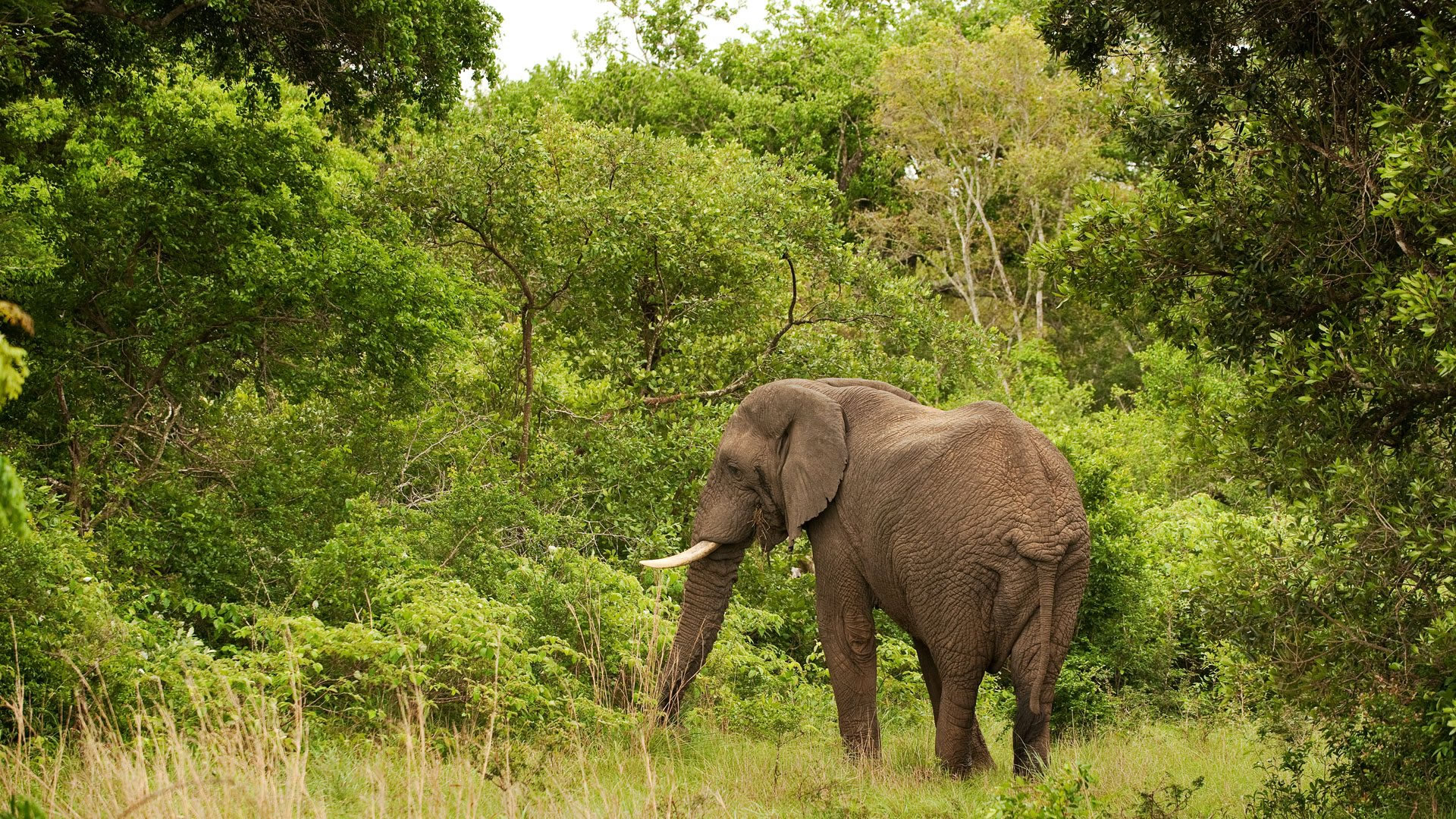
Tarangire holds the largest elephant population of any park in northern Tanzania — over 3,000 individuals spread across family herds, bachelor groups, and breeding bulls. During the dry season, herds of 200 to 300 animals concentrate along the Tarangire River, bathing, drinking, and crossing in slow procession. The scale of the gatherings is among the most impressive elephant spectacles in Africa.
Tarangire's ancient baobab trees — some over a thousand years old — create a landscape unlike any other on the northern circuit. Their massive trunks, some exceeding ten metres in girth, rise from the red earth like organic cathedrals. They are not merely scenic: baobabs support entire micro-ecosystems of nesting birds, roosting bats, and insects, and their fruit feeds baboons, elephants, and local communities. The trees transform the park's visual character entirely.
With over 550 recorded species, Tarangire is the single richest birding destination in Tanzania. The Silale Swamp draws dense concentrations of waterbirds — herons, storks, ibises, and pelicans — while the woodland supports endemics and near-endemics including the yellow-collared lovebird, rufous-tailed weaver, and ashy starling. Serious birders often schedule Tarangire as a multi-day stop in its own right.
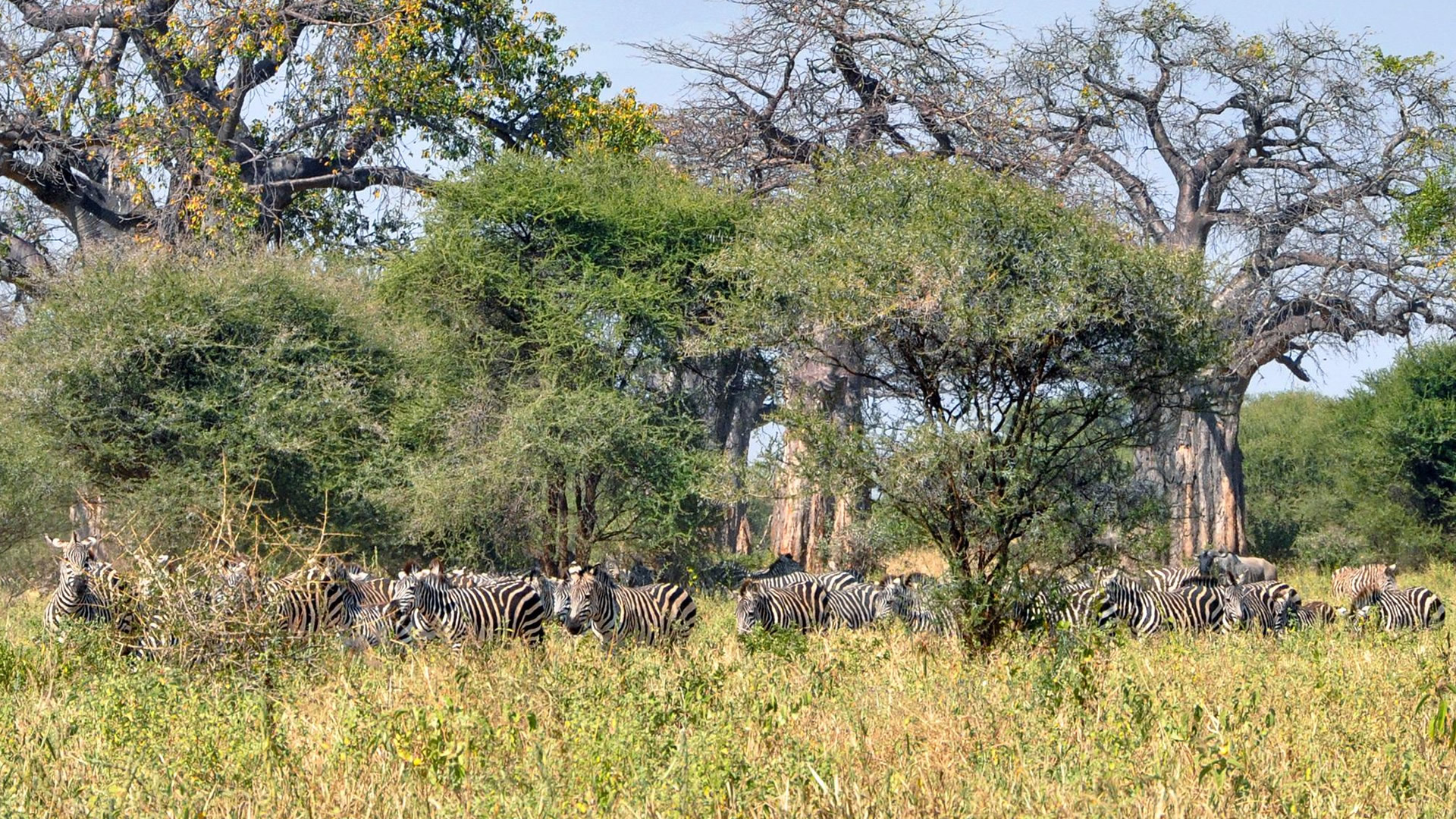
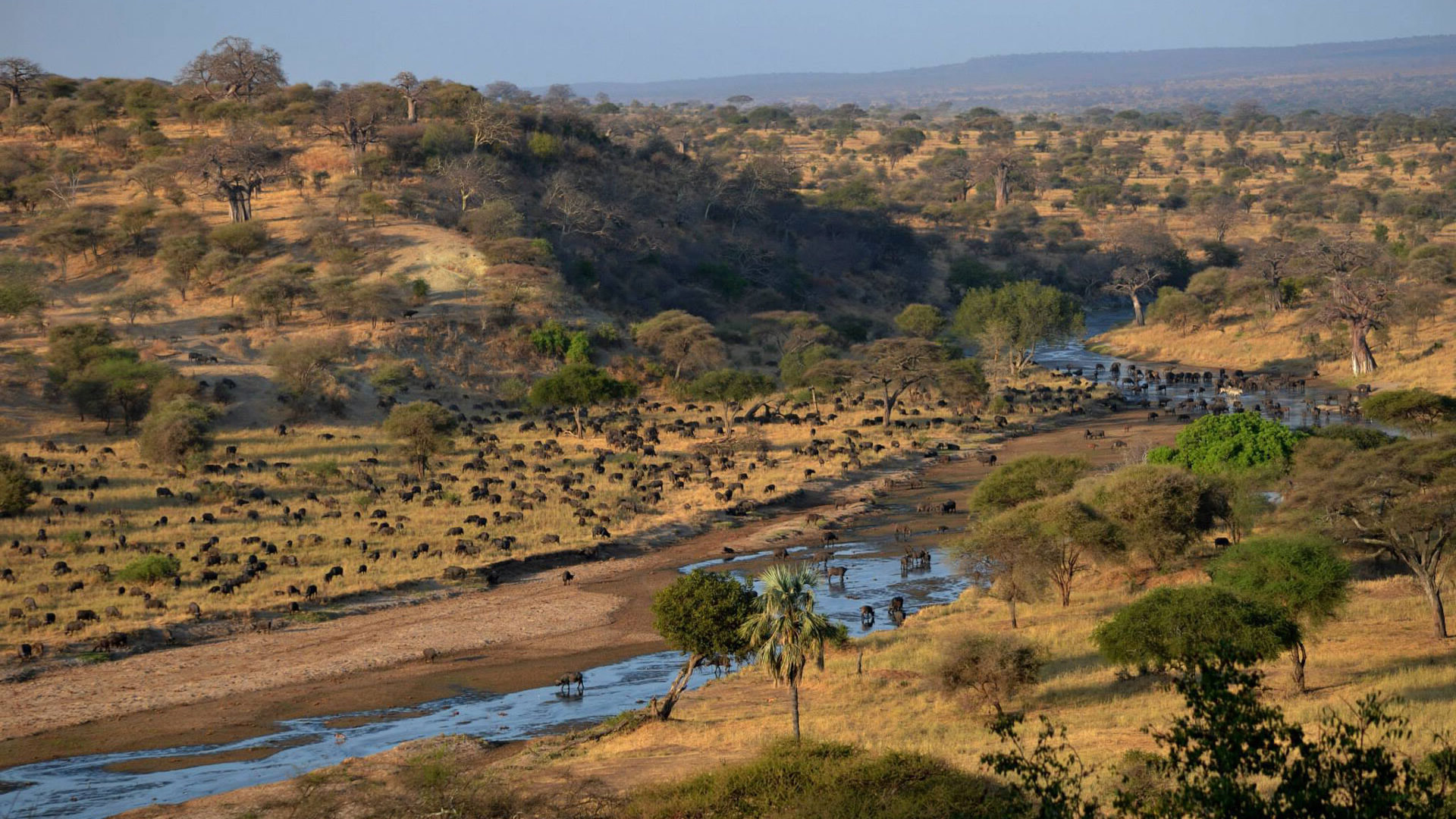
When the rains end, the Tarangire River becomes the last reliable water for thousands of square kilometres. Wildlife pours in from the surrounding Maasai steppe — zebra, wildebeest, buffalo, eland, hartebeest, oryx, and impala in numbers that rival the Serengeti's central plains. Predators follow. Lion, leopard, cheetah, and python are all regularly sighted, and the open terrain around the river makes for outstanding game-drive viewing.
Tarangire's lion prides have developed a notable habit of climbing into the branches of sausage trees and large acacias — a behaviour seen consistently in only a handful of locations across Africa. African rock pythons are also unusually visible here, sometimes spotted draped across branches or basking on termite mounds. Both offer sightings that are genuinely rare on the broader safari circuit.
Despite its proximity to Arusha and its position on the northern circuit, Tarangire receives a fraction of the visitor traffic of the Serengeti and Ngorongoro. Game drives feel private. Sightings are not shared with a dozen vehicles. The park's size, its network of lesser-used tracks, and the option to explore private concessions on its borders mean that Tarangire delivers a sense of solitude that the headline parks increasingly cannot.
Tarangire National Park lies in the Manyara Region of northern Tanzania, approximately 120 kilometres south-west of Arusha. The park occupies a long, narrow corridor running roughly north–south along the Tarangire River valley, bordered by the Maasai steppe to the east and the Rift Valley escarpment to the west. Lake Manyara National Park is just 70 kilometres to the north-west.
Tarangire forms the south-eastern anchor of Tanzania's northern safari circuit. Most itineraries visit it as a first or last stop — either opening a circuit that continues to Lake Manyara, the Ngorongoro Crater, and the Serengeti, or closing one with a final immersion in big-game country before returning to Arusha. Its proximity to the gateway city makes it the most accessible park on the circuit, yet its character is distinctly wild — within an hour of leaving Arusha's outskirts, you are deep in baobab country with elephants crossing the road.
From elephant-watching along the river to walking safaris in private concessions and night drives under baobab canopies — Tarangire offers more than its reputation suggests.
Morning and afternoon drives along the Tarangire River and into the park's interior woodland and swamp zones. The river circuit during the dry season is among the most consistently productive game drives in Tanzania — elephant, buffalo, lion, and zebra are virtually guaranteed, and the baobab-studded scenery makes every stop photographic. Guides read herd movement patterns to position vehicles ahead of the action.
Walking is permitted in the private concessions bordering the national park — and it transforms the Tarangire experience. On foot, the scale of the baobabs becomes overwhelming, elephant tracks in the dust become personal, and the sounds of the bush replace the engine. Walks are led by armed rangers and specialist guides, covering two to three hours through some of the most evocative terrain in northern Tanzania.
Available from camps in the concession areas surrounding the park, night drives reveal Tarangire's nocturnal world — aardvark, honey badger, bushbaby, civet, genet, African wildcat, and the big cats on their nighttime hunts. The dry-season concentration of prey around the river means predator activity after dark is particularly intense and encounters frequently dramatic.
Tarangire is a dedicated birding destination in its own right. Over 550 species have been recorded across the park's mosaic of habitats — riverine forest, swamp, open savannah, and baobab woodland. Key species include the endemic yellow-collared lovebird, rufous-tailed weaver, and ashy starling, along with martial eagle, bateleur, kori bustard, and seasonal concentrations of Palearctic and intra-African migrants.
The communities bordering Tarangire are predominantly Maasai, and several lodges arrange guided visits to local bomas. These encounters offer insight into pastoralist life, cattle herding, traditional medicine, beadwork, and the coexistence between Maasai communities and the wildlife that shares their land. Visits are conducted respectfully and fees contribute directly to community development.
The Silale Swamp in the park's southern interior is one of Tarangire's least-visited and most rewarding areas. During the wet season the swamp fills and attracts enormous flocks of waterbirds; during the dry months it becomes a green oasis surrounded by parched savannah, drawing elephant, buffalo, and hippo in dense concentrations. The drive south to Silale is a full-day commitment and feels genuinely remote.
Tarangire's dry season is legendary — but the green months bring their own rewards for birders and photographers chasing dramatic light.
Tarangire at its most spectacular. The river shrinks, the bush dries to gold and amber, and wildlife concentrates along the remaining water in extraordinary numbers. Elephant herds of 200 to 300 animals line the riverbanks. Predator encounters peak. The baobabs, stripped of their leaves, stand as bare sculptural forms against clear blue skies. This is the period that gives Tarangire its reputation — and it delivers consistently.
The rains transform Tarangire into a lush, bird-filled landscape. Migratory species arrive, the Silale Swamp fills with waterbirds, and the baobabs push out fresh green leaves against dramatic storm skies. Wildlife disperses across the wider Maasai steppe, reducing mammal concentrations — but resident prides, elephants, and the park's unique species remain. Visitor numbers drop sharply, camp rates are lower, and the photographic light is often extraordinary.
The closest major park to Arusha — an easy two-hour drive or a short bush flight to begin or end a northern-circuit safari.
Scheduled light-aircraft flights operate from Arusha Airport to Kuro airstrip in the heart of Tarangire National Park. Flight time is approximately 30 to 40 minutes. Flights also connect Tarangire to the Serengeti, Lake Manyara, and Ngorongoro-area airstrips, making fly-in circuit itineraries straightforward. Charter flights can land directly at several lodges and camps with private strips.
The drive from Arusha to Tarangire's main gate takes approximately two hours via the paved Arusha–Dodoma highway, turning south at the Kwa Kuchinja junction. The road passes through Maasai rangeland with views of Mount Meru behind and the Rift Valley escarpment ahead. It is the shortest and most convenient overland transfer on the northern circuit — close enough for a day trip, though an overnight stay is strongly recommended.
Tarangire sits naturally at the start or end of the northern circuit. A common sequence runs Tarangire (2 nights) → Lake Manyara (1 night) → Ngorongoro Crater (1–2 nights) → Serengeti (3–4 nights). Alternatively, Tarangire pairs beautifully with private concessions on its borders — Manyara Ranch, Chem Chem, or Burunge — for walking safaris and night drives that the national park does not permit.
Ancient baobabs, giant elephant herds, and a landscape that earns its place alongside the Serengeti.
Two nights is ideal — enough for three to four game drives covering the river circuit, the northern baobab zones, and, if time allows, the drive south towards the Silale Swamp. One night works as a circuit stop but limits you to a single afternoon and morning drive. Three nights, particularly at a camp with concession access, allows walking safaris, night drives, and a deeper exploration of the park's less-visited southern reaches. Tarangire rewards time — it is not a day-trip park.
For birders, absolutely — the wet months from November to May are when Tarangire's 550-plus species list comes alive with Palearctic migrants, breeding plumage, and active nesting. For general game viewing, the big dry-season concentrations are absent, as wildlife disperses across the broader Maasai steppe. However, resident elephant, lion, leopard, and giraffe remain in the park year-round, the baobabs are in full leaf, the light is dramatic, and visitor numbers are significantly lower. Many lodges offer reduced green-season rates.
Tarangire has four of the Big Five — elephant, lion, leopard, and buffalo are all present and regularly sighted. Rhino is the missing member; the park does not have a viable rhino population. If completing the Big Five is a priority, pairing Tarangire with the Ngorongoro Crater (which has resident black rhino) ensures all five within a two-park circuit.
Several of Tarangire's lion prides regularly climb into the branches of large sausage trees and acacias — resting, scanning for prey, and sometimes sleeping for hours in the canopy. The behaviour is not unique to Tarangire (Lake Manyara and Uganda's Ishasha sector are also known for it), but sightings here are consistent enough to be a notable feature of the park. The reasons are debated — escaping tsetse flies, gaining a vantage point, or simply habit passed between generations — but the spectacle of a full-grown lion draped across a branch is unforgettable.
Tarangire National Park charges USD 53.10 per non-resident adult per 24-hour period (as of 2024/2025), with reduced rates for children aged 5–15. Concession fees may apply at camps operating in wildlife management areas bordering the park. All park fees, concession fees, and applicable taxes on Kuldip's Touring Company safari packages are included in the quoted price.
Tarangire is one of the most naturally combinable parks on the northern circuit. The classic pairing is Tarangire with Lake Manyara (70 km north-west), followed by the Ngorongoro Crater and the Serengeti. A five-day circuit covering Tarangire, Ngorongoro, and the Serengeti is one of the most popular itineraries in East Africa. Adding Zanzibar for beach days at the end creates a safari-and-coast combination that is hard to improve upon. Kuldip's Touring Company builds all combinations as seamless, single-booking packages.
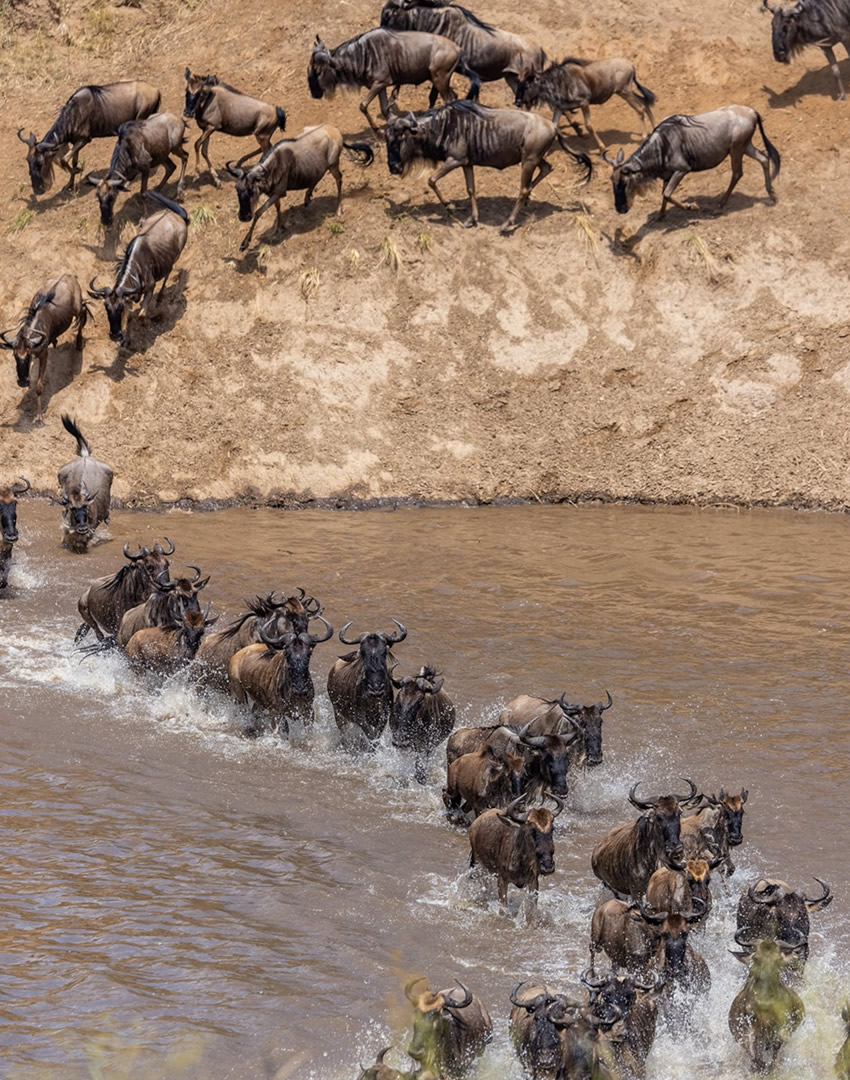
Endless plains supporting the greatest concentration of large mammals on Earth. The stage for the Great Wildebeest Migration.
Explore the SerengetiAncient baobab trees tower over vast herds of elephant that converge on the Tarangire River during the dry season.
Explore Tarangire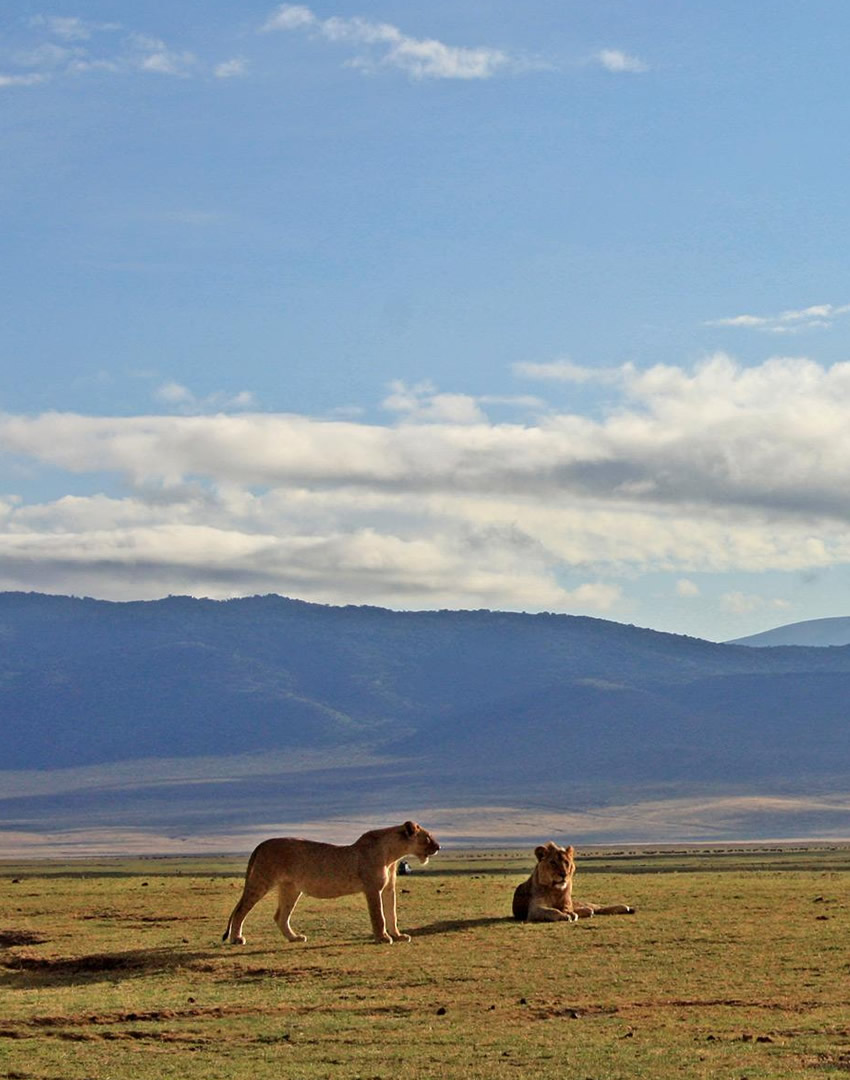
The world's largest unbroken volcanic caldera, sheltering an extraordinary density of wildlife on its lush, 600-metre-deep floor.
Explore Ngorongoro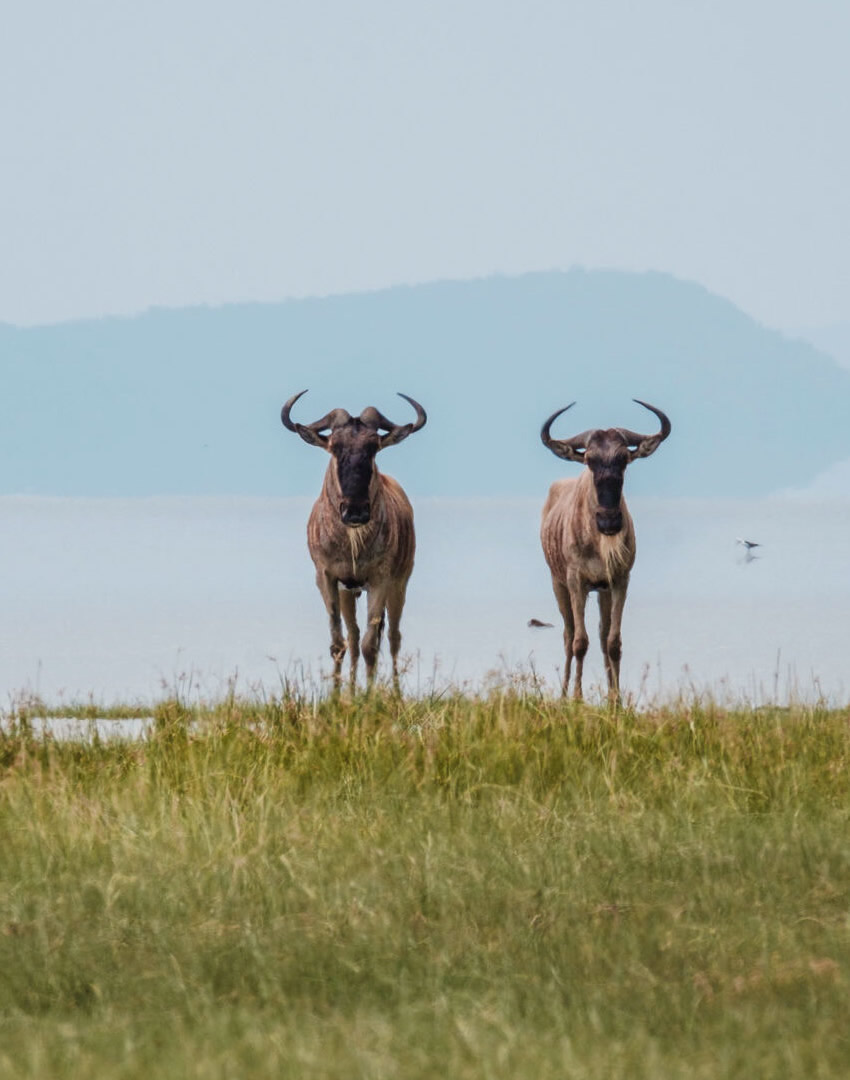
A compact gem at the base of the Great Rift Valley escarpment, famous for its tree-climbing lions in ancient mahogany trees.
Explore Manyara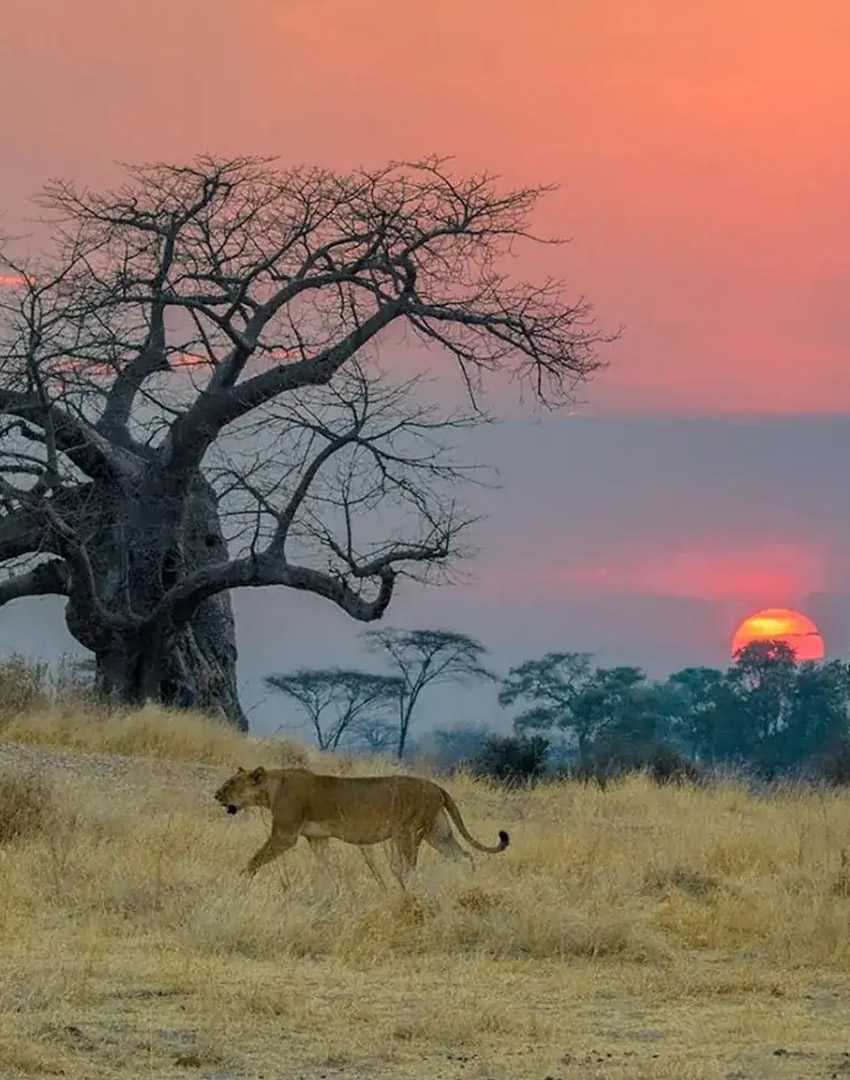
Tanzania's largest national park and one of its best-kept secrets, with one of the largest lion populations in Africa.
Explore Ruaha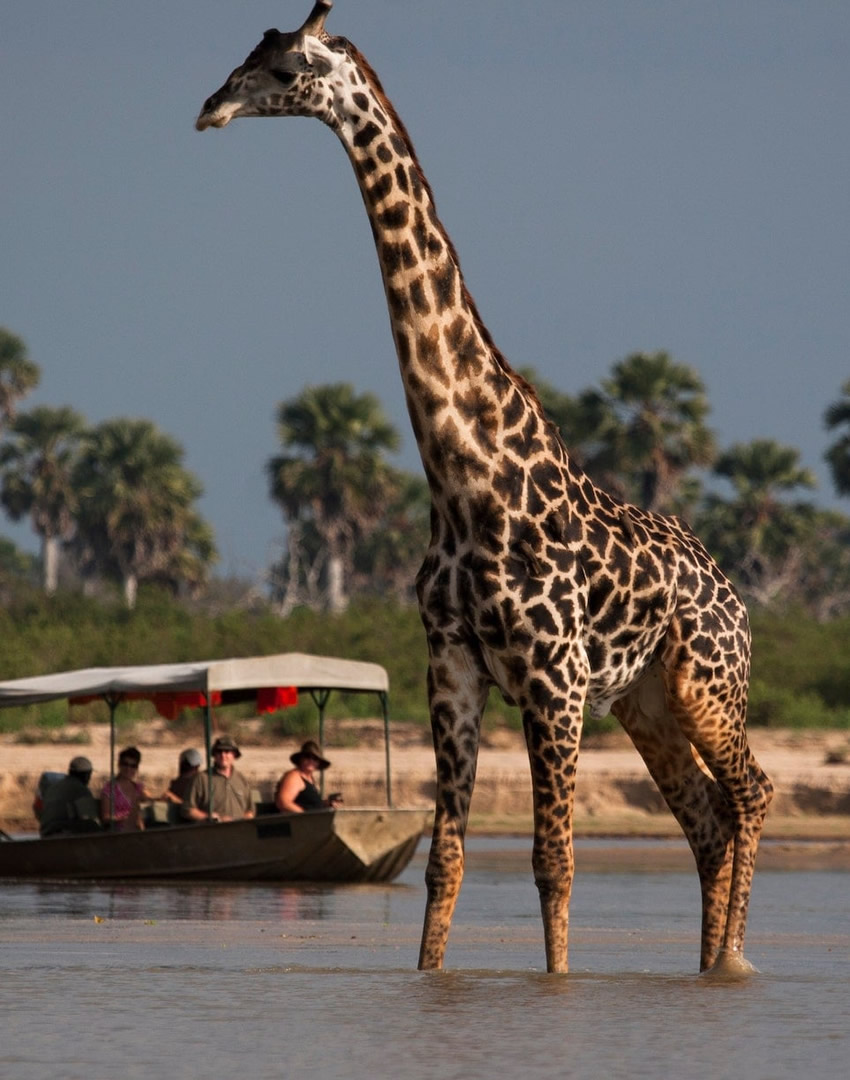
One of the largest protected areas in Africa, defined by the mighty Rufiji River. Boat safaris, walking safaris and fly-camping.
Explore Nyerere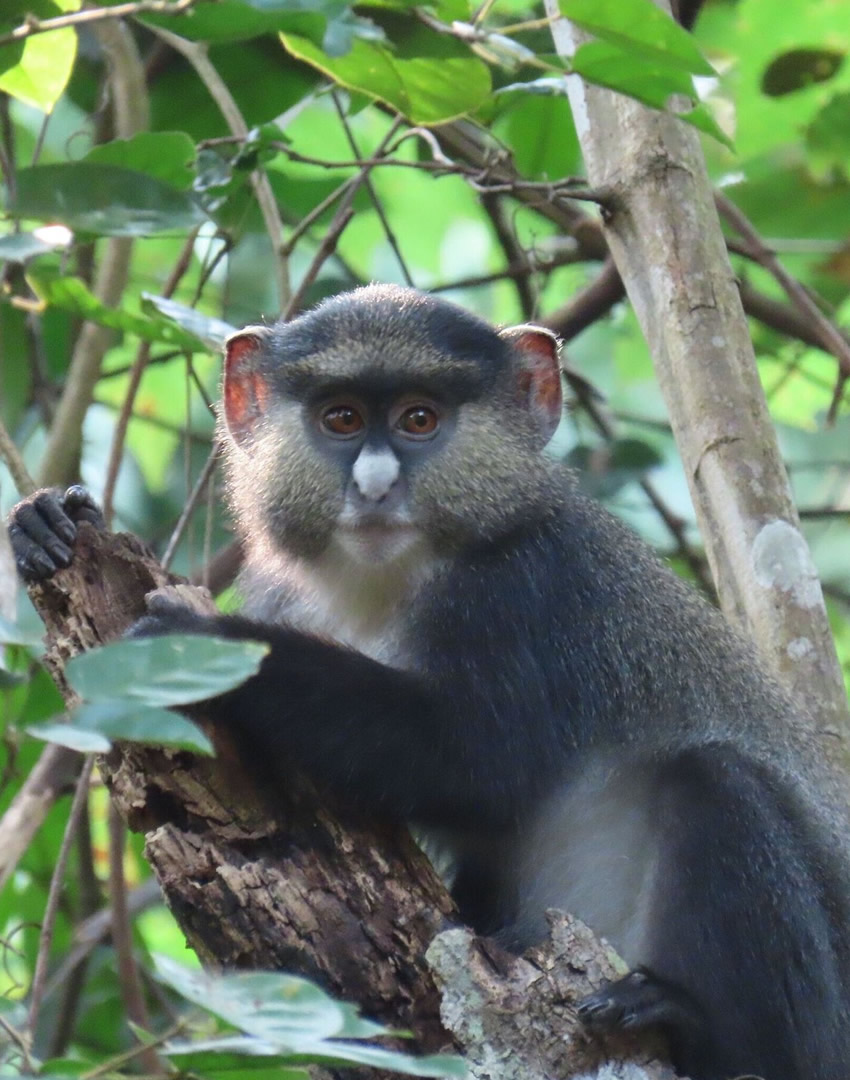
Where Jane Goodall began her groundbreaking chimpanzee research in 1960. Trek through steep forested valleys on the shores of Lake Tanganyika.
Explore Gombe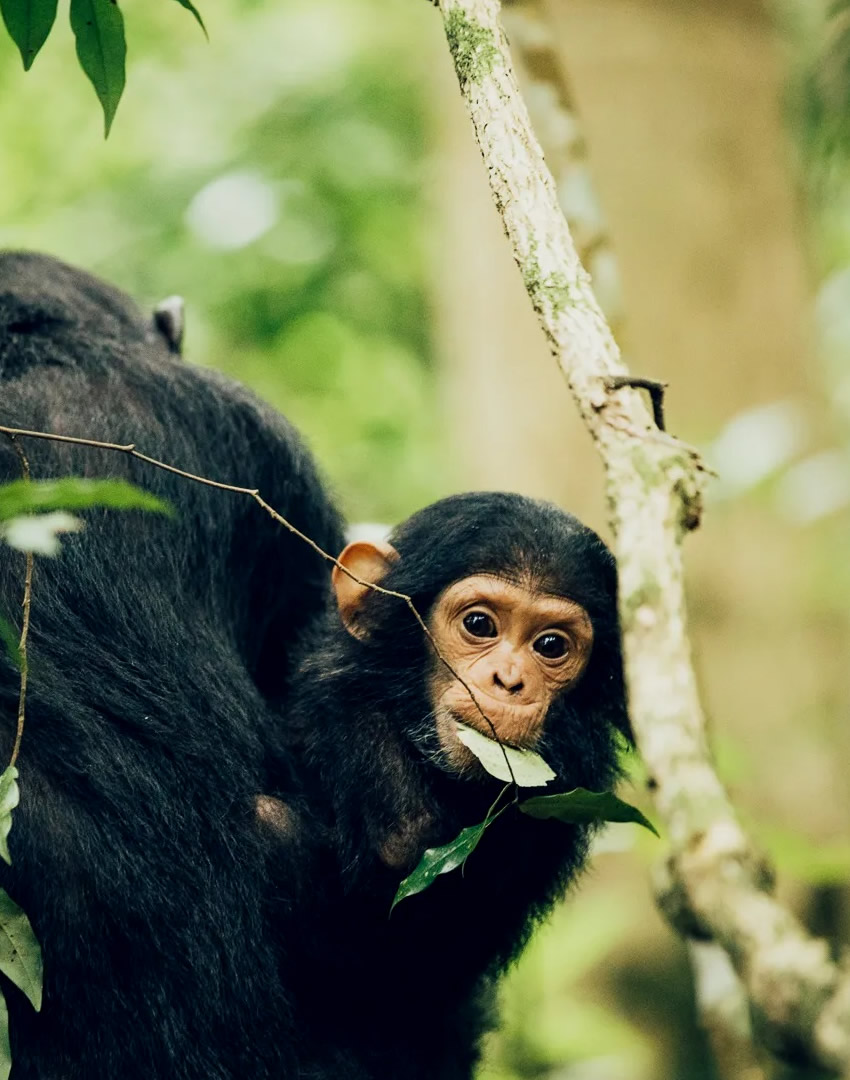
Remote, roadless and utterly extraordinary. The Mahale Mountains shelter one of the largest known populations of wild chimpanzees.
Explore Mahale