
The Primate Capital of the World — 795 square kilometres of tropical rainforest sheltering 13 primate species, including East Africa's largest chimpanzee population and some of the highest primate encounter rates of any forest on the continent.
Kibale National Park protects 795 square kilometres of moist tropical forest in western Uganda, stretching from the crater-lake region near Fort Portal south towards Queen Elizabeth National Park. The forest canopy is tall, closed, and layered — a multi-storey ecosystem of buttressed hardwoods, strangler figs, and a dense understorey of ferns, vines, and epiphytes that supports the highest density and diversity of primates found in any single African forest.
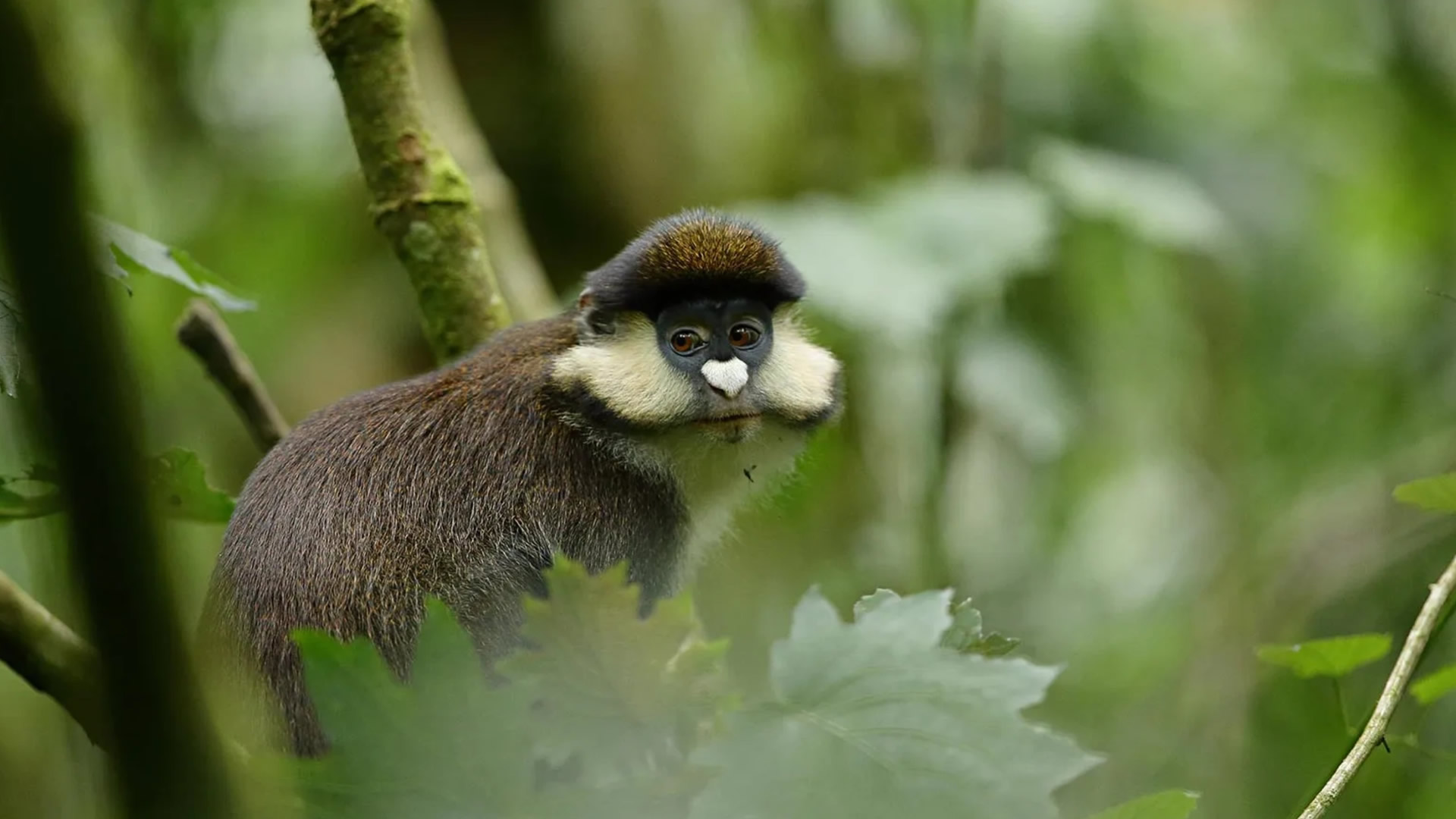
Thirteen primate species inhabit Kibale — a concentration that has earned it the title "Primate Capital of the World." The roster reads like a field guide's wish list: chimpanzee, red colobus, black-and-white colobus, grey-cheeked mangabey, L'Hoest's monkey, red-tailed monkey, blue monkey, olive baboon, vervet monkey, and four nocturnal species including the potto and two species of bushbaby. On a productive day, it is possible to encounter eight or more primate species on a single walk through the forest. No other site in East Africa — and very few anywhere in Africa — can match that.
Kibale's approximately 1,500 chimpanzees represent one of the largest and most thoroughly studied populations in East Africa. Several communities have been habituated for visitor trekking, and sighting rates at Kibale are the highest of any chimpanzee destination on the continent — typically above 90 per cent. The forest is also accessible and relatively flat by East African standards, making the trekking experience more comfortable than the steep, tangled terrain of Bwindi or Mahale. For visitors seeking the best odds of a close, extended chimpanzee encounter in a rich forest setting, Kibale is the destination.
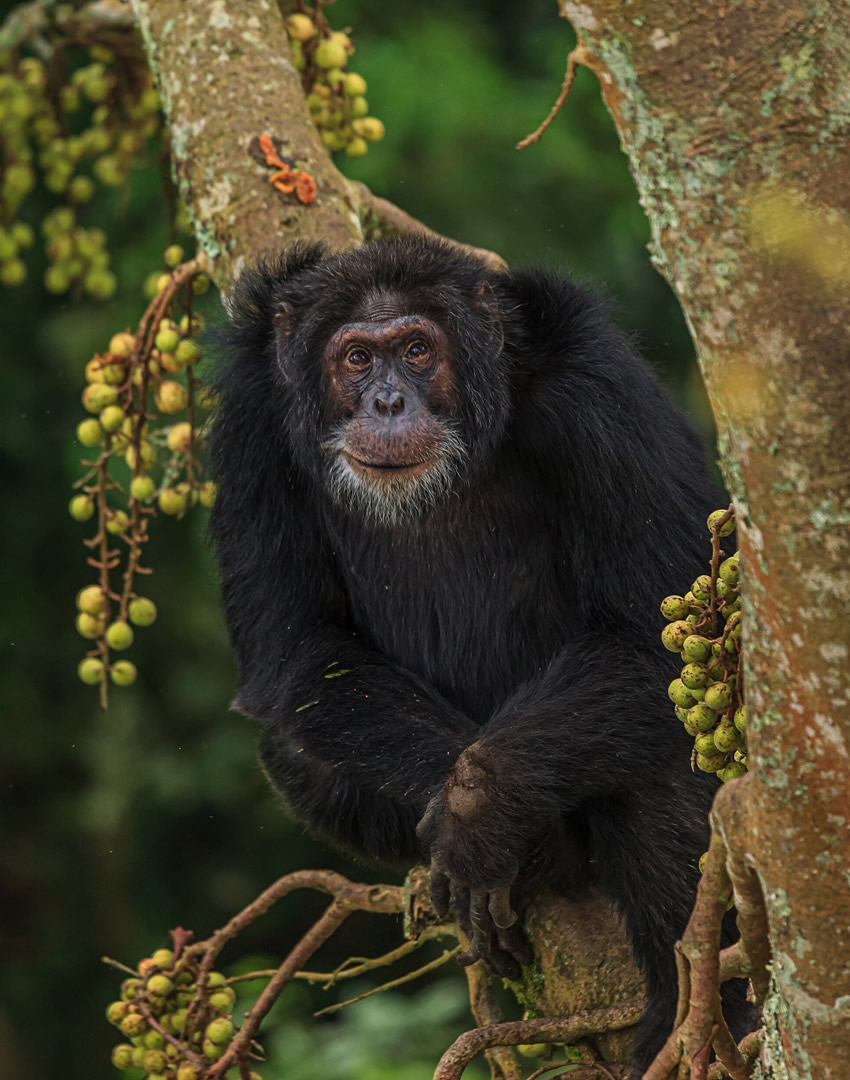
The best chimpanzee sighting rates in Africa, 13 primates in one forest, nocturnal walks, the Bigodi Wetland, and a rainforest that puts you closer to our closest relatives than anywhere else on the continent.
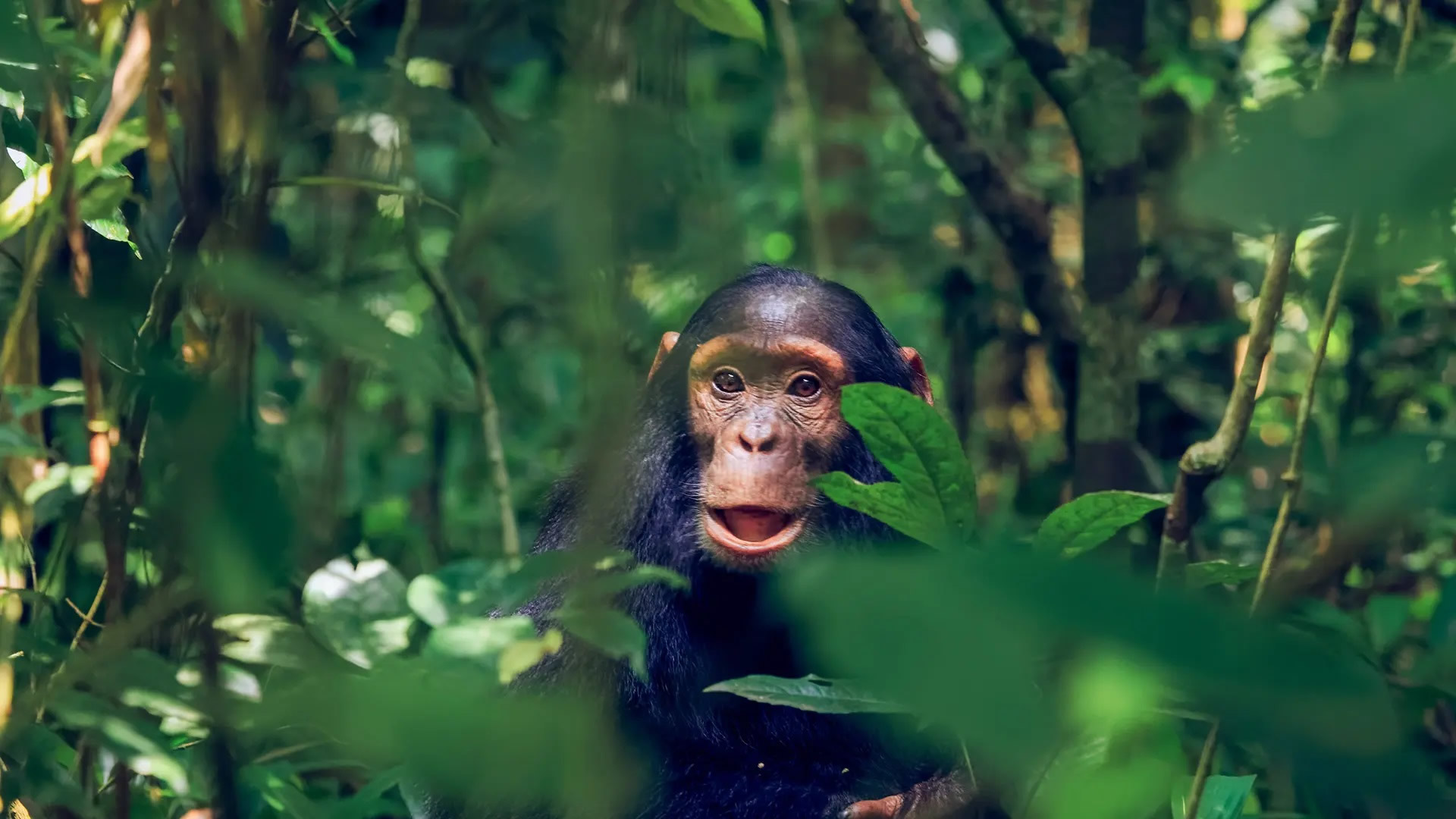
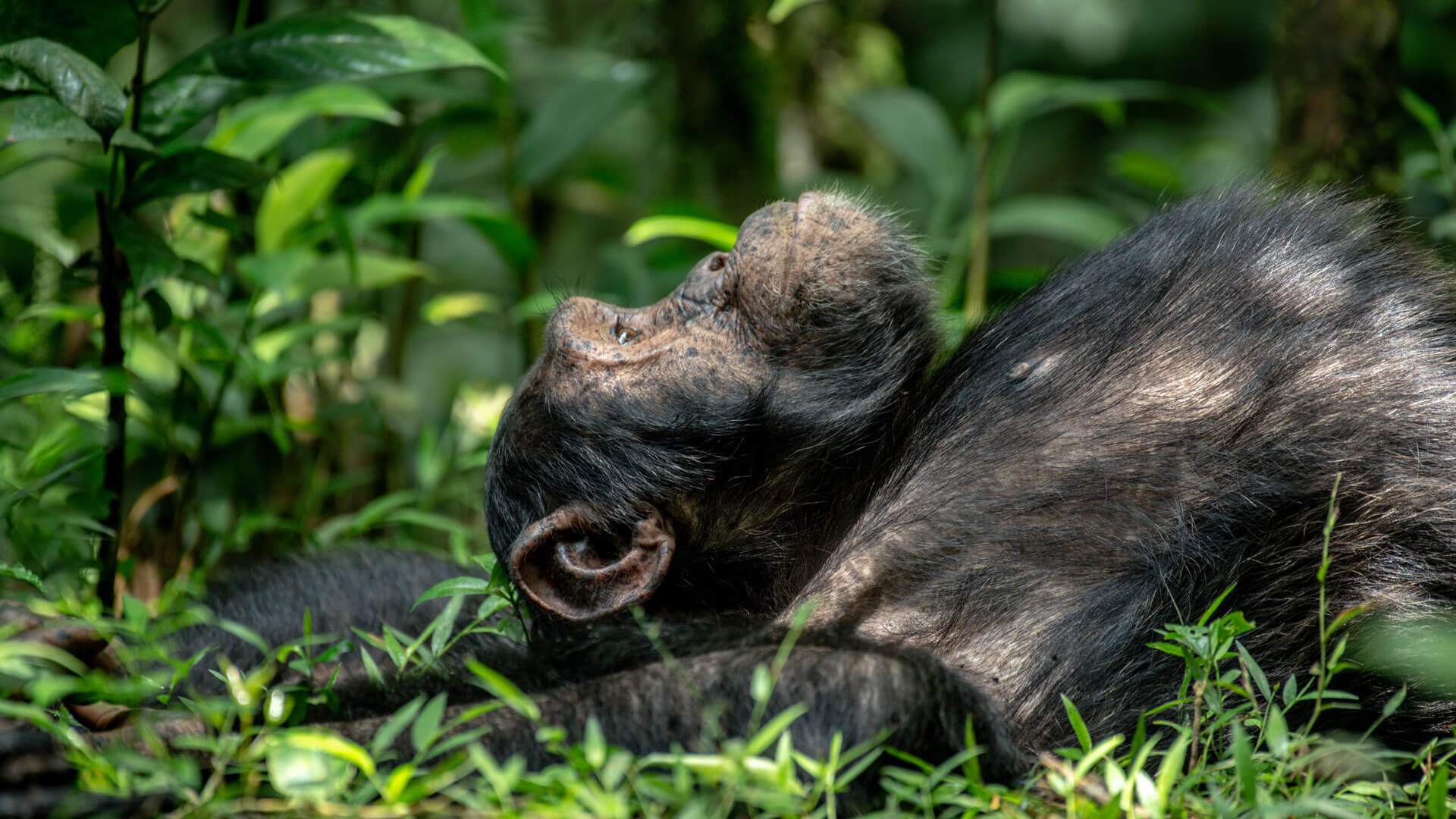
Kibale's habituated chimpanzee communities produce sighting rates consistently above 90 per cent — the highest of any destination on the continent. The forest floor is relatively flat and the understorey more open than at Bwindi or Mahale, meaning encounters tend to be closer, longer, and more photographic. Groups of up to 30 individuals may be feeding in a single fruiting tree, grooming in clusters, or moving through the forest in coordinated travel parties. If chimpanzee trekking is the primary objective, Kibale is the strongest choice.
No other forest in East Africa holds this many primates. Beyond chimpanzees, Kibale supports red colobus (in large, noisy troops), black-and-white colobus, the rare grey-cheeked mangabey, L'Hoest's monkey, red-tailed monkey, blue monkey, olive baboon, vervet monkey, and four nocturnal species. A morning chimp trek followed by a forest walk can realistically produce encounters with eight or more primate species in a single day — a concentration that justifies the "Primate Capital" title without exaggeration.
Kibale is one of the few parks in Uganda that offers guided nocturnal forest walks. After dark, the forest transforms: pottos creep along branches with their characteristic slow-motion gait, bushbabies leap between trees with enormous reflective eyes, and the sounds of the rainforest — frogs, insects, nightjars — replace the daytime primate calls. The night walk reveals an entirely different Kibale, and the potto in particular — rarely seen elsewhere — is a highlight that experienced primatologists travel specifically to find.
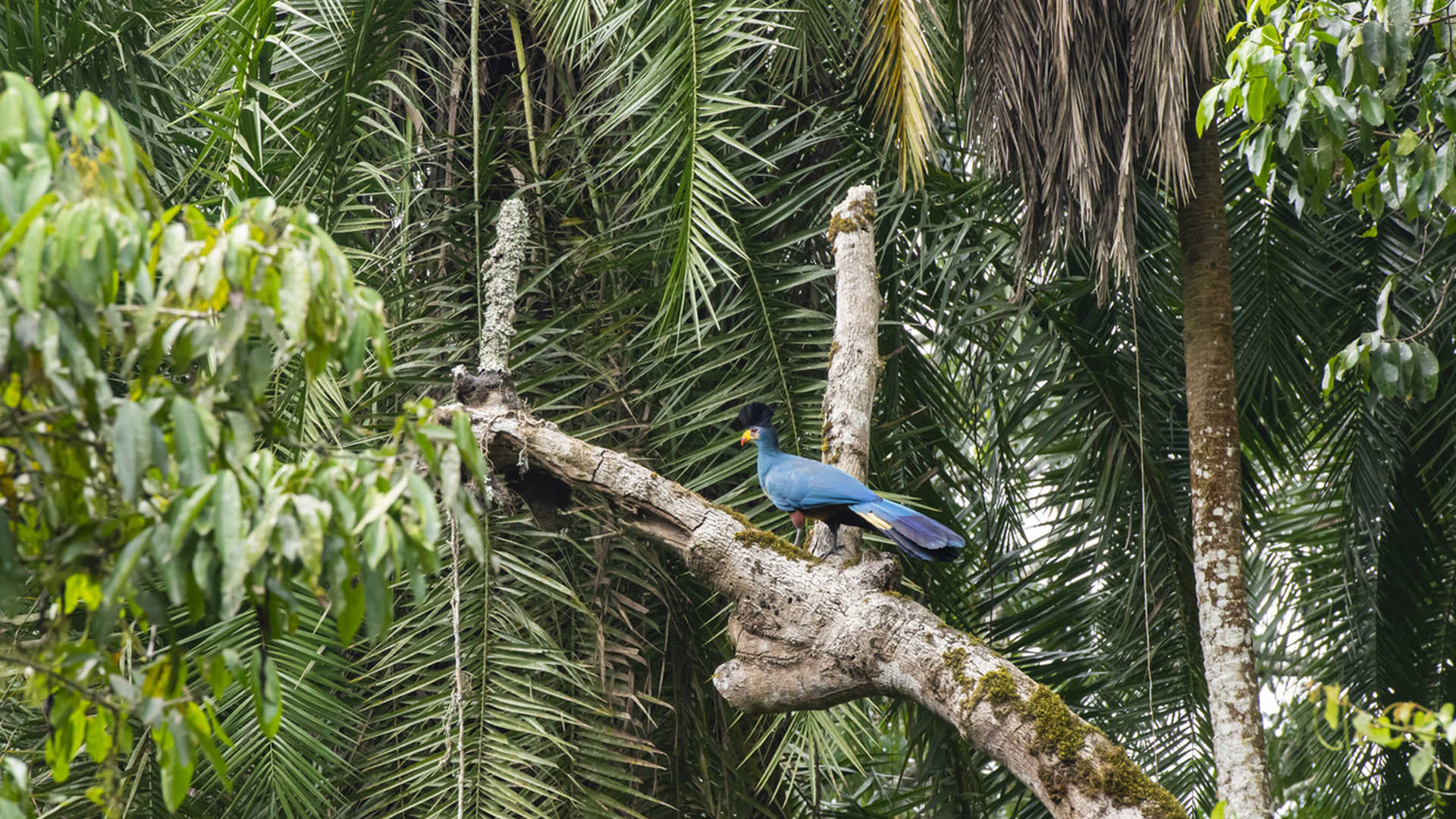
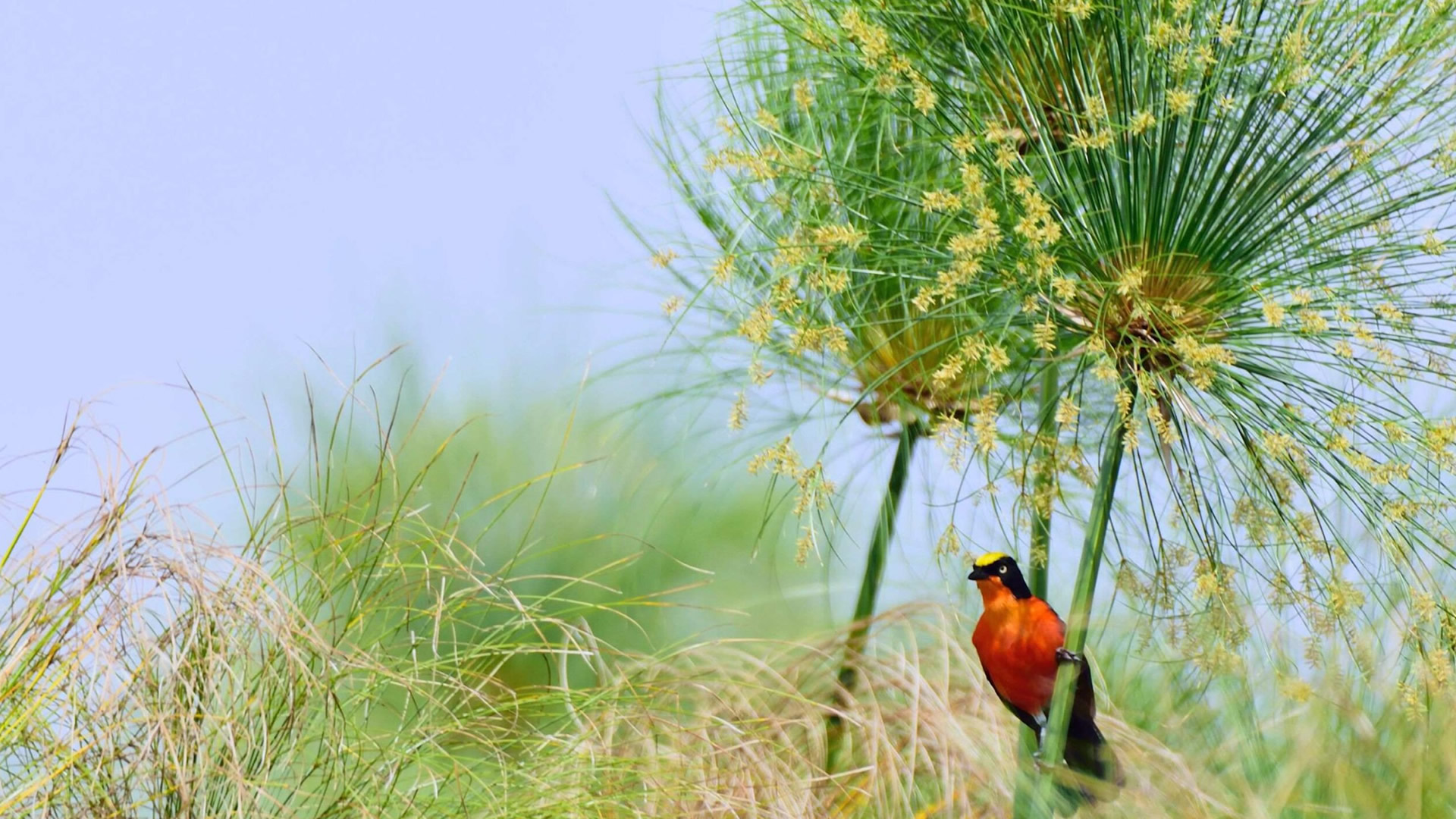
Just outside the park boundary, the community-managed Bigodi Wetland Sanctuary protects a papyrus swamp and fringing forest that is one of Uganda's finest birding and primate-viewing sites. Guided boardwalk trails pass through habitat that supports grey-cheeked mangabey, red colobus, black-and-white colobus, and over 200 bird species including the great blue turaco, papyrus gonolek, and white-spotted flufftail. Bigodi is entirely community-run — all fees support local schools, clinics, and livelihoods.
Unlike the steep, demanding terrain of Bwindi or Mahale, Kibale's forest floor is relatively gentle — undulating rather than vertical, with well-maintained trails that make the trekking accessible to a wider range of fitness levels. The Kanyanchu visitor centre is the starting point for most treks, and the habituated chimp communities typically range within a one- to three-hour walk. This accessibility makes Kibale the ideal chimpanzee destination for families (minimum age 12), older travellers, and anyone who wants an immersive forest experience without extreme physical demands.
Kibale's northern reaches border the Fort Portal crater-lake district — a stunning landscape of over 50 volcanic crater lakes set among tea plantations, tropical forest, and rolling green hills. Several lodges sit on crater-lake rims, offering views that rank among the most beautiful in Uganda. The crater-lake hikes, community tea tours, and the Amabere Caves provide a full day of non-forest activities that complement the chimpanzee trekking and ensure that a two- or three-night stay at Kibale never feels repetitive.
Kibale National Park lies in western Uganda, approximately 30 kilometres south-east of the town of Fort Portal and roughly 300 kilometres west of Kampala. The park stretches from the crater-lake highlands near Fort Portal in the north — at around 1,590 metres elevation — down to the savannah transition zone bordering Queen Elizabeth National Park in the south, at around 1,100 metres.
This altitudinal gradient produces a range of forest types within a single park: moist tropical rainforest in the north gives way to moist semi-deciduous forest in the centre and dry tropical forest and grassland in the south. The Kanyanchu visitor centre, where most chimpanzee treks begin, sits roughly in the park's centre. Fort Portal — a pleasant, leafy town with good accommodation and services — serves as the gateway, and the drive from Kampala passes through some of Uganda's most attractive highland scenery, including the tea estates around Kabarole and the Rwenzori foothills.
From chimpanzee trekking and nocturnal primate walks to the Bigodi Wetland, crater-lake hikes, and the richest forest birding in Uganda.
Kibale's signature experience. Groups of up to eight visitors, led by UWA guides and trackers, enter the forest from the Kanyanchu centre to locate a habituated chimpanzee community. Sighting rates exceed 90 per cent. Encounters typically last one hour and may include feeding in fruiting trees, grooming clusters, play, displays, and — with luck — a coordinated red colobus hunt. The terrain is manageable and the forest beautiful, with enormous buttressed figs and mahogany forming the canopy overhead.
For a deeper immersion, the Chimpanzee Habituation Experience (CHEX) allows visitors to spend an entire day — from dawn nest departure to evening nest building — with a community that is still being accustomed to human presence. You walk with researchers, learning the identification of individuals, observing behaviours in real time, and experiencing the full rhythm of a chimpanzee community's day. Only four visitors per day are permitted, making this one of the most exclusive and intimate primate experiences in Africa.
After dinner, guided walks enter the forest with spotlights to search for Kibale's four nocturnal primate species: the potto, the eastern needle-clawed bushbaby, the Thomas's bushbaby, and the Demidoff's bushbaby. The potto — a slow, methodical primate that clings to branches with an almost mechanical grip — is the star of the night walk and a species that few visitors encounter anywhere else. The forest soundscape after dark — frogs, insects, distant chimps — is an experience in its own right.
A community-managed wetland on Kibale's southern boundary, Bigodi protects a rich papyrus swamp and fringing forest accessible via guided boardwalk trails. The sanctuary is outstanding for primates (grey-cheeked mangabey and red colobus are regularly seen) and birding (great blue turaco, papyrus gonolek, white-spotted flufftail). The walk takes two to three hours and pairs perfectly with an afternoon following a morning chimp trek. All fees go directly to the community — funding schools, boreholes, and healthcare.
Kibale's 375 bird species include several sought-after forest targets: green-breasted pitta (a seasonal visitor that draws birders from around the world), African pitta, blue-headed bee-eater, yellow-spotted barbet, and multiple Albertine Rift endemics in the higher-altitude forest zones. The Kanyanchu trails, the Bigodi Wetland, and the crater-lake forests all produce different species lists. Specialist birding guides can be arranged through lodges, and a dedicated two-day birding itinerary at Kibale is one of the finest in East Africa.
The Fort Portal crater-lake district, bordering Kibale's northern boundary, offers half- and full-day hikes through a landscape of volcanic crater lakes, tea plantations, and tropical forest. Several lodges sit directly on crater rims, and guided walks link multiple lakes through community farmland and forest patches. The hikes are gentle, scenic, and immensely photogenic — a perfect complement to the intensity of the forest trekking and a way to experience the daily life of the communities surrounding the park.
Chimpanzee trekking operates year-round. The dry months offer easier trails; the wet months bring peak birding and lower rates.
The most comfortable months for forest trekking. Trails are drier, the understorey is slightly more open, and the chimps tend to feed at lower levels where encounters are closer and longer. Fruiting patterns during the dry months often concentrate chimpanzee communities in productive areas, improving sighting quality as well as probability. The nocturnal walk is also more comfortable on dry trails. These are the busiest months, and trekking permits and lodge bookings should be confirmed well in advance.
The rains make Kibale's trails muddy but the forest is at its most lush and atmospheric. Chimp trekking operates throughout — sighting rates remain above 90 per cent regardless of season — and the wet months bring the green-breasted pitta (November to April), a globally rare species that draws specialist birders from around the world. Visitor numbers are lower, lodge rates drop, and the Bigodi Wetland is at its most productive for waterbirds. Waterproof boots and a rain jacket are essential; the rewards are worth the mud.
A scenic four-hour drive from Kampala through Uganda's green western highlands or a short flight to Kasese — with crater lakes and tea estates on the approach.
Scheduled flights from Entebbe to Kasese airstrip take approximately 1 hour. From Kasese, Kibale's Kanyanchu visitor centre is roughly 1.5 to 2 hours by road via Fort Portal. Charter flights can also land at the Fort Portal airstrip, reducing the road transfer to approximately 30 minutes. Flying is the fastest option and connects easily to Queen Elizabeth National Park (Kasese serves both parks) for itineraries that pair chimpanzees with savannah game viewing.
The drive from Kampala or Entebbe takes approximately 4 to 5 hours via the Mubende road to Fort Portal — a scenic route through Uganda's green central highlands, past tea plantations, and into the Rwenzori foothills. The road is tarmac throughout. Fort Portal itself is a pleasant overnight stop with good restaurants and accommodation, and the final 30-kilometre stretch from town to the Kanyanchu gate passes through the crater-lake district, making the approach a scenic experience in its own right.
Kibale sits at the northern end of Uganda's western circuit, pairing naturally with Queen Elizabeth National Park (1–2 hours south by road). A classic route runs Entebbe → Kibale (1–2 nights, chimp trekking and Bigodi) → Queen Elizabeth (2–3 nights, Kazinga Channel and Ishasha) → Bwindi (2–3 nights, gorilla trekking) → Lake Bunyonyi (1 night) → Entebbe. This sequence moves from chimps to savannah to gorillas — three fundamentally different safari experiences in a single itinerary.
Chimpanzees, red colobus, pottos after dark, the Bigodi boardwalk, and the forest that earned the title Primate Capital.
Kibale offers the highest sighting rates (above 90 per cent), the most accessible terrain, and the largest chimpanzee population of any trekking destination in East Africa. Gombe carries the weight of Jane Goodall's legacy and a scientific depth that no other site can match. Mahale is the most remote and exclusive, with a luxury camp experience and a dramatic mountain-and-lake setting. In practical terms: Kibale is the strongest choice for visitors prioritising sighting reliability and an easy trekking experience; Gombe and Mahale are pilgrimage destinations for those drawn by history, remoteness, and Lake Tanganyika.
Two nights is ideal. A morning chimp trek on the first full day, followed by the Bigodi Wetland walk in the afternoon, and either a nocturnal primate walk that evening or a crater-lake hike the next morning covers Kibale's highlights thoroughly. One night works on a tight circuit but limits you to the chimp trek alone. Three nights suits visitors planning the full-day Chimpanzee Habituation Experience, a dedicated birding walk, and time in the crater-lake district. Kibale rewards variety — the chimp trek, the night walk, and Bigodi together make a rich two-day programme.
A standard chimpanzee trekking permit at Kibale costs USD 200 per person per trek (as of 2024/2025), with a one-hour encounter time. The full-day Chimpanzee Habituation Experience (CHEX) costs USD 250 per person. Both include park entry and guided services. Permits are limited per day and should be booked in advance, particularly for the dry-season months. All permits on Kuldip's Touring Company itineraries are secured and included in the quoted price.
Moderate — and notably easier than gorilla trekking at Bwindi or chimpanzee trekking at Gombe and Mahale. Kibale's forest floor is gently undulating rather than steep, the trails from the Kanyanchu centre are well-maintained, and the habituated chimp communities typically range within a one- to three-hour walk. The altitude (around 1,100–1,500 m) is comfortable and the canopy provides shade. Proper closed-toe walking shoes are essential (not open sandals), and long trousers protect against undergrowth, but the trekking is accessible to most fitness levels and suitable for visitors aged 12 and above.
Yes — Kibale is one of the best primate destinations for families. The minimum age for chimp trekking is 12 (strictly enforced), and the terrain is manageable for teenagers with a reasonable fitness level. The Bigodi Wetland walk is open to all ages and is engaging for younger children. The crater-lake hikes work well as gentle family outings. The nocturnal walk is a favourite with older children and teenagers. For families with children under 12, the Bigodi walk and crater lakes provide a full programme while adults take the chimp trek, and some lodges offer childcare arrangements.
Kibale National Park charges USD 40.00 per non-resident adult per 24-hour period (as of 2024/2025). Chimp trekking (USD 200) and the Habituation Experience (USD 250) are charged separately. The nocturnal primate walk is approximately USD 30. Bigodi Wetland entry is a separate community fee (approximately USD 30–40). All park fees, activity fees, and applicable taxes on Kuldip's Touring Company safari packages are included in the quoted price.
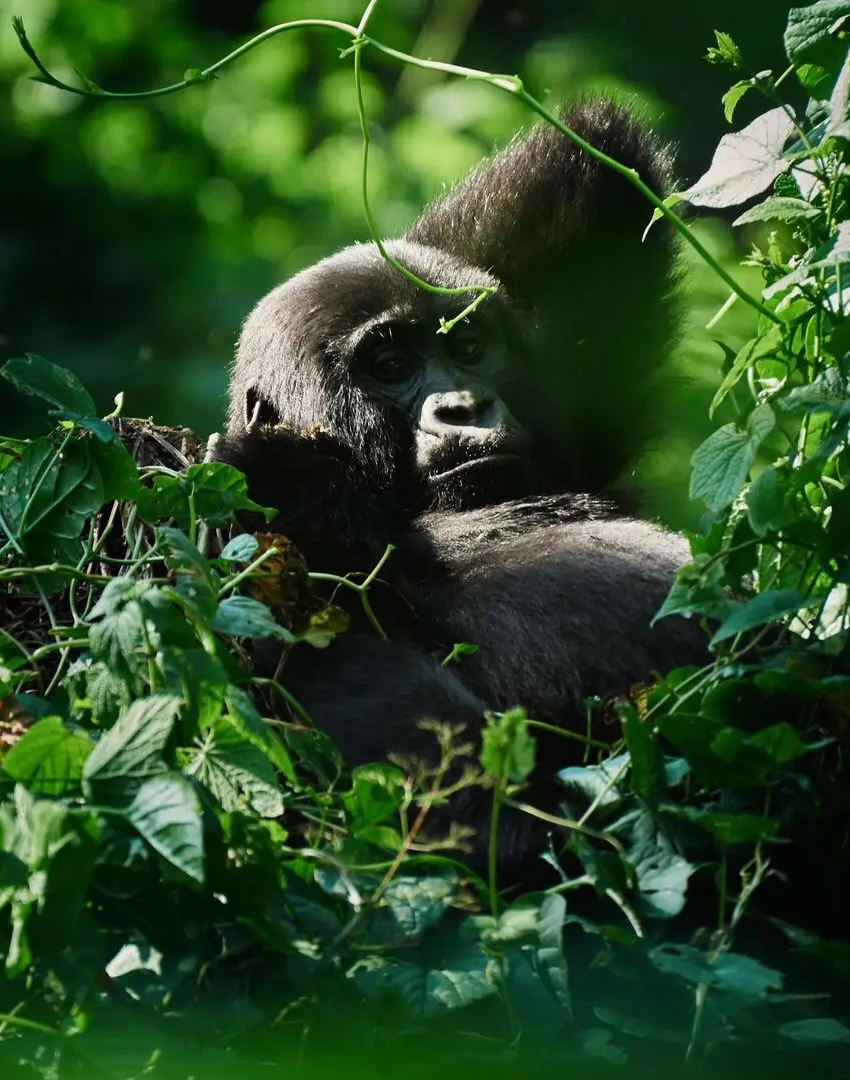
One of Africa's most ancient rainforests and home to roughly half the world's mountain gorillas. An extraordinary wildlife experience.
Explore Bwindi
Uganda's largest national park, where the Victoria Nile forces itself through a narrow rock gap and plunges forty-three metres.
Explore Murchison Falls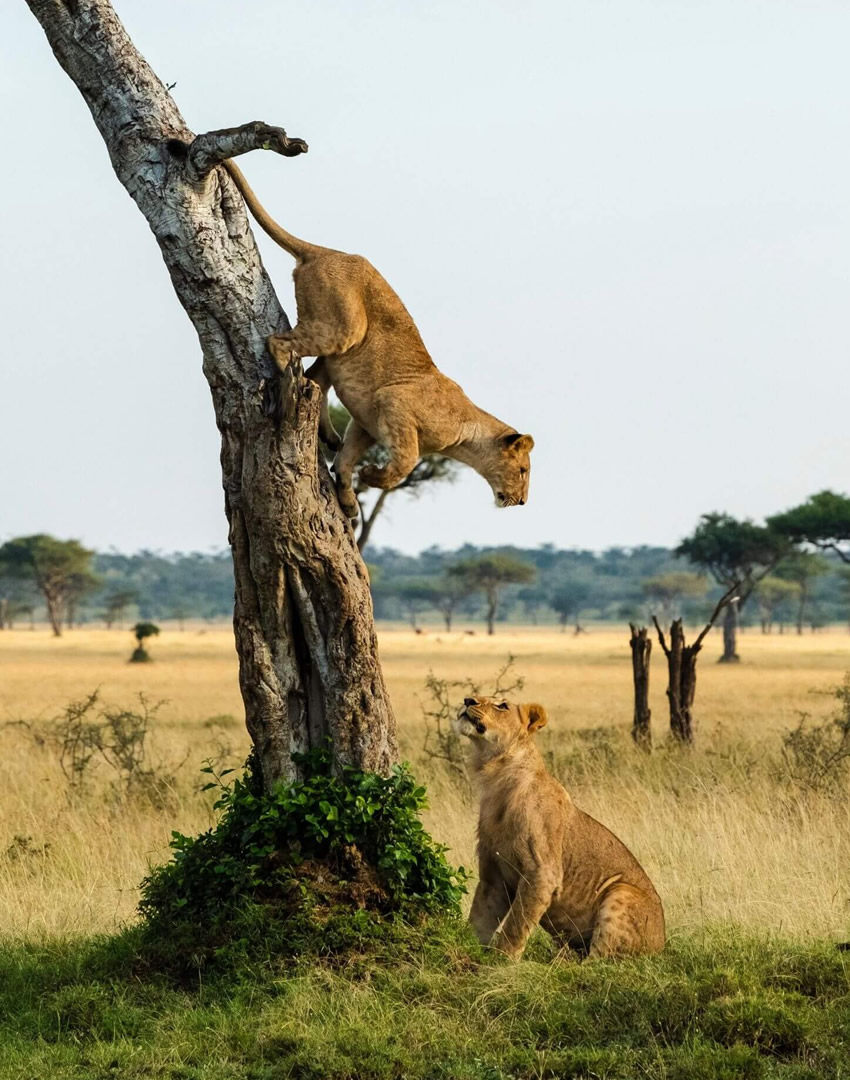
A mosaic of savannah, wetlands, crater lakes and tropical forest. Best known for tree-climbing lions and the Kazinga Channel boat safari.
Explore Queen Elizabeth NPAfrica's premier chimpanzee tracking destination, with the highest density and diversity of primates on the continent.
Explore Kibale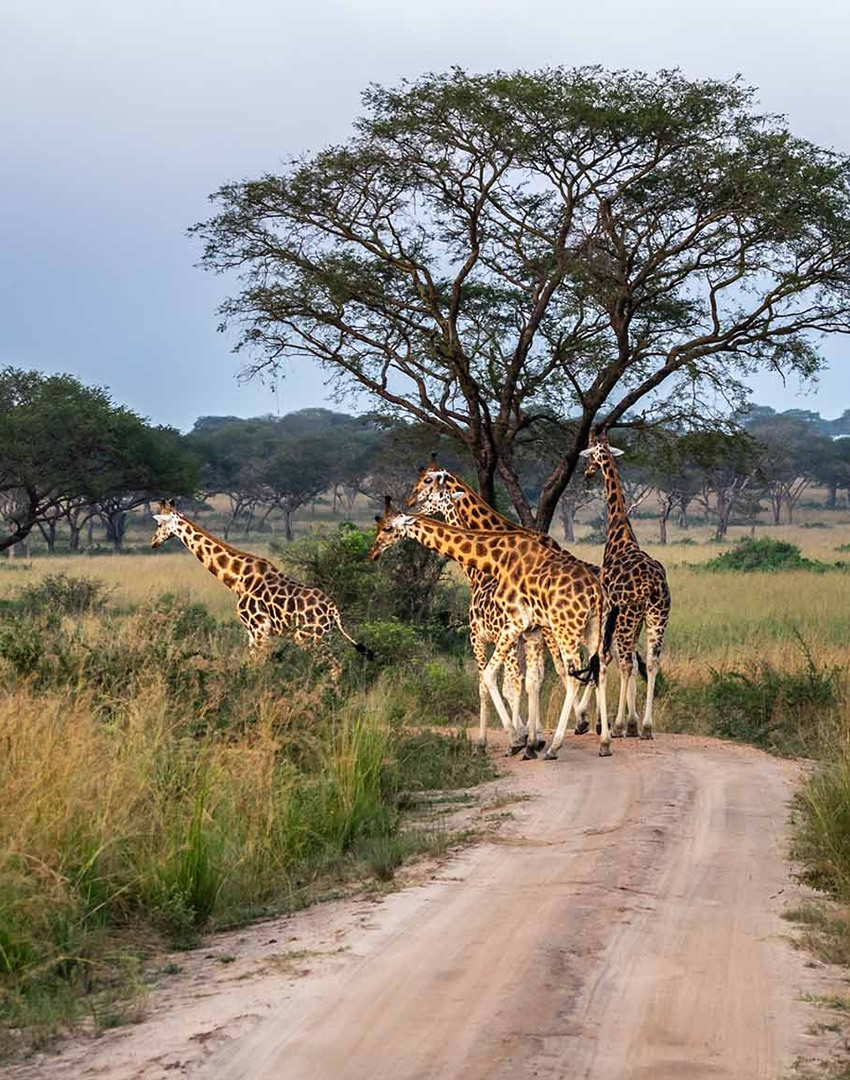
One of Africa's last true wilderness frontiers. Semi-arid savannah and rugged mountain scenery with species found nowhere else in Uganda.
Explore Kidepo Valley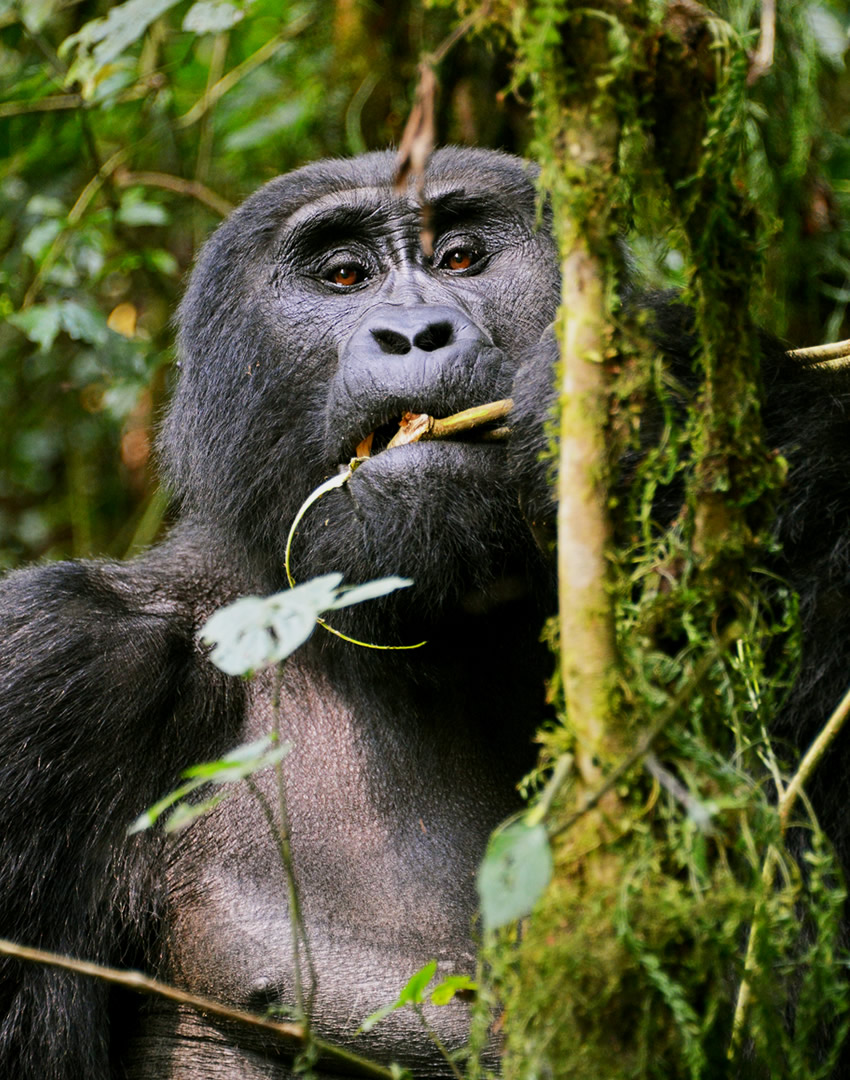
The smallest and most scenic of Uganda's gorilla parks, set on the slopes of the Virunga volcanoes at the meeting point of three countries.
Explore Mgahinga