
A UNESCO World Heritage forest in south-western Uganda — ancient, mist-wrapped, and vertical — sheltering roughly half the world's remaining mountain gorillas in one of the most biologically dense ecosystems on the African continent.
Bwindi Impenetrable National Park covers 331 square kilometres of steep, densely forested mountain terrain on the eastern edge of the Albertine Rift in south-western Uganda. The forest — one of the oldest and most biologically rich on the continent — has survived since the last ice age, when most of Africa's tropical forests retreated. That continuity, measured in tens of thousands of years, explains both the park's extraordinary biodiversity and its name: Bwindi means "place of darkness" in the local Rukiga language, a reference to the deep, tangled canopy that makes the forest floor perpetually dim.
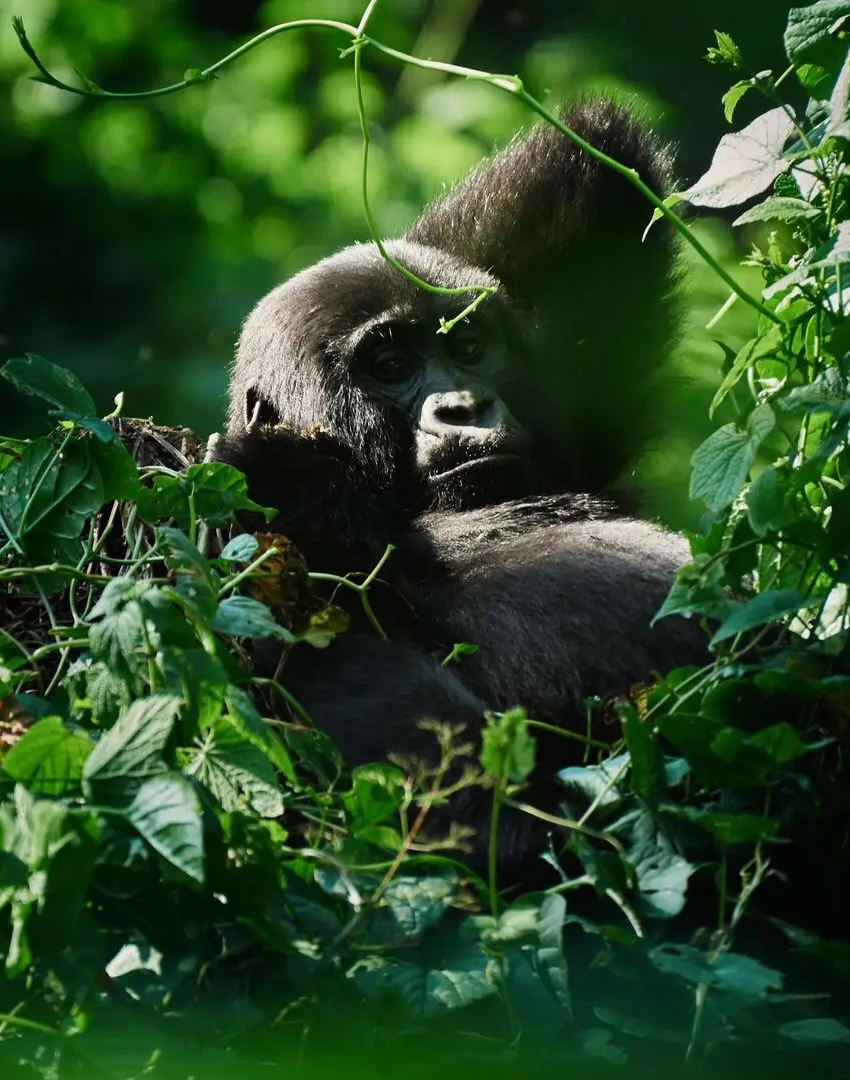
Bwindi's global significance, however, rests on a single species. The park is home to approximately 459 mountain gorillas — roughly half the world's entire population, which totals just over 1,000 individuals split between the Bwindi-Sarambwe ecosystem and the Virunga volcanoes shared by Rwanda, Uganda, and the Democratic Republic of Congo. Mountain gorillas cannot survive in captivity. Every individual alive exists in these two small patches of forest. Bwindi is not just a park — it is one of two vaults in which the survival of an entire species is stored.
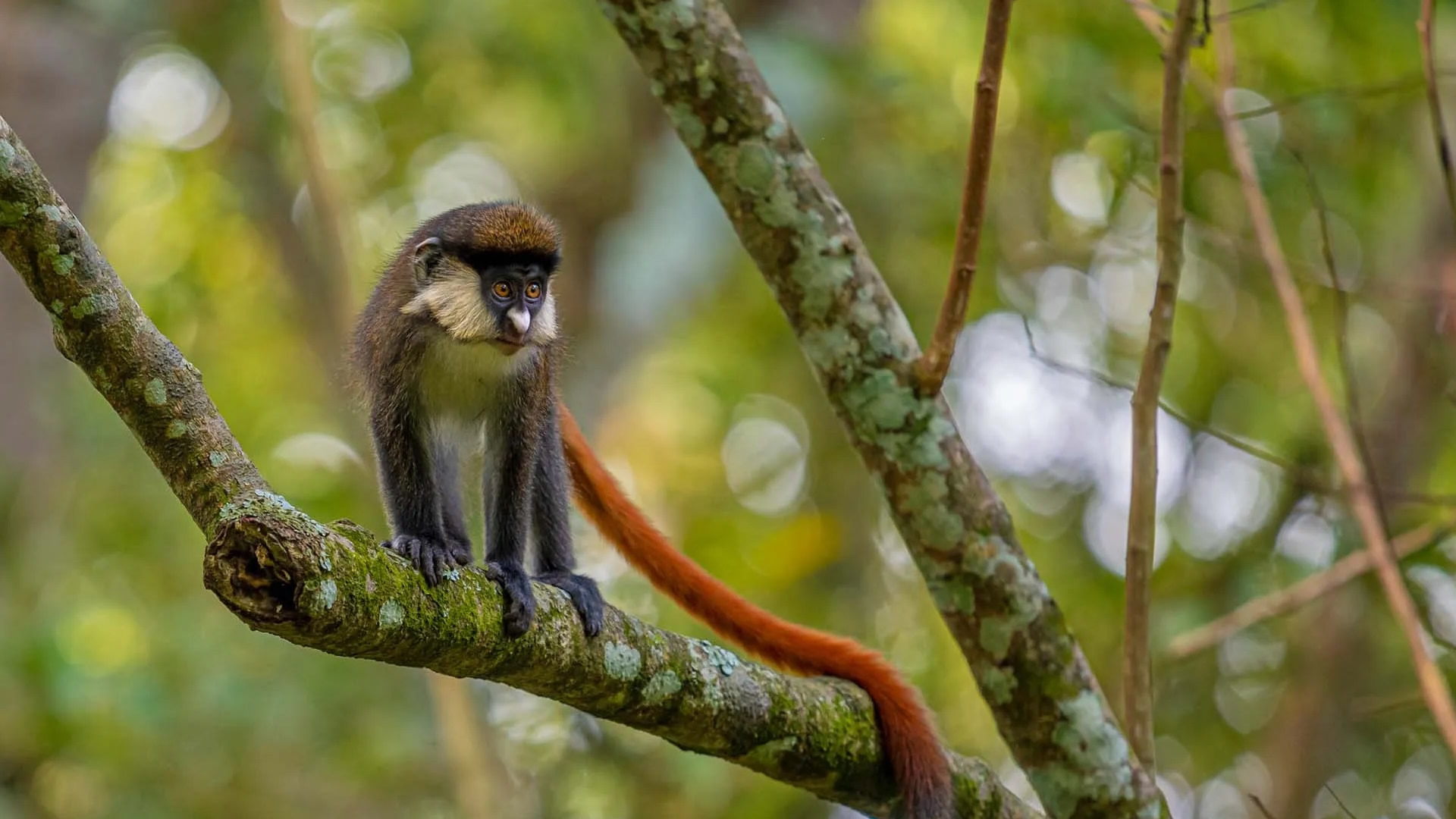
Over 20 gorilla families have been habituated for trekking across Bwindi's four sectors — Buhoma, Ruhija, Rushaga, and Nkuringo — each offering a different terrain, altitude, and trekking character. Beyond the gorillas, Bwindi supports 120 mammal species, over 350 bird species (including 23 Albertine Rift endemics), 220 butterfly species, and an estimated 1,000 flowering plants. The forest is not merely home to gorillas; it is one of the most important repositories of montane biodiversity in Africa.
Mountain gorilla trekking, ancient montane forest, Albertine Rift endemics, Batwa heritage, and an encounter that permanently changes how you see the natural world.
There is no wildlife experience on Earth quite like sitting on the forest floor while a family of mountain gorillas feeds, plays, and rests around you. The silverback — 200 kilograms of muscle, authority, and quiet intelligence — watches from a few metres away. Juveniles tumble through the undergrowth. A mother nurses an infant. The encounter lasts one hour, and it is, for most visitors, the single most powerful and emotionally resonant wildlife moment of their lives. Bwindi offers more habituated families and more trekking permits than any other gorilla destination.
Mountain gorillas are critically endangered — the total global population is just over 1,000, and every individual lives in the wild. Roughly half reside in Bwindi. The species cannot be kept in zoos; it survives only in its natural forest habitat. Visiting Bwindi is not simply a safari activity — it is a direct contribution to the economic model that protects the species. Permit revenue funds park management, anti-poaching, and community development. Every trek is an act of conservation as much as it is an act of wonder.
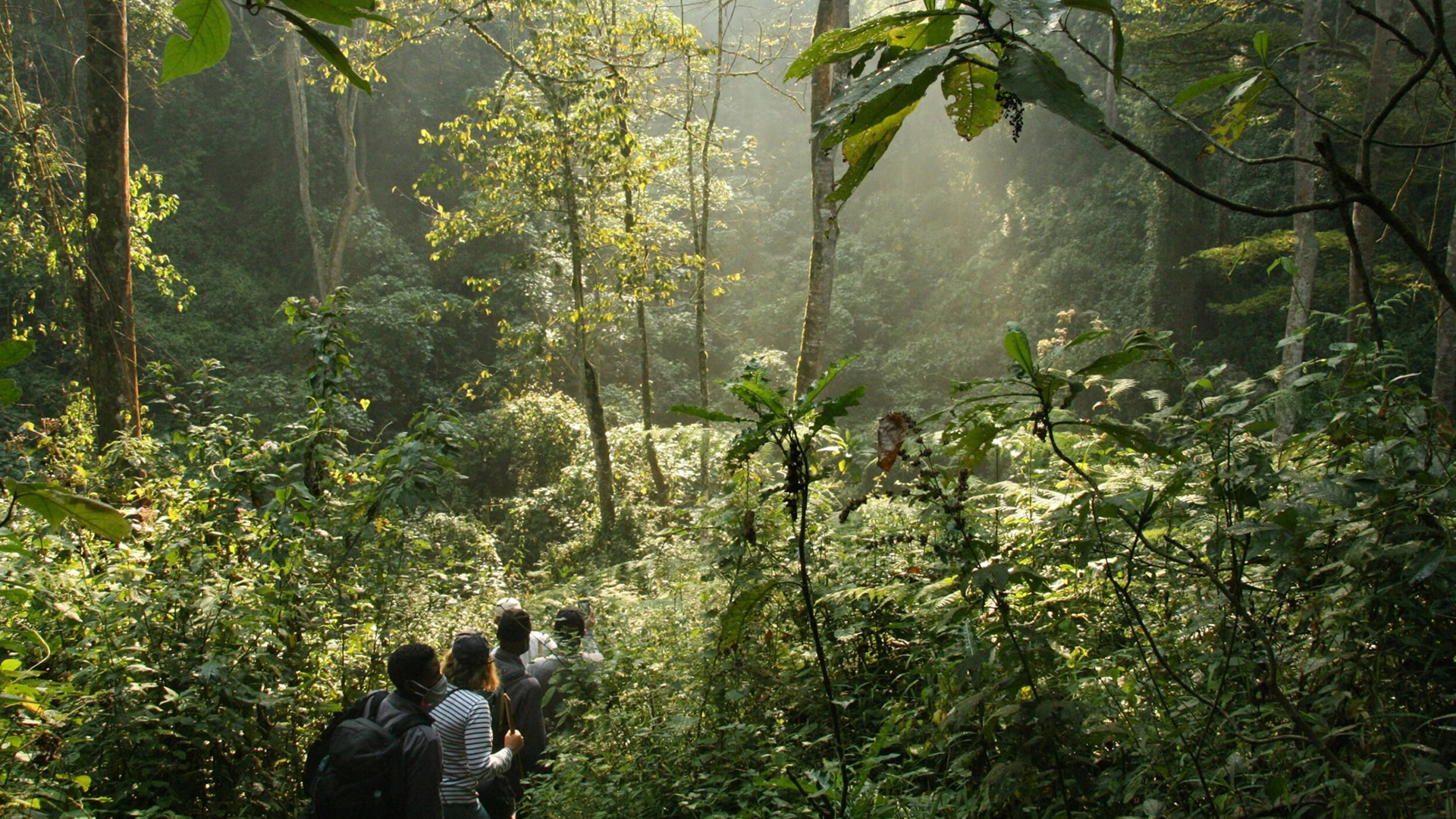
Bwindi is one of the few forests in Africa that survived the last ice age — a refugium where species persisted while the surrounding landscape dried and retreated. This deep continuity explains the forest's extraordinary species richness and its dense, tangled character. Walking through Bwindi is walking through a living archive — ferns, mosses, orchids, and trees that have occupied this ground for 25,000 years or more. The forest is not scenic in a postcard sense; it is overwhelming, vertical, and alive in every direction.
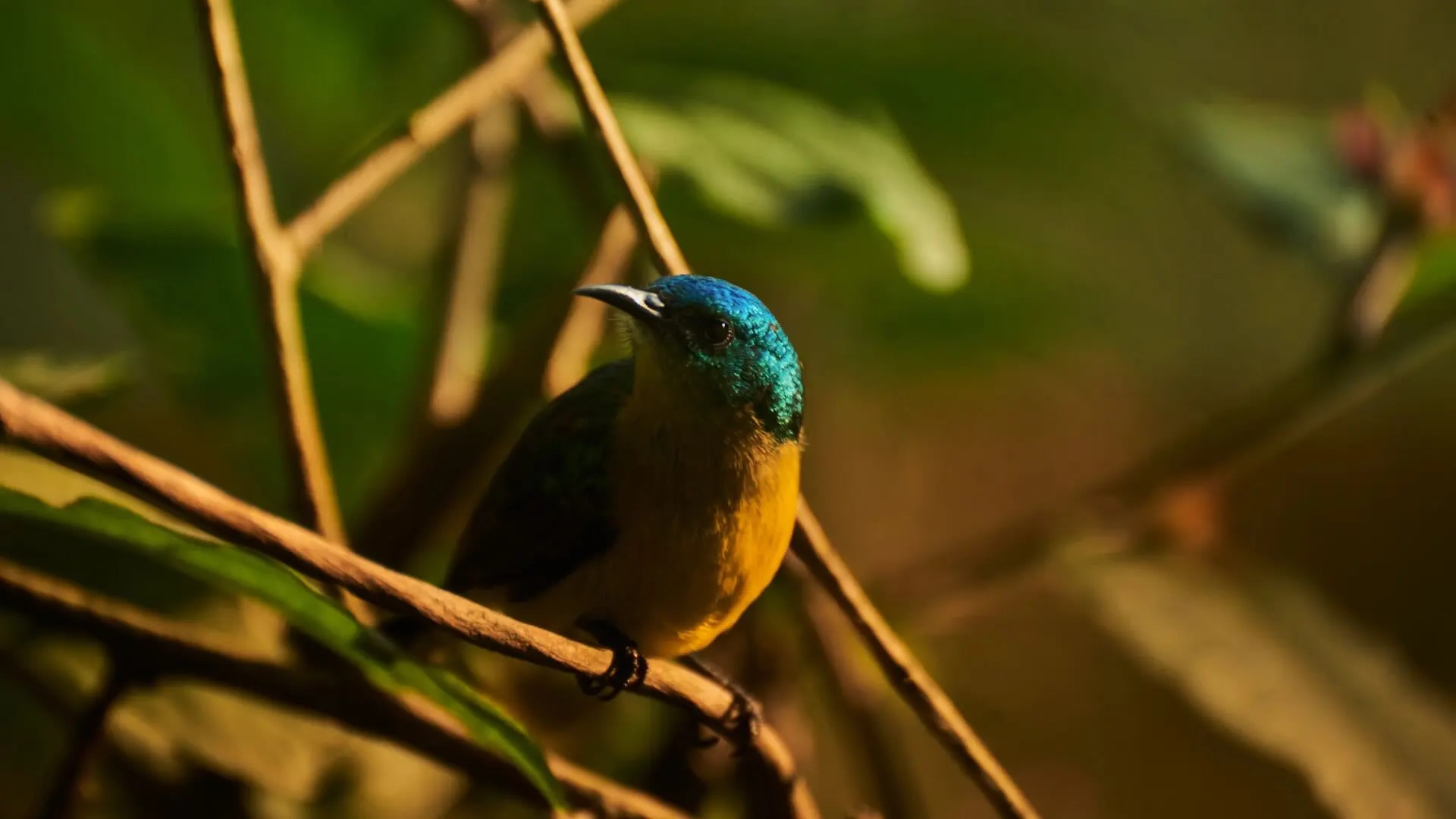
Bwindi lies within the Albertine Rift — one of Africa's most important centres of endemism. The park supports 23 bird species found only in this rift system, including African green broadbill, Shelley's crimsonwing, Grauer's warbler, and the handsome spurfowl. For birders, Bwindi is a bucket-list destination independent of the gorillas. The forest also supports endemic and near-endemic reptiles, amphibians, and invertebrates in numbers that have led conservation biologists to rank it among the most irreplaceable forests on Earth.
The Batwa — the indigenous forest-dwelling people of Bwindi — were displaced from the forest when it was gazetted as a national park. Today, Batwa community groups offer guided cultural experiences that share their ancestral knowledge of the forest: traditional hunting techniques, medicinal plant identification, honey gathering, and the songs and stories of a people whose relationship with this ecosystem predates written history. These encounters provide a human dimension to the conservation story and support communities navigating a profoundly difficult transition.
Bwindi operates across four sectors — Buhoma in the north, Ruhija in the east, Rushaga in the south, and Nkuringo on the western slopes — each with its own habituated gorilla families, terrain, altitude, and character. Buhoma is the most established and accessible. Ruhija is the highest, set in bamboo and montane forest. Rushaga has the most families. Nkuringo offers dramatic valley views and a famously steep approach. The choice of sector allows itineraries to be tailored to fitness level, lodge preference, and the specific family you wish to visit.
Bwindi Impenetrable National Park lies in the extreme south-west of Uganda, on the edge of the Albertine Rift Valley where the country meets the Democratic Republic of Congo. The park occupies a series of steep, forested ridges and valleys on the eastern slopes of the Rift, with elevations ranging from 1,160 metres in the valley bottoms to 2,607 metres on the highest peaks.
The nearest major town is Kabale, approximately 30 kilometres to the east. Kampala and Entebbe are roughly 450 kilometres to the north-east — an 8 to 10 hour drive that passes through Uganda's green, hilly western highlands. Alternatively, charter flights from Entebbe or Kampala to the airstrips at Kihihi (for Buhoma and Nkuringo) or Kisoro (for Rushaga and Nkuringo) reduce the journey to approximately 1 to 1.5 hours. Bwindi's proximity to Rwanda's Volcanoes National Park — just 30 kilometres south across the border — makes cross-border gorilla itineraries possible.
From gorilla trekking through mist-wrapped forest to Albertine Rift birding, Batwa cultural encounters, and community walks on the forest edge.
The core Bwindi experience. Groups of eight trekkers, guided by UWA rangers and trackers, enter the forest at dawn to locate a habituated gorilla family. The trek may take one to six hours depending on where the gorillas have moved — through dense understorey, up steep ridges, and across muddy valleys. Once found, you spend one hour with the family at close range. The terrain is demanding but the encounter is transformative. Permits are limited and must be booked well in advance.
For those wanting more than the standard one-hour encounter, the Gorilla Habituation Experience (GHE) allows visitors to spend up to four hours with a gorilla family that is still in the process of becoming accustomed to human presence. Available in the Rushaga sector, the GHE provides an extended, immersive window into gorilla behaviour — feeding, resting, socialising, and moving through the forest in real time. Only four visitors are permitted per day, making it one of the most exclusive wildlife experiences in Africa.
Bwindi is one of Africa's premier birding destinations — 350 species have been recorded, including 23 Albertine Rift endemics. Key targets include the African green broadbill, Shelley's crimsonwing, Grauer's warbler, handsome spurfowl, short-tailed warbler, and the elusive Grauer's rush warbler. The Buhoma waterfall trail, the Ruhija bamboo zone, and the Mubwindi Swamp trail are particularly productive. Specialist birding guides can be arranged through lodges, and a serious birding visit to Bwindi warrants two to three dedicated days independent of the gorilla trek.
The Batwa Trail follows a route through the forest guided by members of the indigenous Batwa community, who share their ancestral knowledge of the ecosystem they inhabited for thousands of years before the park's creation. Demonstrations include traditional fire-making, honey harvesting, medicinal plant use, and the songs and dances that express the Batwa's relationship with the forest. The experience is moving, informative, and an important source of income for communities navigating displacement and cultural transition.
Bwindi offers several guided forest walks independent of the gorilla trek — including the Munyaga River waterfall trail, the Rushura hilltop walk with views across the Rift Valley to the Congo, and the Mubwindi Swamp trail that passes through some of the park's densest and most pristine forest. These walks are physically moderate to challenging (the terrain is always steep), and they provide extended time in the forest ecosystem — primates, butterflies, orchids, and birdlife — without the time pressure of the gorilla hour.
Several lodges arrange guided walks through the farming communities surrounding the park — through terraced hillsides, tea plantations, banana groves, and village schools. These walks provide insight into the daily lives of the Bakiga communities who live alongside the forest and the challenges of coexisting with gorillas that sometimes raid crops. Visits to community-run projects — craft cooperatives, women's groups, and beekeeping initiatives — demonstrate the human side of the conservation model that keeps Bwindi's gorillas safe.
Gorilla trekking operates year-round. Trail conditions change with the rains, but the gorillas are always there — and some of the best encounters happen in the quieter wet months.
The driest months and the most popular for gorilla trekking. Trails are firmer (though never truly dry — this is a rainforest), the forest floor is less muddy, and the approach routes are at their most manageable. These months are also the busiest, and gorilla permits sell out months in advance. June to August is the peak window; January and February offer a second dry spell that is slightly quieter. Morning mists clear earlier, and the forest canopy admits more light — improving photography during the gorilla hour.
The long rains make Bwindi's steep trails seriously muddy and slippery — gaiters, waterproof layers, and strong boots are essential. However, gorilla trekking operates year-round, sighting rates are no lower in the wet months, and visitor numbers drop significantly — meaning quieter trails, more available permits, and a forest that is at its most lush, dramatic, and atmospheric. April and May lodge rates are often considerably lower. Experienced trekkers who are comfortable with challenging conditions often prefer the wet months for the intimacy and the light.
A scenic full-day drive through Uganda's western highlands or a short charter flight from Entebbe — the journey into gorilla country is part of the story.
Charter and scheduled flights operate from Entebbe International Airport to the airstrips at Kihihi (for Buhoma and Nkuringo sectors) and Kisoro (for Rushaga and Nkuringo). Flight time is approximately 1 to 1.5 hours, depending on routing. From the airstrip, a road transfer of 1 to 2.5 hours reaches the park gate and your lodge. AeroLink Uganda and charter operators run these routes regularly. Flying eliminates the long overland drive and allows same-day arrival from Entebbe.
The overland drive from Kampala or Entebbe takes 8 to 10 hours via the western route through Mbarara and Kabale — a scenic journey through Uganda's green, terraced highlands, past Lake Bunyonyi, and into the steep hill country that surrounds the park. Many itineraries break the journey with an overnight at Lake Bunyonyi or Queen Elizabeth National Park, turning the transfer into an experience. The roads are tarmac for most of the route, with the final stretch on well-maintained murram.
Bwindi pairs naturally with Queen Elizabeth National Park (3–4 hours north) for savannah game drives and the Kazinga Channel boat cruise, and with Lake Bunyonyi (1–2 hours east) for a rest day between treks. A classic Uganda gorilla circuit runs Entebbe → Queen Elizabeth (2 nights) → Bwindi (2–3 nights) → Lake Bunyonyi (1 night) → Entebbe. Cross-border itineraries linking Bwindi with Rwanda's Volcanoes National Park are also straightforward, combining Uganda and Rwanda gorilla trekking in a single trip.
Mountain gorillas, ancient forest, misty ridges, and the place where conservation is written in every permit sold.
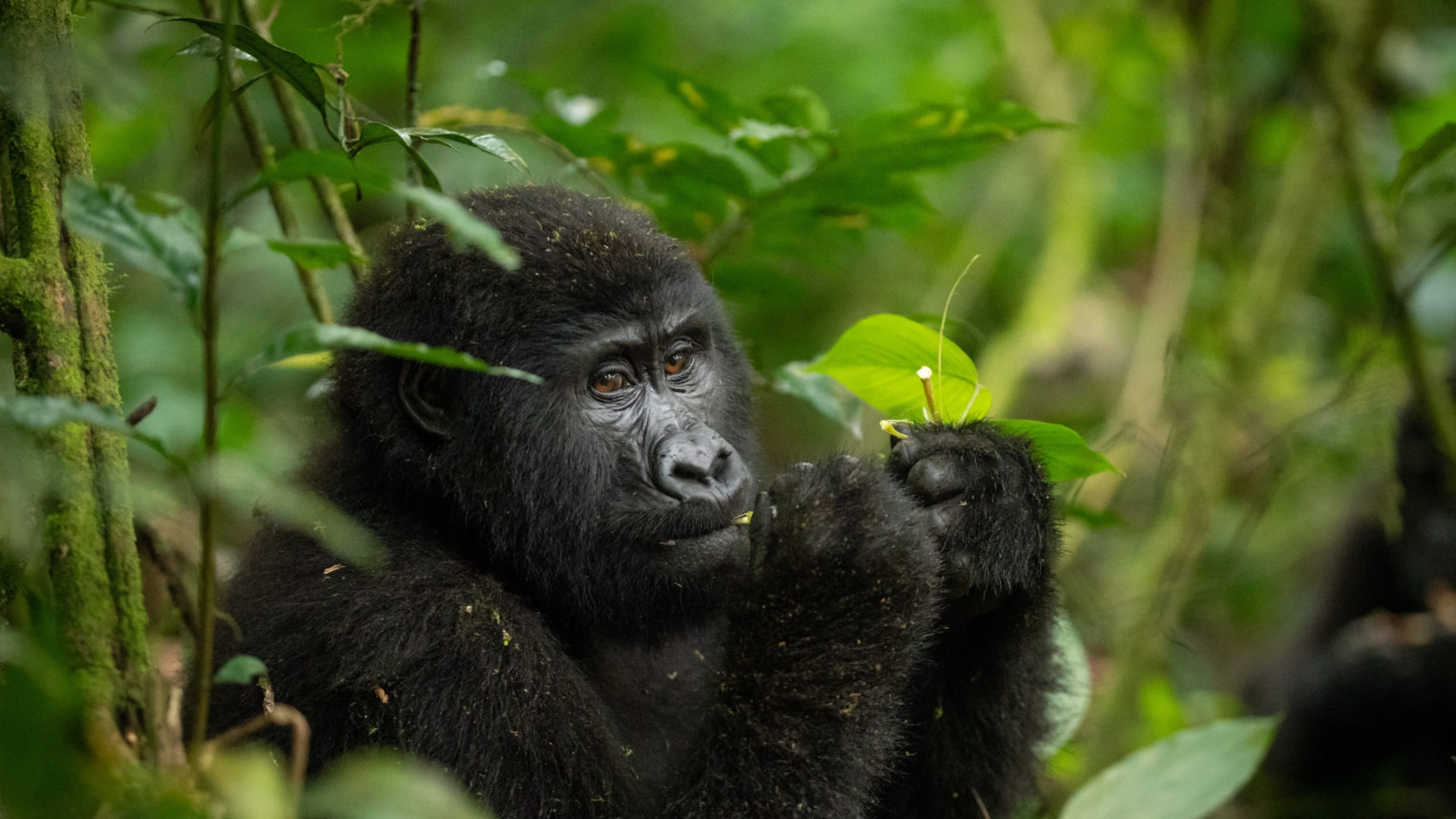
A gorilla trekking permit in Uganda costs USD 700 per person per trek (as of 2024/2025). The permit includes park entry and the services of UWA rangers and trackers. Only eight visitors are permitted per gorilla family per day, and permits are allocated by family and sector. Demand is high, particularly in the dry-season months, and permits should be booked as far in advance as possible — six to twelve months ahead for peak season is advisable. All gorilla permits on Kuldip's Touring Company itineraries are secured and included in the quoted price.
Moderate to strenuous. Bwindi's terrain is steep, densely vegetated, and often muddy. Treks can last from one to six hours each way depending on where the gorilla family has moved. The altitude (1,160 to 2,607 m) adds to the physical effort. A reasonable level of fitness is needed, and sturdy waterproof hiking boots, long trousers, gardening gloves (for gripping vegetation), and gaiters are strongly recommended. Porters are available at each sector to carry bags and provide support on the trail — their assistance is invaluable and their hire directly supports the local community.
Two nights is the standard allocation — allowing one gorilla trek plus a second activity such as the Batwa Trail, a forest walk, or birding. Three nights is ideal for visitors planning two gorilla treks (different families on consecutive days), a birding walk, and the Batwa cultural experience. A single night is too tight given the transfer time from the airstrip and the early-morning trek departure. Many visitors also add an overnight at Lake Bunyonyi before or after Bwindi for a rest day.
Each sector has its own character. Buhoma (north) is the most established and accessible, with the widest lodge selection and generally moderate trekking terrain. Ruhija (east) is the highest sector, set in bamboo and montane forest — cooler, mistier, and excellent for birding. Rushaga (south) has the most habituated families and is the only sector offering the Gorilla Habituation Experience. Nkuringo (west) offers dramatic views across the Rift Valley but involves the steepest approach. Your guide or tour operator can recommend a sector based on fitness level, lodge preference, and permit availability.
Both offer world-class gorilla encounters, but the experiences differ. Bwindi is denser, more tangled, and lower in altitude — the trekking is more physically demanding but the forest setting is wilder and more immersive. Rwanda's Volcanoes NP is at higher altitude on the open volcanic slopes of the Virunga range — the trekking is often shorter and the scenery more open. Rwanda's permits cost USD 1,500, more than double Uganda's USD 700. Bwindi offers more habituated families and more permits per day. For those on a Uganda-focused itinerary, Bwindi is the natural choice; for those already visiting Rwanda, Volcanoes NP is equally exceptional.
Gorilla trekking has a strict minimum age of 15 years — no exceptions. The Gorilla Habituation Experience requires a minimum age of 15 as well. For families with children below this age, Bwindi offers the Batwa Trail, guided forest walks, community walks, and birding — all of which are open to younger visitors. Some lodges are family-friendly and can arrange childcare during the adults' gorilla trek. Families with teenagers aged 15 and above who are physically fit will find the gorilla experience profoundly memorable — many guides consider it the best possible introduction to conservation for a young person.
One of Africa's most ancient rainforests and home to roughly half the world's mountain gorillas. An extraordinary wildlife experience.
Explore Bwindi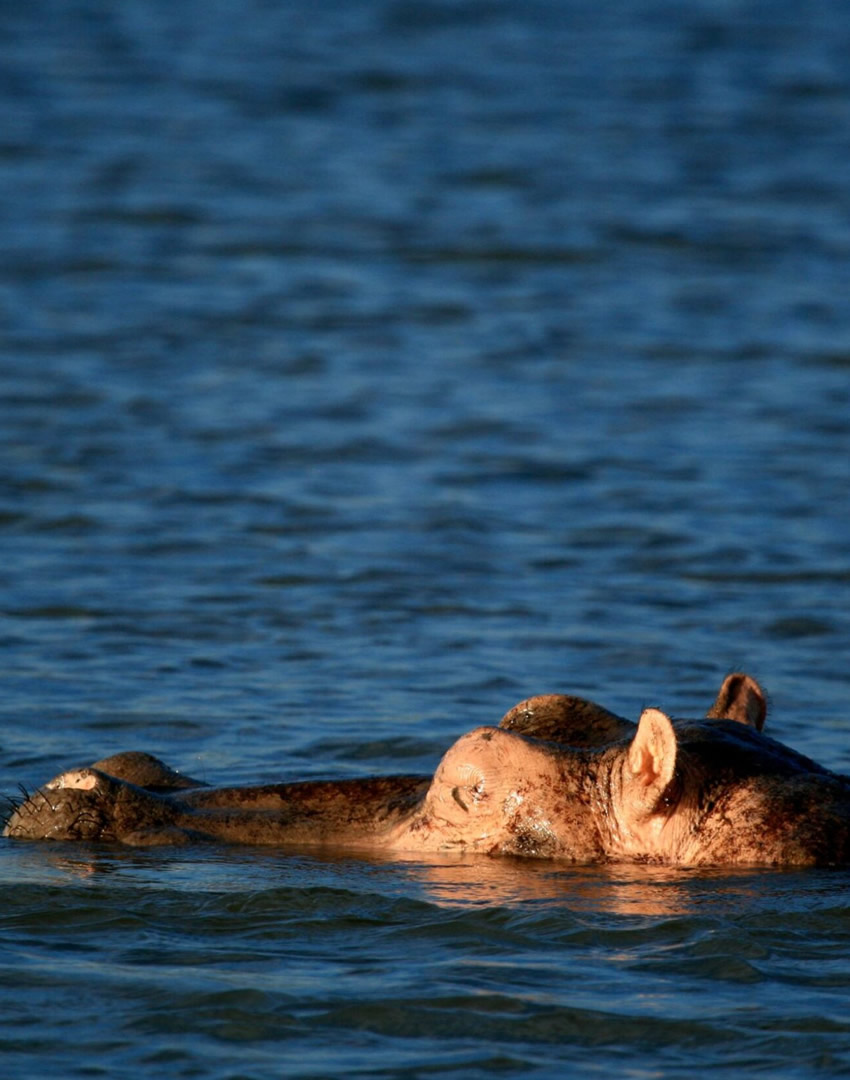
Uganda's largest national park, where the Victoria Nile forces itself through a narrow rock gap and plunges forty-three metres.
Explore Murchison Falls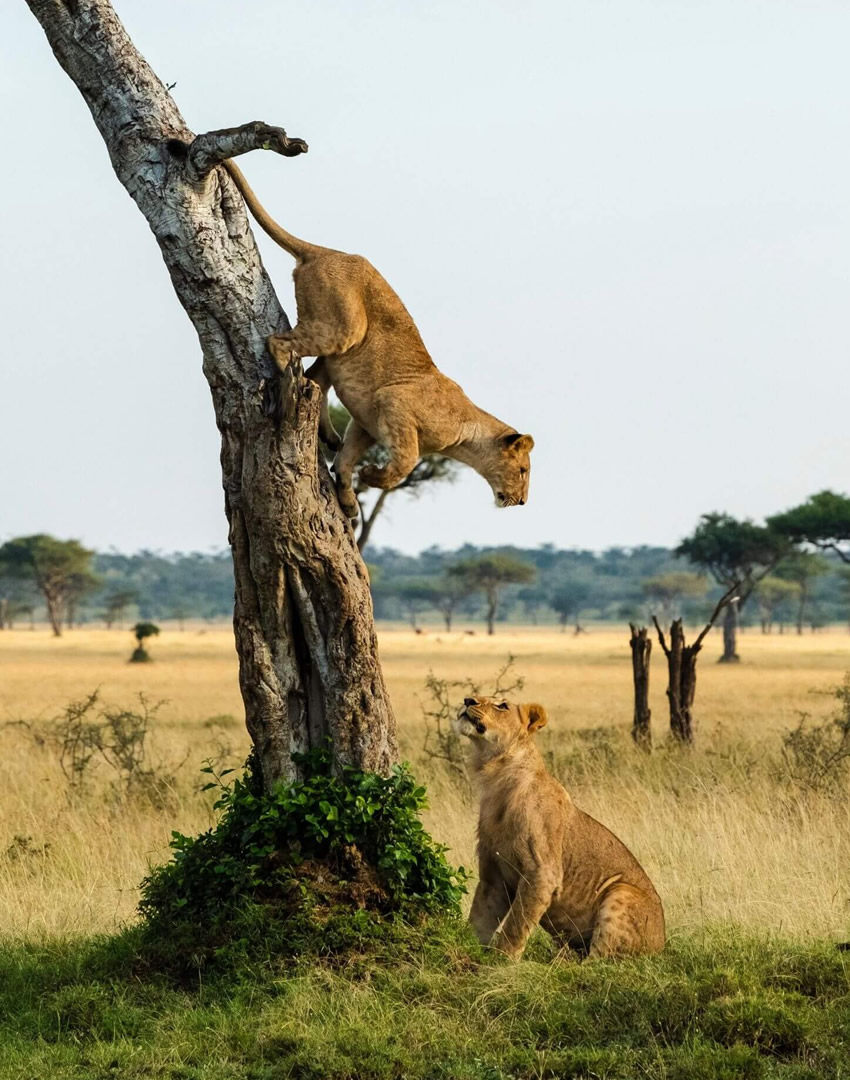
A mosaic of savannah, wetlands, crater lakes and tropical forest. Best known for tree-climbing lions and the Kazinga Channel boat safari.
Explore Queen Elizabeth NP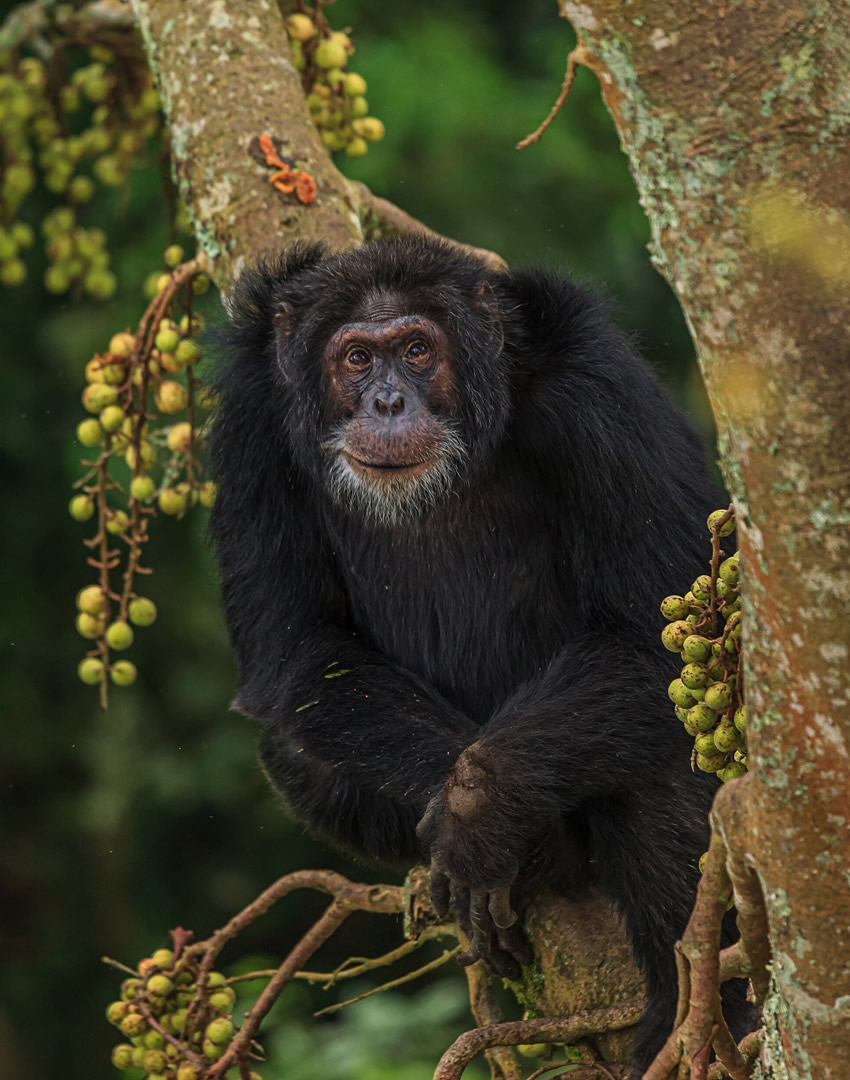
Africa's premier chimpanzee tracking destination, with the highest density and diversity of primates on the continent.
Explore Kibale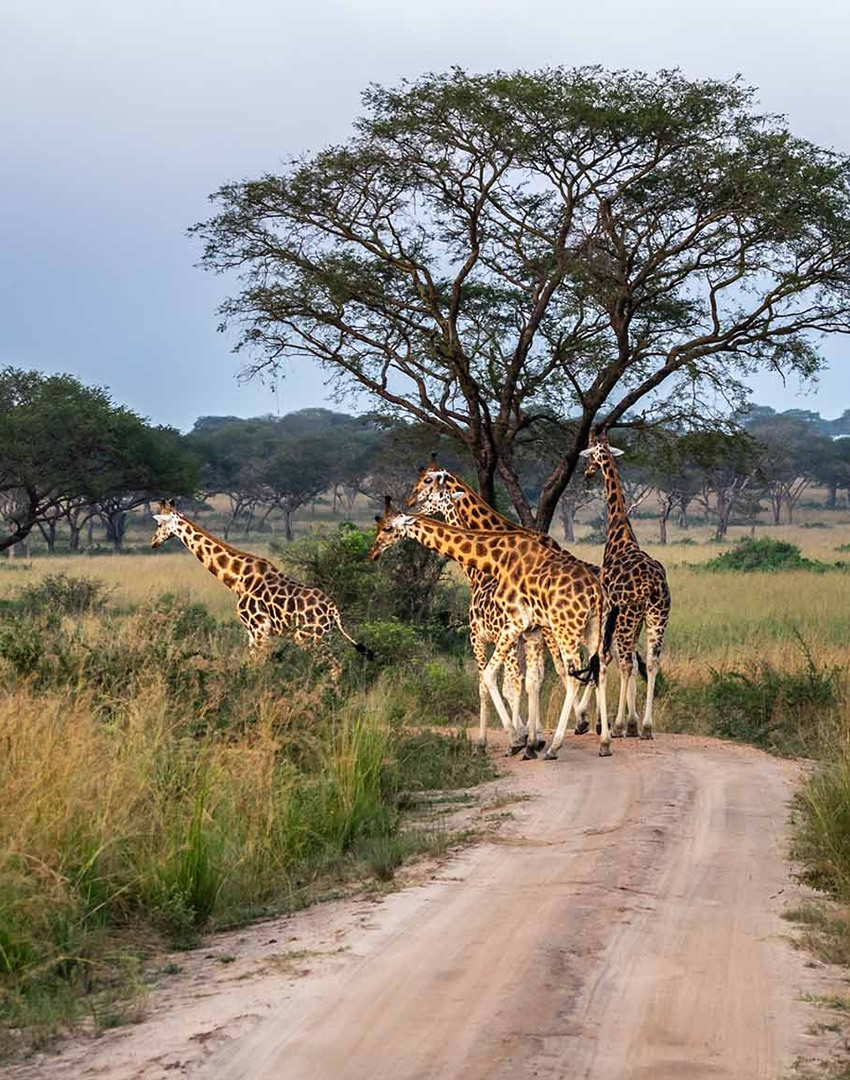
One of Africa's last true wilderness frontiers. Semi-arid savannah and rugged mountain scenery with species found nowhere else in Uganda.
Explore Kidepo Valley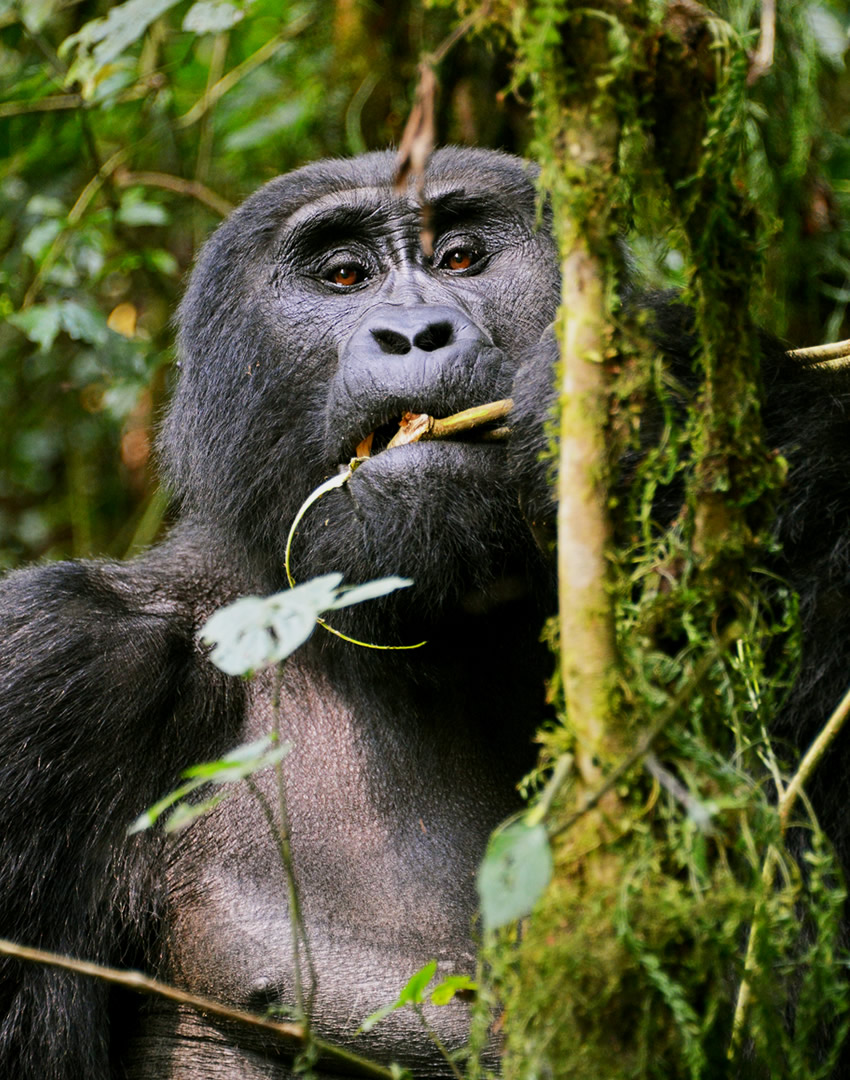
The smallest and most scenic of Uganda's gorilla parks, set on the slopes of the Virunga volcanoes at the meeting point of three countries.
Explore Mgahinga