
A shallow soda lake cradled by the Great Rift Valley — where millions of flamingos once turned the shoreline pink and endangered rhinos now roam a fenced sanctuary beneath euphorbia-studded cliffs.
Lake Nakuru National Park occupies 188 square kilometres of the Great Rift Valley floor in central Kenya, encircling the alkaline waters of Lake Nakuru itself. The park lies just four kilometres south of Nakuru town — Kenya's fourth-largest city — yet feels a world apart: a compact, fully-fenced sanctuary where endangered black and white rhinoceros, Rothschild's giraffe, lion, leopard, buffalo, and over 450 bird species thrive within sight of dramatic escarpment walls.
The lake gained international fame as the setting for one of the natural world's most iconic spectacles — vast congregations of lesser flamingos carpeting the shoreline in a ribbon of vivid pink. At their peak, up to two million flamingos gathered here to feed on the lake's blue-green algae, Spirulina platensis. Fluctuating water levels have periodically dispersed the flocks to neighbouring lakes Bogoria and Elementaita, but the flamingos continue to return, and the sight of even thousands of birds lining the shore remains one of Kenya's most memorable wildlife experiences.
Designated a UNESCO World Heritage Site in 2011 as part of the Kenya Lake System in the Great Rift Valley, Lake Nakuru is also one of Kenya's most important rhino sanctuaries. The park's perimeter fence and dedicated anti-poaching units have made it a stronghold for both black and white rhino conservation — a place where seeing both species in a single game drive is a realistic possibility.
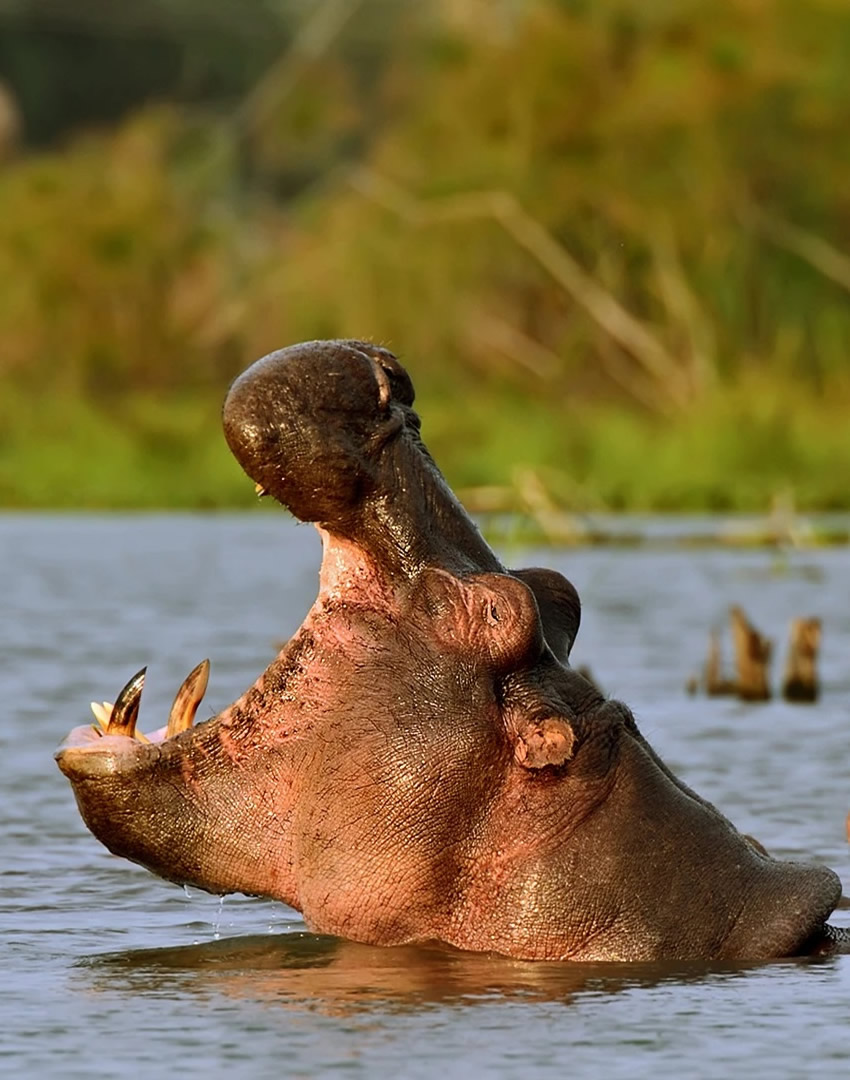
Compact in area but extraordinarily rich in wildlife, Lake Nakuru delivers more per kilometre than almost any park in East Africa.
Lake Nakuru is one of Kenya's most successful rhino conservation stories. The fully-fenced park protects over 70 black and white rhinos — both critically endangered species — making it one of the best places in East Africa to see rhinos in the wild, often at remarkably close range.
Though numbers fluctuate with water chemistry, the sight of lesser and greater flamingos wading along the alkaline shore remains one of Kenya's most unforgettable wildlife experiences. When conditions align, the lake's edge turns a vivid, almost surreal shade of pink.
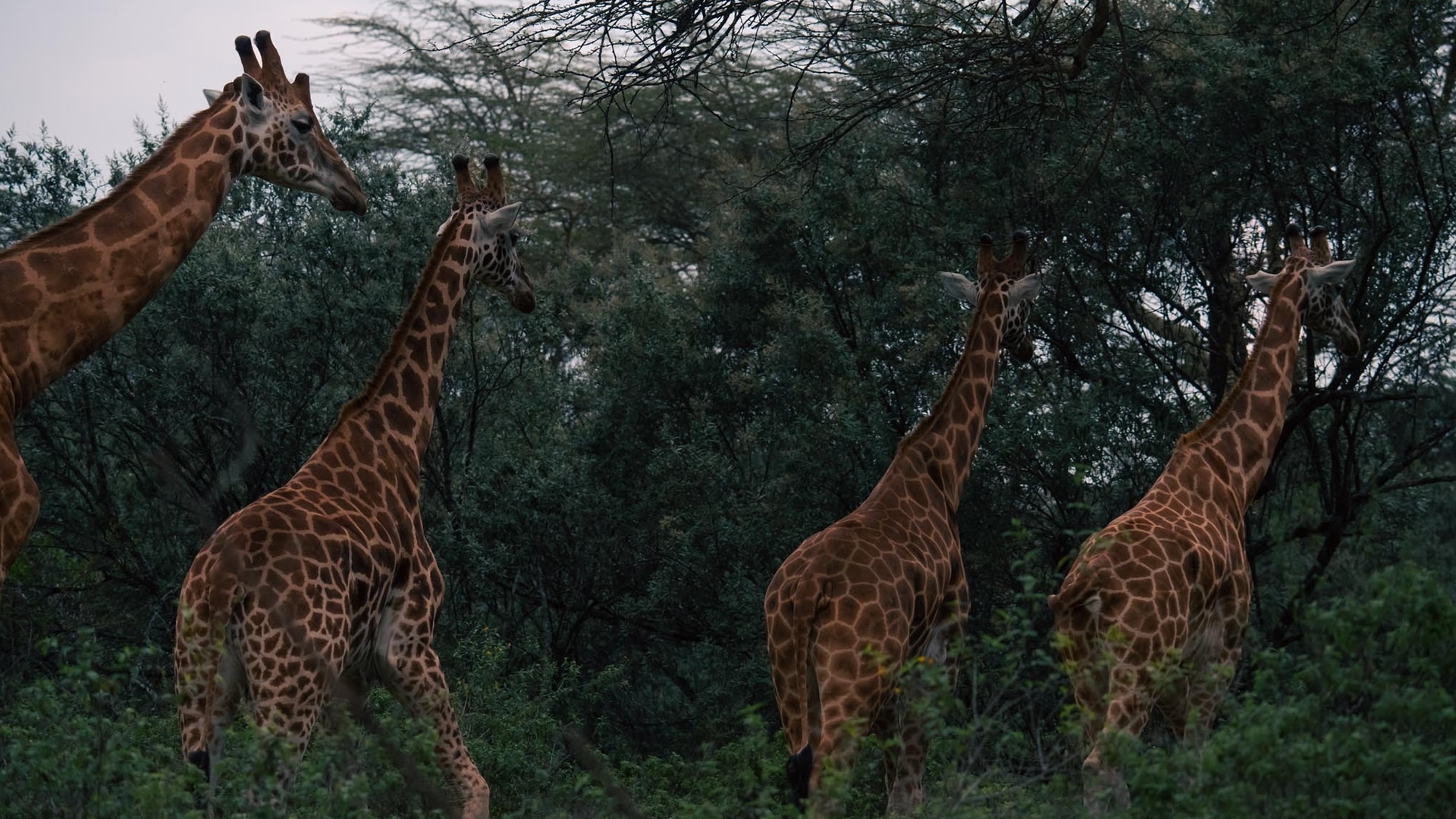
Lake Nakuru is one of only a handful of places where the endangered Rothschild's giraffe — distinguished by its paler colouring and absence of markings below the knee — can be seen in the wild. The park's translocation programme has helped secure the subspecies' future.
The park sits on the Rift Valley floor, ringed by rocky escarpments, euphorbia candelabra forest, and dense acacia woodland. Viewpoints like Baboon Cliff and Lion Hill Ridge offer sweeping panoramas across the lake and valley — landscapes as dramatic as the wildlife.
At just 188 km², the park is small enough to explore thoroughly in a single day, yet dense enough in wildlife to rival parks ten times its size. Its proximity to Nairobi — under three hours by road — makes it one of the most accessible Big Five destinations in Kenya.
Inscribed in 2011 as part of the Kenya Lake System in the Great Rift Valley, Lake Nakuru sits alongside Lakes Bogoria and Elementaita as a globally significant site for birdlife, geological heritage, and the conservation of threatened species.
Lake Nakuru National Park lies in Nakuru County, on the floor of the Great Rift Valley in central Kenya. The park's main gate is just four kilometres from Nakuru town centre and approximately 160 kilometres north-west of Nairobi — a straightforward 2.5 to 3-hour drive via the Nairobi–Nakuru highway or the newer Nairobi Expressway.
The park is entirely fenced, encircling Lake Nakuru and the surrounding grasslands, acacia and euphorbia woodland, and rocky escarpments. To the north, Lake Elementaita and Lake Naivasha extend the Rift Valley lake chain. The Menengai Crater — one of the largest volcanic calderas in the world — sits just north of Nakuru town, and the Hyrax Hill prehistoric site is minutes away, adding geological and archaeological layers to any visit.
Rhino tracking, flamingo shores, and cliffside panoramas — packed into one of Kenya's most rewarding small parks.
Morning and afternoon circuits cover the park's varied habitats — open shoreline, dense woodland, and rocky ridgelines. Lion, leopard, buffalo, rhino, waterbuck, eland, and Rothschild's giraffe are all regularly encountered within a few hours.
Both black and white rhinoceros are present in the park — a rarity in East Africa. White rhinos graze the open grasslands and are often spotted near the southern shore. The more elusive black rhino favours the dense thicket around the eastern ridges.
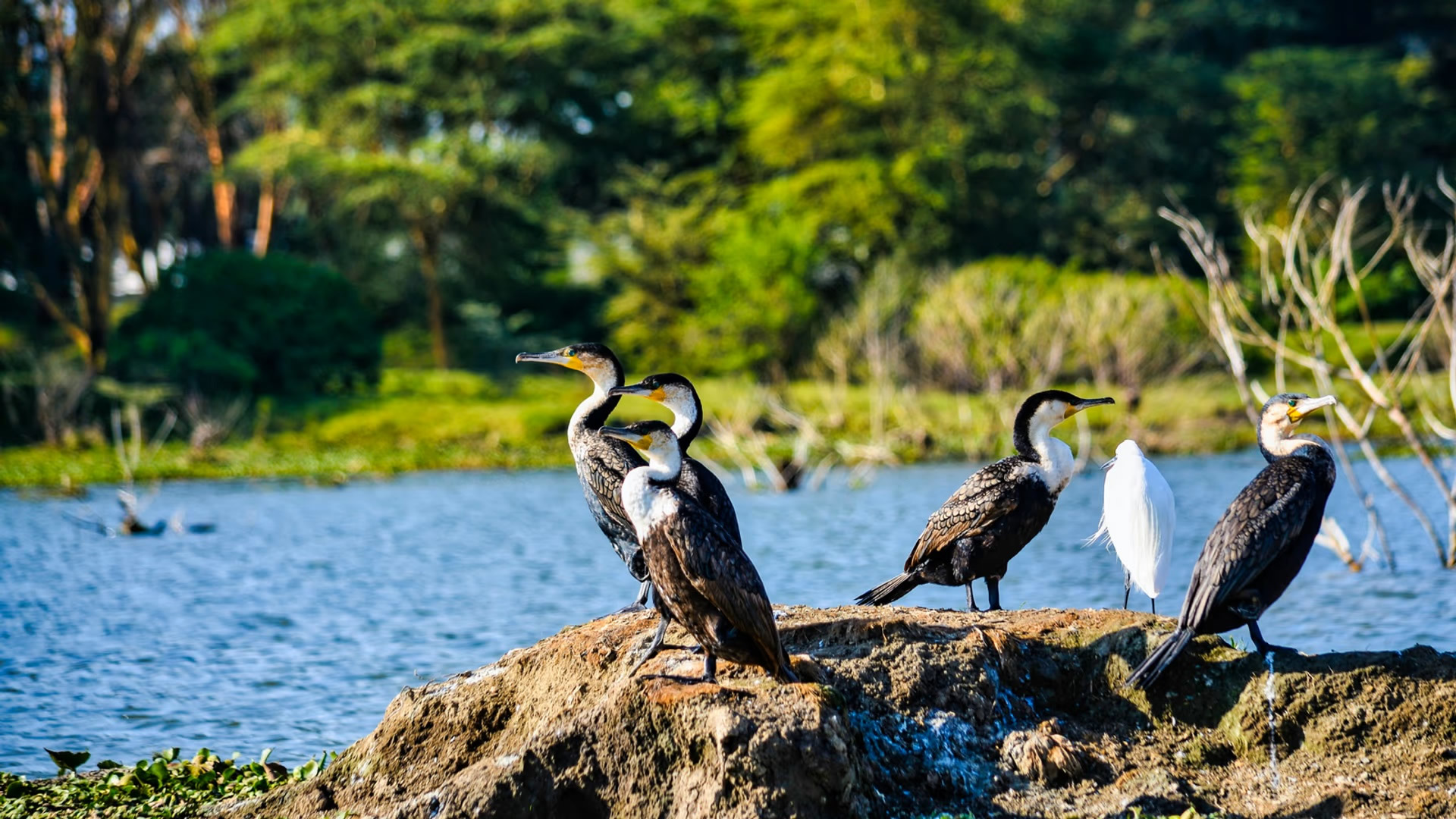
When water levels and salinity align, lesser and greater flamingos gather along the shoreline in their thousands — a spectacle of pink against the alkaline blue. Even in quieter periods, the lake supports pelicans, cormorants, storks, and over 450 recorded bird species.
A short drive to the western escarpment leads to Baboon Cliff — a dramatic vantage point high above the lake with uninterrupted views across the entire park, the Rift Valley floor, and the distant Menengai Crater. Best at dawn or late afternoon.
Over 450 species have been recorded — one of the highest concentrations in any Kenyan park. The alkaline lake draws waterbirds in vast numbers, while the surrounding woodland shelters barbets, woodpeckers, turacos, and the Verreaux's eagle-owl.
The park's southern section contains one of Kenya's largest euphorbia candelabra forests — towering, cactus-like succulents that create an otherworldly landscape. Leopards favour these thickets, and guided walks offer a closer look at the park's unique botany.
Lake Nakuru is rewarding year-round. Dry months concentrate wildlife and improve road conditions; wet months bring the flamingos and migratory birds.
Dry months offer the easiest game-viewing — wildlife concentrates near the lake and permanent water sources, murram roads are firm, and the open grasslands provide clear sightlines for spotting rhino and predators. January and February are warm and dry with excellent visibility; July to October is cooler with the best conditions for the Mara combination route.
Rising water levels alter the lake's salinity, and when conditions are right, flamingos arrive in spectacular numbers. Migratory birds from Europe and North Africa swell the species count. The landscape is green and photogenic, though some park roads may be muddy. Fewer visitors mean a quieter, more personal experience.
One of Kenya's most accessible national parks — under three hours from Nairobi by road.
The most popular route follows the A104 highway north-west from Nairobi through Naivasha to Nakuru — approximately 160 kilometres. The Nairobi Expressway has reduced travel time considerably, and the tarmac road is in excellent condition throughout. The main gate is just four kilometres from Nakuru town.
Scheduled flights operate to Naishi airstrip inside the park from Nairobi's Wilson Airport. Flight time is approximately 35 minutes. Charter options to the nearby Nakuru airfield are also available. Lodge transfers from either airstrip can be arranged in advance.
Lake Nakuru sits naturally on the overland route between Nairobi and the Maasai Mara, making it an ideal first or second stop in multi-park itineraries. The drive from Nakuru to the Mara takes approximately 5–6 hours via Narok — two parks, one continuous Rift Valley journey.
Flamingos, rhinos, and the raw beauty of the Rift Valley floor.
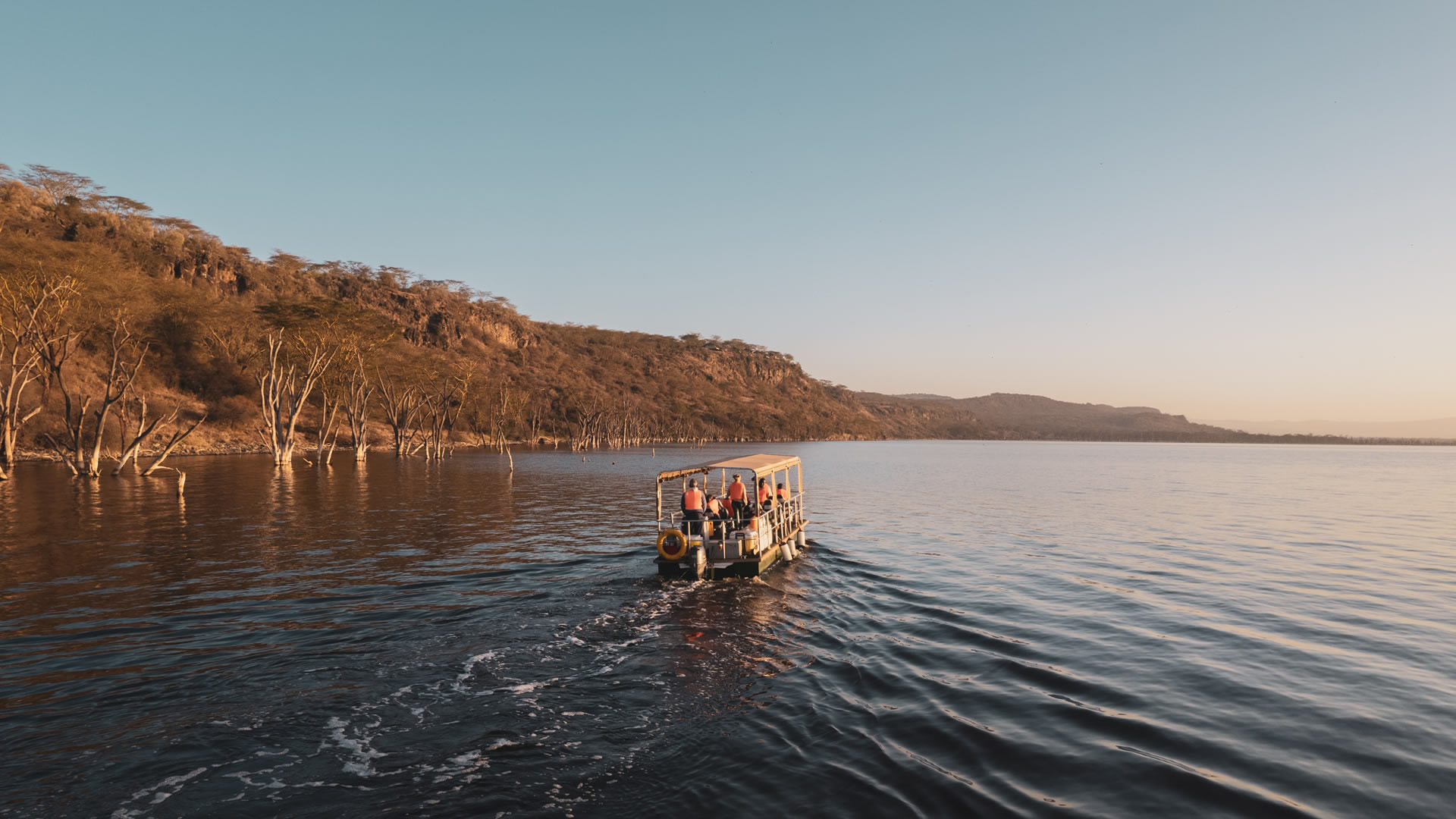
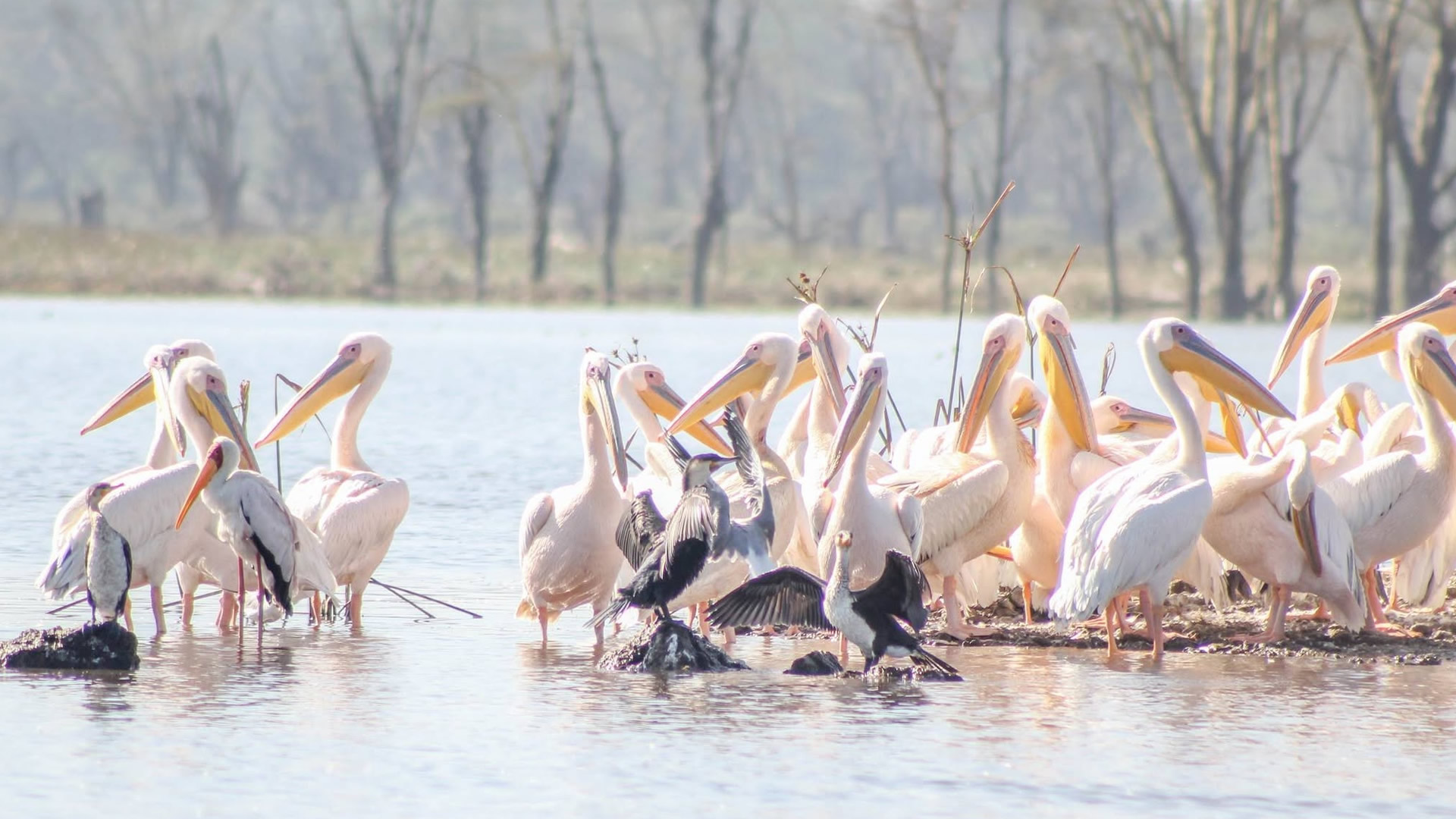
Yes — though their numbers fluctuate significantly depending on the lake's water level and salinity. When conditions are right, tens or even hundreds of thousands of lesser flamingos return to feed on the lake's blue-green algae. In years of high water levels (the lake rose dramatically around 2013–2020), many flamingos relocated to nearby Lake Bogoria. As water levels have receded, the birds have been returning. Your guide will have current information on flamingo numbers at the time of your visit.
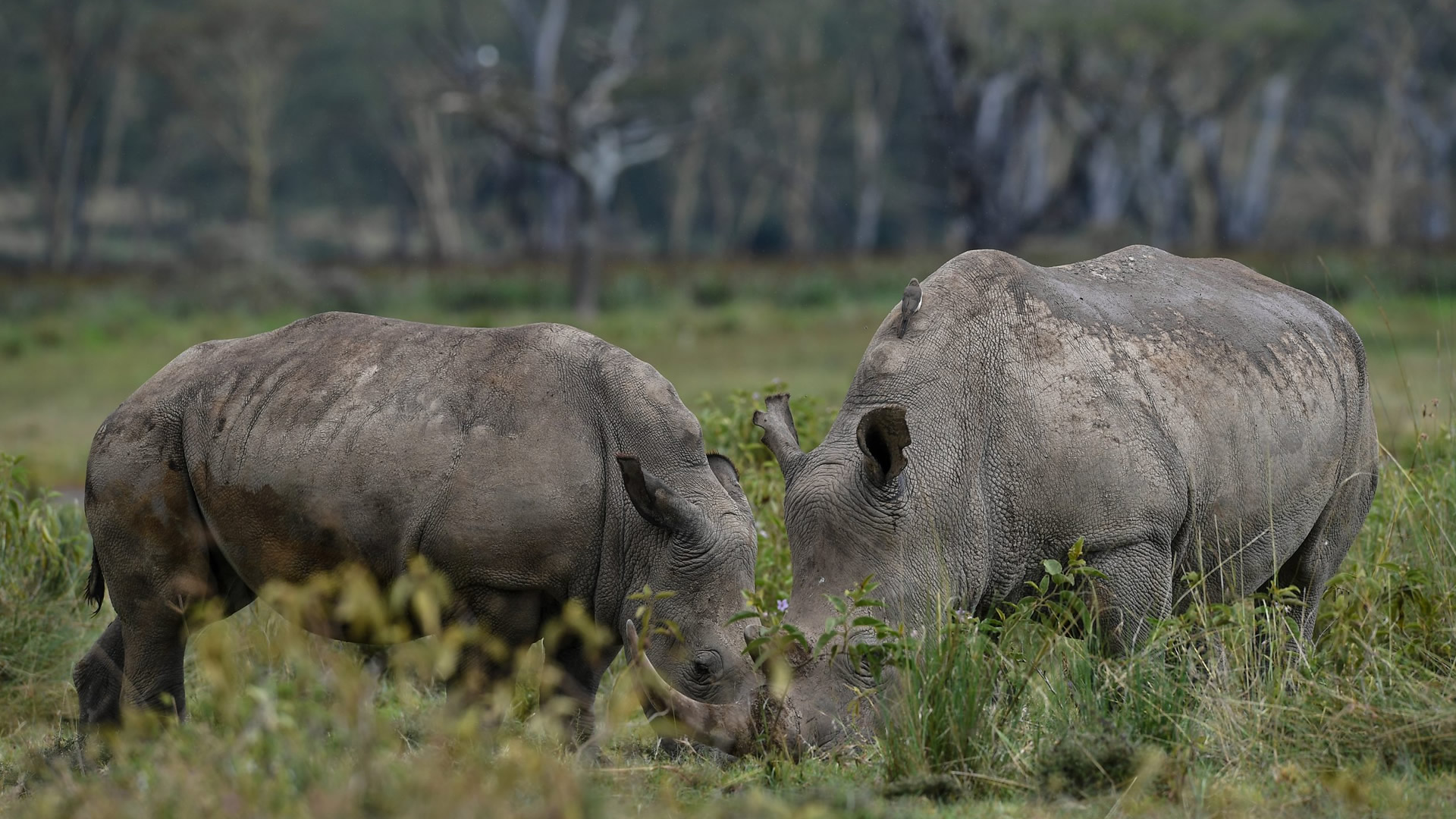
Yes — Lake Nakuru is one of the few places in Kenya where both species coexist in a single park. White rhinos tend to favour the open grasslands near the southern and western shores and are often seen in the open. Black rhinos are smaller, more solitary, and prefer dense bush, particularly around the eastern ridges and euphorbia thickets. A full-day game drive gives you a strong chance of seeing both, though black rhino sightings require patience and a good guide.
It is possible but not ideal. The 160-kilometre drive takes 2.5 to 3 hours each way, leaving limited time inside the park. A single overnight stay is far more rewarding — arriving in the afternoon for a sunset drive, and spending the following morning exploring the park's varied habitats before returning to Nairobi. Day trips work better when Lake Nakuru is part of a longer itinerary that includes Lake Naivasha or the Maasai Mara.
Baboon Cliff is a viewpoint on the western escarpment of the park, reached by a short drive up a winding track. From the clifftop, you get a panoramic view across the entire lake, the surrounding forest, and the Rift Valley floor stretching north towards Menengai Crater. It is one of the most photographed viewpoints in any Kenyan national park and a regular stop on morning game-drive circuits. Olive baboons are often encountered along the approach road.
Non-resident adult entry fees are currently USD 60 per person per day (24-hour period), with children aged 3–17 paying USD 35. East African citizen rates are significantly lower. Fees are payable via the KWS Smart Card system. All park fees on Kuldip's Touring Company safari packages are included in the quoted price — you won't need to handle payment at the gate.
This is one of the most popular safari combinations in Kenya. Lake Nakuru sits naturally on the overland route between Nairobi and the Maasai Mara, and a typical itinerary spends one or two nights at Nakuru before continuing to the Mara for three or four nights. The drive from Nakuru to the Mara takes approximately 5–6 hours via Narok, passing through open farmland and Maasai ranchland. The combination offers an excellent contrast — Rift Valley lake ecology followed by open savannah game viewing.
No. Lake Nakuru is a highly alkaline soda lake — its waters have a pH of around 10.5 and contain high concentrations of dissolved salts and minerals. The lake is not suitable for swimming, and visitors are not permitted to enter the water. The alkaline conditions are what sustain the algae that attract flamingos, but they make the water inhospitable for human contact.
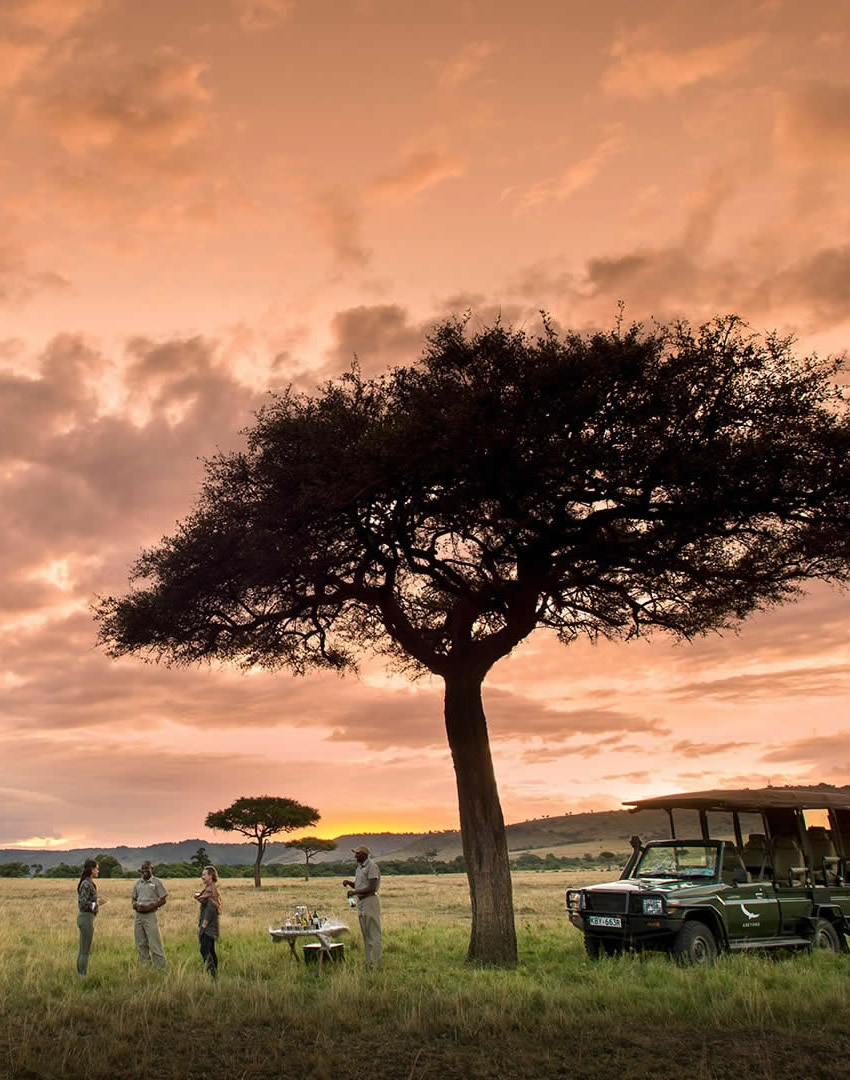
Kenya's most celebrated reserve and the northern stage of the Great Wildebeest Migration. Vast open grasslands deliver exceptional big cat sightings year-round.
Explore the MaraA soda lake fringed by millions of flamingos and surrounded by a compact national park that shelters both black and white rhino.
Explore Nakuru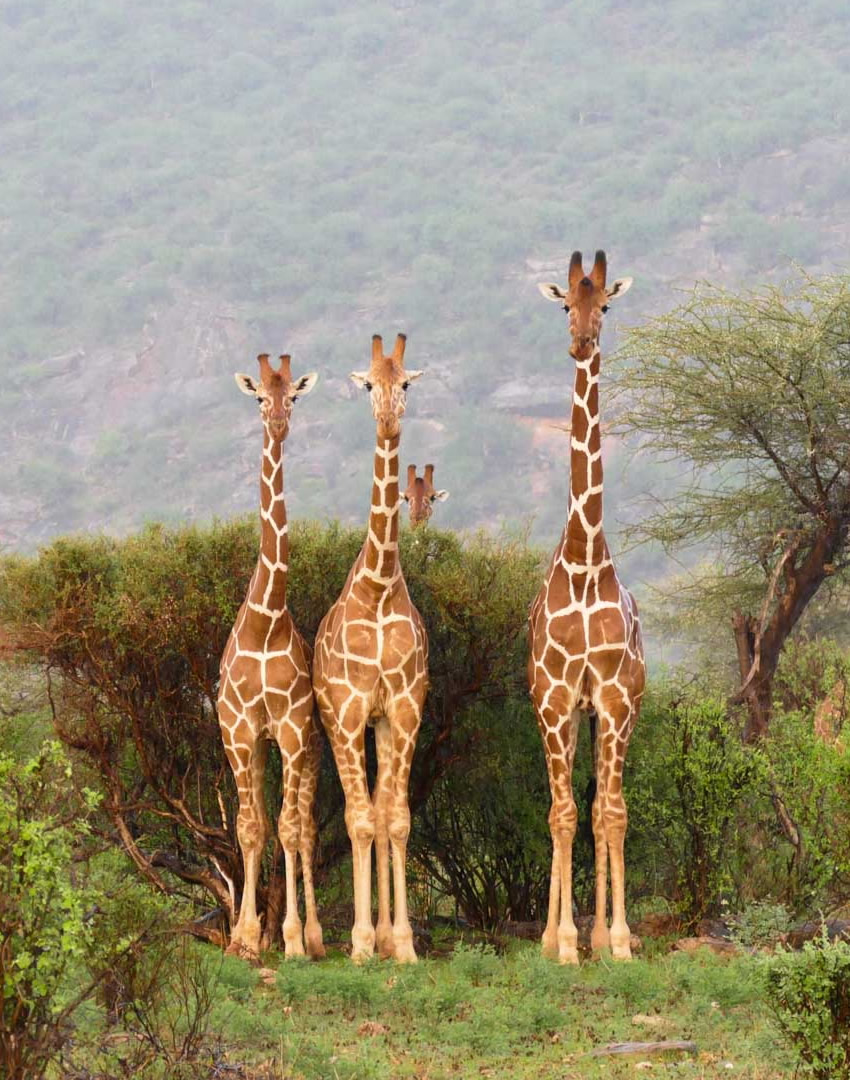
An arid wilderness bisected by the Ewaso Nyiro river, home to the famous Special Five — Grevy's zebra, reticulated giraffe, Somali ostrich, gerenuk and Beisa oryx.
Explore Samburu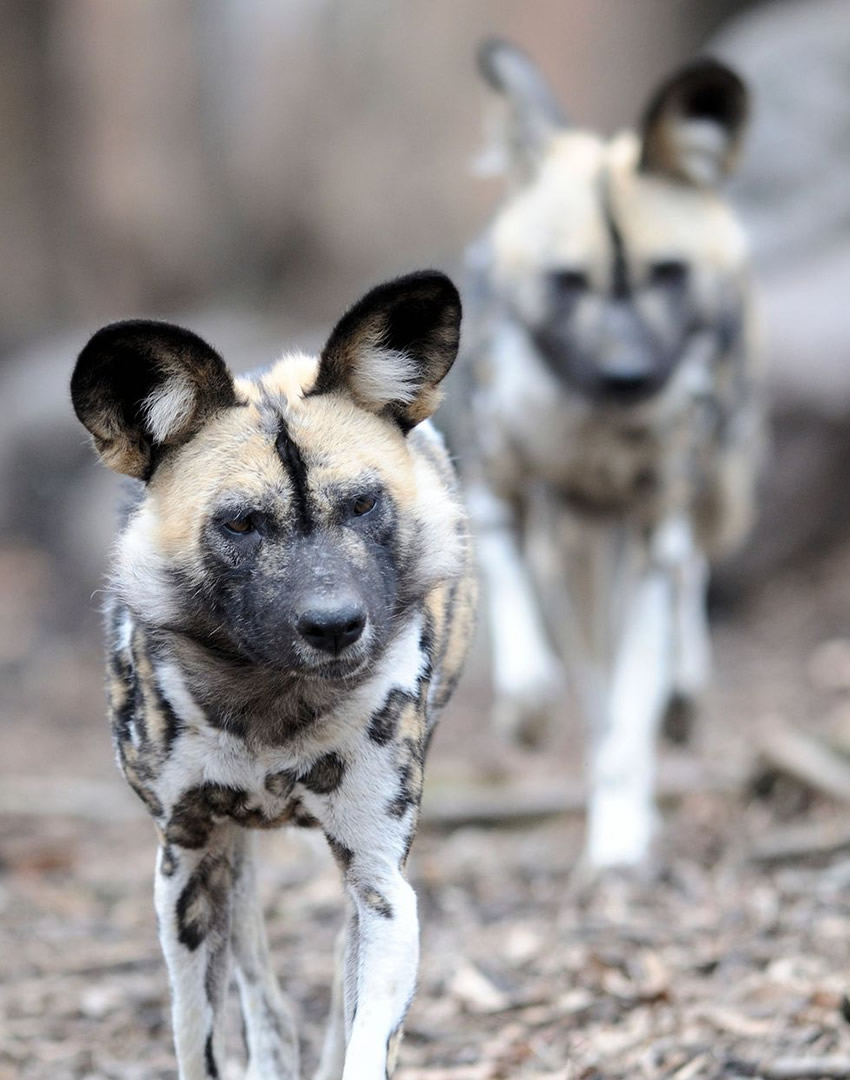
Made famous by Joy Adamson's Born Free story, Meru is a lush, under-visited wilderness of palm-lined rivers, dense bush and open grassland.
Explore Meru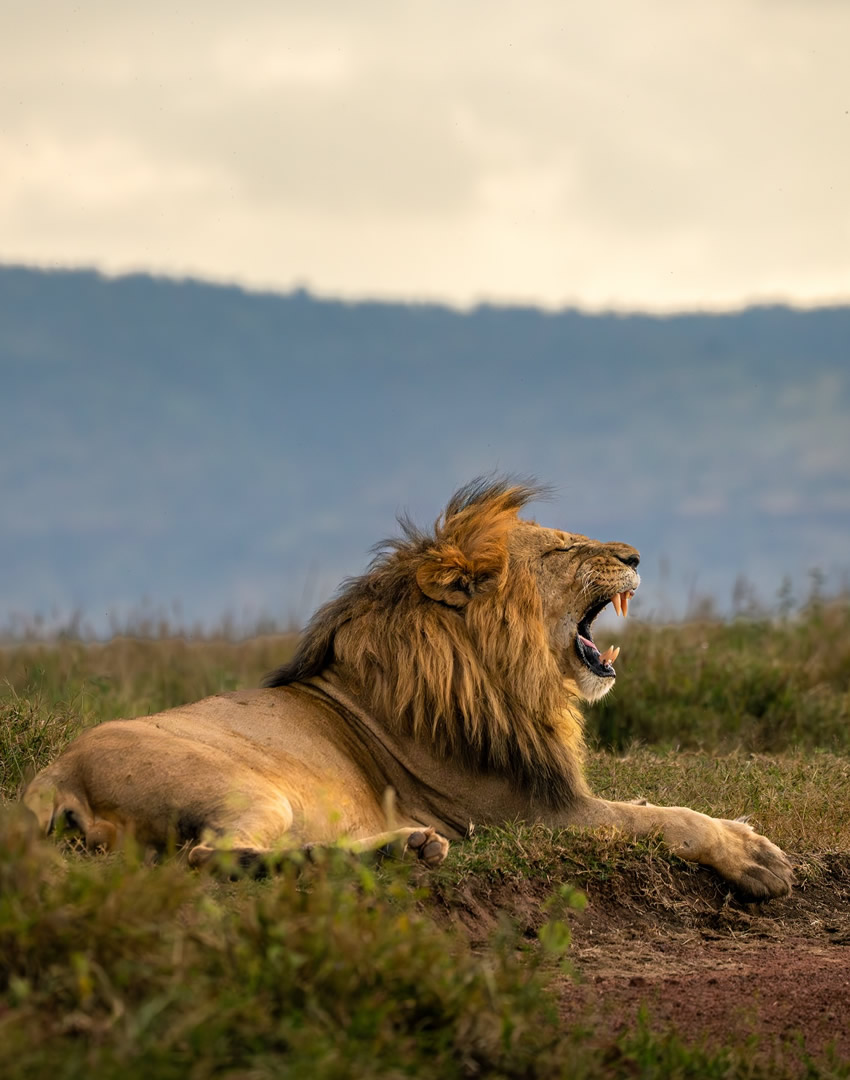
A private conservancy at the foot of Mount Kenya and one of Africa's greatest conservation success stories with exceptional rhino sightings.
Explore Lewa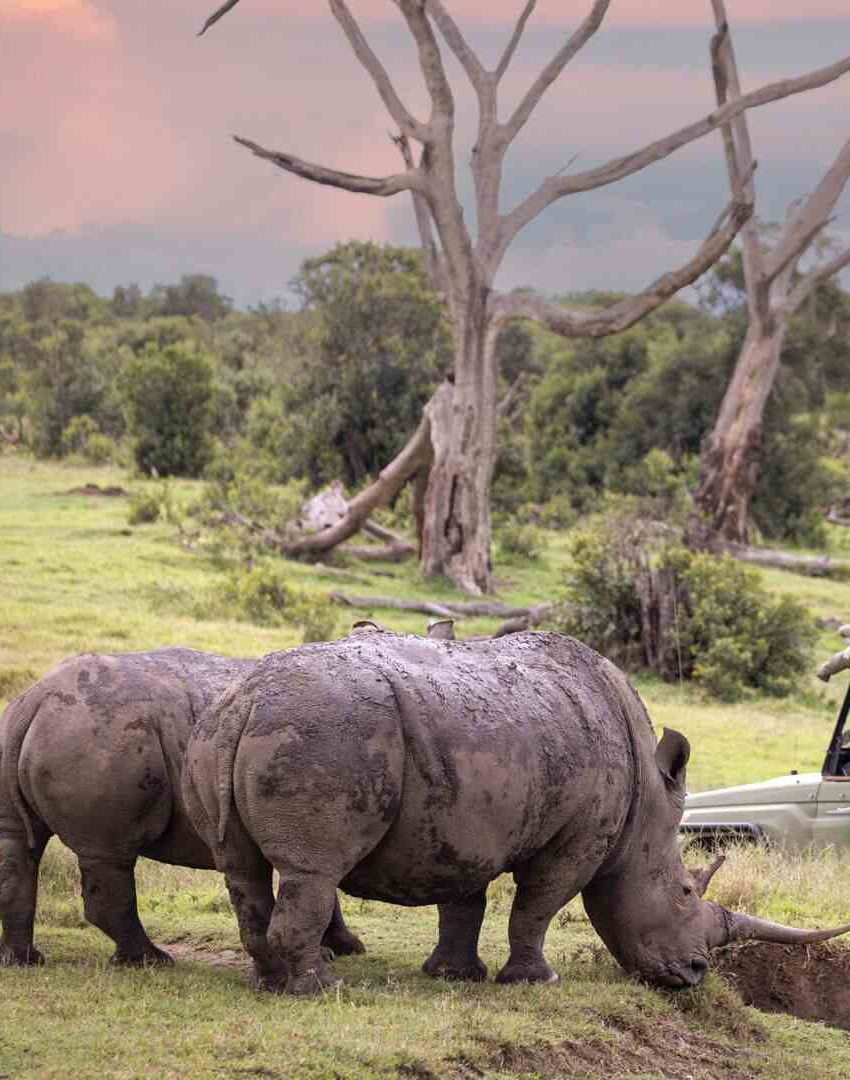
East Africa's largest black rhino sanctuary and home to the world's last two northern white rhinos. Big Five game drives and night drives.
Explore Ol Pejeta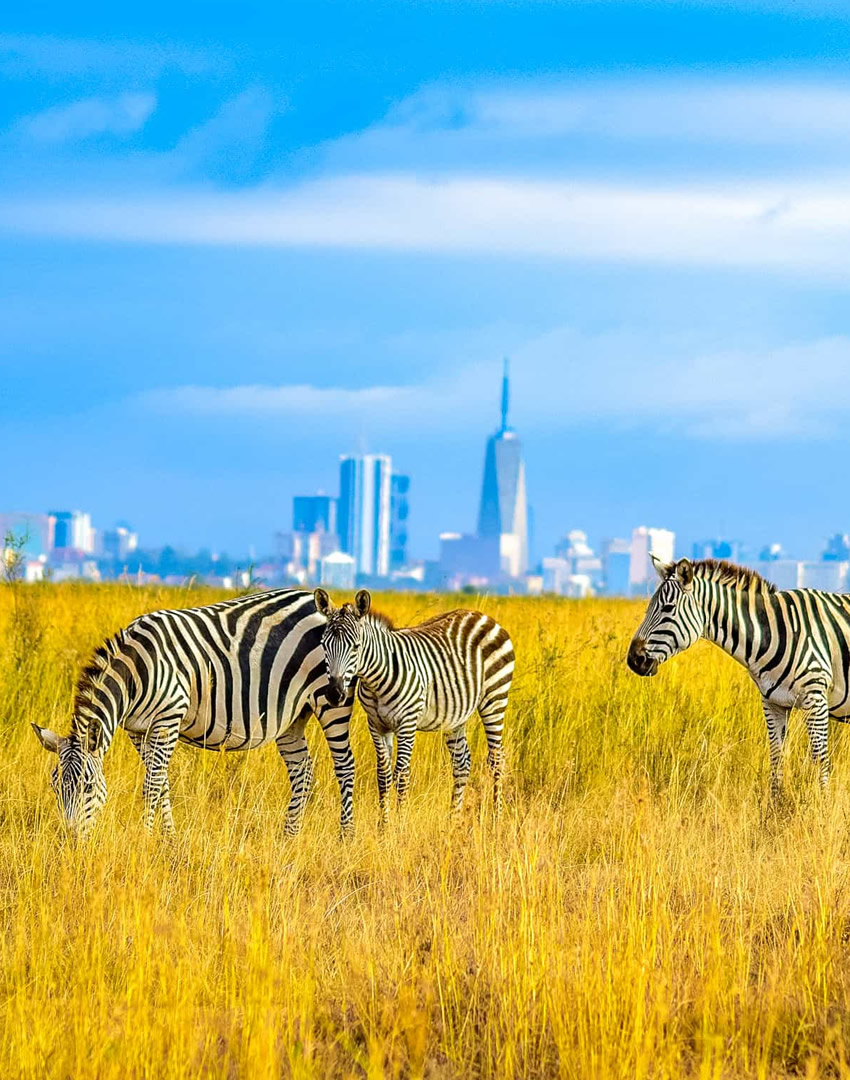
The only national park in the world set against a capital-city skyline. Lions, rhinos, buffalos and giraffes roam with Nairobi's towers rising behind them.
Explore Nairobi NP
Kenya's largest national park — a vast, rust-coloured wilderness where elephants coat themselves in red laterite soil and maneless lions patrol the plains.
Explore Tsavo East
A dramatic landscape of ancient lava flows, rocky outcrops and dense woodland, centred around the crystal-clear Mzima Springs.
Explore Tsavo West