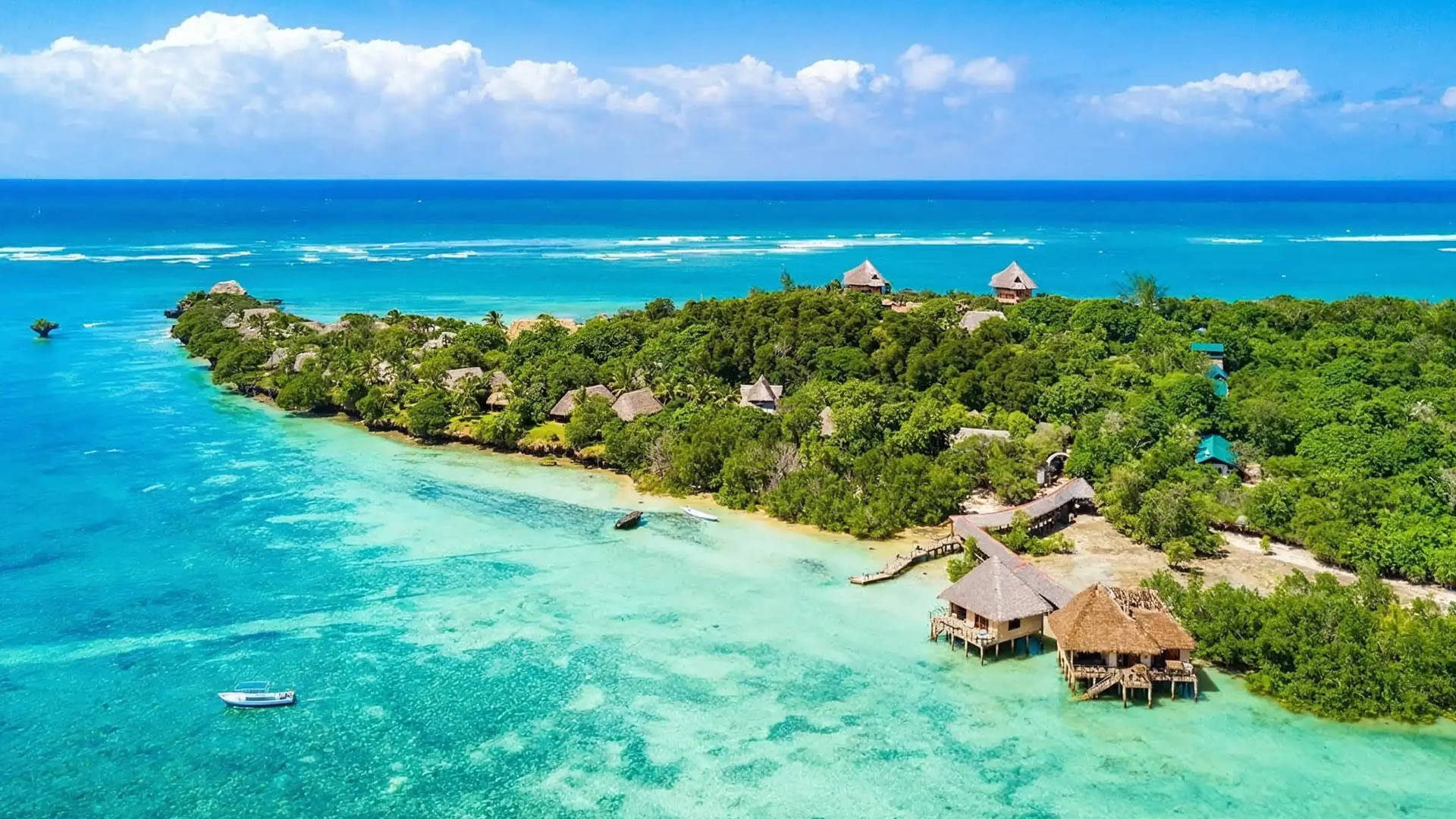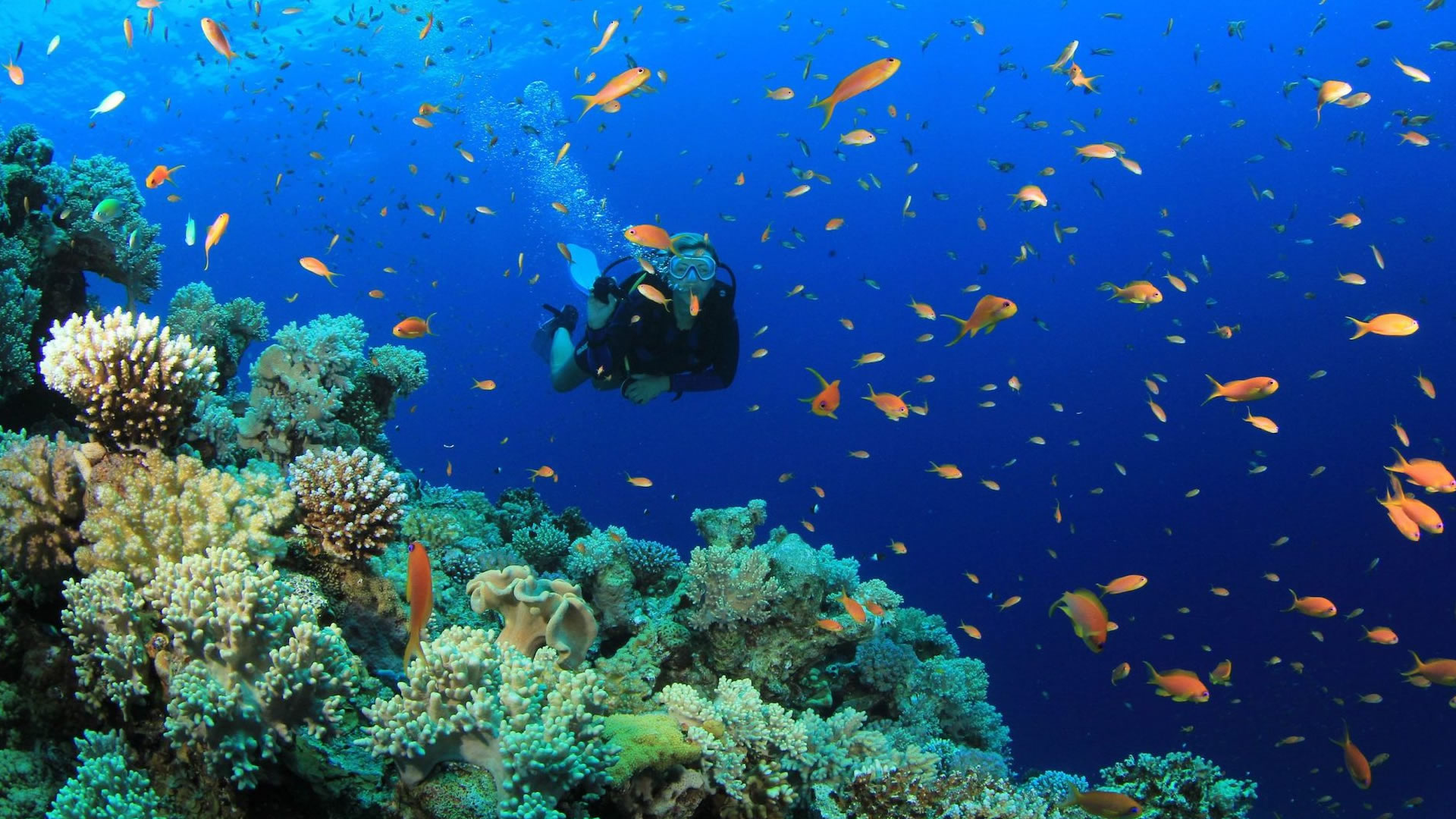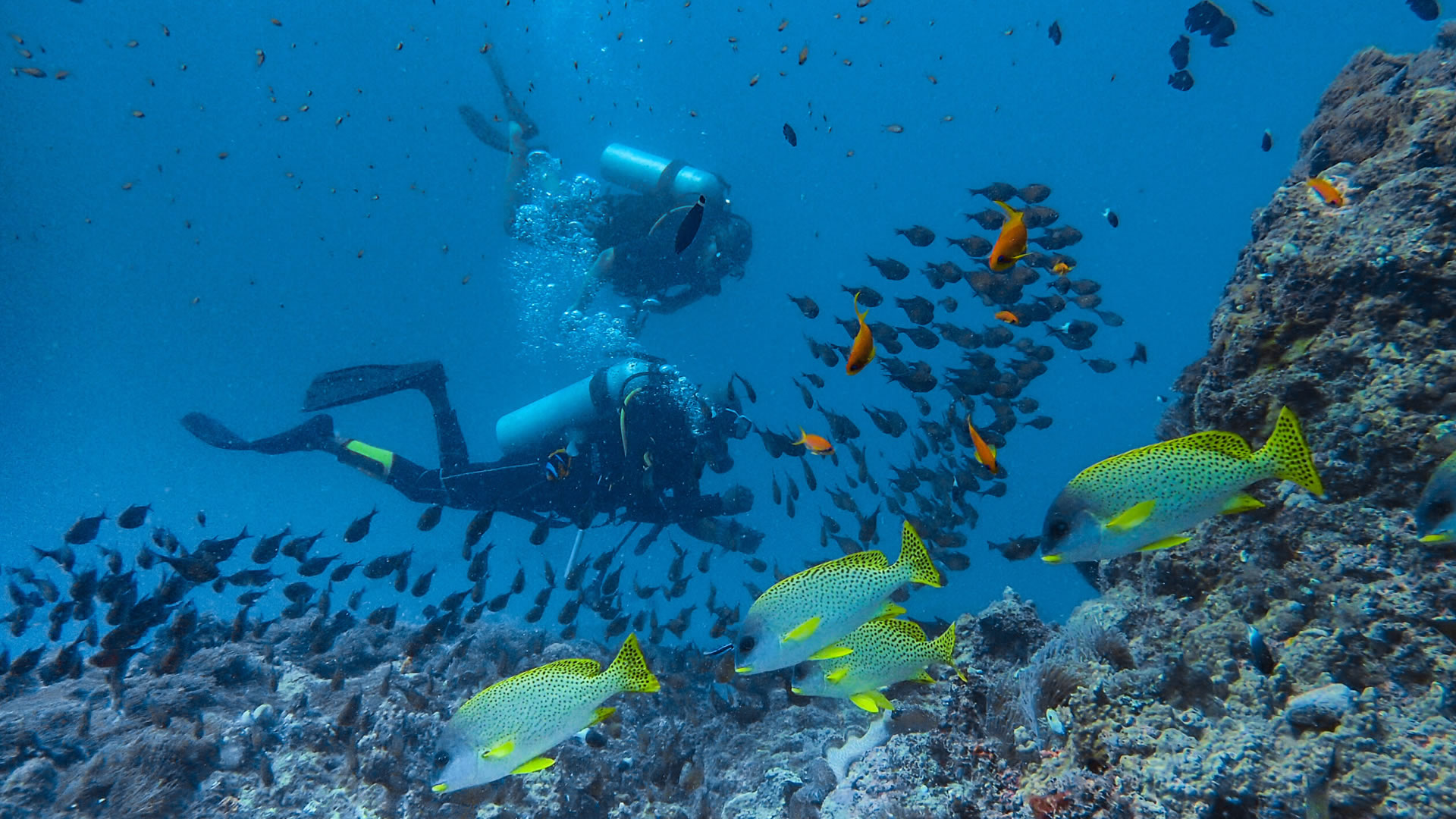
Descend through warm, turquoise water onto coral walls alive with sea turtles, reef sharks, and a kaleidoscope of tropical fish. Whether it's your first breath underwater or your five-hundredth dive — Diani delivers.
Diani's fringing reef system stretches along the entire South Coast, running parallel to the beach just a short boat ride from shore. Below the surface lies one of East Africa's richest underwater ecosystems — coral walls, swim-throughs, caves, and overhangs teeming with life. Visibility ranges from 10 to 30 metres depending on the season and tides, and the water temperature hovers between a comfortable 25°C and 29°C year-round.
For first-timers, Discover Scuba programmes offer a guided introduction that requires no certification, no prior experience, and no medical exam. After a poolside or shallow-water briefing, your instructor takes you to a reef site where you breathe underwater for the first time — surrounded by parrotfish, angelfish, moray eels, and the slow glide of a green sea turtle. It is, for most people, a genuinely life-changing moment.
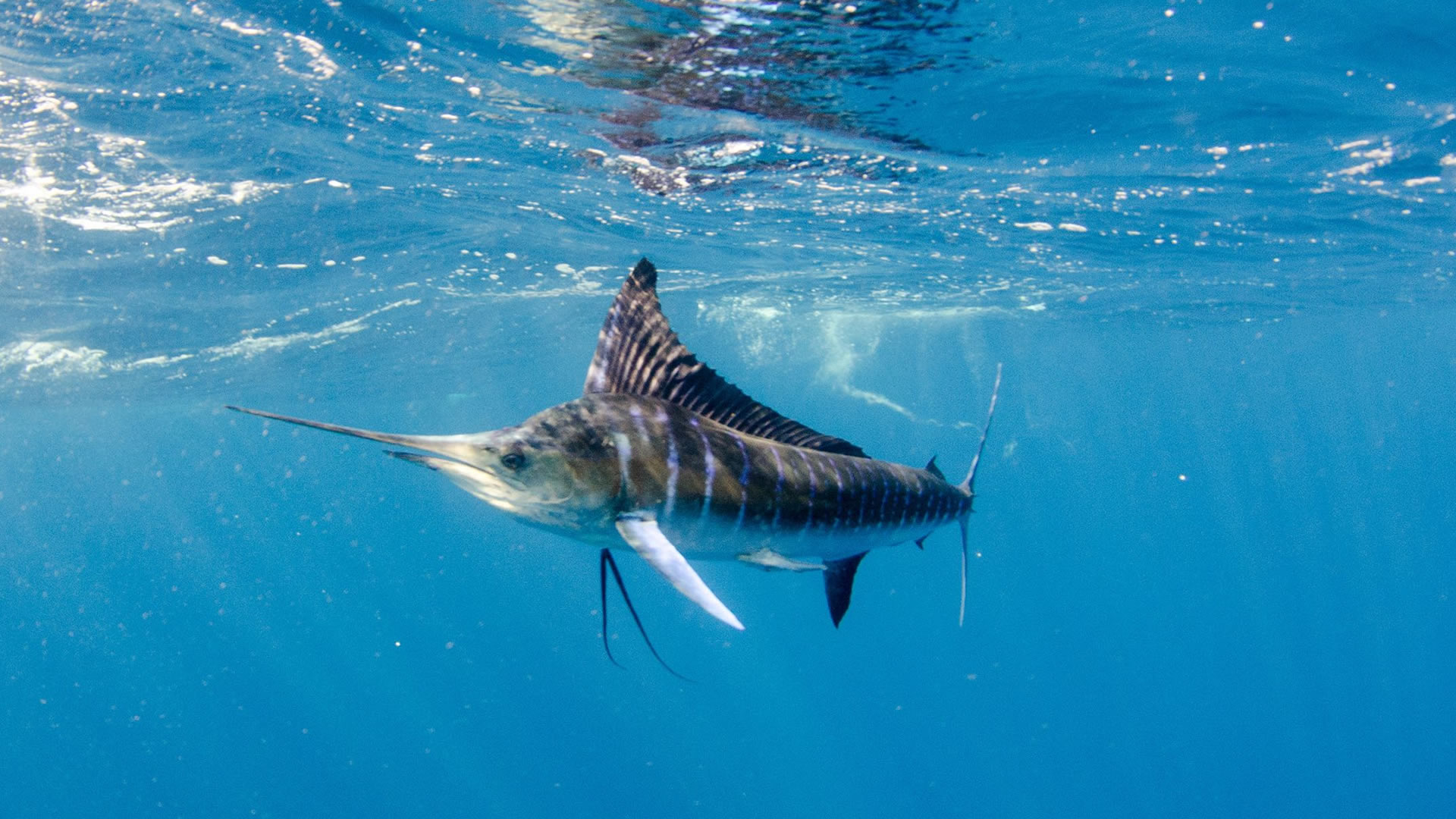
For certified divers, Diani's reef offers over a dozen named sites. The Kinondo Wall drops sharply into deep blue, its face covered in soft coral and home to whitetip reef sharks and large grouper. The Crab Caves are a maze of swim-throughs populated by lionfish and giant moray eels. The outer reef attracts pelagic species — whale sharks (seasonal), barracuda, and eagle rays. PADI and SSI certification courses from Open Water to Divemaster are available at multiple beach-based dive centres.
Warm water, vibrant coral, extraordinary marine life, and PADI-certified instruction — all accessible from the beach.
Green and hawksbill sea turtles are resident on Diani's reef. Encounters are common — watching a turtle glide past you in slow motion, unperturbed by your presence, is one of diving's most magical moments.
Diani's reef drops sharply in places, creating vertical walls, overhangs, caves, and swim-throughs covered in soft coral and sponges. The Kinondo Wall and Crab Caves are standout sites that rival dive destinations worldwide.
The reef supports hundreds of fish species — from schools of fusiliers and surgeonfish to solitary frogfish and ghost pipefish. Whitetip reef sharks patrol the drop-offs. Giant moray eels peer from crevices. Lionfish hang motionless in the current.
Discover Scuba requires zero experience. Your instructor guides you through every breath. The shallow reef sites used for introductory dives are calm, sheltered, and full of life — you will see extraordinary things on your very first dive.
Water temperatures between 25°C and 29°C mean you can dive comfortably in a shorty wetsuit or even a rash guard. No drysuits, no cold-water anxiety — just warm, clear, tropical ocean.
Multiple accredited dive centres offer courses from Bubblemaker (age 8) and Open Water through Advanced, Rescue, and Divemaster. Earn your certification in one of the most beautiful classroom settings on the planet.
Medical requirements, what to bring, and everything you need to know before your first — or next — dive.
Swimwear, towel, reef-safe sunscreen, your PADI or SSI certification card and dive logbook if certified. Prescription dive mask if you have one. A dry change of clothes for after the dive. Everything else is provided by the dive centre.
All divers complete a medical questionnaire before diving. Conditions including asthma, heart problems, epilepsy, diabetes, or recent surgery may require written clearance from a doctor. If in doubt, consult your physician before your trip. No medical exam is required for Discover Scuba if you pass the questionnaire.
No flying within 18–24 hours after diving (plan your last dive accordingly if flying out). No scuba diving within 24 hours before skydiving. No alcohol before diving. Pregnant women should not dive. These are safety rules — all reputable dive centres enforce them.
Bubblemaker programmes for children aged 8–9 (pool or confined water only). PADI Junior Open Water certification from age 10. Full PADI Open Water from age 15. Discover Scuba generally from age 10. Snorkeling is available at all dive centres for family members who prefer to stay at the surface.
All reputable centres are PADI or SSI affiliated with current certifications. Boats carry oxygen, first-aid kits, and VHF radio. The nearest decompression chamber is in Mombasa. Dive insurance through DAN (Divers Alert Network) or equivalent is strongly recommended and can often be arranged through the dive centre.
Weather and sea-condition dependent. Rougher conditions during the Kusi monsoon (Jun–Sep) may limit access to some outer sites, but diving still operates on sheltered inner-reef sites. Operators reschedule or refund for weather cancellations. Client cancellation: 24 hours for refund on single dives.
Warm water year-round, but visibility and marine encounters vary by season.
Calm seas, warm water, and visibility of 20–30 metres on good days. The Kaskazi (northeast monsoon) brings light winds and gentle swells. This is the ideal window for Discover Scuba, certification courses, and outer-reef wall dives. Whale shark sightings are most likely between October and February.
The southeast monsoon brings stronger winds and choppier surface conditions. Visibility on outer sites can drop to 10–15 metres. However, inner-reef and sheltered sites remain diveable, and the cooler water brings nutrient-rich upwelling that attracts larger pelagic species. Experienced divers often find this season rewarding for different reasons.
Diani's coral reef is a fragile ecosystem. All divers must use reef-safe sunscreen — conventional chemical sunscreens contain oxybenzone and octinoxate, which damage coral tissue and inhibit reproduction. No touching, standing on, or collecting coral, shells, or marine life. Some dive centres actively participate in reef monitoring programmes and coral restoration projects, including REEFolution's coral gardening initiative on the South Coast. By diving responsibly, you help protect the underwater world that makes Diani special.
Tell us your experience level and dates — we'll match you with the right dive centre, instructor, and reef sites.
Book My DiveAbsolutely. The Discover Scuba programme is designed specifically for complete beginners. You will receive a briefing on equipment and breathing technique, practise in shallow water, and then descend to the reef with your instructor right beside you. No certification is needed. Most first-timers are amazed at how natural breathing underwater feels after the first few minutes — and the reef life you see on a Discover Scuba dive is every bit as spectacular as what experienced divers encounter.
That depends on the site and the season, but typical sightings include green and hawksbill sea turtles, whitetip reef sharks, moray eels (giant and snowflake), lionfish, octopus, nudibranchs, parrotfish, surgeonfish, angelfish, butterflyfish, grouper, barracuda, and rays. Coral formations range from hard table corals to colourful soft corals and sponges. Whale sharks are an occasional bonus from October to February. Every dive is different — the reef never shows the same face twice.
The PADI Open Water Diver course takes 3–4 days and includes classroom theory (or e-learning completed before your trip), confined water skills sessions, and four open-water qualification dives on the reef. Once certified, you can dive independently with a buddy anywhere in the world. The PADI Advanced Open Water course takes an additional 2 days with five specialty dives. Both are available at Diani's dive centres and can be started any day of the week.
Diving with a reputable PADI or SSI centre is very safe. Instructors are trained in emergency procedures, boats carry oxygen and first-aid equipment, and the nearest decompression chamber is in Mombasa. As for sharks — the whitetip reef sharks found on Diani's reef are small, docile, and completely uninterested in divers. Seeing one is a highlight, not a hazard. They are far more afraid of you than you are of them.
Contact lenses work fine — most divers wear them under a standard dive mask with no issues. If you wear glasses, you will need a prescription dive mask, which some dive centres can provide on request (ask when booking). Alternatively, you can order prescription lens inserts for a standard mask — your optician can advise.
No. You must wait a minimum of 18 hours after a single no-decompression dive, and 24 hours after multiple dives or multi-day diving, before flying. This is a non-negotiable safety rule to prevent decompression sickness. Plan your last dive at least a full day before any flight — including domestic flights and helicopter transfers. All dive centres will remind you of this.
All dive centres also offer snorkeling — your non-diving family members can explore the same reef from the surface while you dive below. Snorkeling equipment is available for rent. The boat takes both divers and snorkelers to the same sites, so the family stays together. For children too young to dive, Bubblemaker programmes (age 8–9) offer a pool-based introduction to breathing underwater.