
A former cattle ranch turned world-class conservation sanctuary — where rhinos roam safely beneath Mount Kenya's glaciers, Grevy's zebra graze the highland grasslands, and every safari directly sustains the communities who protect them.
Lewa Wildlife Conservancy occupies 250 square kilometres of highland savannah, open woodland, and swamp on the northern foothills of Mount Kenya, in Meru County. What began in 1983 as a small rhino sanctuary on a working cattle ranch has evolved into one of Africa's most celebrated conservation success stories — a model of community-led wildlife protection that has been replicated across the continent.
Today, Lewa is home to over 200 black and white rhinoceros — approximately 14% of Kenya's entire rhino population — making it one of the country's most important rhino strongholds. The conservancy's security operation, which includes armed rangers, sniffer dogs, and aerial surveillance, has maintained a near-zero poaching rate for over a decade. In 2013, the fence between Lewa and the neighbouring Borana Conservancy was removed, creating a contiguous 370 km² wildlife corridor and effectively doubling the available habitat.
But Lewa's influence extends far beyond its fences. The conservancy invests directly in the surrounding communities — building schools, clinics, and water infrastructure, and employing over 400 staff from local populations. Lewa's philosophy is that conservation succeeds only when the people who live alongside wildlife benefit from its protection. This ethos earned Lewa UNESCO World Heritage status in 2013 as part of the Mount Kenya ecosystem, and makes a stay here not just a safari but a contribution to a proven model of sustainable coexistence.
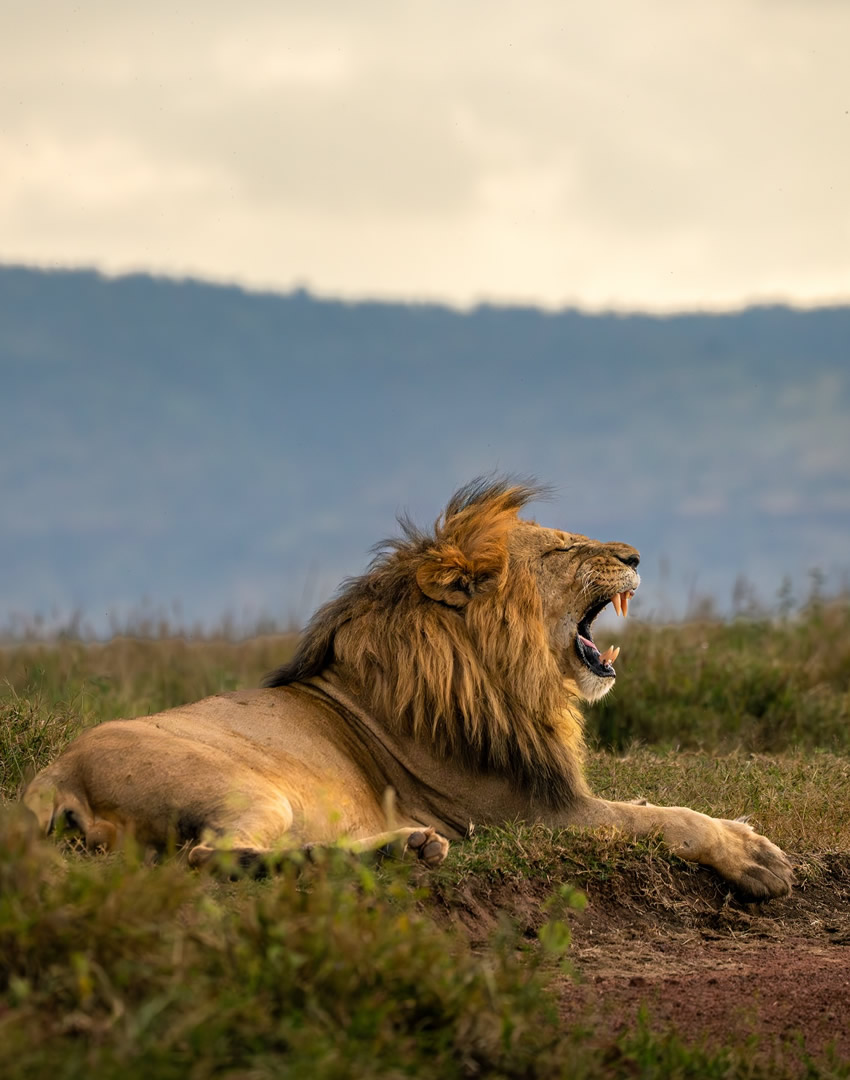
Exceptional rhino sightings, highland scenery, and a conservation story that redefines what a safari can mean.
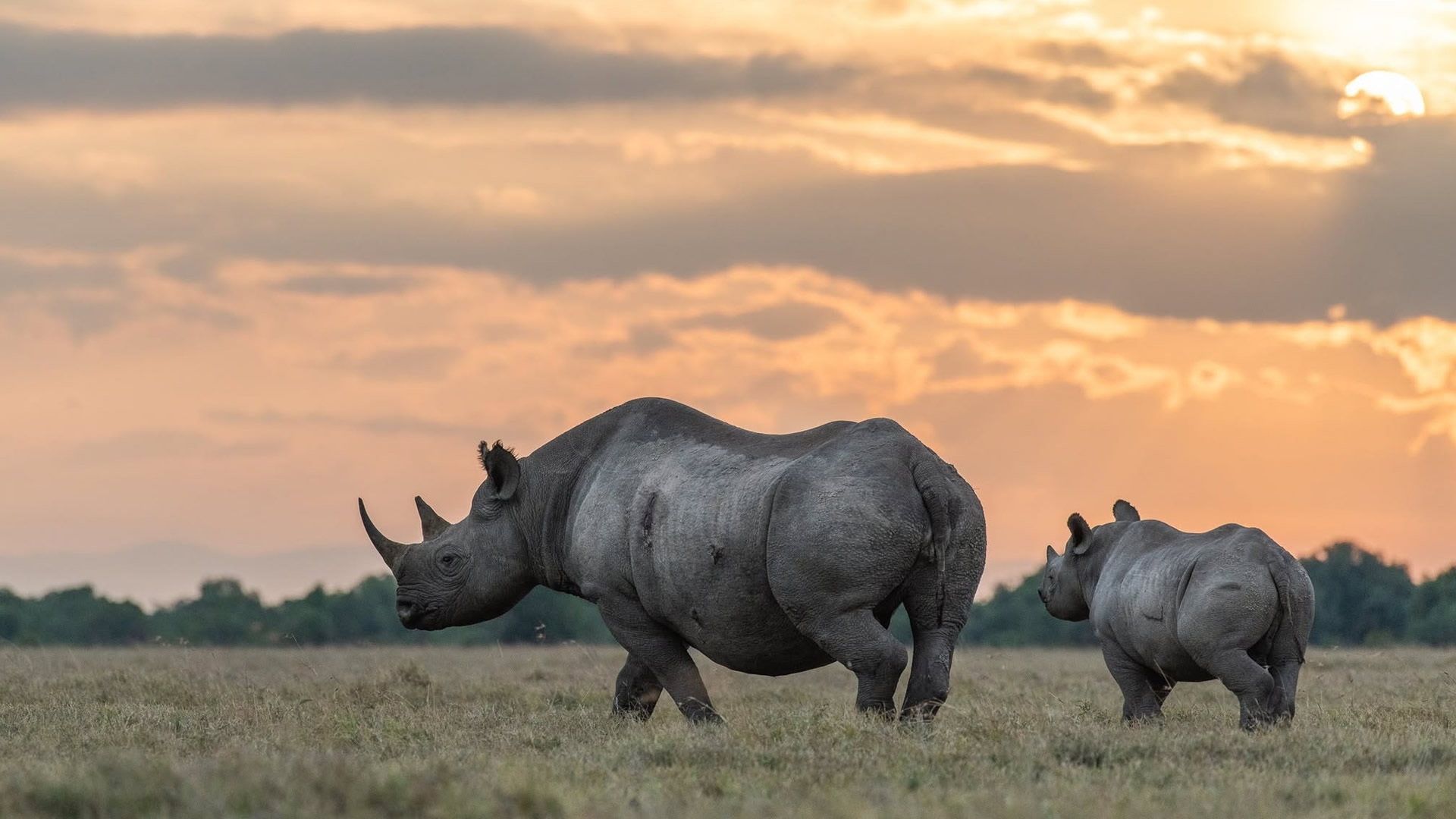
Over 200 black and white rhinos roam Lewa's open grasslands — approximately 14% of Kenya's total population. The conservancy's near-zero poaching record and meticulous monitoring mean sightings are frequent, close, and unhurried. Few places on Earth offer a more reliable or more intimate rhino experience.
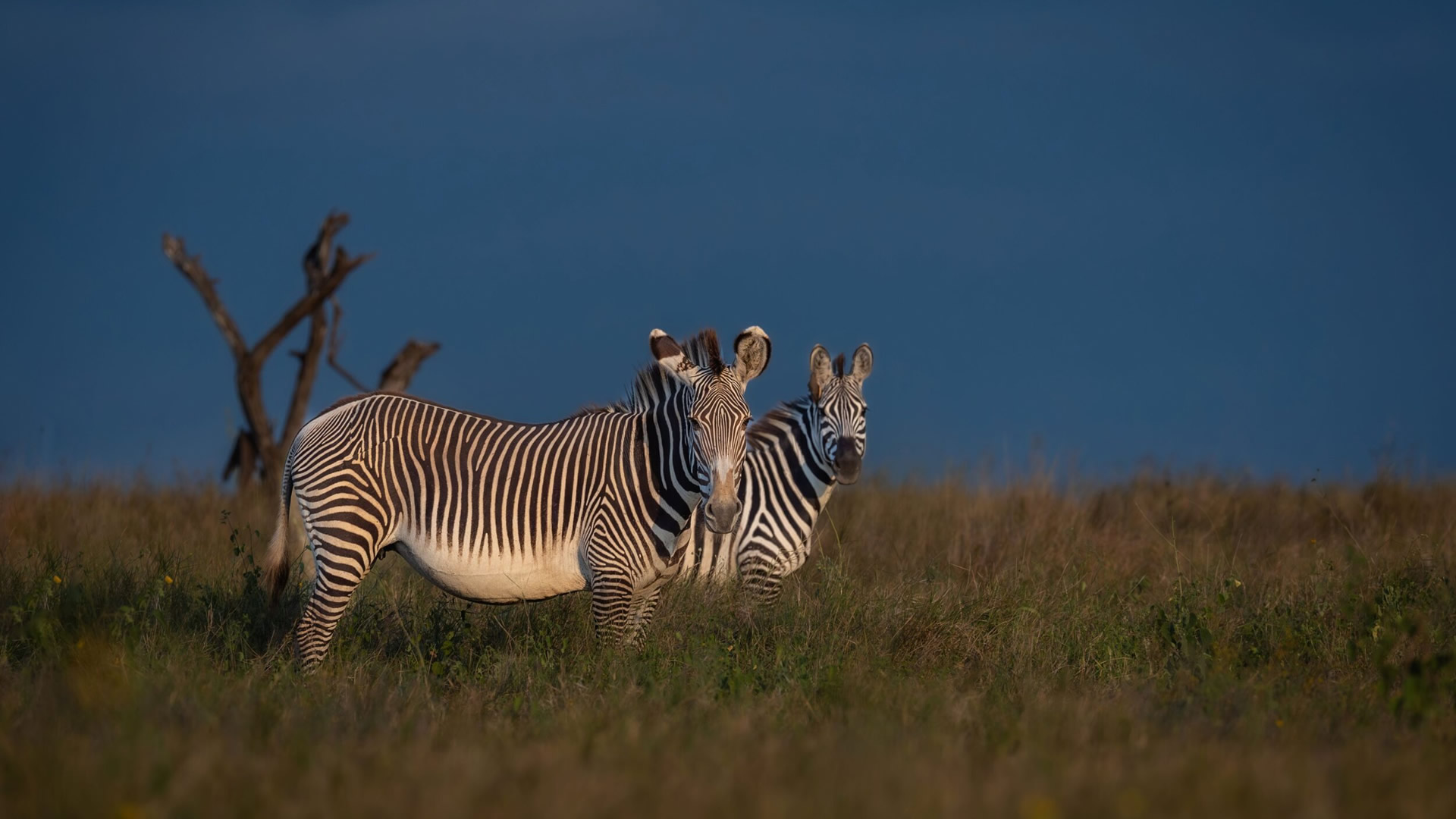
Lewa protects the single largest population of the critically endangered Grevy's zebra — the world's rarest zebra species, distinguished by its narrow stripes, large rounded ears, and stately gait. Over 500 Grevy's zebra live on the conservancy, making sightings virtually guaranteed and photography outstanding.
Every night spent at Lewa directly funds community schools, healthcare facilities, water projects, and anti-poaching operations. The conservancy's integrated model — where tourism revenue sustains both wildlife and the people who live beside it — is widely regarded as the benchmark for conservation in Africa.
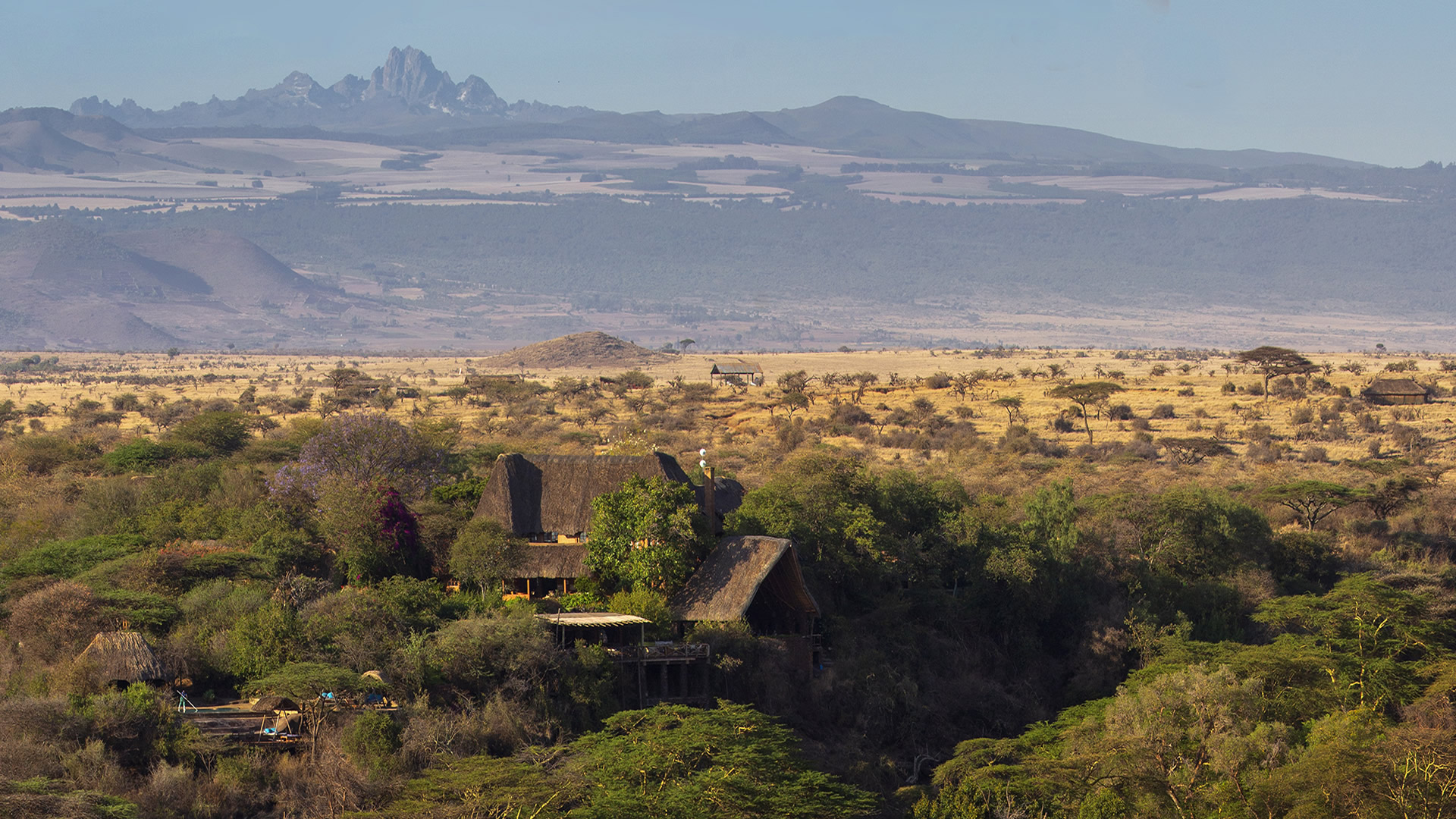
Lewa sits on Mount Kenya's northern foothills, and on clear days Africa's second-highest peak rises directly to the south — snow-capped and glaciated above 4,800 metres. The combination of highland wildlife and mountain scenery gives game drives a vertical drama unique to this part of Kenya.
Visitor numbers are strictly controlled. Only a handful of lodges operate on the conservancy, and vehicle density is a fraction of what you would encounter in the national parks. Game drives feel personal and private — guides know individual animals by name, and the pace is dictated by the wildlife, not the crowd.
Each June, the Lewa Safari Marathon draws runners from around the world to race a full or half marathon through the conservancy — alongside rhinos, elephants, and giraffes, under armed ranger escort. It is one of the world's most unique sporting events and a major fundraiser for Lewa's community programmes.
Lewa Wildlife Conservancy lies on the northern foothills of Mount Kenya, in Meru County, approximately 280 kilometres north of Nairobi. The conservancy straddles the ecological transition zone between Mount Kenya's forested highlands and the semi-arid lowlands of the Laikipia Plateau — a position that gives it an unusually diverse range of habitats within a relatively compact area.
To the west, the Borana Conservancy connects seamlessly to Lewa (the dividing fence was removed in 2013), creating a 370 km² contiguous wildlife area. Ol Pejeta Conservancy lies further west on the Laikipia Plateau, and Samburu National Reserve is approximately 90 kilometres to the north. Isiolo town, the gateway to Kenya's northern frontier, is just 30 kilometres east. Mount Kenya's peaks — Batian (5,199 m) and Nelion (5,188 m) — dominate the southern skyline.
From rhino tracking on foot to horseback safaris and visits to community projects — Lewa offers experiences no national park can match.
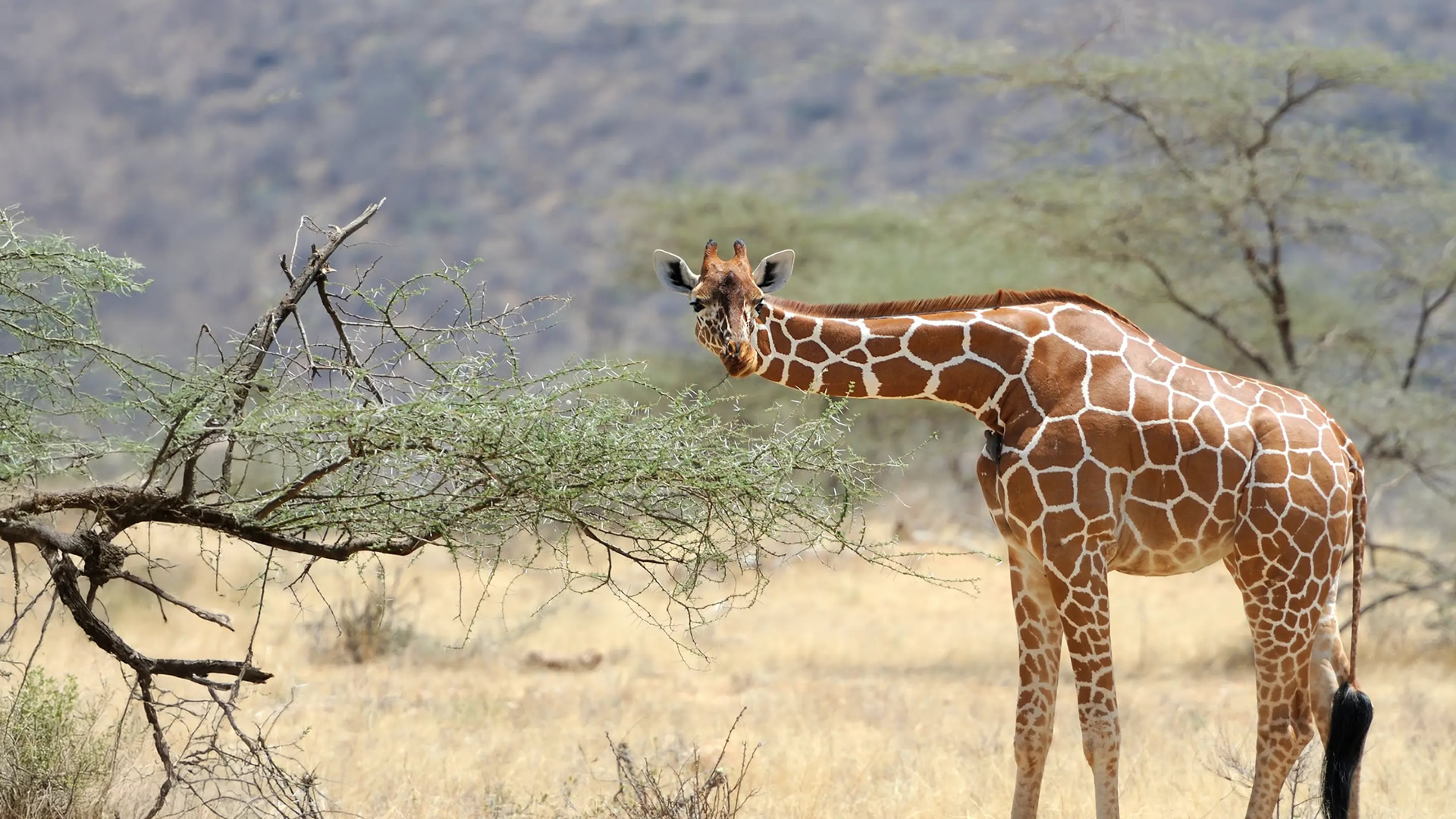
Morning and afternoon drives across Lewa's varied terrain — open grassland, acacia woodland, swamp, and rocky ridge. Rhino, elephant, lion, cheetah, Grevy's zebra, reticulated giraffe, and wild dog are all present. Off-road driving is permitted, and guides operate without vehicle limits or rigid routes.
Walk through the bush with armed Lewa rangers to track black rhino on foot — reading spoor, approaching on the wind, and observing one of Africa's most elusive animals from a distance no vehicle can match. A visceral, unforgettable experience available only in conservancies with this level of security and expertise.
Lewa is one of Kenya's premier horseback safari destinations. Ride across the open plains alongside zebra, giraffe, and eland — moving with the wildlife rather than watching from behind glass. Rides range from gentle morning outings to multi-day expeditions for experienced riders.
Visit the schools, clinics, and water projects that Lewa funds through tourism revenue. Meet the teachers, nurses, and students whose lives are directly sustained by conservation. This is not a cultural performance — it is a working model of how wildlife and community wellbeing reinforce each other.
Over 440 species recorded across the conservancy's highland and semi-arid habitats. The Lewa Swamp attracts waterbirds and waders, the acacia woodland hosts barbets and starlings, and the open grasslands support raptors including martial eagle, bateleur, and Verreaux's eagle. Migrant species swell the count from October to April.
Helicopter flights from Lewa offer a bird's-eye view of the conservancy, the Borana corridor, and Mount Kenya's glaciated peaks. Some lodges arrange scenic overflights as part of the experience — a perspective that reveals the scale of the landscape and the conservation corridor's reach.
Lewa's highland position ensures comfortable temperatures year-round. Dry months offer the clearest Mount Kenya views and the densest wildlife concentrations.
The prime months for Lewa. Short grass and reduced water availability concentrate rhino, elephant, and Grevy's zebra on the open plains and around the Lewa Swamp. Mount Kenya is at its most visible, and the highland air is cool and crisp. June hosts the Safaricom Marathon — book early if you want to visit during the event weekend.
Rainfall greens the landscape and brings wildflowers across the grasslands. Wildlife disperses but remains accessible on the conservancy's well-maintained road network. Migratory birds arrive, newborn animals appear, and visitor numbers drop — some of Lewa's lodges offer reduced green-season rates. Mount Kenya's peaks may be hidden behind cloud, but the conservancy itself remains beautiful and productive.
A scenic flight or highland drive from Nairobi — or a short hop from Samburu on the northern circuit.
Daily scheduled flights from Nairobi's Wilson Airport to Lewa Downs airstrip take approximately one hour. Safarilink operates the route. The airstrip is within the conservancy — your lodge vehicle meets you on the tarmac, and the game drive begins immediately. Charter flights from other parks and reserves can also be arranged.
The drive from Nairobi to Lewa takes approximately 4.5 to 5 hours via the A2 highway through Nanyuki and Isiolo. The route crosses the equator at Nanyuki and climbs through the Laikipia Plateau before descending to the conservancy's main gate. The tarmac road is in good condition throughout.
Lewa is the natural partner for Samburu on a northern-circuit itinerary. The overland transfer takes approximately 2 to 2.5 hours via Isiolo, or a short charter flight of around 20 minutes. Two or three nights at each creates one of Kenya's most rewarding highland-to-lowland safari sequences.
Rhinos, Grevy's zebra, and the highland plains beneath Mount Kenya's peaks.
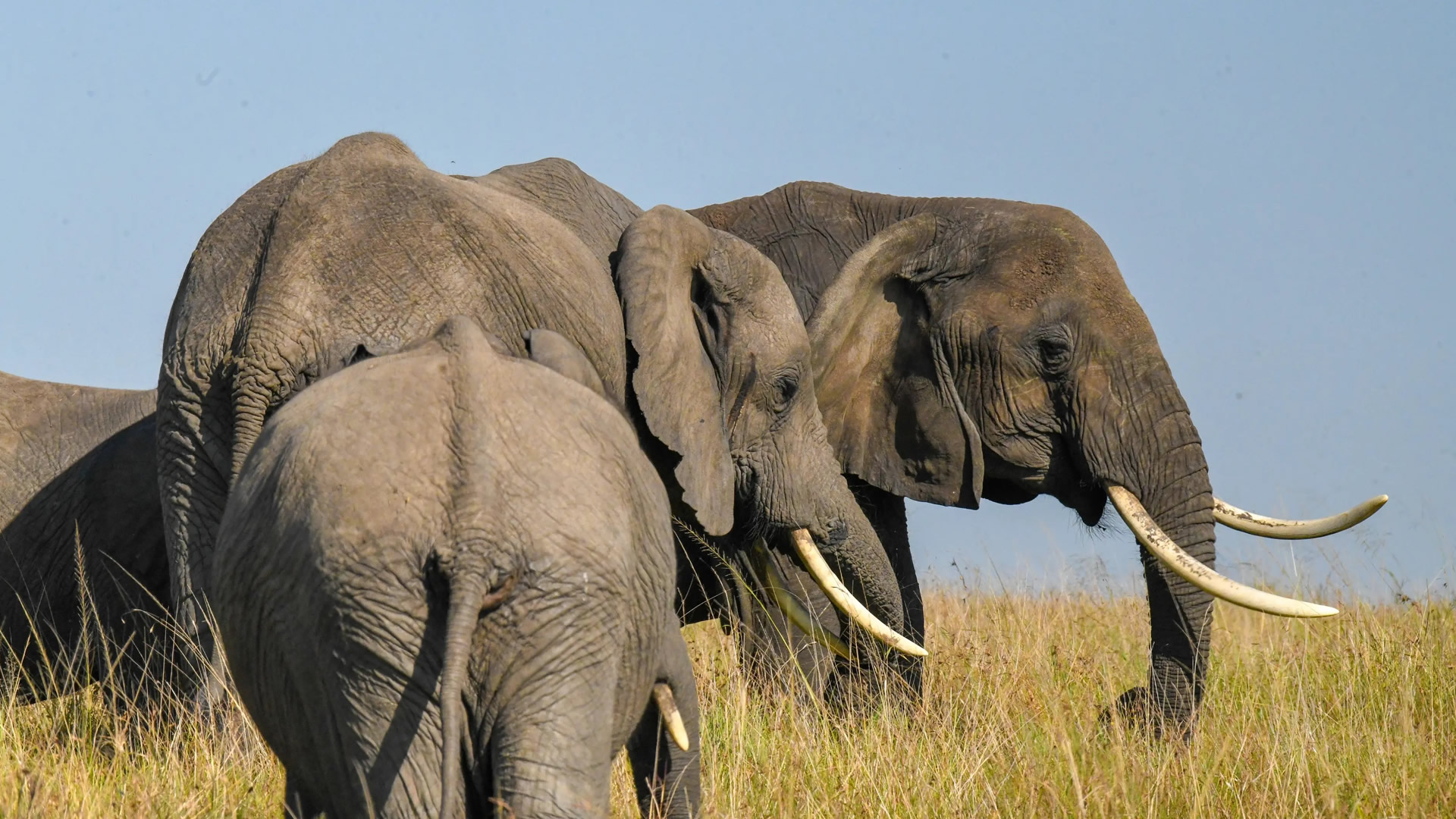
A conservancy is privately or community managed, as opposed to a national park which is managed by the Kenya Wildlife Service (KWS). Conservancies typically offer a more exclusive experience — lower vehicle density, off-road driving, walking safaris, night drives, and horseback game viewing, all of which are restricted or prohibited in most national parks. Lewa is a not-for-profit conservancy that reinvests all tourism revenue into wildlife protection and community development.
Lewa currently protects over 200 black and white rhinoceros — approximately 14% of Kenya's entire rhino population. The conservancy has maintained a near-zero poaching rate for over a decade through a comprehensive security operation that includes armed rangers, tracker dogs, aerial surveillance, and community intelligence networks. Rhino sightings on game drives are frequent and often prolonged.
Held annually in late June, the Safaricom Marathon at Lewa is a full and half marathon run entirely within the conservancy at an altitude of approximately 1,600 metres. Runners share the course with rhinos, elephants, giraffes, and zebras, under armed ranger escort. It attracts over 1,400 participants from around the world and has raised millions of dollars for Lewa's education, healthcare, and conservation programmes since its inception in 2000.
Lewa operates at the premium end of the Kenyan safari market. Conservancy fees and lodge rates are higher than those at national parks, reflecting the exclusivity (low vehicle numbers, private guiding, off-road access), the quality of the lodges, and the fact that fees directly fund conservation and community work. For many visitors, the combination of exceptional wildlife, intimacy, and tangible conservation impact justifies the investment. A stay at Lewa is an experience and a contribution in equal measure.
Two nights (three days) is the recommended minimum — enough for four game drives, a bush walk or rhino tracking excursion, and a community visit. Three nights allows a more relaxed pace with time for horseback riding, extended birding, or a day trip into the neighbouring Borana Conservancy. Lewa pairs naturally with Samburu (2–3 nights) or Ol Pejeta (1–2 nights) on a northern-circuit itinerary.
The Grevy's zebra is the world's largest and rarest wild equid — larger than the common plains zebra, with narrower stripes, larger ears, and a more solitary social structure. Fewer than 3,000 remain in the wild, almost exclusively in northern Kenya and southern Ethiopia. Lewa protects over 500 individuals — the single largest concentration anywhere — and has invested heavily in Grevy's zebra research, GPS tracking, and community awareness programmes. Seeing a herd on the Lewa plains is to see a species that is genuinely fighting for survival.
Yes — the Lewa-to-Mara combination is one of the finest safari sequences in Kenya, offering a complete north-to-south cross-section of the country's wildlife habitats. The connection is typically by air — a scheduled flight from Lewa to Nairobi (1 hour), then Nairobi to the Mara (45 minutes). The contrast between Lewa's highland conservancy and the Mara's open savannah grassland ensures that neither experience repeats the other.
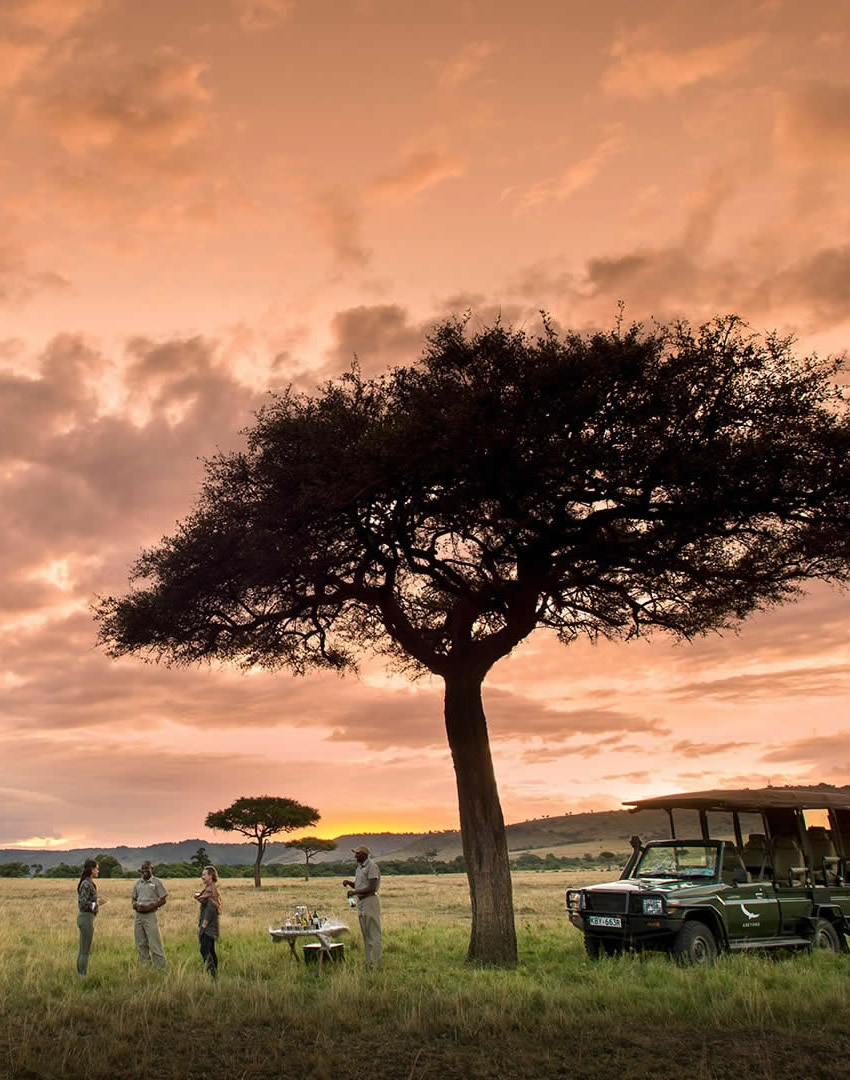
Kenya's most celebrated reserve and the northern stage of the Great Wildebeest Migration. Vast open grasslands deliver exceptional big cat sightings year-round.
Explore the Mara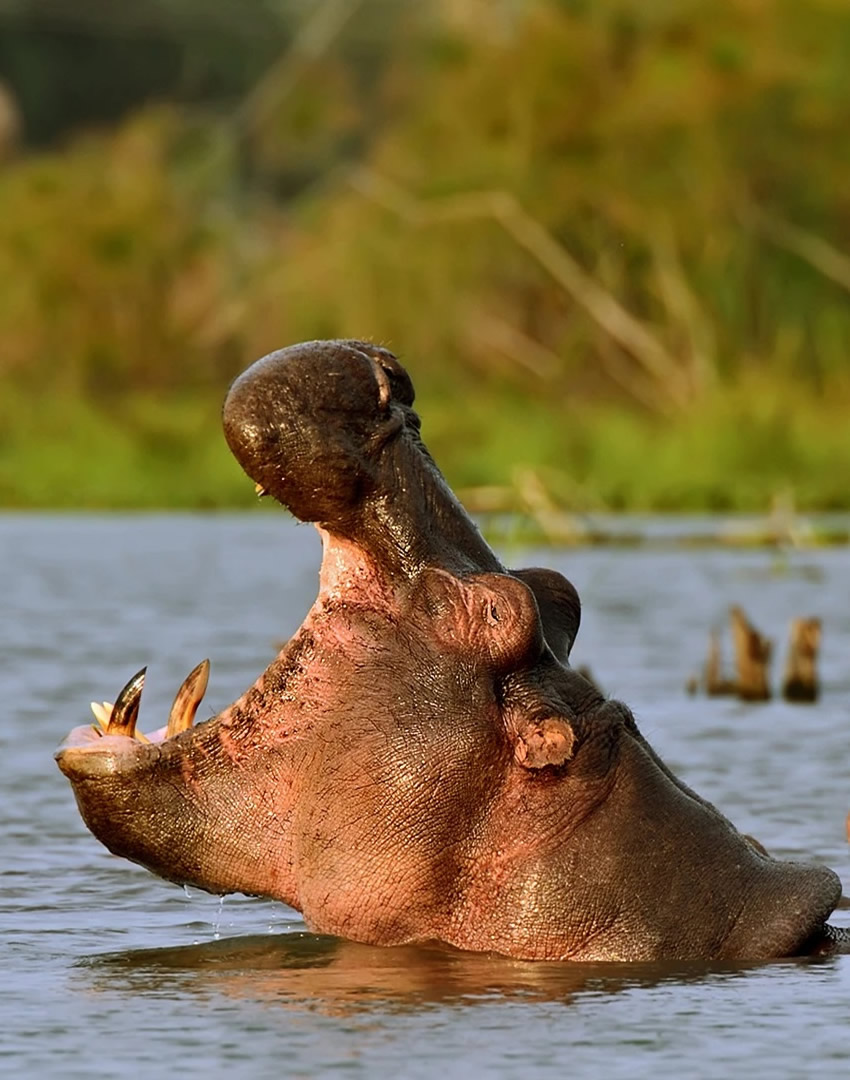
A soda lake fringed by millions of flamingos and surrounded by a compact national park that shelters both black and white rhino.
Explore Nakuru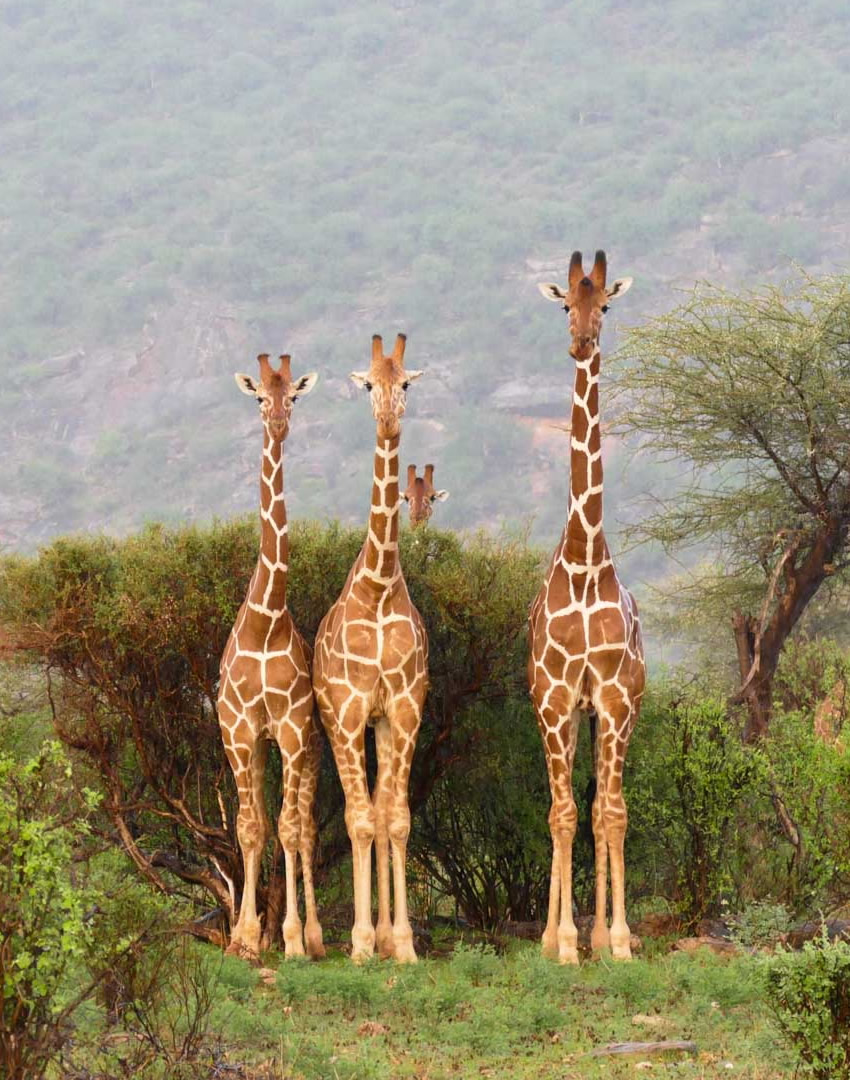
An arid wilderness bisected by the Ewaso Nyiro river, home to the famous Special Five — Grevy's zebra, reticulated giraffe, Somali ostrich, gerenuk and Beisa oryx.
Explore Samburu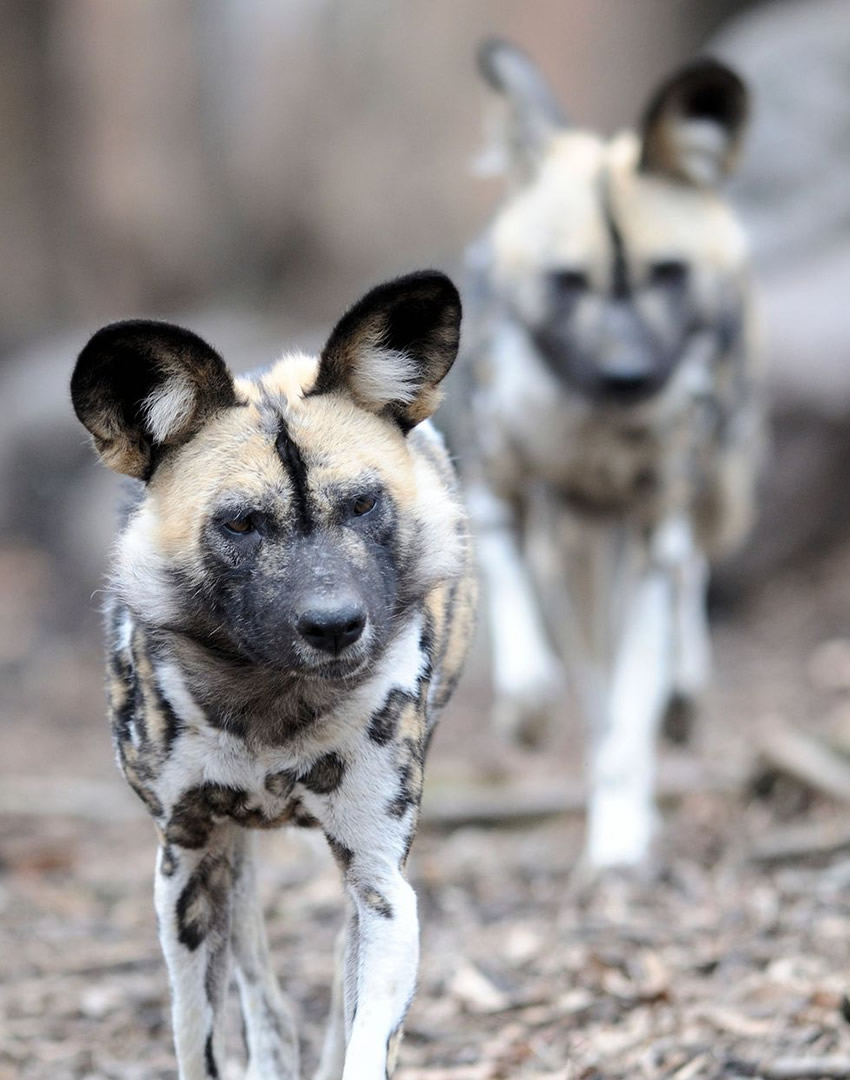
Made famous by Joy Adamson's Born Free story, Meru is a lush, under-visited wilderness of palm-lined rivers, dense bush and open grassland.
Explore MeruA private conservancy at the foot of Mount Kenya and one of Africa's greatest conservation success stories with exceptional rhino sightings.
Explore Lewa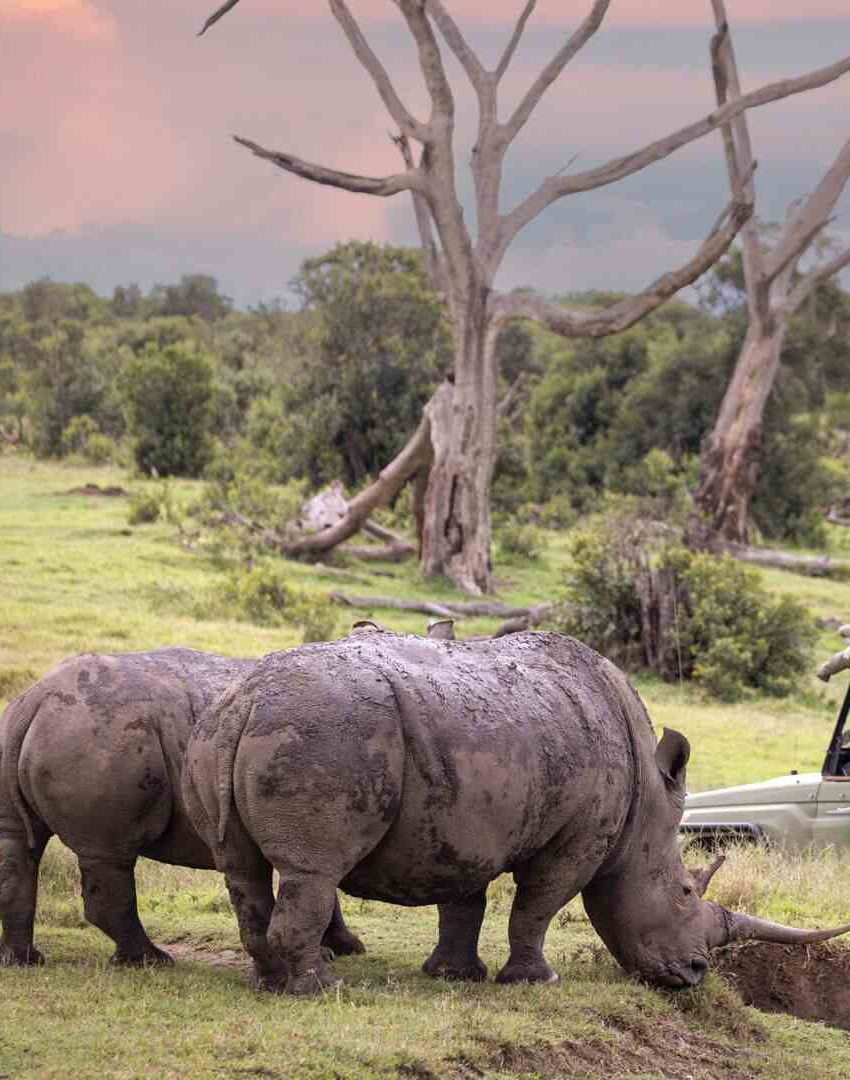
East Africa's largest black rhino sanctuary and home to the world's last two northern white rhinos. Big Five game drives and night drives.
Explore Ol Pejeta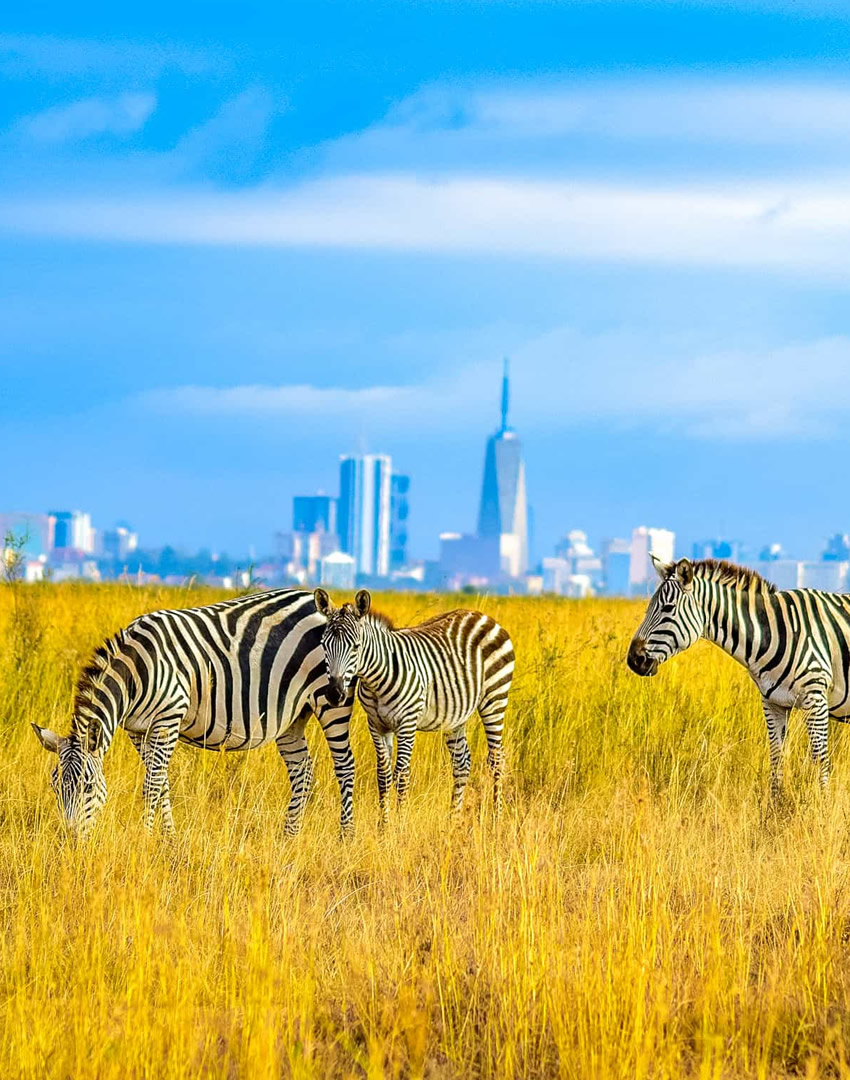
The only national park in the world set against a capital-city skyline. Lions, rhinos, buffalos and giraffes roam with Nairobi's towers rising behind them.
Explore Nairobi NP
Kenya's largest national park — a vast, rust-coloured wilderness where elephants coat themselves in red laterite soil and maneless lions patrol the plains.
Explore Tsavo East
A dramatic landscape of ancient lava flows, rocky outcrops and dense woodland, centred around the crystal-clear Mzima Springs.
Explore Tsavo West