
Uganda's most diverse national park — a mosaic of savannah, crater lakes, tropical forest, and the great Kazinga Channel, where tree-climbing lions, chimpanzees, and over 600 bird species share a Rift Valley landscape framed by the distant snowcaps of the Mountains of the Moon.
Queen Elizabeth National Park spans nearly 2,000 square kilometres of western Uganda's Albertine Rift — a dramatic landscape of volcanic crater lakes, open savannah, dense tropical forest, and the 32-kilometre Kazinga Channel that links Lake Edward and Lake George. The park straddles the equator, flanked to the north by the Rwenzori Mountains and to the south by the forested Ishasha sector that borders the Democratic Republic of Congo. No other park in Uganda — and few in East Africa — packs this range of habitats, wildlife, and visual drama into a single protected area.
The Kazinga Channel is the park's centrepiece: a wide, hippo-filled waterway lined with buffalo herds, elephant families, and one of the densest concentrations of waterbirds in Africa. The afternoon boat cruise along the channel is routinely rated among the finest wildlife experiences in Uganda — and for good reason. But the park extends far beyond the channel. The Kasenyi plains in the north support lion prides and large herds of Uganda kob. The Katwe-Kikorongo crater fields form a volcanic moonscape of salt lakes and mineral-stained shores. And in the far south, the Ishasha sector is home to tree-climbing lions — prides that habitually rest in the branches of giant fig trees, a behaviour seen consistently in only a handful of locations across the continent.
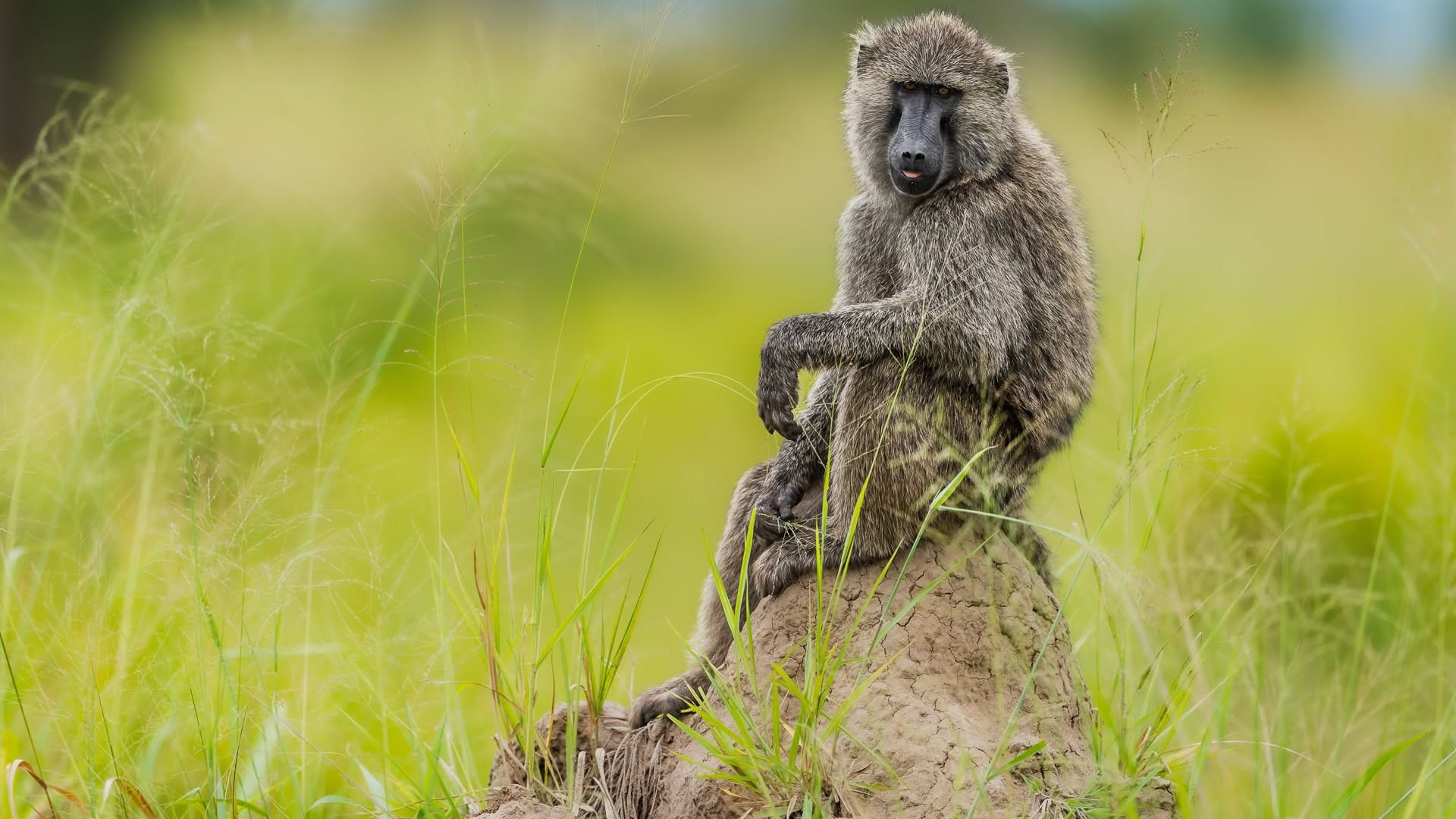
Queen Elizabeth also harbours ten primate species — a count that includes a habituated chimpanzee community in the Kyambura Gorge, a narrow, forested canyon cut into the savannah floor. Black-and-white colobus, red-tailed monkey, olive baboon, vervet monkey, and L'Hoest's monkey inhabit the Maramagambo Forest in the park's southern reaches. With over 611 recorded bird species — the highest count of any East African national park — Queen Elizabeth is simultaneously a big-game savannah, a primate habitat, a birder's destination, and a geological showcase. It is the park that proves Uganda's claim to be the most ecologically diverse country on the continent.
The Kazinga Channel, tree-climbing lions, crater lakes, chimpanzee tracking, 611 bird species, and a landscape that shifts from savannah to forest to volcanic crater within a single drive.
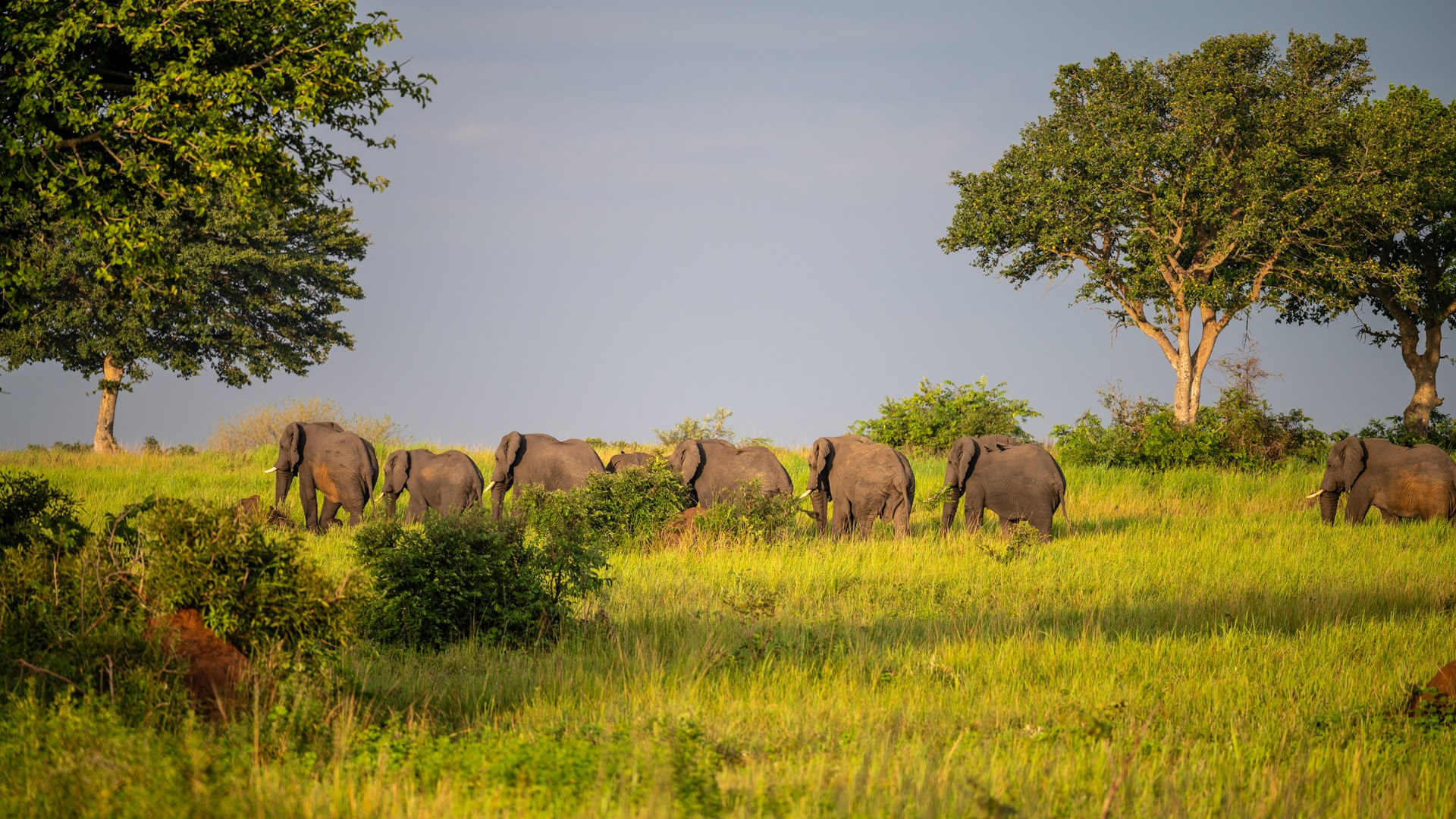
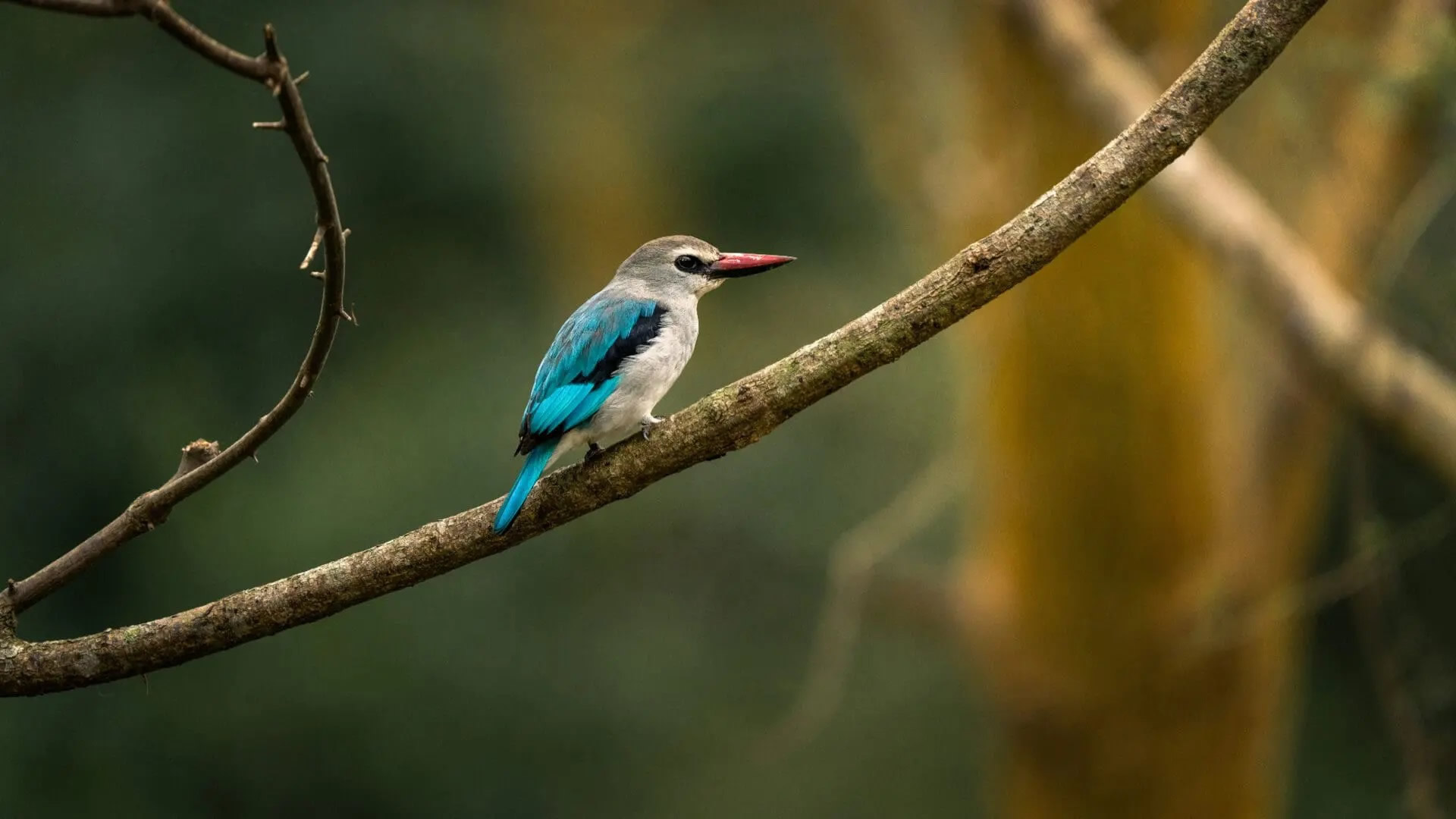
The 32-kilometre Kazinga Channel connects Lake Edward and Lake George through the heart of the park — and the afternoon boat cruise along its banks is one of the signature wildlife experiences in Uganda. Hippo pods of 30 or more surface alongside the boat. Elephants wade at the water's edge. Buffalo herds line the banks in the hundreds. Fish eagles, pied kingfishers, African skimmers, and malachite kingfishers hunt from the shoreline. The cruise is two hours of sustained, close-range wildlife viewing from a perspective no game drive can match.
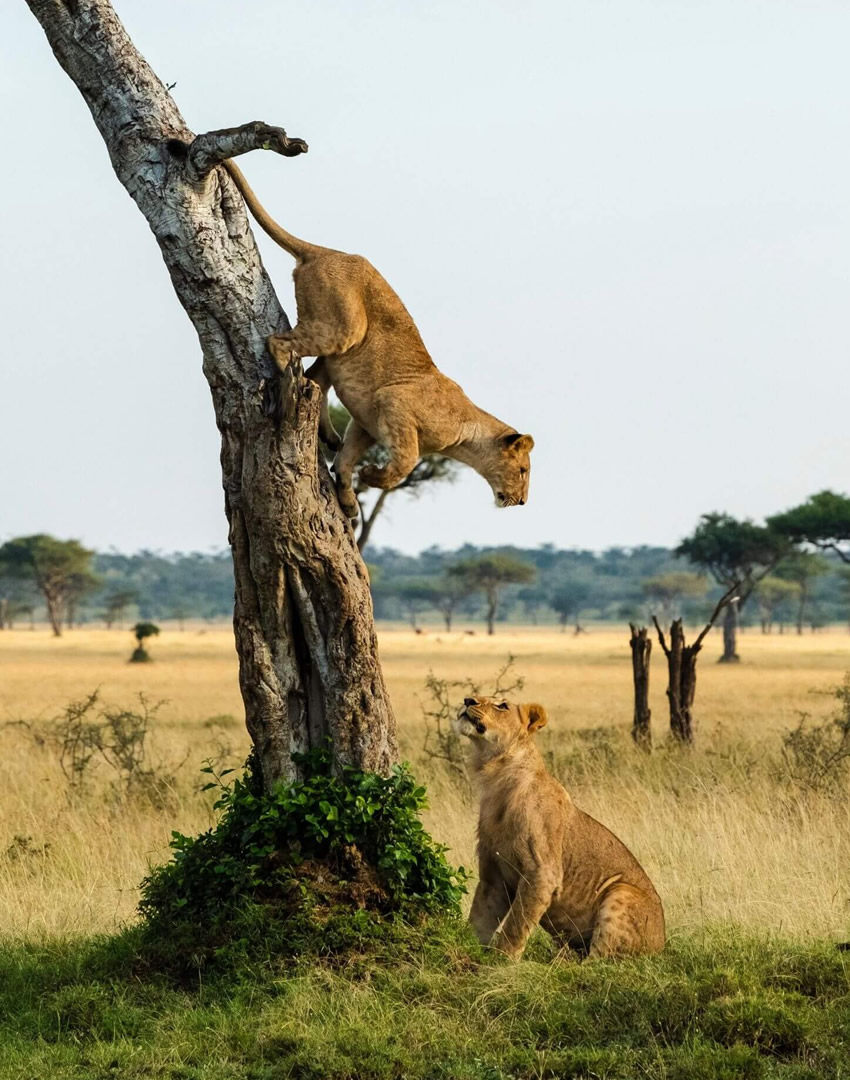
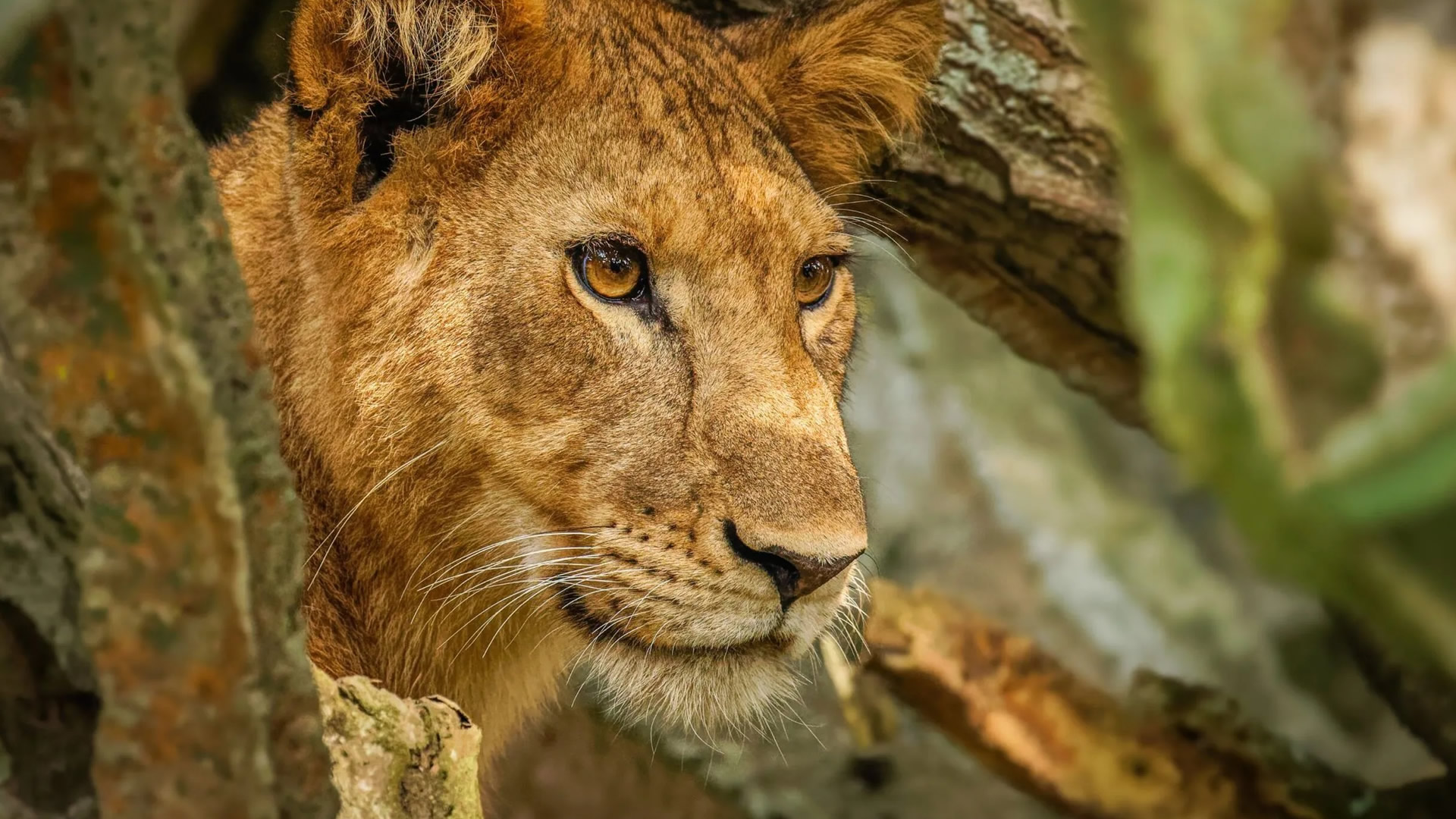
In the park's remote southern Ishasha sector, lion prides have developed a remarkable habit of climbing into the canopies of large fig trees — draping across branches, sleeping, and scanning the plains from a height of five metres or more. The behaviour is seen consistently in only two or three locations in Africa, and Ishasha is one of the most reliable. Finding a pride of lions arrayed across a fig tree's branches — tails dangling, eyes half-closed — is one of the most unusual and photogenic sightings on any East African safari.
Queen Elizabeth holds the highest bird count of any national park in East Africa — 611 species recorded across its mosaic of savannah, forest, wetland, crater lake, and channel habitats. Shoebill sightings are possible in the channel marshes. African finfoot, white-winged warbler, and papyrus gonolek inhabit the lakeside papyrus. Raptors patrol the crater rims. The Maramagambo Forest adds Albertine Rift endemics. For birders, Queen Elizabeth is a multi-day destination in its own right — a park where the bird list alone justifies the visit.
The Kyambura Gorge — a narrow, steep-sided river canyon cut into the savannah floor — shelters a habituated chimpanzee community in a strip of tropical forest far removed from the typical chimp habitat. Tracking the chimps involves descending into the gorge on foot with armed rangers, navigating the forest along the river, and locating the group by calls and movement. The setting is dramatic — a hidden world of towering trees and filtered light, surrounded by open grassland on every side — and the encounter is unlike chimp trekking at any other site.
The Katwe-Kikorongo explosion crater field — a chain of volcanic craters scattered across the park's northern reaches — creates one of Uganda's most visually striking landscapes. Some craters hold vivid blue or green mineral lakes. Others are dry, salt-crusted basins. The crater drive offers panoramic views across the Rift Valley floor to the distant Rwenzori snowline. Lake Katwe itself has been a source of salt for centuries, and visits to the artisanal salt-mining operations on its shores provide a cultural dimension to the geological spectacle.
Queen Elizabeth sits at the geographical centre of Uganda's western safari circuit — connected by good roads to Bwindi (3–4 hours south), Kibale Forest (1–2 hours north), and the Rwenzori Mountains (accessible from the park's northern boundary). Almost every Uganda itinerary passes through Queen Elizabeth, and its diversity of habitats and activities makes it a natural anchor for two to three nights. The combination of savannah game drives, the channel cruise, chimpanzee tracking, and the Ishasha lions ensures that no two days here are the same.
Queen Elizabeth National Park lies in western Uganda, straddling the equator between Lake Edward to the south-west and Lake George to the north-east. The park occupies the floor and lower slopes of the western branch of the Great Rift Valley, with the Rwenzori Mountains — the legendary Mountains of the Moon — rising to over 5,000 metres along its northern boundary.
The main access town is Kasese, approximately 400 kilometres west of Kampala (5–6 hours by road). The park headquarters at Mweya Peninsula sit on a headland where the Kazinga Channel meets Lake Edward, providing one of the most dramatic lodge settings in Uganda. The Ishasha sector, in the park's far south, is a further 2 to 3 hours from Mweya and is typically visited en route to or from Bwindi. Queen Elizabeth's position on the western circuit makes it the natural hub between gorilla trekking in Bwindi, chimpanzee tracking in Kibale, and mountaineering on the Rwenzoris.
From the Kazinga Channel cruise and Ishasha lion tracking to Kyambura Gorge chimps, crater drives, and some of the finest birding in Africa.
The park's unmissable experience. The two-hour afternoon cruise travels the channel between Lake Edward and Lake George, passing hippo pods, bathing elephants, massive Nile crocodiles, and buffalo herds that can number in the hundreds. The banks teem with waterbirds — pelicans, storks, herons, skimmers, and fish eagles calling from dead trees overhead. The boat brings you closer to the wildlife than any vehicle could, and the late-afternoon golden light makes every frame photographic.
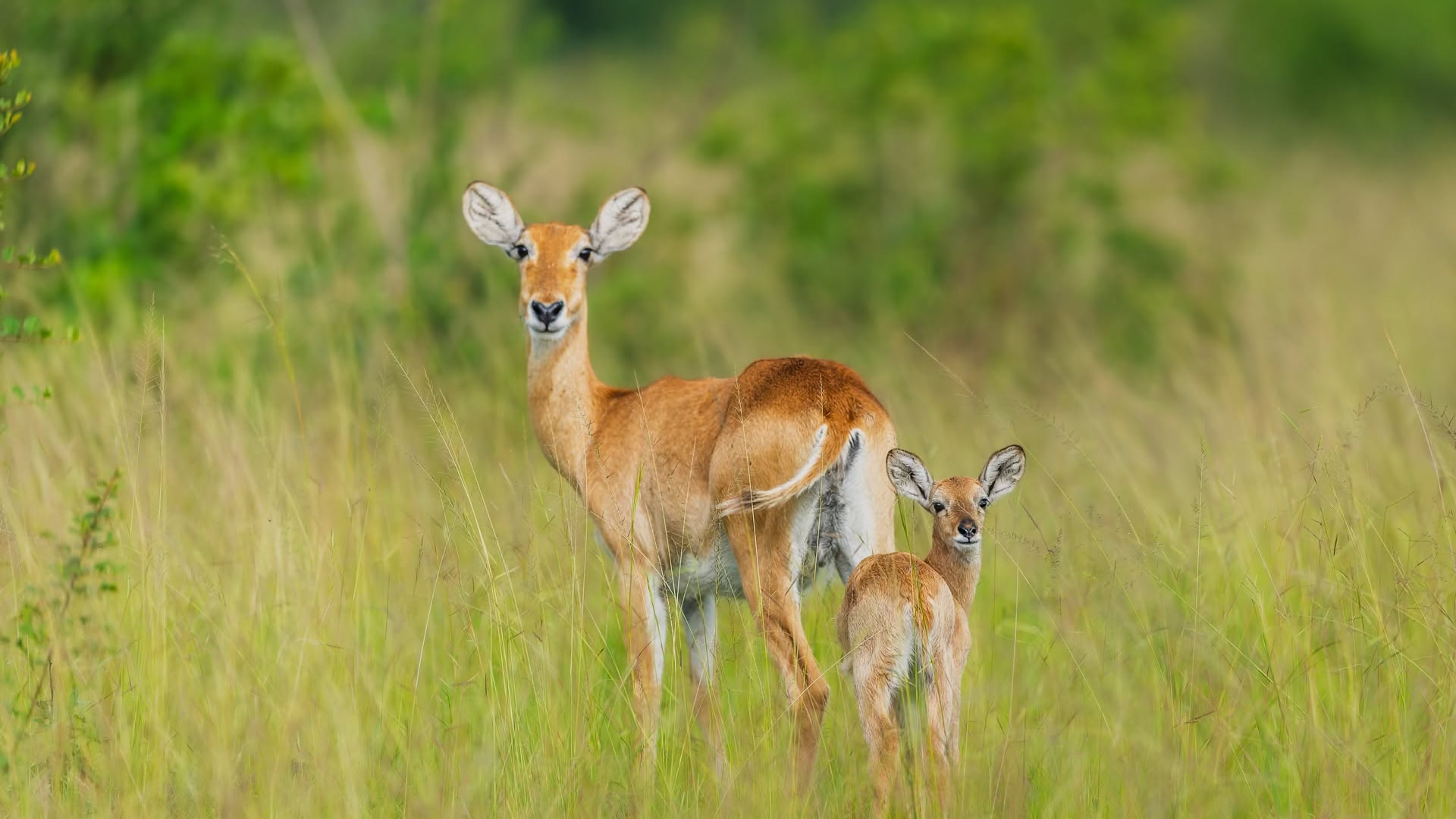
Morning and afternoon drives across the Kasenyi plains and the northern sector cover open savannah where lion prides hunt large herds of Uganda kob — a courtship-lekking antelope found in numbers here that rival any spectacle on the continent. Leopard, spotted hyena, side-striped jackal, giant forest hog, and warthog are all present. The Ishasha sector in the south adds the tree-climbing lions, best found on dedicated drives through the fig-tree woodland along the Ishasha River floodplain.
The Kyambura Gorge — a steep-walled canyon carved by the Kyambura River into the surrounding savannah — shelters a small habituated chimpanzee community in a ribbon of tropical forest at its base. Tracking involves a guided descent into the gorge and a forest walk along the river to locate the group. The setting is extraordinary: towering canopy, filtered light, and the sound of chimps calling between the vertical walls. Sightings are not guaranteed (the community is small and can range widely), but the experience of entering the gorge is memorable regardless.
The Katwe-Kikorongo explosion crater field contains over 50 volcanic craters — some filled with vivid mineral lakes, others dry and salt-encrusted. A guided drive through the crater landscape reveals a geological history written in volcanic cones, lava formations, and multicoloured lakeshores. Lake Katwe's artisanal salt-mining operations have been active for centuries; guided visits explain the traditional extraction methods and the economic significance of the salt trade to the surrounding communities.
With 611 recorded species, Queen Elizabeth is East Africa's richest birding park. The channel supports African skimmer, pink-backed pelican, and African finfoot. The Maramagambo Forest holds white-naped pigeon, African broadbill, and Albertine Rift endemics. The crater lakes attract flamingos and various waders. Shoebill — one of Africa's most sought-after species — is occasionally sighted in the papyrus marshes. Specialist birding guides can arrange multi-day itineraries covering all habitat zones.
Queen Elizabeth is unique among East African parks in that several fishing villages — Kazinga, Katunguru, Katwe — operate within its boundaries. Guided visits to these communities provide insight into the daily lives of people who live alongside hippos, elephants, and lions. The Lake Katwe salt works, the Katunguru fish market, and women's craft cooperatives all offer encounters that anchor the safari in human context. Tourism fees contribute directly to community health and education projects.
Queen Elizabeth operates year-round. The dry months offer the best game viewing; the wet season brings peak birding and lush scenery.
The best conditions for game drives and the Kazinga Channel cruise. Vegetation is shorter, tracks are dry, and wildlife concentrates around the channel and remaining water sources. The Ishasha tree-climbing lions are easier to locate in the open fig woodland. Chimpanzee tracking in Kyambura Gorge is more comfortable on dry trails. Clear days offer views of the Rwenzori snowline from the crater drive. These months are the busiest, and lodges on the Mweya Peninsula should be booked well in advance.
The rains turn the park lush and green, and the birding reaches its peak — migratory species arrive, breeding plumage is on display, and the crater lakes attract concentrated flocks. Tracks in the Ishasha sector can become muddy and occasionally impassable, but the Mweya and Kasenyi areas remain accessible. The channel cruise operates year-round regardless of rain. Lodge rates drop, visitor numbers thin, and the photographic light in the breaks between showers can be superb. Serious birders should consider timing their visit for the wet months.
A scenic day's drive through western Uganda or a short flight from Entebbe to Kasese — with the Rwenzori Mountains visible on approach.
Scheduled flights operate from Entebbe International Airport to Kasese airstrip, approximately 1 hour by air. From Kasese, the park headquarters at Mweya is roughly 1.5 hours by road. Charter flights can land at the Mweya airstrip within the park itself, reducing the transfer to minutes. AeroLink Uganda and charter operators serve these routes. Flying is the fastest option and provides spectacular views of the Rwenzori range on approach.
The drive from Kampala or Entebbe takes approximately 5 to 6 hours via the Fort Portal road through the green western highlands, or via Mbarara and the equator crossing. Both routes are scenic and largely tarmac. The approach from the north passes through the Rwenzori foothills; the southern approach from Mbarara crosses open savannah. Many itineraries combine the drive with a stop at the equator or at Kibale Forest (1–2 hours north) en route, turning the transfer into a game-viewing day.
Queen Elizabeth is the natural hub of Uganda's western safari circuit. A classic route runs Entebbe → Kibale Forest (chimpanzees, 1–2 nights) → Queen Elizabeth (2–3 nights, including the channel cruise and Ishasha) → Bwindi (gorilla trekking, 2–3 nights) → Lake Bunyonyi (1 night) → Entebbe. The Ishasha sector, in the park's south, sits directly on the route between Mweya and Bwindi, making tree-climbing lions a natural en-route activity rather than a detour.
The Kazinga Channel, tree-climbing lions, crater lakes, chimpanzees, and a Rift Valley landscape that contains more wildlife diversity per square kilometre than almost anywhere in Africa.
Two to three nights is ideal. Two nights allows the Kazinga Channel cruise, two game drives (Kasenyi plains and either a crater drive or Kyambura Gorge chimp tracking), and time on the Mweya Peninsula. Three nights adds the Ishasha sector — a full day's excursion from Mweya, or, better, a night at an Ishasha camp that breaks the journey to Bwindi. Visitors on a full Uganda circuit often spend two nights at Mweya plus one night in Ishasha, maximising the park's range without rushing.
Sightings are good but never guaranteed. The tree-climbing behaviour is a habit of specific prides rather than a constant state — the lions climb when conditions suit (heat, tsetse flies, vantage) and rest on the ground at other times. Guides know the fig trees the prides currently favour and will prioritise those circuits. A full morning or afternoon drive in the Ishasha sector gives a strong chance of finding them in the trees. The dry season, when the woodland is more open, typically offers better visibility.
Yes — the Kyambura Gorge shelters a habituated chimpanzee community, and guided tracking walks depart twice daily. However, the community is small (roughly 25 to 30 individuals) and ranges across a narrow, steep-sided gorge, which means sighting rates are lower than at Kibale Forest or Budongo. The experience is nonetheless remarkable — descending into a forested canyon hidden beneath the savannah and tracking primates along the riverbed. For the best chimpanzee trekking odds on a Uganda circuit, Kibale Forest (1–2 hours north) is the stronger choice.
Queen Elizabeth National Park charges USD 40.00 per non-resident adult per 24-hour period (as of 2024/2025). The Kazinga Channel boat cruise is approximately USD 30 per person. Kyambura Gorge chimpanzee tracking is approximately USD 50 per person. Children aged 5–15 pay reduced rates. All park fees, activity fees, and applicable taxes on Kuldip's Touring Company safari packages are included in the quoted price.
Very much so — and it is one of the best family parks in Uganda. The Kazinga Channel cruise is engaging for all ages: hippos, elephants, and birds at close range from a stable boat. Game drives on the Kasenyi plains deliver consistent sightings without long waits. The crater drive is visually dramatic and doesn't require leaving the vehicle. The Ishasha sector's tree-climbing lions are inherently exciting for children. Kyambura Gorge chimp tracking has a minimum age (usually 12–15), but the other activities are open to all ages. Several lodges around Mweya are family-friendly with swimming pools and flexible dining.
Absolutely — this is the most popular combination in Uganda. Queen Elizabeth's Ishasha sector sits on the direct route between the Mweya area and Bwindi Impenetrable, making the journey to the gorillas a game drive in its own right. A typical itinerary runs two nights at Mweya (channel cruise, game drives, chimp tracking) → one night at Ishasha (tree-climbing lions) → two to three nights at Bwindi (gorilla trekking). The transition from savannah to montane forest is one of the most dramatic habitat shifts on any African itinerary.
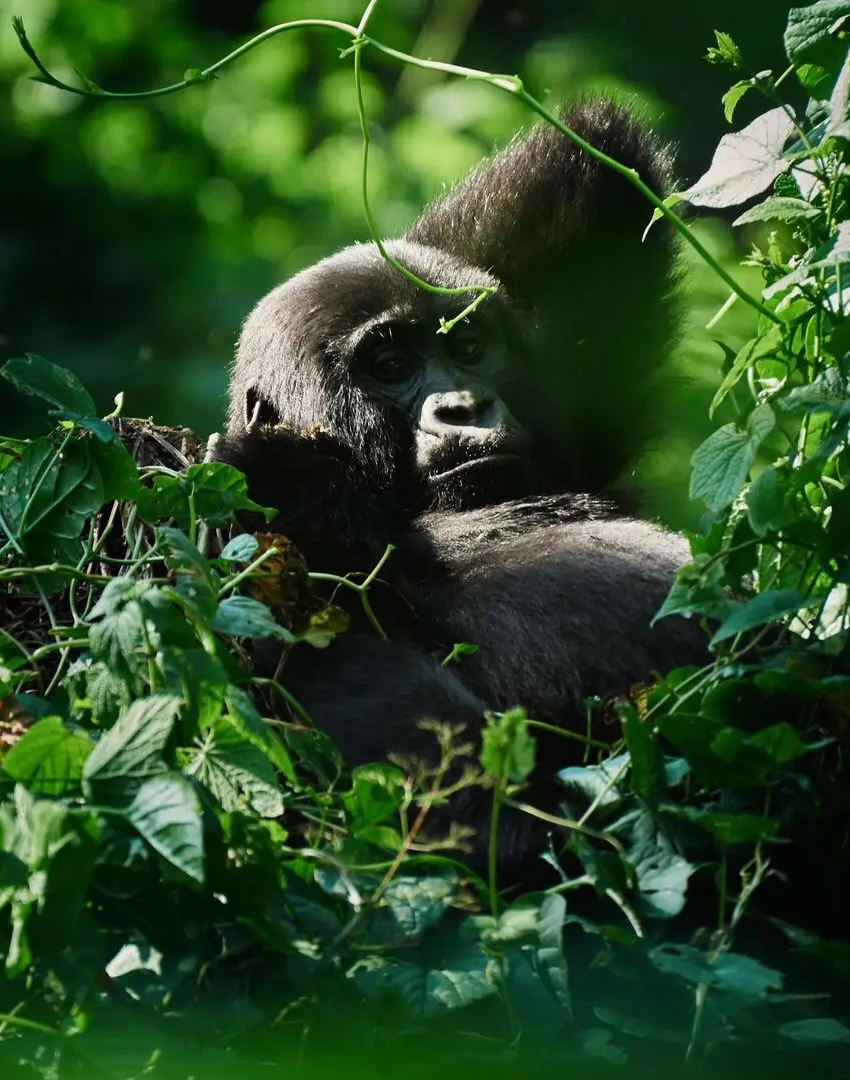
One of Africa's most ancient rainforests and home to roughly half the world's mountain gorillas. An extraordinary wildlife experience.
Explore Bwindi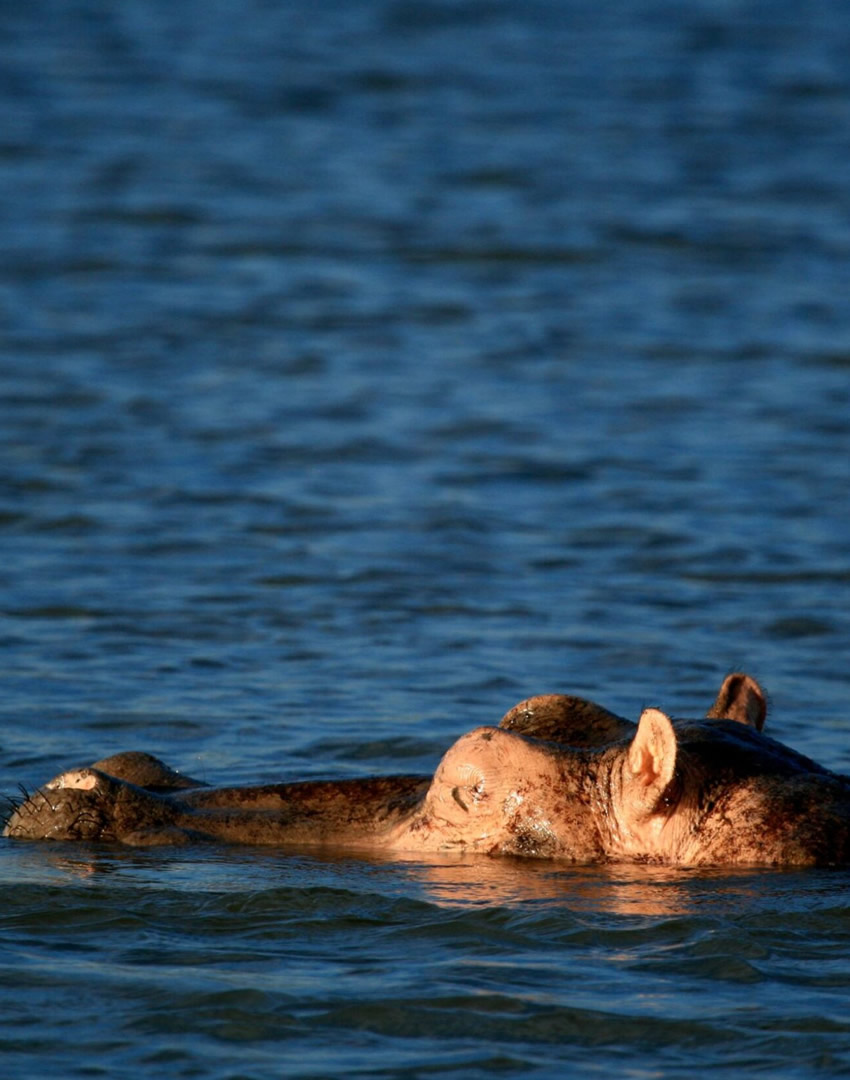
Uganda's largest national park, where the Victoria Nile forces itself through a narrow rock gap and plunges forty-three metres.
Explore Murchison FallsA mosaic of savannah, wetlands, crater lakes and tropical forest. Best known for tree-climbing lions and the Kazinga Channel boat safari.
Explore Queen Elizabeth NP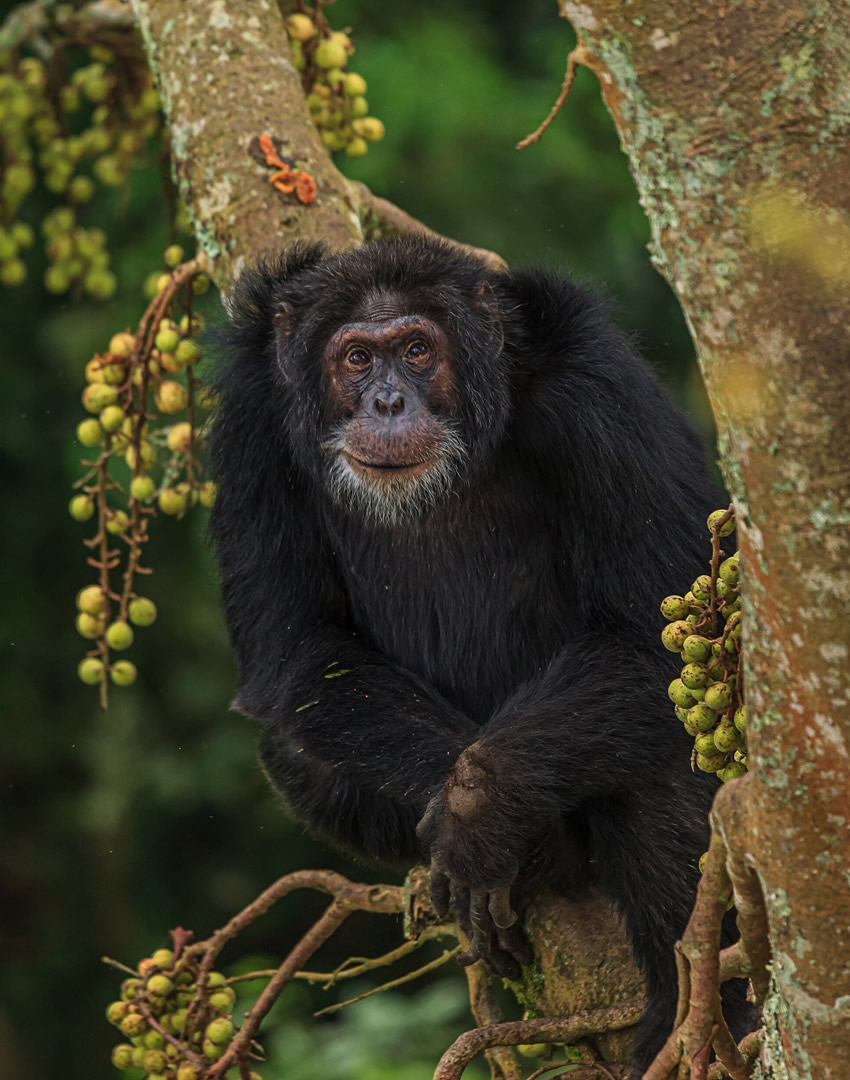
Africa's premier chimpanzee tracking destination, with the highest density and diversity of primates on the continent.
Explore Kibale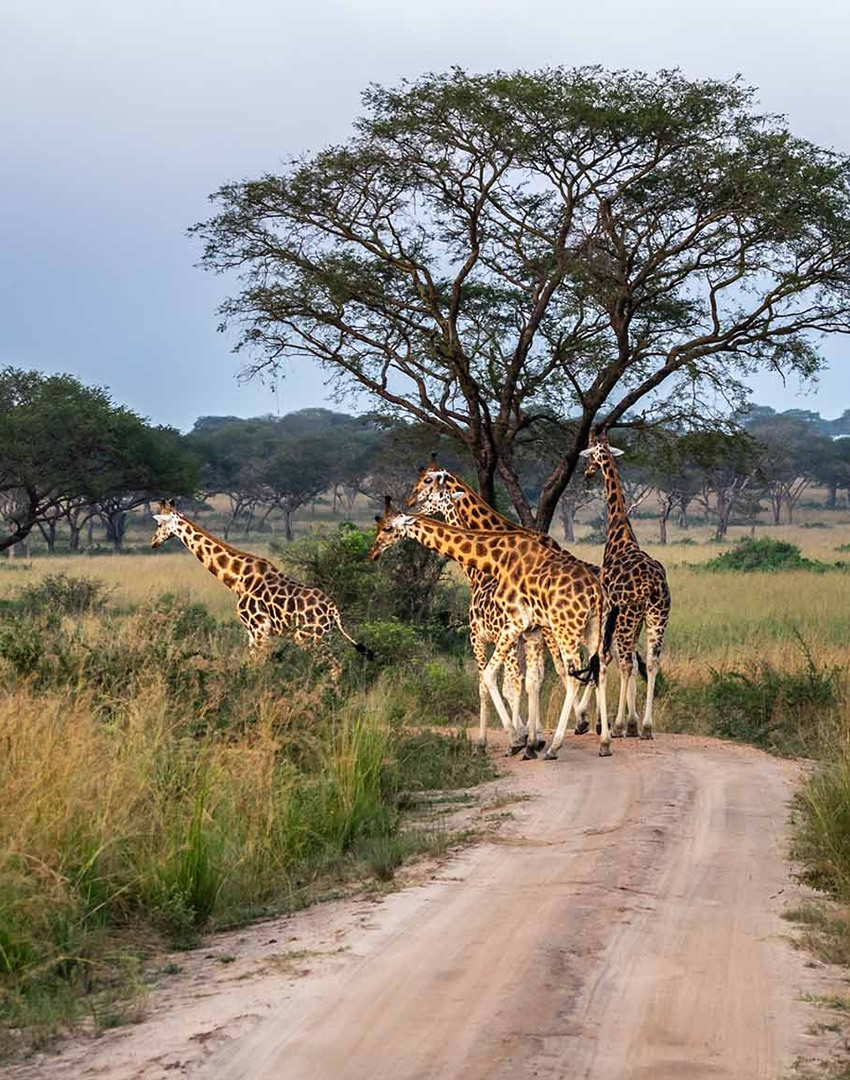
One of Africa's last true wilderness frontiers. Semi-arid savannah and rugged mountain scenery with species found nowhere else in Uganda.
Explore Kidepo Valley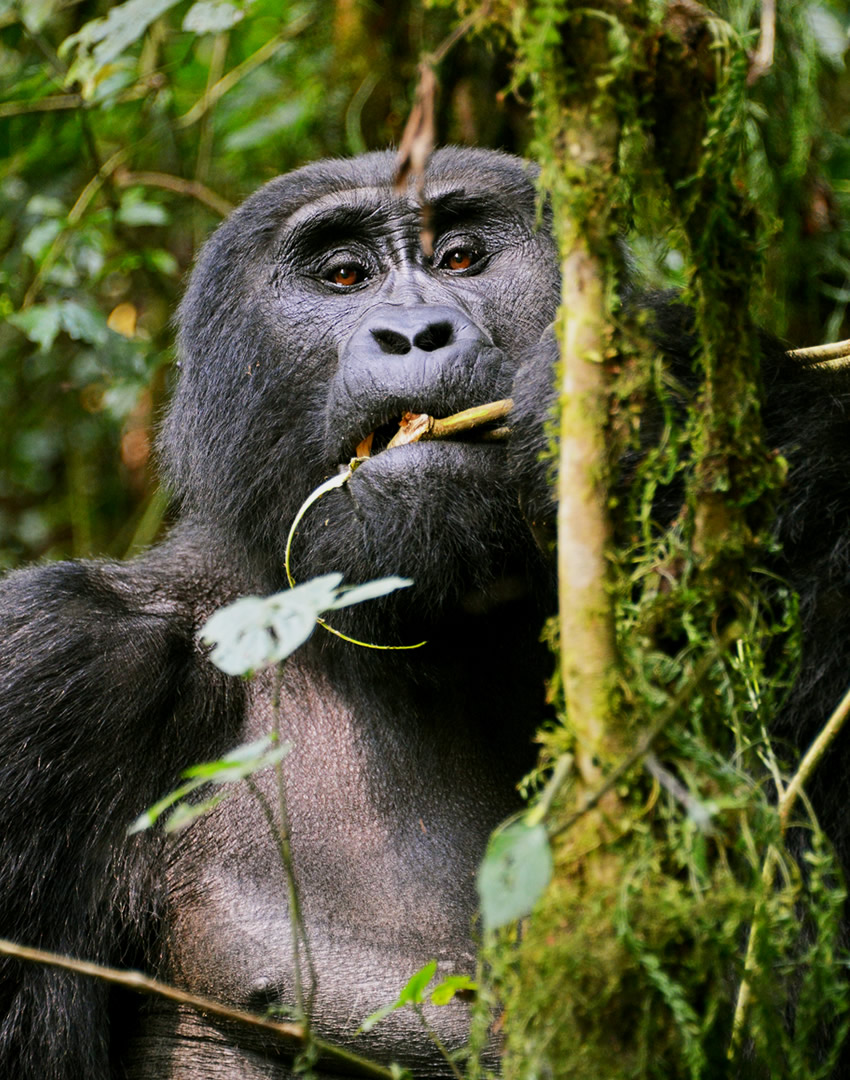
The smallest and most scenic of Uganda's gorilla parks, set on the slopes of the Virunga volcanoes at the meeting point of three countries.
Explore Mgahinga