
One of the oldest and most biodiverse montane rainforests in Africa — a vast emerald canopy stretching across the mountains of south-western Rwanda where 13 primate species swing through the trees, East Africa's only canopy walkway hangs above the valley, and the source waters of the Nile begin their 6,700-kilometre journey north.
Nyungwe Forest National Park protects approximately 1,019 square kilometres of montane rainforest in south-western Rwanda — the largest remaining tract of mountain forest in East or Central Africa. The forest drapes over the peaks and ridges of the Albertine Rift at elevations between 1,600 and 2,950 metres, where mist hangs in the canopy most mornings and the air smells of damp earth and decaying leaves. It has been forest, continuously, for tens of thousands of years — one of the few African forests that survived the Ice Age drying events that reduced most of the continent's woodland to fragments.
That antiquity is written into its species list. Nyungwe supports 13 primate species — the highest count of any single forest in East Africa — including habituated chimpanzees, Rwenzori colobus (in troops numbering up to 400 individuals, the largest arboreal primate groups in Africa), L'Hoest's monkey, owl-faced monkey, and several other Albertine Rift endemics. Over 310 bird species include at least 27 Albertine Rift endemics — more than any other single site in the rift system. The flora — over 1,100 plant species, including more than 200 tree species and approximately 140 orchids — is similarly dense with endemism and rarity.
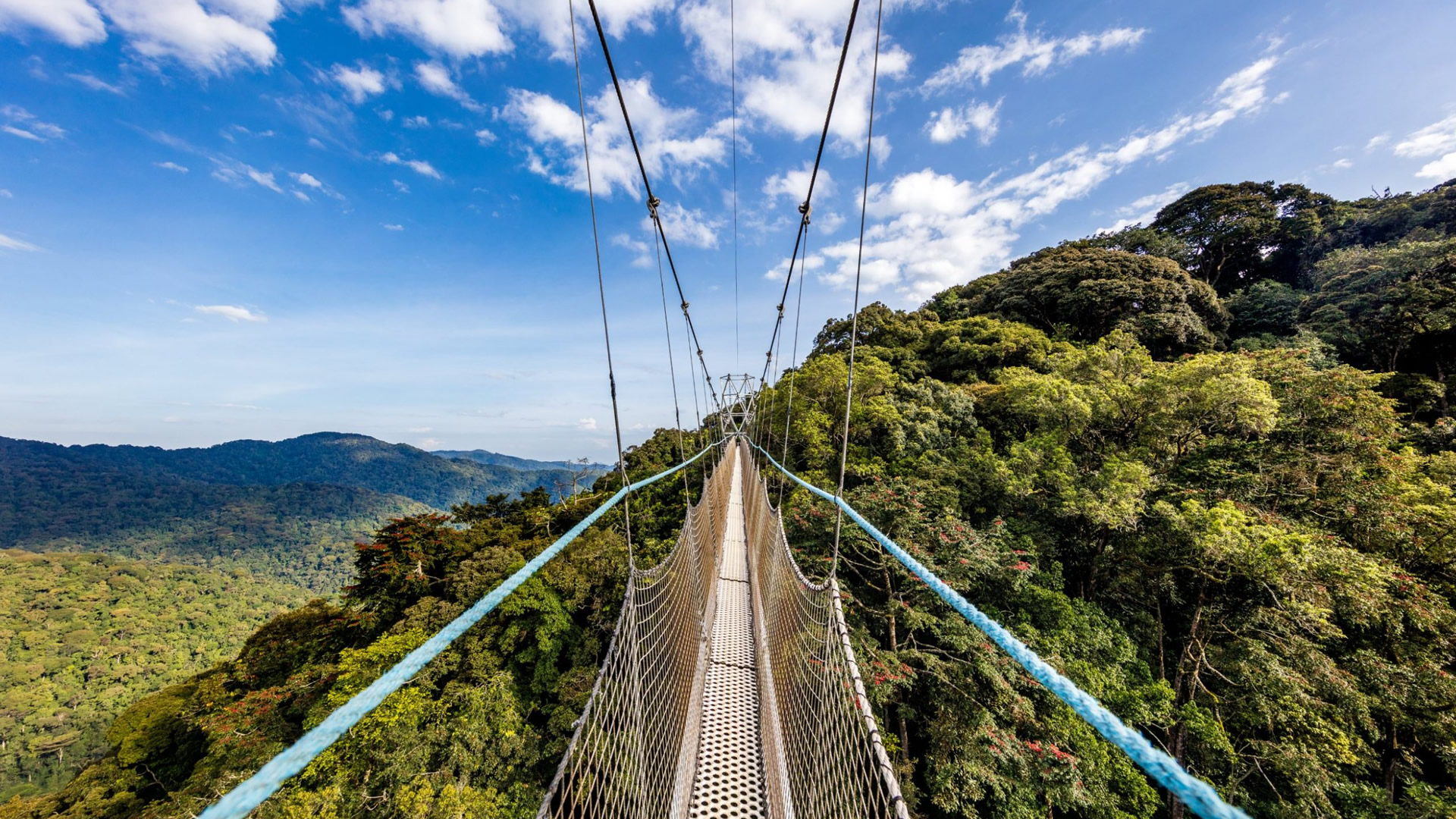
The park's centrepiece infrastructure is the Igishigishigi Canopy Walkway — a 200-metre suspended metal walkway that hangs 50 metres above the forest floor, offering treetop-level views across the Nyungwe valley. It is the only structure of its kind in East Africa. But Nyungwe is far more than a canopy walkway and a chimp trek. Over 130 kilometres of maintained trails explore every altitude zone of the forest, from the bamboo lowlands to the ridge-top heath. For visitors willing to walk slowly, listen carefully, and look up, Nyungwe reveals an ecosystem of extraordinary richness — a place where evolution has been running a very long experiment without interruption.
Chimpanzees, colobus troops of 400, East Africa's only canopy walkway, Albertine Rift endemics, and a forest that has been here since before the last Ice Age.
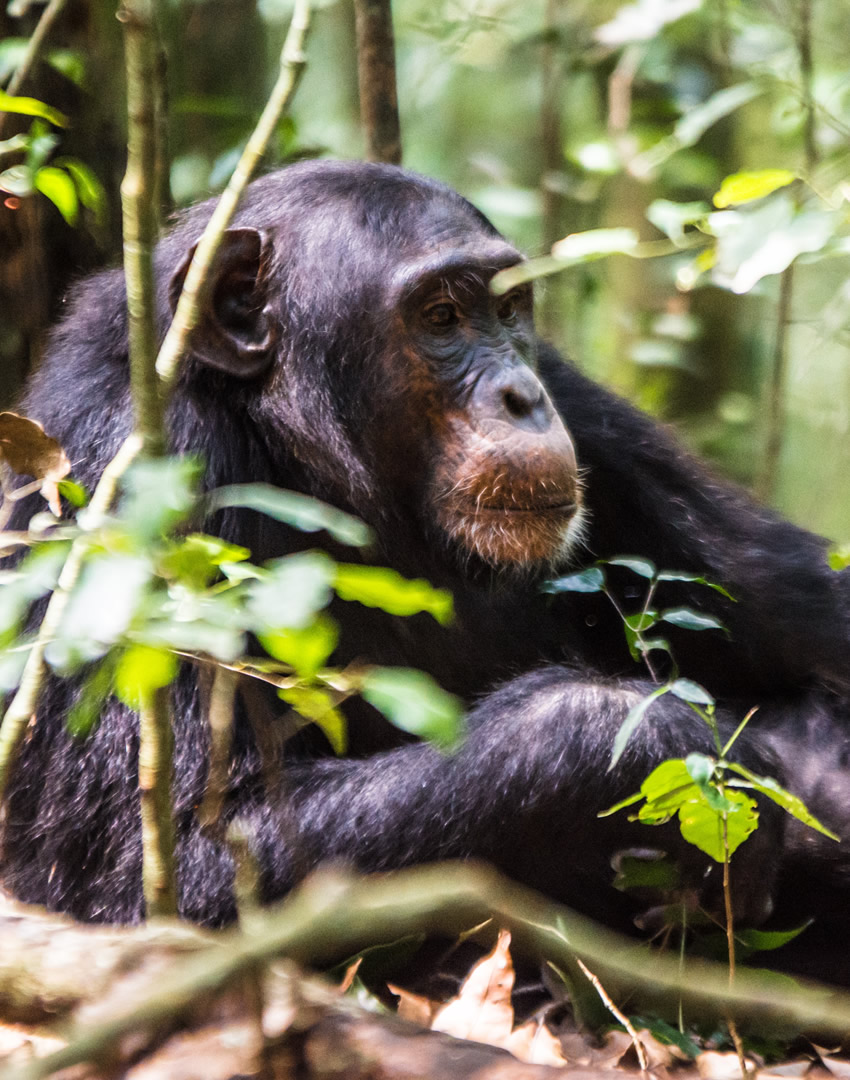
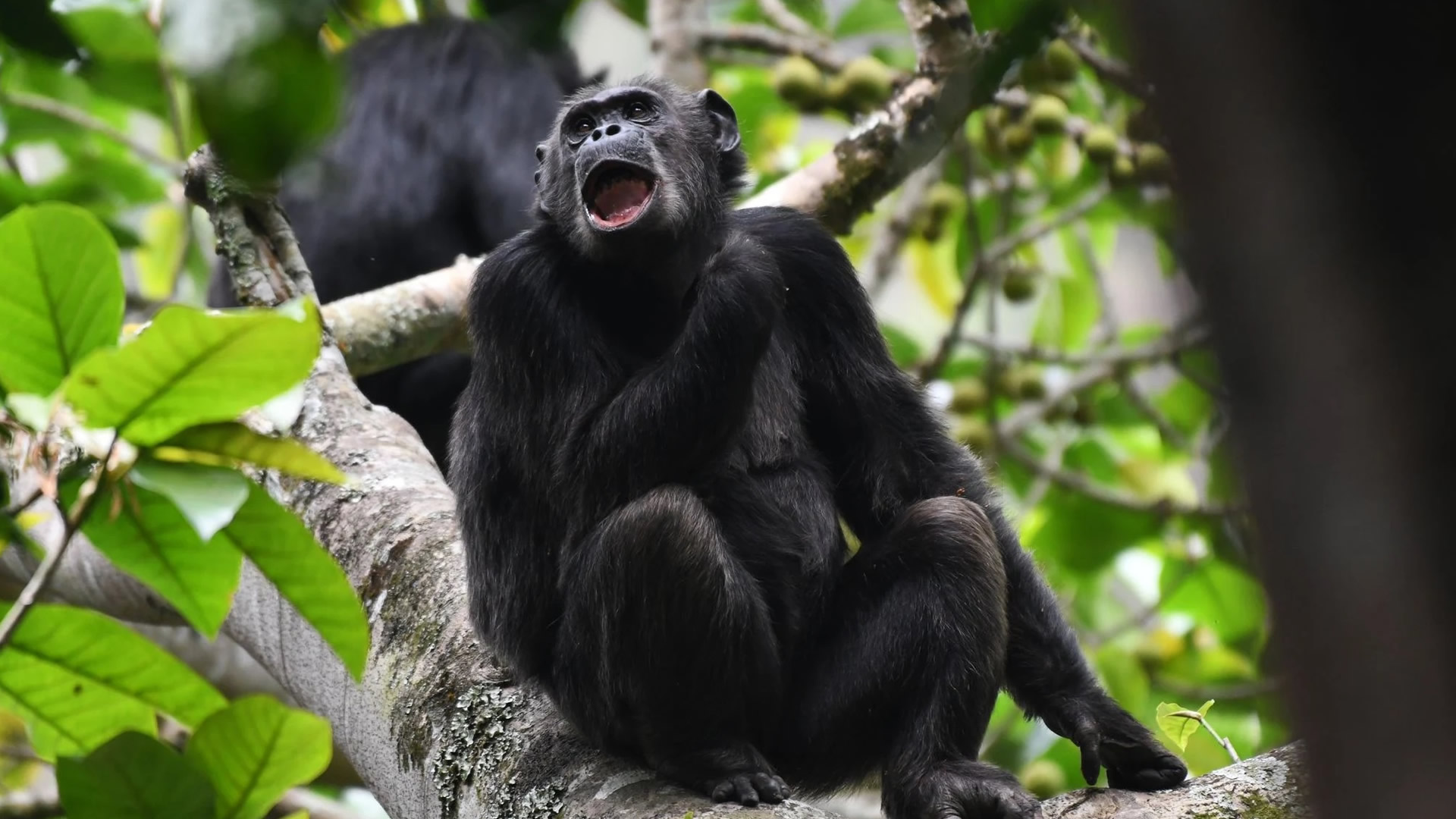
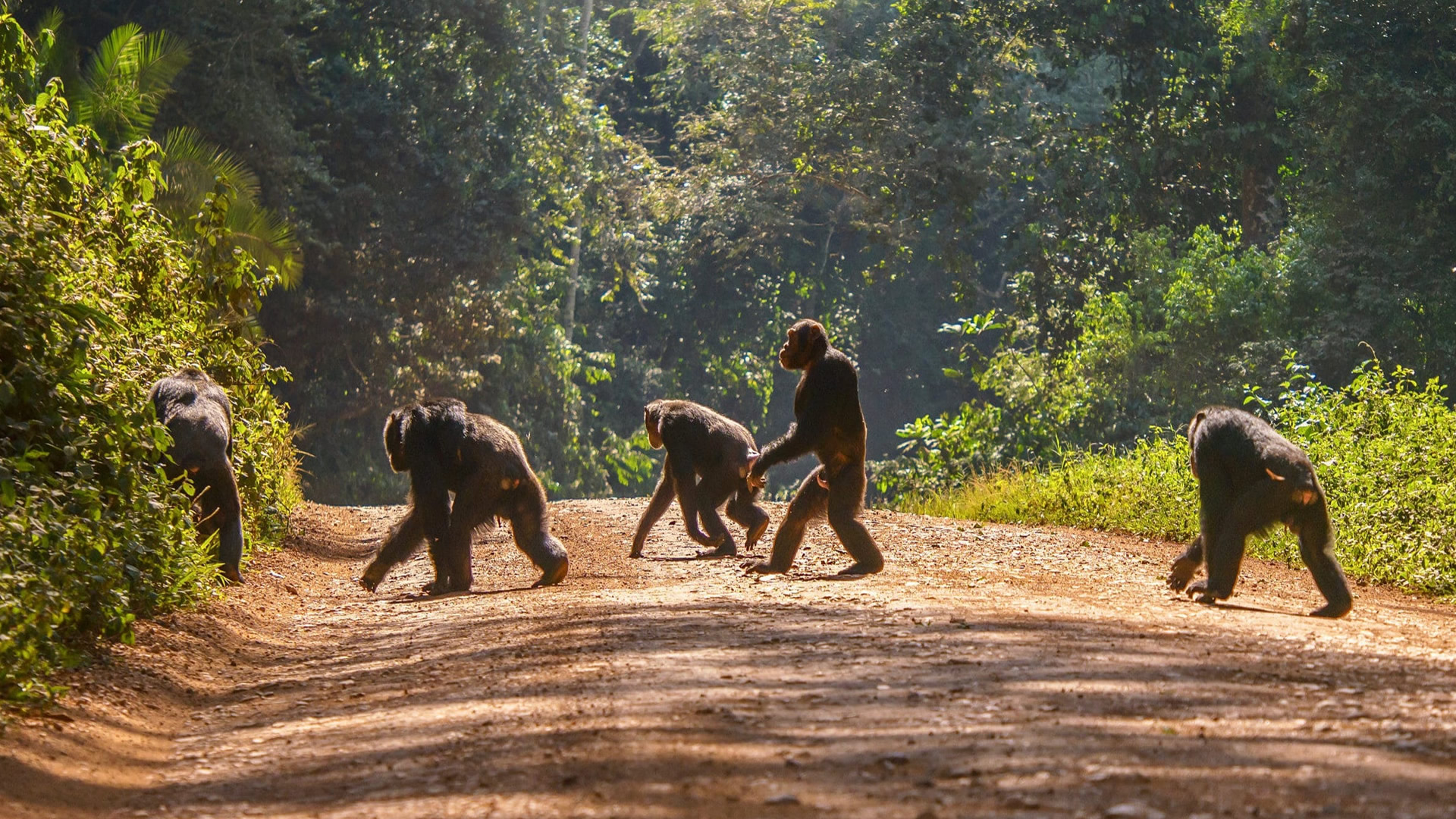
Nyungwe's habituated chimpanzee community — based around the Cyamudongo forest sector and the main forest block — offers Rwanda's only opportunity to track wild chimpanzees on foot. The experience is fundamentally different from a gorilla trek: chimps are faster, louder, more unpredictable, and the encounter unfolds through sound as much as sight — long-distance pant-hoots, the crash of branches overhead, then suddenly a face peering down from the canopy. Tracking takes one to three hours depending on the community's location, and the one-hour observation period begins when the first individuals are found.
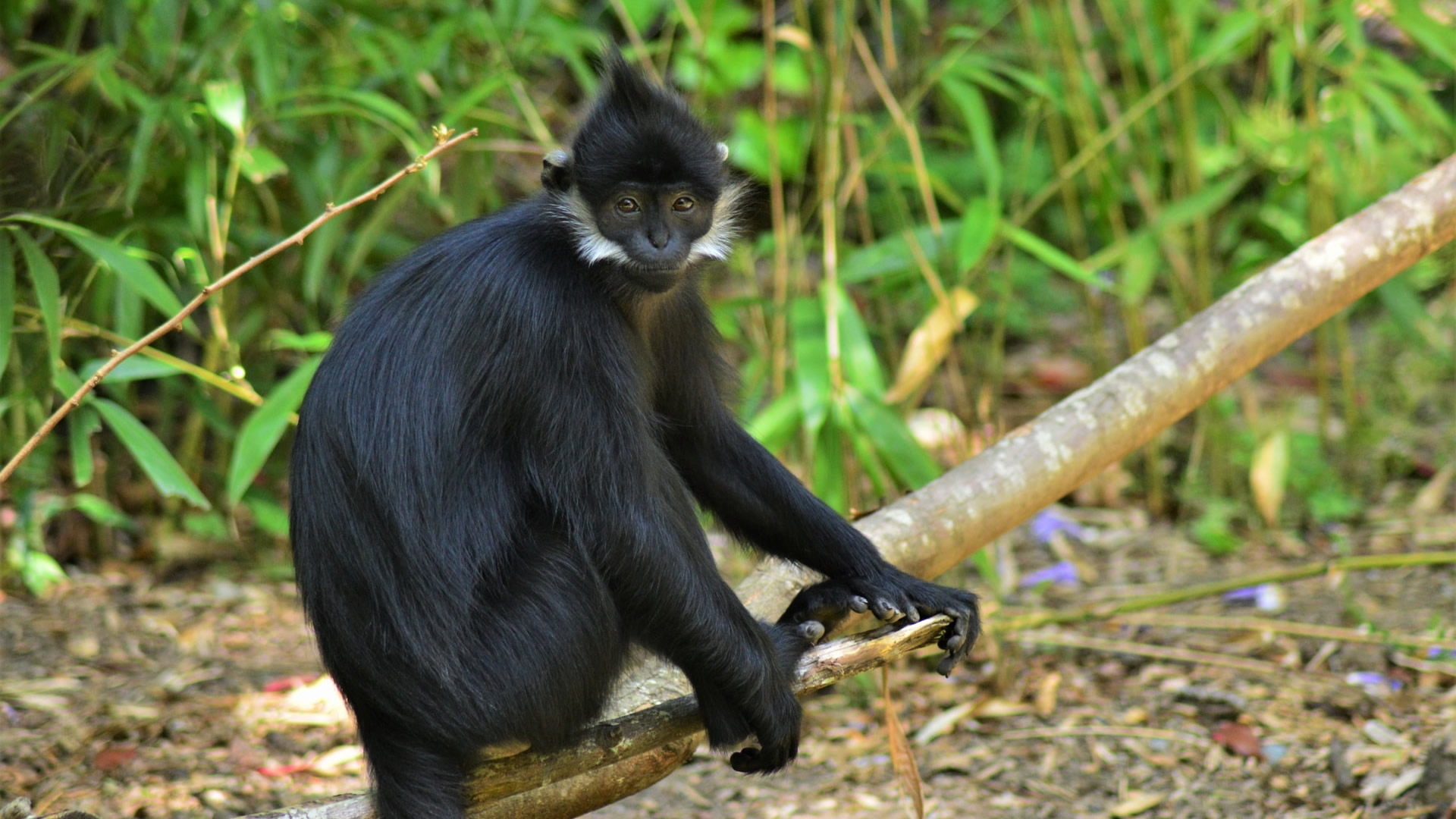
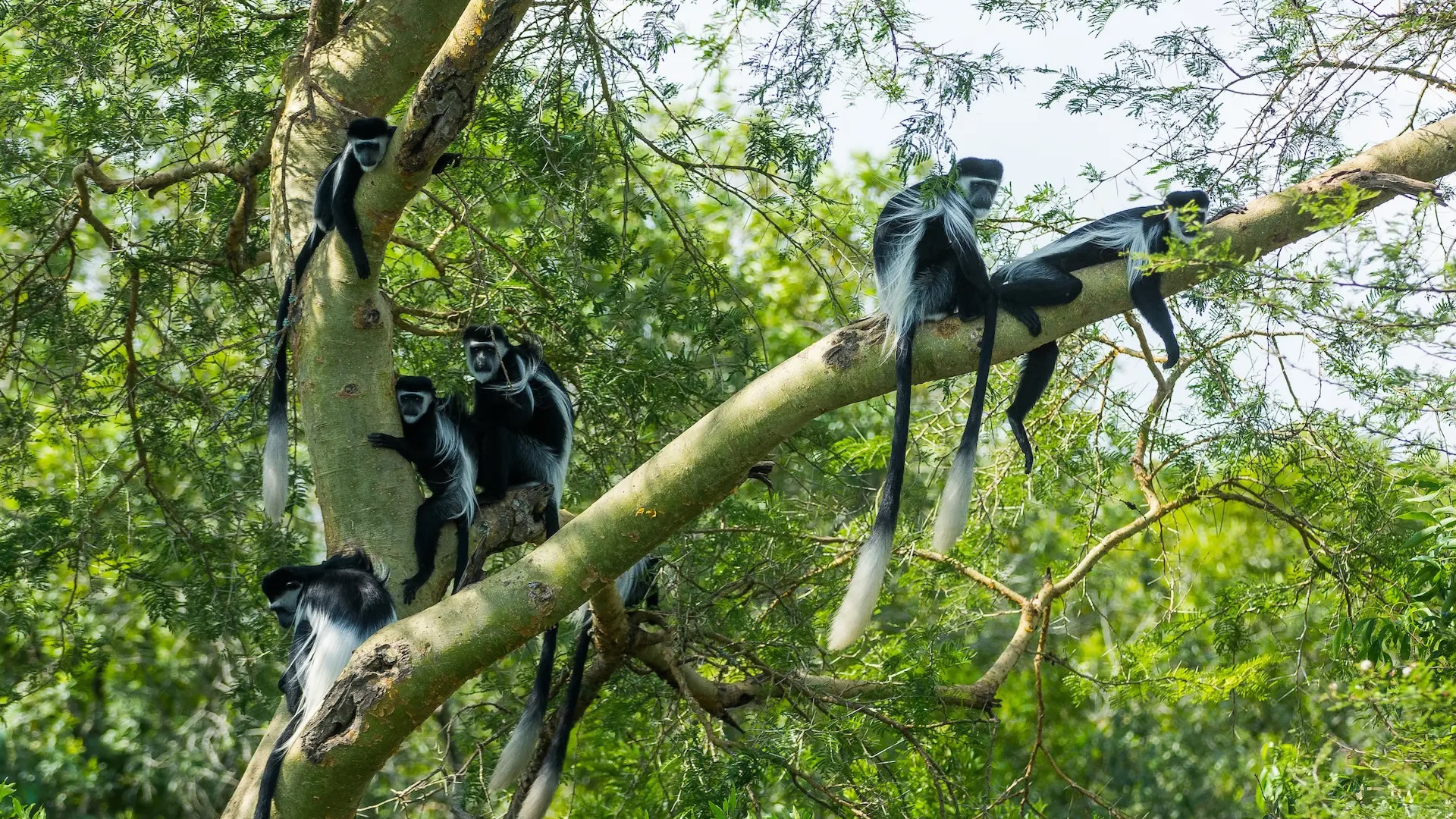
No other single forest in East Africa matches Nyungwe's primate diversity. Beyond the chimpanzees, the species list includes Rwenzori colobus (in troops of up to 400 — a wildlife spectacle in its own right), L'Hoest's monkey, silver monkey, owl-faced monkey, red-tailed monkey, grey-cheeked mangabey, olive baboon, and several nocturnal prosimians including the potto and several galago species. The colobus troops — cascading through the canopy in flowing black-and-white capes — are among the most photogenic primate encounters in Africa and can be seen on most forest walks.
The Igishigishigi Canopy Walkway — 200 metres of suspended metal walkway hanging 50 metres above the forest floor — is the only structure of its kind in East Africa. Walking across it places you at canopy level, eye-to-eye with the birds, butterflies, and primates that live in the treetops. The views across the Nyungwe valley — ridgeline after ridgeline of unbroken forest — are spectacular. The walkway is accessible as a short guided excursion and is suitable for most fitness levels, though a reasonable comfort with heights is required.
Nyungwe sits at the heart of the Albertine Rift — the western branch of the Great Rift Valley — which is one of the most biologically important regions in Africa. The park contains more Albertine Rift endemic species than any other single site: at least 27 endemic bird species (including Grauer's swamp warbler, Rwenzori turaco, and red-collared mountain babbler), endemic amphibians, endemic chameleons, and endemic plants. For biodiversity-focused travellers, Nyungwe is not merely a forest hike — it is a visit to one of Africa's richest evolutionary laboratories.
Nyungwe Forest is the source of one of the headwaters of the Nile. A stream rising in the southern section of the park flows into the Rukarara River, which feeds the Nyabarongo, which joins the Akagera, which enters Lake Victoria — and from there, the White Nile begins its journey to Khartoum and the Mediterranean. The source can be visited on a guided hike, and while the stream itself is modest, the significance — standing at the hydrological origin of the world's longest river — adds a dimension of geography and history that resonates with visitors who know the story of the Nile.
Nyungwe's trail network is the most extensive of any forest park in Rwanda — over 130 kilometres of maintained paths exploring bamboo zones, ridge-top heath, stream valleys, waterfall sites, and the deep interior of the montane forest. Trails range from gentle two-hour loops near the main road to strenuous full-day hikes crossing the park's highest ridges. The Bigugu Trail ascends to the park's highest point at 2,950 metres. The Isumo Waterfall Trail follows a stream through primary forest to a cascade dropping through moss-covered rocks. Walking is the only way to experience Nyungwe — there are no game drives — and the trail system rewards it fully.
Nyungwe Forest National Park lies in south-western Rwanda, straddling the watershed between the Congo and Nile river basins. The forest covers the mountain ridges and valleys of the Albertine Rift at elevations between 1,600 and 2,950 metres, bordering Burundi to the south and extending almost to the shores of Lake Kivu to the west. The main road from Butare (Huye) to Cyangugu (Rusizi) — one of Rwanda's most scenic drives — cuts through the forest, providing vehicle access to most trailheads.
Kigali is approximately 230 kilometres to the north-east — a drive of five to six hours. Most itineraries reach Nyungwe via Lake Kivu (a two- to three-hour drive from Gisenyi or Kibuye) or from the south via Butare (Huye). The park headquarters and the One&Only Nyungwe House are located along the main forest road, roughly mid-way through the park. The Cyamudongo sector — a detached forest fragment hosting a habituated chimpanzee group — lies approximately 45 minutes from the main forest block near the Congo border.
From chimpanzee trekking and the canopy walkway to colobus tracking, waterfall hikes, birding, and tea plantation visits in the surrounding highlands.
The chimp trek begins early — briefing at dawn, then into the forest following trackers who have located the community. The terrain is hilly and the forest dense; tracking can take one to three hours before the first encounter. The chimpanzees move fast and feed high, so the experience is dynamic — following sound, craning upward, waiting for individuals to descend. The one-hour observation period is intense and noisy. Nyungwe's chimps are habituated but not as accustomed to close human proximity as Kibale's groups in Uganda, which makes the encounter feel wilder and less predictable.
The Igishigishigi Canopy Walkway — 200 metres long, suspended 50 metres above the forest floor on metal cables and towers — offers a perspective available at no other location in East Africa. The walkway sways gently as you cross, with the treetop canopy at eye level and the valley floor far below. Birds, butterflies, and occasionally monkeys move through the canopy around you. The views across the forest-covered ridges are the most panoramic in the park. The guided walkway excursion takes approximately one hour and can be combined with a short forest hike to the trailhead.
Nyungwe's Rwenzori colobus assemble in super-troops that can number up to 400 individuals — the largest arboreal primate groups recorded anywhere in Africa. Tracking these troops is a visual spectacle: hundreds of black-and-white monkeys cascading through the canopy, trailing their long white mantles behind them. The troops move through the forest along regular routes, and guides know the sectors they favour. The colobus tracking excursion is shorter and less strenuous than the chimp trek and works well as an afternoon activity or as the primary primate experience for visitors with limited time.
The Isumo Waterfall Trail — the most popular forest walk — follows a stream through primary montane forest to a waterfall dropping through a cathedral of moss-covered rocks and tree ferns. The hike is moderate and takes approximately three hours. For stronger walkers, the Bigugu Trail ascends to the park's highest point (2,950 m) with panoramic views across the entire forest block. Over 130 kilometres of maintained trails offer options from gentle loop walks to full-day ridge traverses. All forest walks are guided and require advance booking through the park.
Nyungwe's 310+ bird species include at least 27 Albertine Rift endemics — more than any other single site in the rift system. Key species include Rwenzori turaco, red-collared mountain babbler, Grauer's swamp warbler, Albertine owlet, handsome spurfowl, and purple-breasted sunbird. The forest road itself — cutting through the park at canopy level — is one of the most productive birding routes, with mixed flocks moving through the trees on either side. Dedicated birding walks with specialist guides can be arranged through the park and are best in the early morning when calling activity peaks.
The hills surrounding Nyungwe Forest are covered in some of Rwanda's most productive tea estates — endless rows of bright green tea bushes climbing the ridgelines in geometric precision. Guided tours of the plantations explain the cultivation, harvesting, and processing of Rwandan tea — one of the country's major exports. The visual contrast between the dark, ancient forest and the manicured tea gardens is striking, and the visits provide insight into the rural economy that borders the park. Most lodges near Nyungwe can arrange tea plantation excursions as a half-day activity.
Nyungwe is a rainforest — it rains year-round. The dry months offer drier trails and more reliable chimp tracking; the wet months are greener and quieter.
The best window for Nyungwe. The forest trails are drier and less muddy, the chimpanzees are easier to track, and the canopy walkway offers clearer views across the valley. Mornings are often misty but clear by mid-morning. The forest is still damp — this is montane rainforest — but the difference in trail condition between the dry and wet seasons is significant. June to September aligns with the dry season across Rwanda, making circuit planning straightforward. January and February — a shorter dry period — are also good months for visiting.
Heavy rainfall makes trails very muddy and slippery — waterproof boots and gaiters are essential. Chimpanzee tracking becomes more challenging as the chimps range farther and the forest floor is harder to navigate. However, the forest is at its most lush and atmospheric, butterflies are more abundant, and the reduced visitor numbers mean a quieter experience. The canopy walkway remains open. Birding can actually improve during the rains as some species become more vocal. For visitors who accept that mud is part of the forest experience, the wet season offers a raw, immersive encounter with the ecosystem at its most alive.
A scenic five- to six-hour drive from Kigali — or a shorter transfer from Lake Kivu or Butare as part of a Rwanda circuit.
The nearest airport with commercial flights is Kamembe (Cyangugu), on the southern shore of Lake Kivu, approximately 1.5 hours' drive from the park. RwandAir operates flights from Kigali to Kamembe. Helicopter transfers from Kigali directly to the park are available for those on tight schedules. Otherwise, the overland drive from Kigali — though long — passes through some of Rwanda's most spectacular highland scenery and is an experience in itself.
From Kigali, the drive takes approximately five to six hours via Butare (Huye) — a route that crosses the central highlands, passes through Rwanda's academic capital, and climbs into the tea-covered hills surrounding the forest. From Lake Kivu (Gisenyi or Kibuye), the drive follows the lakeshore road south before climbing into the mountains — roughly three to four hours depending on starting point. The road through the park itself is paved and scenic, cutting through the forest at canopy level with frequent trailhead pull-offs. All routes require a vehicle; there is no public transport to the park.
Nyungwe fits naturally into a full Rwanda circuit as the second primate destination after Volcanoes NP. A common route runs: Kigali → Volcanoes NP (gorillas) → Lake Kivu (rest) → Nyungwe (chimps, canopy walkway, forest hikes) → Butare/Huye (cultural sites) → Akagera (Big Five savannah) → Kigali. This sequence moves from mountain gorillas to forest chimpanzees to savannah game — three fundamentally different ecosystems in a single compact itinerary. Nyungwe is also easily combined with a side trip to the nearby Gishwati-Mukura National Park for visitors adding Rwanda's newest conservation story.
Ancient canopy, chimpanzees overhead, the walkway above the valley, colobus troops cascading through the trees, and the forest that feeds the Nile.
Two nights is the standard allocation. This allows a chimpanzee trek on one morning and the canopy walkway plus a forest hike on the other morning, with time for an afternoon colobus tracking walk or tea plantation visit. Three nights is ideal for dedicated primate and birding enthusiasts — adding a second chimp trek attempt (helpful if the first morning's tracking was unsuccessful), a longer forest hike such as the Bigugu or Isumo Waterfall trail, and dedicated birding walks in the early morning. One night is too short given the transfer time from Kigali or Lake Kivu.
Nyungwe's habituated chimpanzee communities are trackable year-round, but sighting rates are lower than at Kibale in Uganda. The chimps range widely, the forest is dense, and the terrain is steep. Sighting success in the dry season is estimated at 70–80 percent; in the wet season, somewhat lower. When the chimps are found, the encounter is typically excellent — the habituation allows close observation of feeding, grooming, and social behaviour. A two-night stay gives you two mornings and a much higher cumulative probability of a successful trek. Kuldip's guides and trackers work closely with the park's trackers to maximise chances.
Kibale Forest in Uganda has more habituated communities, a longer tracking history, higher sighting success rates (above 90 percent), and the option of a full-day Chimpanzee Habituation Experience. Nyungwe offers a wilder, less predictable encounter — the chimps are less accustomed to close human proximity, the forest is higher-altitude and more dramatic, and the accompanying primate diversity (13 species vs Kibale's 13) is comparable. The choice depends on context: Kibale fits naturally into a Uganda itinerary, Nyungwe into a Rwanda itinerary. Both deliver genuine chimpanzee encounters, but Kibale is the safer bet for a guaranteed sighting.
Nyungwe Forest National Park charges USD 50 per non-resident adult per 24-hour period (as of 2024/2025). A chimpanzee tracking permit costs USD 100 per person per trek. The canopy walkway costs USD 60 per person. Colobus monkey tracking is USD 60 per person. Guided forest walks are typically included with park entry or available at modest additional cost. All park fees, permits, and applicable taxes on Kuldip's Touring Company itineraries are included in the quoted price.
Moderate to strenuous. The chimpanzee trek involves hiking on steep, often muddy forest trails at altitude (1,600–2,500 m), with sections where the path is narrow and root-tangled. Good hiking boots with ankle support are essential; waterproof boots and gaiters are strongly recommended in the wet season. The canopy walkway is less demanding but requires a moderate comfort with heights. The forest hikes vary — the Isumo Waterfall trail is gentle; the Bigugu summit trail is a full-day workout. A reasonable level of fitness is needed for the chimp trek; the other activities can be adjusted to different ability levels.
Chimpanzee trekking requires a minimum age of 15 years. The canopy walkway is generally open to children aged 6 and above (at the guide's discretion). Colobus tracking and shorter forest walks are suitable for older children who are comfortable hiking in forest terrain. The tea plantation visit is open to all ages. Nyungwe is a walking-only park — there are no vehicle-based game drives — so family suitability depends on the children's willingness to hike in sometimes challenging conditions. For families with teenagers, the combination of the chimp trek, canopy walkway, and forest hikes makes a compelling two-night programme.
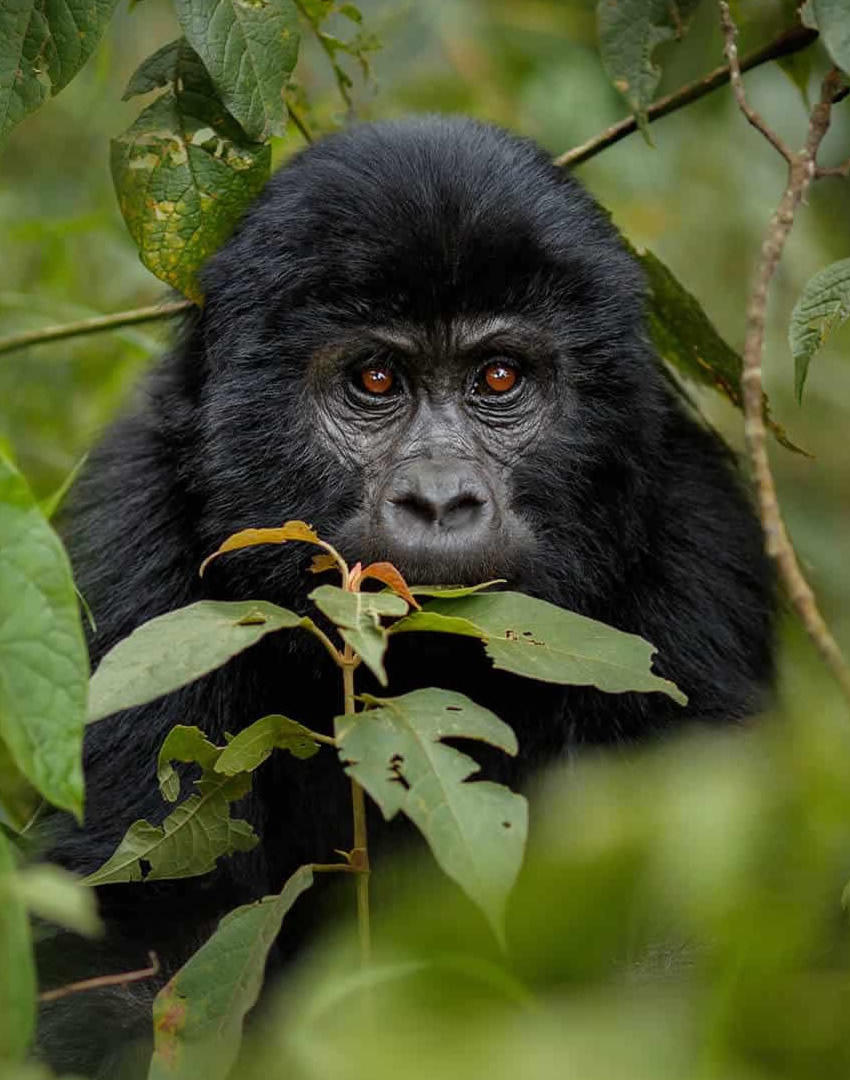
The crown jewel of Rwandan conservation and the original home of Dian Fossey's ground-breaking gorilla research on the Virunga volcanoes.
Explore Volcanoes NP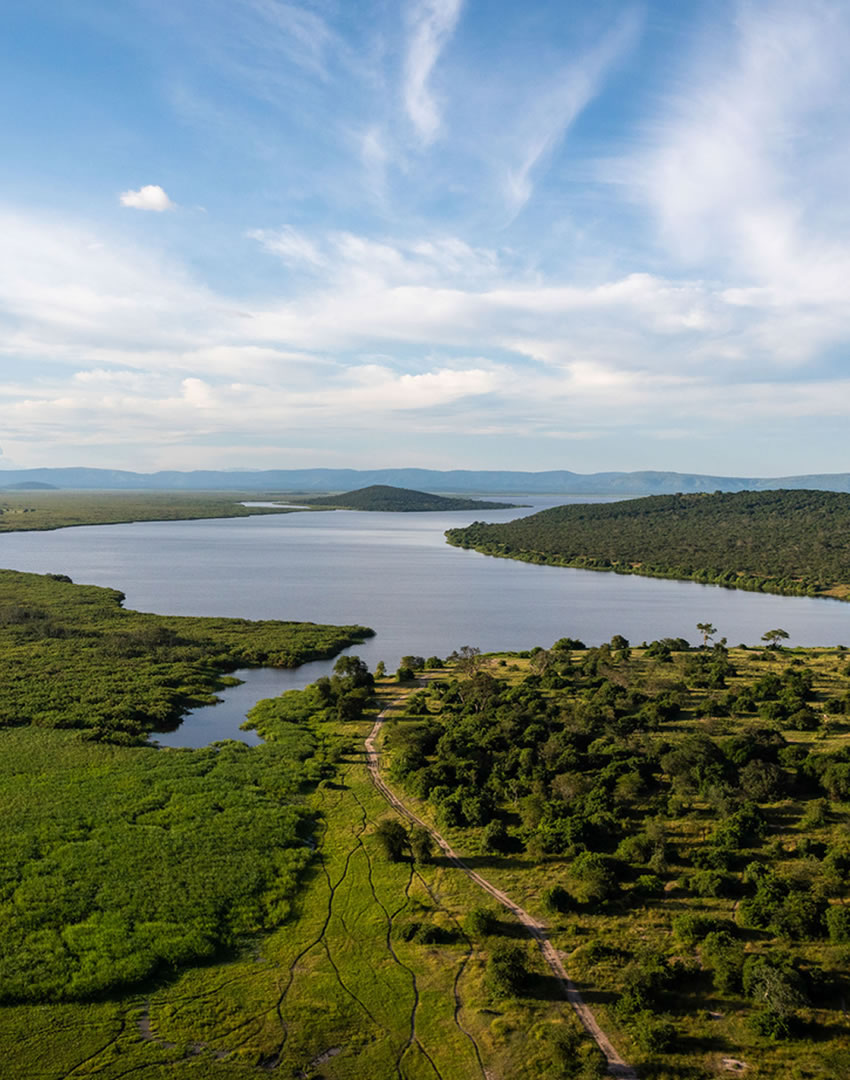
East Africa's greatest conservation comeback — a fully restored Big Five park with lions reintroduced in 2015 and black rhinos in 2017.
Explore AkageraOne of the oldest and most biodiverse montane rainforests in Africa. Rwanda's premier chimpanzee tracking destination with a canopy walkway.
Explore Nyungwe Forest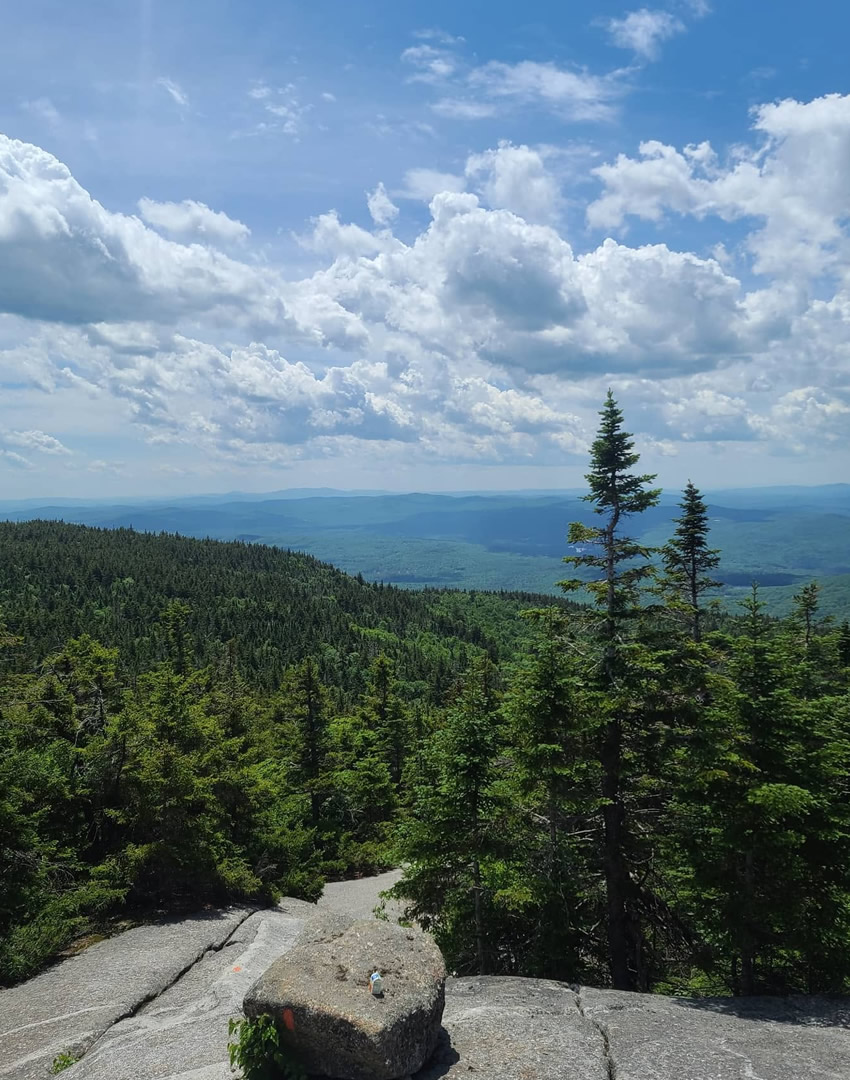
Rwanda's newest national park, home to a recovering population of eastern chimpanzees, golden monkeys and over 230 bird species.
Explore Gishwati Mukura