
The world's largest unbroken volcanic caldera — a natural amphitheatre 600 metres deep where 25,000 large animals, including endangered black rhino, live inside the collapsed heart of an ancient volcano beneath a rim of highland forest.
The Ngorongoro Crater is what remains of a massive volcano — once perhaps as tall as Kilimanjaro — that collapsed inward roughly two to three million years ago, leaving a caldera 19 kilometres wide and 600 metres deep. The walls are unbroken. The floor is flat, open, and self-contained: a grassland, a soda lake, a freshwater marsh, and pockets of acacia woodland, all enclosed within a vast natural amphitheatre visible from rim to rim. It is the largest unbroken, unflooded caldera on Earth.
Inside this geological theatre live approximately 25,000 large animals. The crater supports one of the densest concentrations of lion anywhere in Africa — an estimated 60 to 70 individuals in the floor population alone. Spotted hyena, buffalo, wildebeest, zebra, and eland are present in large herds. Hippos crowd the Mandusi Swamp. Flamingos drift across the alkaline surface of Lake Magadi at the crater's centre. And critically, the crater is home to a small but stable population of endangered black rhinoceros — roughly 26 individuals — making it one of the most reliable places in East Africa to see this species in the wild.
But the Ngorongoro Conservation Area is far more than the crater. The broader NCA covers 8,292 square kilometres of highland forest, volcanic peaks, and open steppe stretching west to the Serengeti border. Olduvai Gorge — one of the most important paleoanthropological sites on Earth — lies within its boundaries. The shifting sand dunes of volcanic ash, the Empakaai and Olmoti craters, and the Maasai communities who live and herd cattle alongside the wildlife all form part of a landscape that is simultaneously a geological wonder, a wildlife stronghold, and a window into human origins.
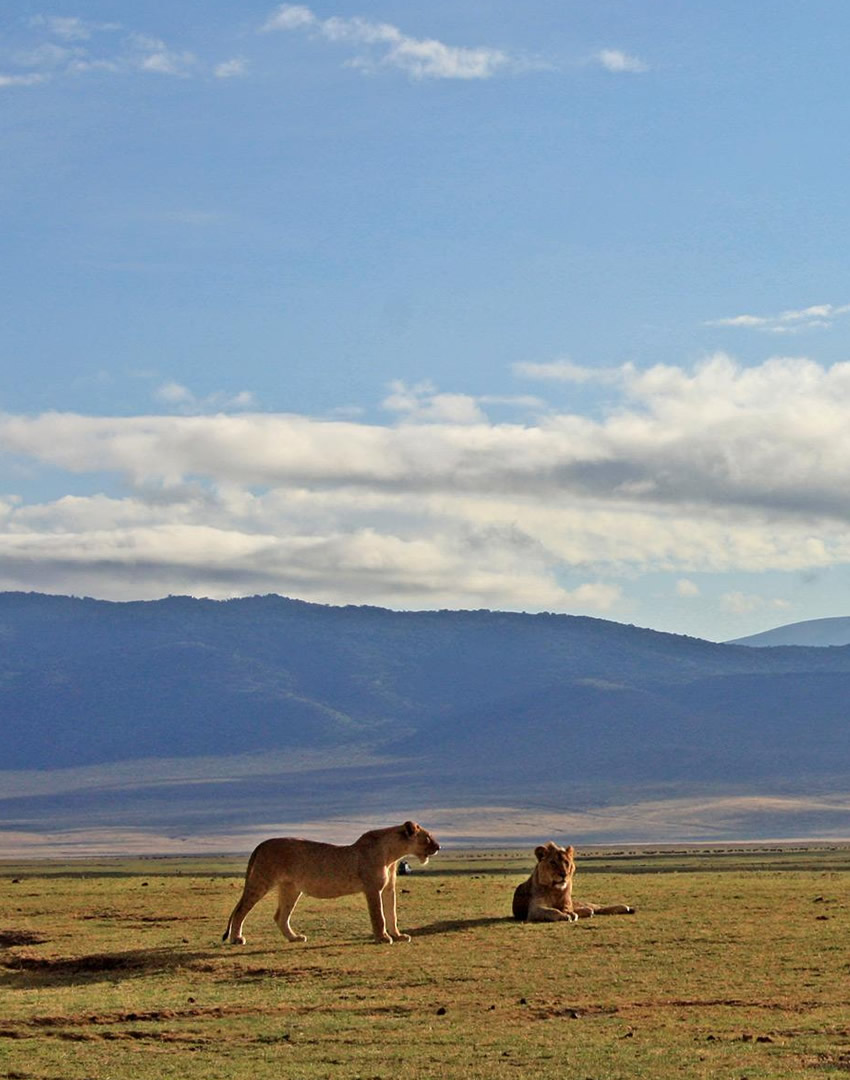
Big Five in a single morning, black rhino on open ground, Olduvai Gorge, and a setting that no photograph has ever fully captured.
The Ngorongoro Crater is one of the very few places in Africa where all Big Five species — lion, leopard, elephant, buffalo, and black rhino — can realistically be encountered in a single morning. The crater floor is compact enough to cover in one circuit, and the density of wildlife within its walls is extraordinary. A six-hour game drive on the crater floor routinely produces sightings that would take days to accumulate in a larger park.
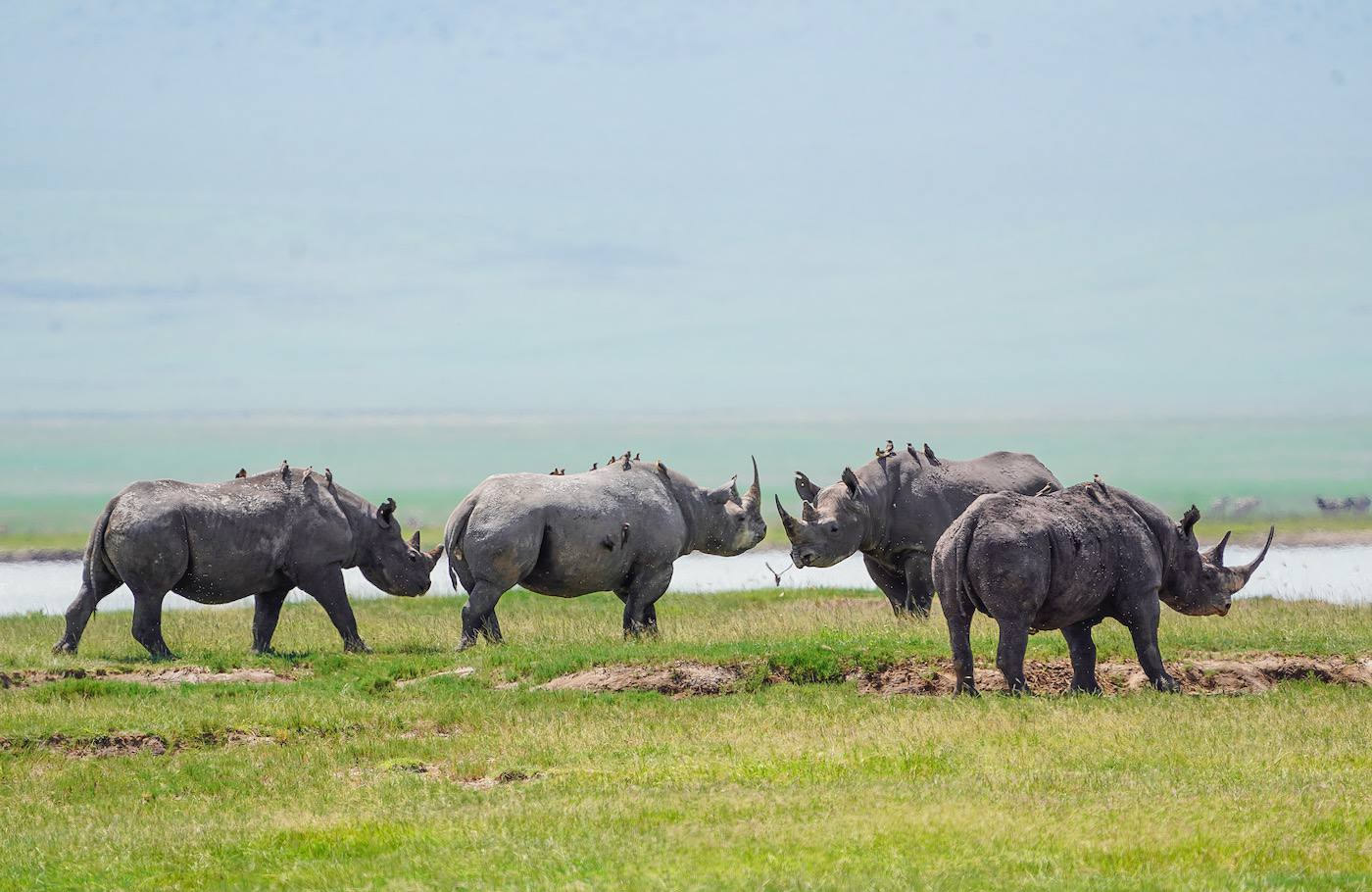
The crater's population of approximately 26 endangered black rhinoceros is one of the most accessible in East Africa. Unlike forest-dwelling populations elsewhere, Ngorongoro's rhinos inhabit the open crater floor — often visible from considerable distance, grazing against the backdrop of the caldera walls. Sightings are never guaranteed (the crater floor is 260 km²), but guides know the favoured areas and the odds are significantly better here than at almost any other destination.
The Ngorongoro Crater is a geological spectacle that transcends wildlife. The moment you stand on the rim and look down 600 metres to a complete, functioning ecosystem — lake, marsh, grassland, forest, and thousands of animals, all contained within a single unbroken wall — is one of the great visual experiences in travel. The crater has been called the eighth natural wonder of the world, and the description, for once, does not feel inflated.
Within the Ngorongoro Conservation Area lies Olduvai Gorge — the site where Louis and Mary Leakey discovered fossils that reshaped our understanding of human evolution. The gorge has yielded remains of Homo habilis, Paranthropus boisei, and early stone tools dating back nearly two million years. A museum on the rim of the gorge interprets the discoveries. Visiting Olduvai places the safari in a deeper context — this is not only where the wildlife is; it is where humanity began.
Lake Magadi — the shallow, alkaline lake at the crater's centre — attracts flocks of lesser flamingos whose pink drifts contrast against the grey-green water and the towering crater walls. The lake's margins also support dense concentrations of other waterbirds — Egyptian geese, crowned cranes, sacred ibis, and various herons — making the lakeshore circuit one of the most productive stretches of any crater game drive.
The Ngorongoro Conservation Area is unique in Tanzania: it is the only protected area where indigenous communities live alongside wildlife. Maasai pastoralists graze their cattle on the crater rim and across the highlands — a coexistence that has shaped the landscape for generations. The NCA model demonstrates that conservation and traditional livelihoods need not be mutually exclusive. Visitors can arrange cultural visits to Maasai bomas on the rim, adding a human dimension to the natural spectacle below.
The Ngorongoro Conservation Area occupies the volcanic highlands between the Serengeti plains to the west and the Great Rift Valley to the east, in northern Tanzania. The crater rim lies approximately 180 kilometres west of Arusha, reached via the town of Karatu on the paved highway that continues to the Serengeti's Naabi Hill gate.
The broader NCA extends from the Ngorongoro Crater itself — the centrepiece — across a chain of volcanic highlands, including the smaller Empakaai and Olmoti craters, to the Olduvai Gorge and the short-grass plains that merge with the Serengeti ecosystem. This continuity is critical: the Great Migration's wildebeest herds calve on the NCA's south-eastern plains during the wet season before moving north and west into the Serengeti. The Ngorongoro Conservation Area is simultaneously a destination in its own right and the ecological gateway to the Serengeti.
From crater-floor game drives and black rhino sightings to Olduvai Gorge, highland hikes, and Maasai cultural encounters on the rim.
The signature Ngorongoro experience. Vehicles descend the steep crater wall via one of two access roads and spend four to six hours circuiting the floor — crossing open grassland dense with wildebeest and zebra, skirting the Mandusi Swamp where hippos wallow, scanning for black rhino on the open flats, and following lion prides through the Lerai Forest. A single crater drive is often cited as the single most concentrated game-viewing experience in Africa.
One of the most important archaeological sites on Earth, Olduvai Gorge has yielded hominin fossils and stone tools spanning nearly two million years. A small but excellent museum on the gorge rim displays casts of key finds and explains the Leakey family's decades of excavation. A guided walk down into the gorge itself is available. Olduvai sits on the road between the crater and the Serengeti, making it a natural stop on circuit days.
A lesser-known volcanic caldera 30 kilometres north-east of Ngorongoro, Empakaai holds a deep soda lake that fills most of its floor — often ringed with flamingos. The hike descends from the forested rim to the lake shore, guided by an armed ranger through montane forest alive with birds and buffalo. The views from the rim — across to Ol Doinyo Lengai, the Rift Valley, and on clear days, Kilimanjaro — are among the finest in northern Tanzania.
A shorter, gentler hike than Empakaai, the walk to Olmoti Crater takes roughly two hours round trip and rewards with a waterfall that tumbles from the crater's rim into the Munge River — a stream that feeds the Mandusi Swamp on the Ngorongoro Crater floor below. The hike passes through open highland grassland grazed by Maasai cattle and frequently visited by buffalo, eland, and bushbuck. It is a peaceful contrast to the vehicle-based intensity of the main crater.
The Ngorongoro Conservation Area is home to approximately 90,000 Maasai pastoralists who live and graze their livestock across the highlands — one of the few places in East Africa where indigenous communities coexist with wildlife inside a protected area. Guided visits to Maasai bomas on the crater rim offer an introduction to traditional housing, cattle culture, beadwork, song, and the practicalities of daily life at 2,300 metres. Fees contribute directly to community projects.
The rim itself is an experience. At over 2,300 metres, the air is cool and clear, and the forested edge drops away to reveal the entire crater floor — lake, marsh, grassland, and the dust plumes of animal herds visible from a height of 600 metres. Several lodges sit directly on the rim, offering this view from the breakfast table. Sundowners on the rim, watching the light change across the caldera as the sun drops behind the highlands, are an unforgettable way to close a safari day.
The crater is a year-round destination — its enclosed ecosystem ensures that wildlife never leaves. The question is weather, not wildlife.
Clear skies and cool highland mornings make these months ideal. The crater floor is dry, the tracks are firm, and visibility is at its best — critical for spotting black rhino at distance. June to September is the busiest period, with December to February offering a second window when the rim is less crowded and the short-grass plains beyond the NCA begin hosting the migration's calving season. Morning temperatures on the rim can drop to 5–10°C; layers are essential.
The long rains bring mist to the crater rim, lush green to the floor, and dramatic cloud formations above the caldera walls. The crater's wildlife remains — the animals have no reason to leave — but some tracks on the floor may be muddy and the descent roads occasionally close briefly after heavy rain. Visitor numbers drop significantly, rim lodges offer lower rates, and the photographic light in the breaks between showers can be extraordinary. November's short rains are mild and rarely disruptive.
A scenic highland drive from Arusha through Karatu, or a bush flight connecting the crater rim to the Serengeti, Tarangire, and Lake Manyara.
Lake Manyara airstrip — approximately 1.5 hours by road from the crater rim — is the nearest scheduled-flight destination, served by daily connections from Arusha. Charter flights can land at the NCA's own airstrips closer to the crater, reducing the road transfer. Fly-in circuits connecting Ngorongoro with the Serengeti, Tarangire, and Zanzibar are popular options that eliminate long overland drives.
The drive from Arusha to the Ngorongoro Crater rim takes approximately 3 to 4 hours via the paved highway through the coffee town of Karatu. The road climbs from the Rift Valley floor through farmland and forest before reaching the Lodoare gate at the eastern edge of the NCA. From the gate, a winding forest road ascends to the rim — a transition from cultivated highlands to cloud forest that sets the stage for the first crater view. Most northern-circuit itineraries include this drive as part of the journey from Lake Manyara or Tarangire.
Ngorongoro sits at the hinge of the northern circuit. To the east: Lake Manyara (1.5 hours) and Tarangire (3 hours). To the west: the Serengeti's Naabi Hill gate (3 hours via Olduvai Gorge). A typical circuit places Ngorongoro between the two — one or two nights on the rim, with a crater-floor game drive, an Olduvai visit, and the drive to the Serengeti packed into the itinerary. The crater is also increasingly offered as a stand-alone experience, pairing two rim nights with a dedicated crater day and highland activities.
The caldera, the crater floor, black rhino in the open, and one of the most extraordinary landscapes on Earth.
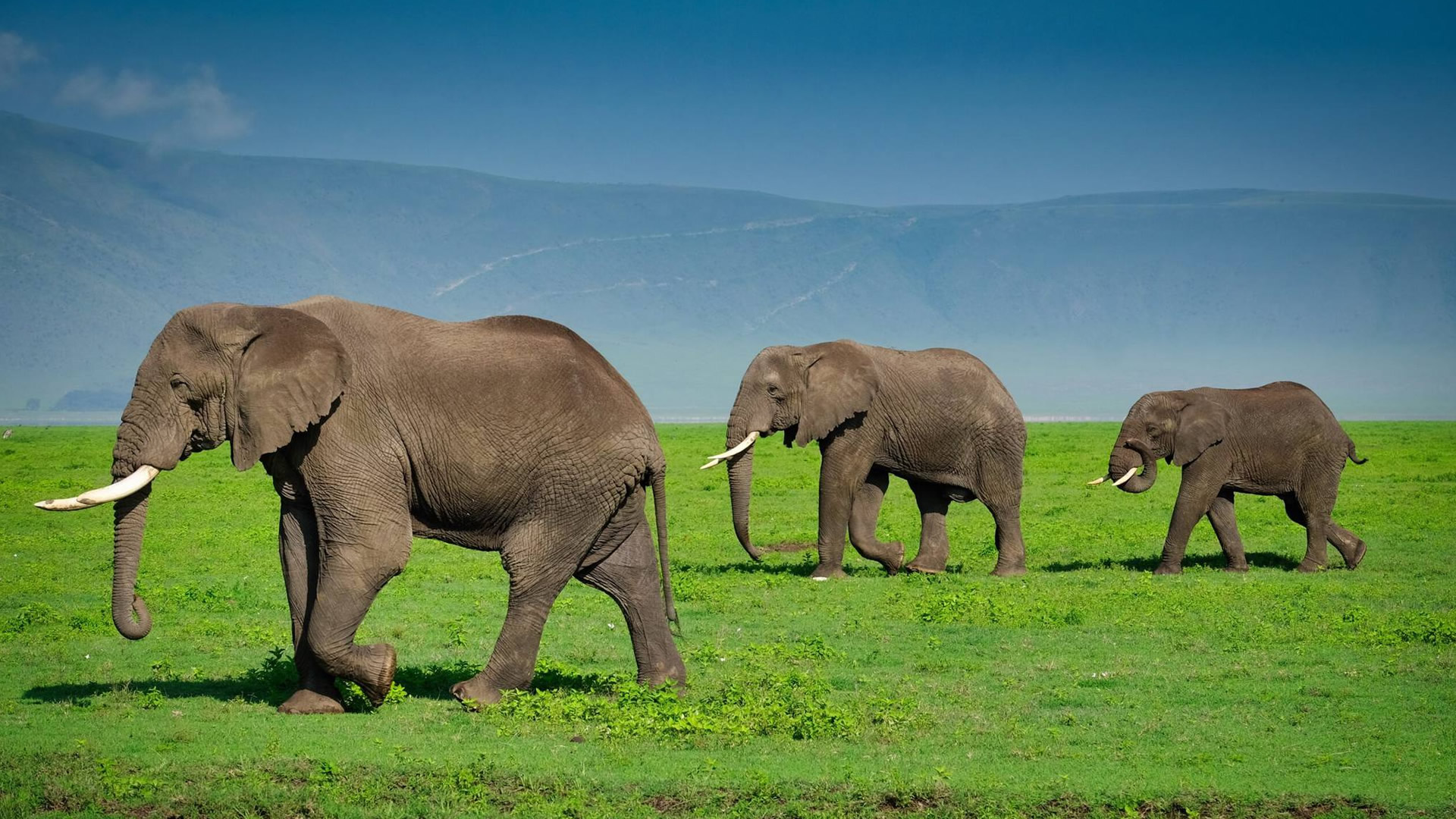
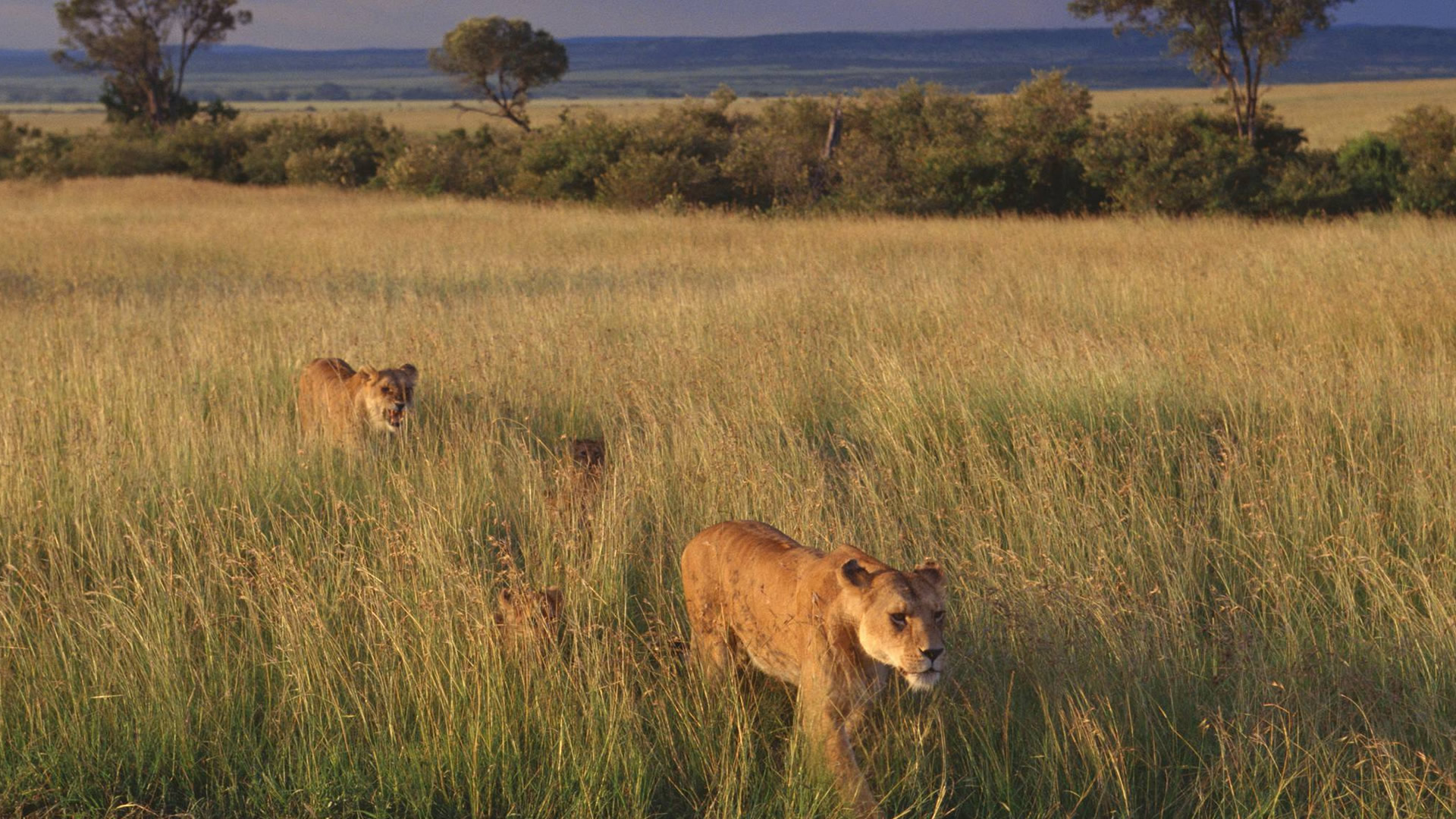
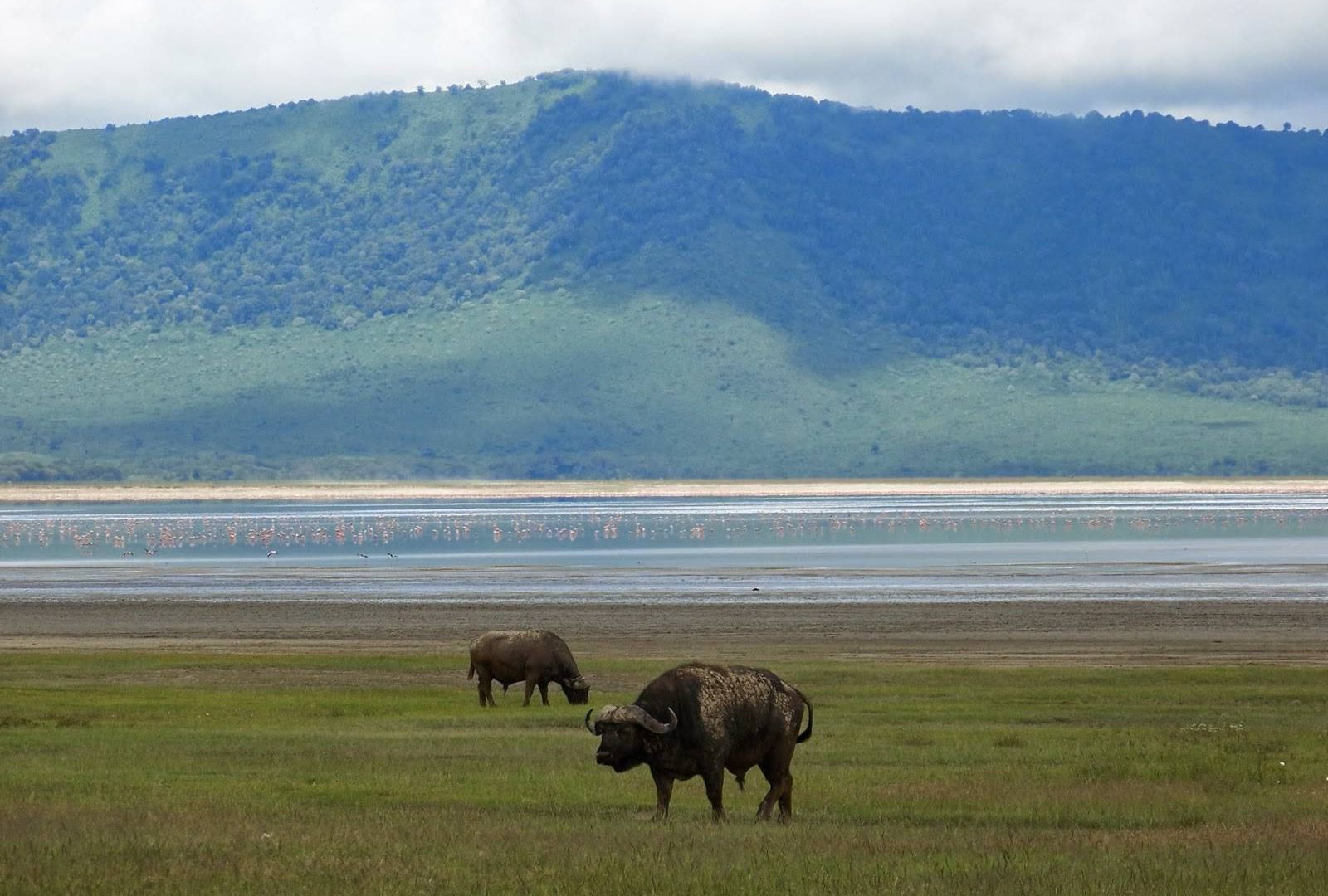
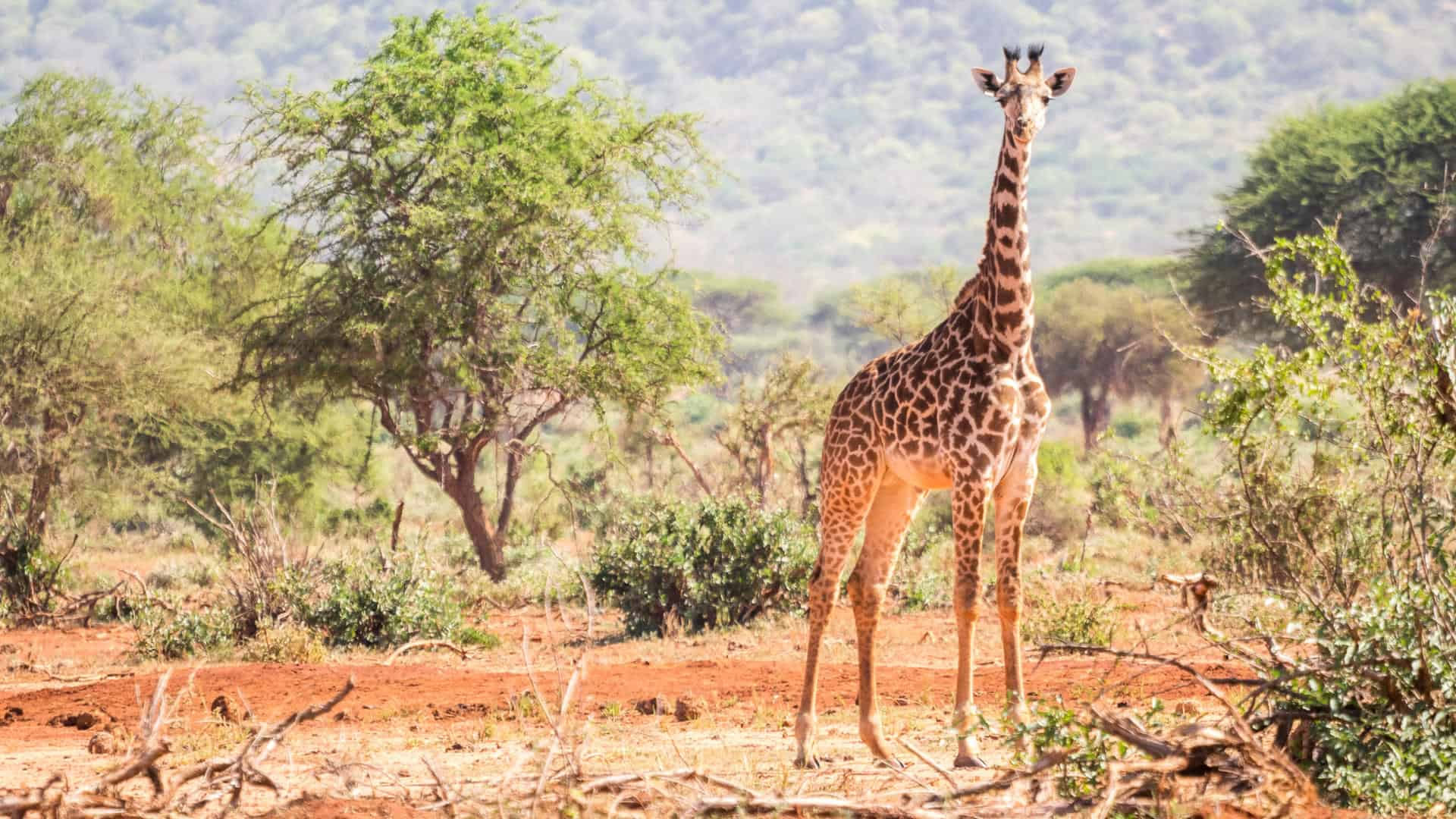
One or two nights on the rim is the standard allocation. One night allows a single crater-floor game drive — typically descending early in the morning and ascending by early afternoon — which is enough to cover the main circuits and encounter the Big Five. Two nights allows a second crater drive (worthwhile, as conditions and sightings vary day to day), plus time for Olduvai Gorge, an Empakaai or Olmoti crater hike, or a Maasai cultural visit. The crater itself permits a maximum of six hours per vehicle per day.
The Ngorongoro Crater is one of the best places in East Africa to see black rhino in the wild. Approximately 26 individuals live on the crater floor, and their habit of grazing in the open grassland — rather than hiding in dense bush — makes them more visible here than in most other habitats. Sightings are not guaranteed on every drive (the floor covers 260 km²), but experienced guides know the favoured areas, and over a two-drive visit the odds are strong. Binoculars are essential — rhino are often spotted at distance first.
The crater rim sits at approximately 2,300 metres and the climate is significantly cooler than the lowland parks. Morning temperatures between June and August can drop to 5–10°C, and evenings are chilly year-round. Cloud and mist are common on the rim, particularly during the wet months. Warm layers, a fleece, and a light waterproof jacket are essential — even travellers accustomed to equatorial heat will feel the altitude. The crater floor, 600 metres lower, is noticeably warmer during the day.
The Ngorongoro Conservation Area charges a conservation fee of USD 70.80 per non-resident adult per 24-hour period, plus a separate crater service fee of USD 295.00 per vehicle per descent (as of 2024/2025). Children aged 5–15 pay reduced rates. The fee structure makes Ngorongoro one of the more expensive destinations on the northern circuit, but the crater experience justifies the cost. All conservation fees, crater service fees, and applicable taxes on Kuldip's Touring Company safari packages are included in the quoted price.
Absolutely — and children tend to love the crater. The visual drama of descending into a volcano is inherently exciting. The density of wildlife means game drives are consistently active with minimal waiting. The compact floor ensures drives stay manageable in length. Olduvai Gorge provides an educational dimension that works well for older children. The main consideration is the cold: children feel the rim temperatures more acutely, so warm clothing is essential. Most rim lodges welcome families and several offer interconnecting rooms and child-friendly dining.
The Ngorongoro Conservation Area is a multi-use protected area — not a national park. The critical distinction is that Maasai communities are permitted to live within the NCA and graze their cattle on the highlands, a right that predates the conservation designation. National parks in Tanzania prohibit human settlement and livestock. This coexistence model is unique in Tanzania and gives Ngorongoro a cultural dimension that no national park offers. The crater floor itself is managed more like a park — no settlement or grazing is permitted inside the caldera — but the broader NCA landscape is shared between wildlife and pastoralist communities.
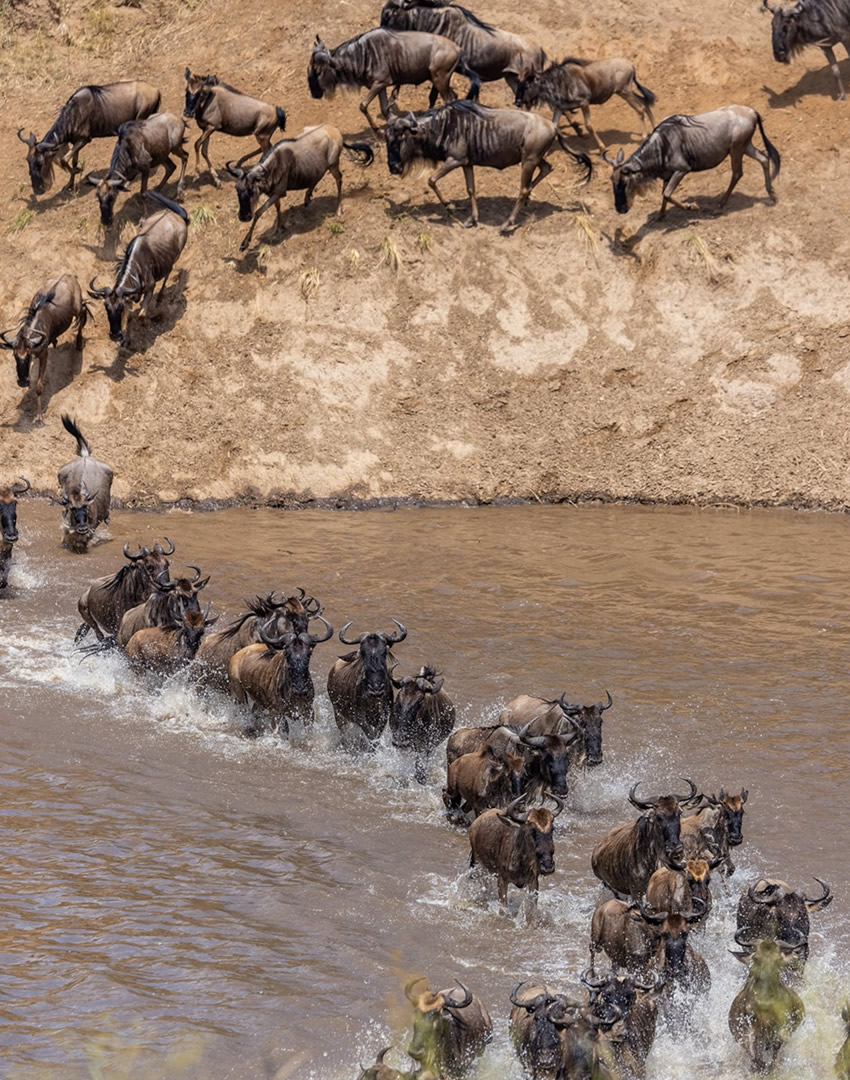
Endless plains supporting the greatest concentration of large mammals on Earth. The stage for the Great Wildebeest Migration.
Explore the Serengeti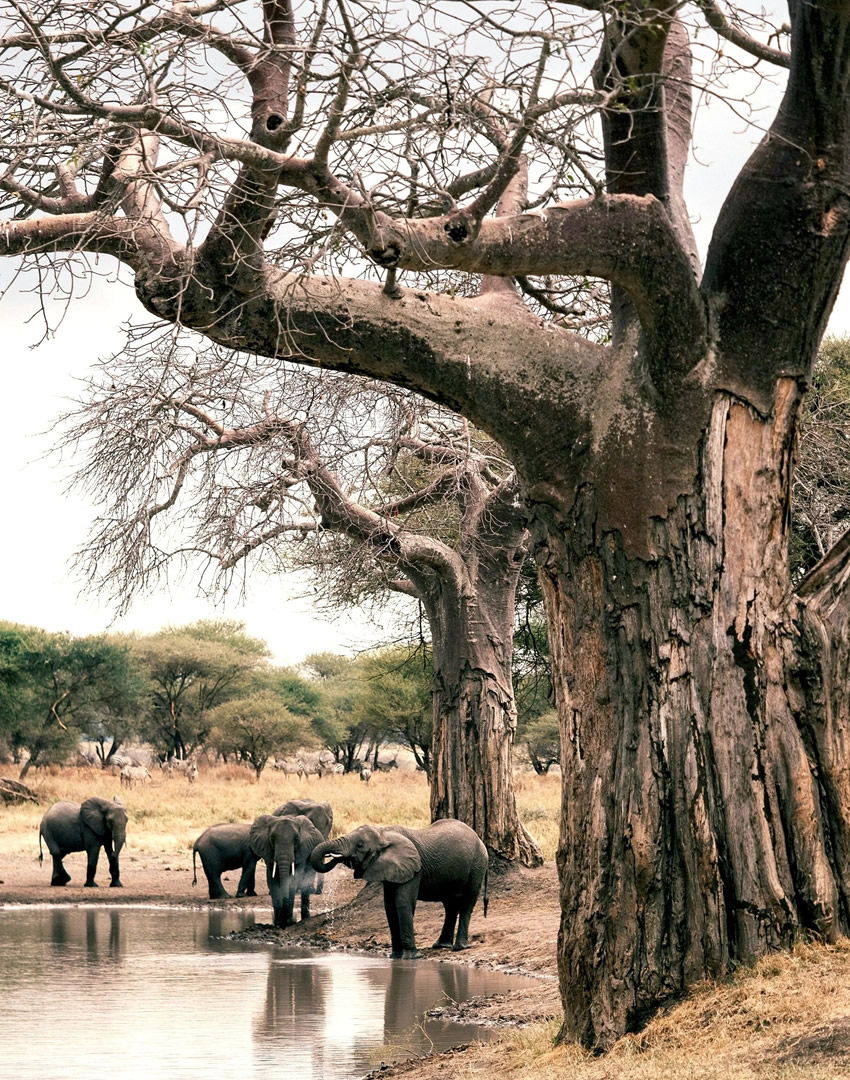
Ancient baobab trees tower over vast herds of elephant that converge on the Tarangire River during the dry season.
Explore TarangireThe world's largest unbroken volcanic caldera, sheltering an extraordinary density of wildlife on its lush, 600-metre-deep floor.
Explore Ngorongoro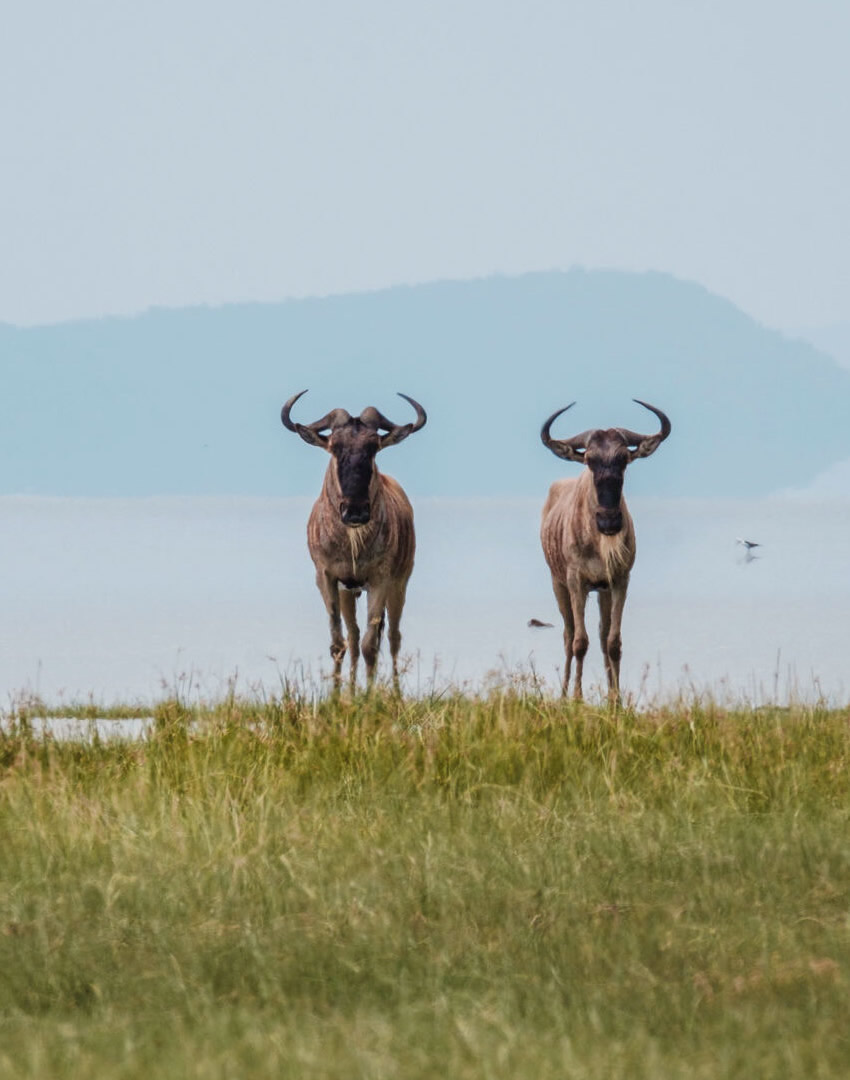
A compact gem at the base of the Great Rift Valley escarpment, famous for its tree-climbing lions in ancient mahogany trees.
Explore Manyara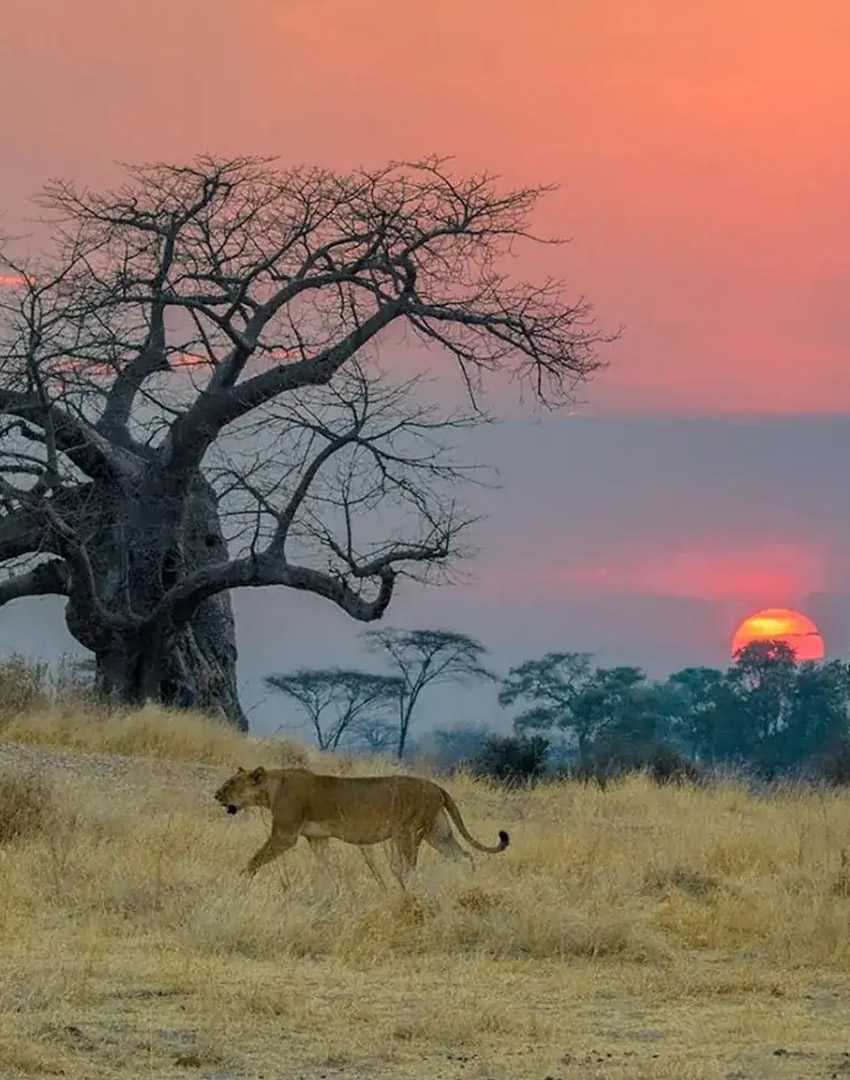
Tanzania's largest national park and one of its best-kept secrets, with one of the largest lion populations in Africa.
Explore Ruaha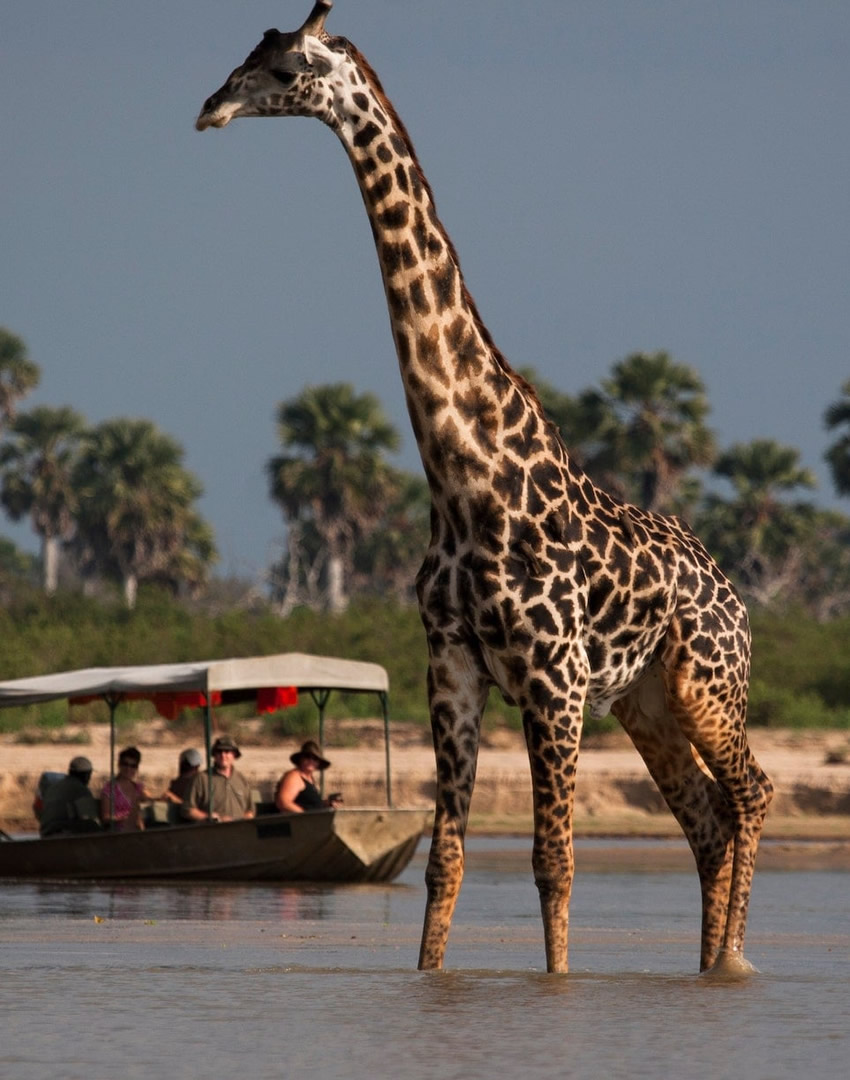
One of the largest protected areas in Africa, defined by the mighty Rufiji River. Boat safaris, walking safaris and fly-camping.
Explore Nyerere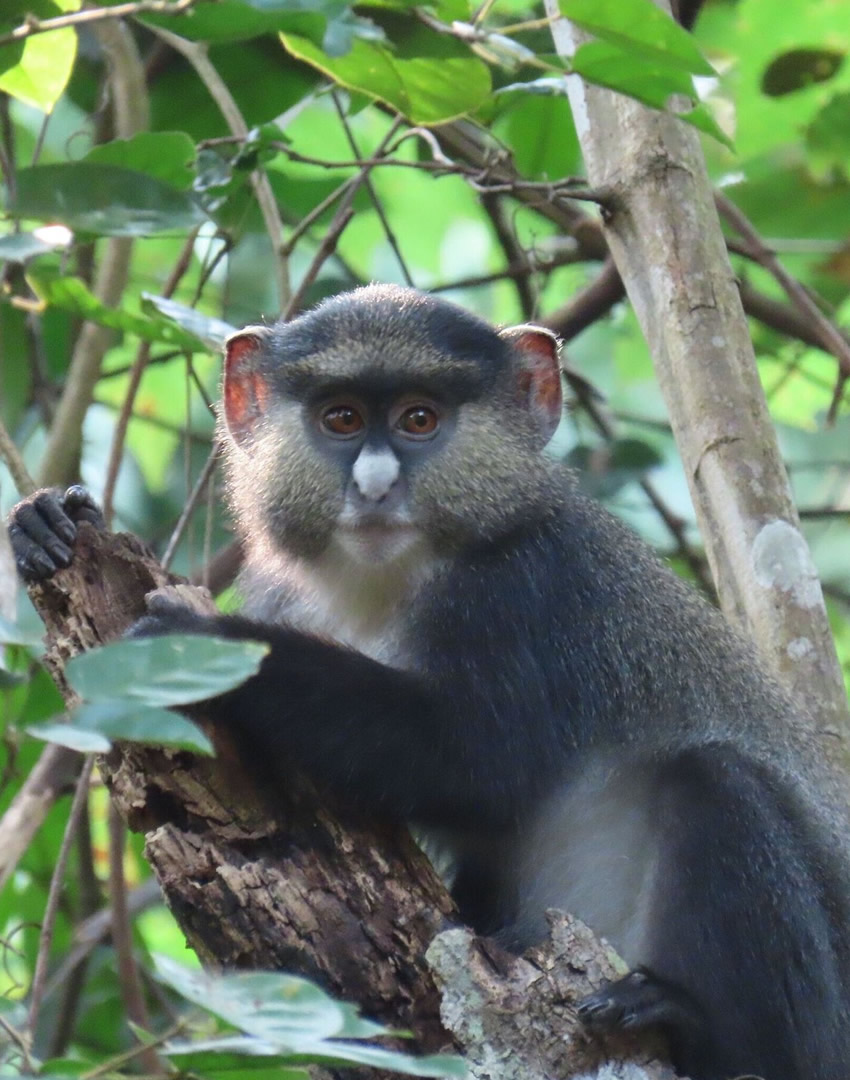
Where Jane Goodall began her groundbreaking chimpanzee research in 1960. Trek through steep forested valleys on the shores of Lake Tanganyika.
Explore Gombe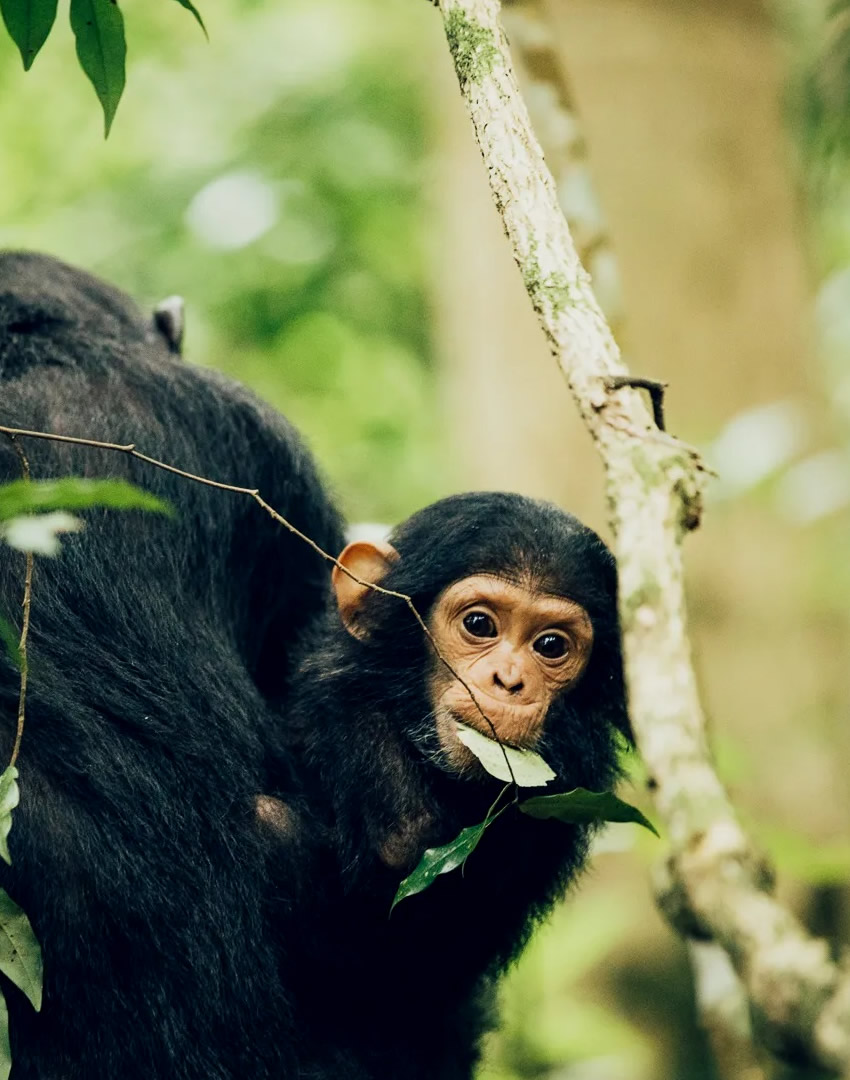
Remote, roadless and utterly extraordinary. The Mahale Mountains shelter one of the largest known populations of wild chimpanzees.
Explore Mahale