
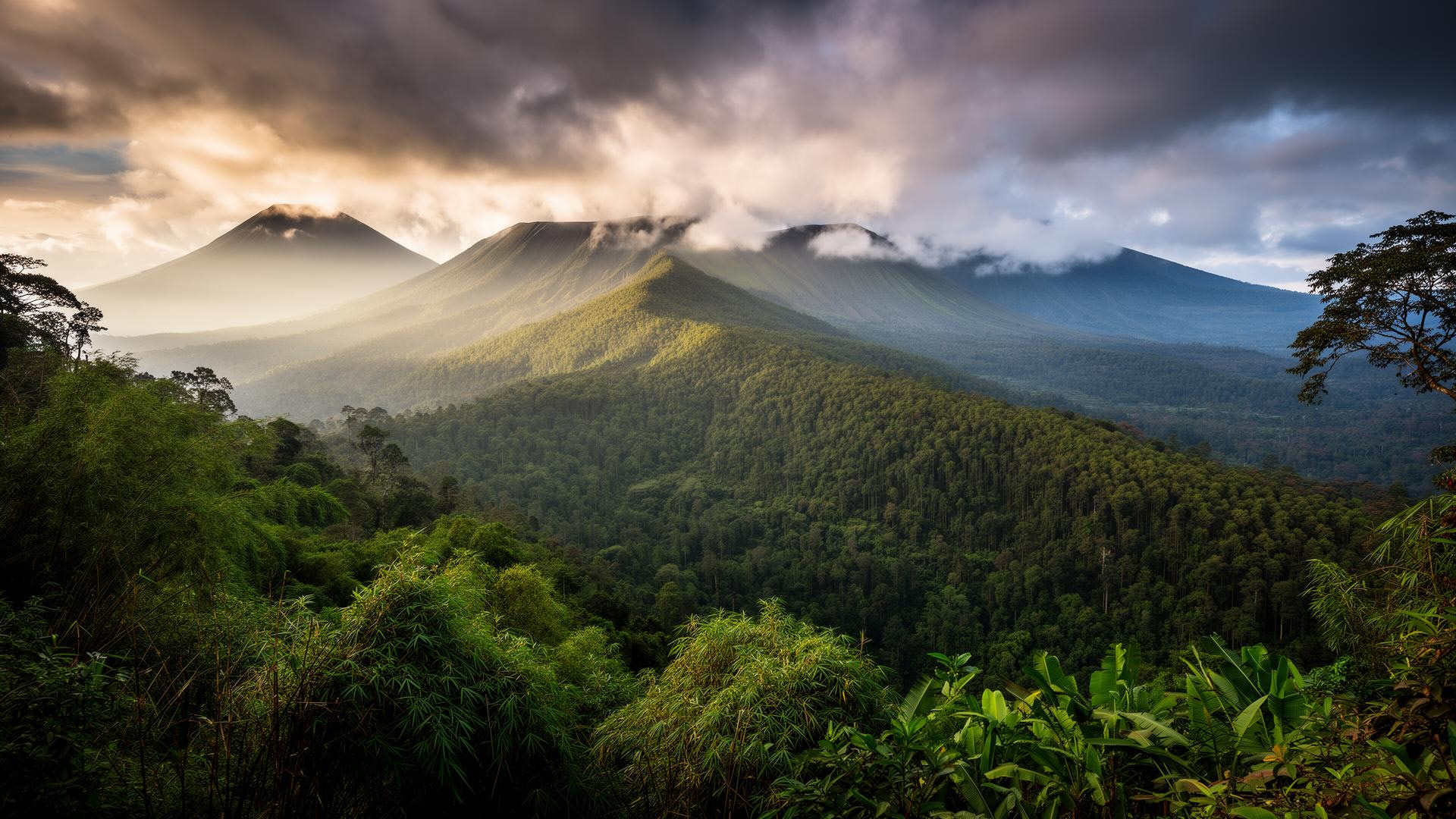
Africa's oldest national park and the site of Dian Fossey's life's work — five Virunga volcanoes draped in montane forest where mountain gorilla families live on the misty slopes that inspired a global conservation movement and changed how the world sees its closest relatives.
Volcanoes National Park — Parc National des Volcans — protects the Rwandan portion of the Virunga volcanic massif: five towering, forest-clad volcanoes rising from the intensively farmed highlands of north-western Rwanda to summits above 4,500 metres. The park covers just 160 square kilometres, making it one of the smallest in Africa, but within that compressed footprint lies one of the most important conservation stories on Earth.
In 1967, the American primatologist Dian Fossey established the Karisoke Research Center in the saddle between Mounts Karisimbi and Bisoke and began the study that would transform our understanding of mountain gorillas — and ultimately cost her life. Fossey's work, documented in her book Gorillas in the Mist, brought the species from the edge of extinction to global consciousness. When she arrived, the Virunga mountain gorilla population numbered fewer than 250. Today, thanks in large part to the conservation model her work inspired — and the gorilla tourism economy that funds it — the population has recovered to over 1,000 individuals across the Virunga massif and Bwindi.
Rwanda's contribution to that recovery has been transformative. Approximately 340 gorillas live on the Rwandan slopes, distributed across more than 12 habituated families available for trekking. The Rwandan gorilla permit — at USD 1,500, the most expensive wildlife encounter in Africa — funds not only park management and anti-poaching but also a revenue-sharing programme that channels a percentage of tourism income directly to communities surrounding the park. The model has become a global benchmark for how conservation, tourism, and community development can reinforce one another. Visiting Volcanoes National Park is not merely a wildlife experience; it is participation in one of conservation's most important success stories.
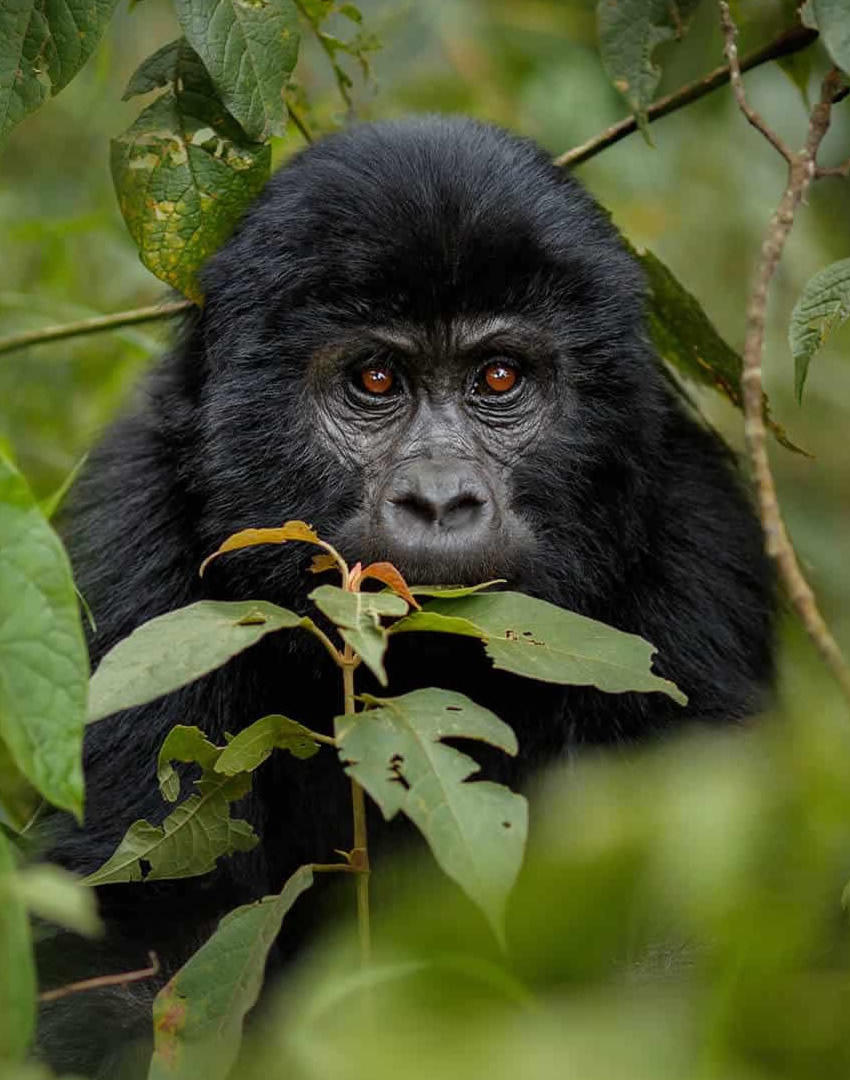
Dian Fossey's gorillas, Africa's oldest national park, five volcanic summits, golden monkeys, and a conservation economy that has become the model for the continent.
Volcanoes National Park is where mountain gorilla tourism began — the first habituated families, the first permits, the first visitors sitting on the forest floor in the presence of a silverback. The tradition here is the longest, the habituation the deepest, and the infrastructure the most refined. Over 12 family groups are available for trekking, with 96 permits issued daily. The volcanic terrain — open bamboo, hagenia woodland, and alpine meadow — offers more photogenic settings than the dense lowland forest of Bwindi, and encounters often unfold in dappled clearings with volcanic cones visible above.
Dian Fossey's Karisoke Research Center — established in 1967 between Mounts Karisimbi and Bisoke — remains active, now operated by the Dian Fossey Gorilla Fund. Fossey's grave, beside those of the gorillas she fought to protect, can be visited on a guided hike through the forest. Walking in her footsteps, through the bamboo and hagenia that she described in Gorillas in the Mist, adds a dimension of history and meaning that no other gorilla destination can offer. The science and the sacrifice are tangible here.
Volcanoes National Park was first gazetted in 1925 — making it the oldest national park in Africa, predating even the Serengeti. That century of protection (with interruptions) has preserved the Virunga forest in a country where every available hectare of land is under intense agricultural pressure. The park exists as a green island in a sea of cultivation — and its survival is a testament to the economic value that gorilla tourism generates. The contrast between the forest and the surrounding farmland is visible from every trailhead and gives the conservation achievement its human scale.
Like Uganda's Mgahinga, Volcanoes NP supports a habituated population of the golden monkey — the bright, acrobatic bamboo-forest endemic found only on the Virunga volcanoes. Rwanda's golden monkey group is large and well-habituated, and tracking through the bamboo zone on the lower volcanic slopes is fast, colourful, and engaging. The golden monkey experience contrasts beautifully with the slow gravity of the gorilla encounter — two primate treks of completely different character, often scheduled on consecutive mornings.
Five of the eight Virunga volcanoes fall within the park, and several can be climbed as day hikes or overnight expeditions. Mount Bisoke (3,711 m) — a half-day climb to a stunning crater lake — is the most popular. Mount Karisimbi (4,507 m), the highest volcano in the chain, is a demanding two-day climb with a night camped at 3,800 metres, rewarded with panoramic views across the entire Virunga chain, Lake Kivu, and the forests of the Congo basin. The hikes add a mountaineering dimension to what might otherwise be a purely primate-focused visit.
Rwanda's tourism infrastructure is among the best-organised in Africa. Kigali — clean, safe, and efficiently run — is two hours from the park by good tarmac road. Musanze (Ruhengeri), the gateway town, has a growing selection of luxury lodges on the foothills facing the volcanoes. The permit system is transparent and well-managed. Guides are professional, multilingual, and deeply knowledgeable. The entire experience — from airport to gorilla and back — operates with a smoothness and reliability that has made Rwanda the benchmark for high-end gorilla tourism on the continent.
Volcanoes National Park lies in north-western Rwanda, along the border with Uganda and the Democratic Republic of Congo. The park protects the Rwandan slopes of the Virunga volcanic chain — five volcanoes rising from the densely populated agricultural highlands to summits between 3,474 and 4,507 metres. The gateway town of Musanze (formerly Ruhengeri) sits at the foot of the volcanoes, approximately 110 kilometres and two hours' drive from Kigali.
The Virunga massif is shared between three countries — Rwanda, Uganda, and the DRC — with Volcanoes NP adjoining Uganda's Mgahinga Gorilla National Park to the north-east and the DRC's Virunga National Park to the west. The gorillas move freely across political borders, and the three parks together form a single conservation unit. Rwanda's portion, though the smallest, generates the highest tourism revenue per square kilometre of any park in Africa — a statistic that underpins the entire Virunga conservation model.
From gorilla trekking and the Fossey tomb hike to golden monkey tracking, volcano summits, and the cave that sheltered Musinga's court.
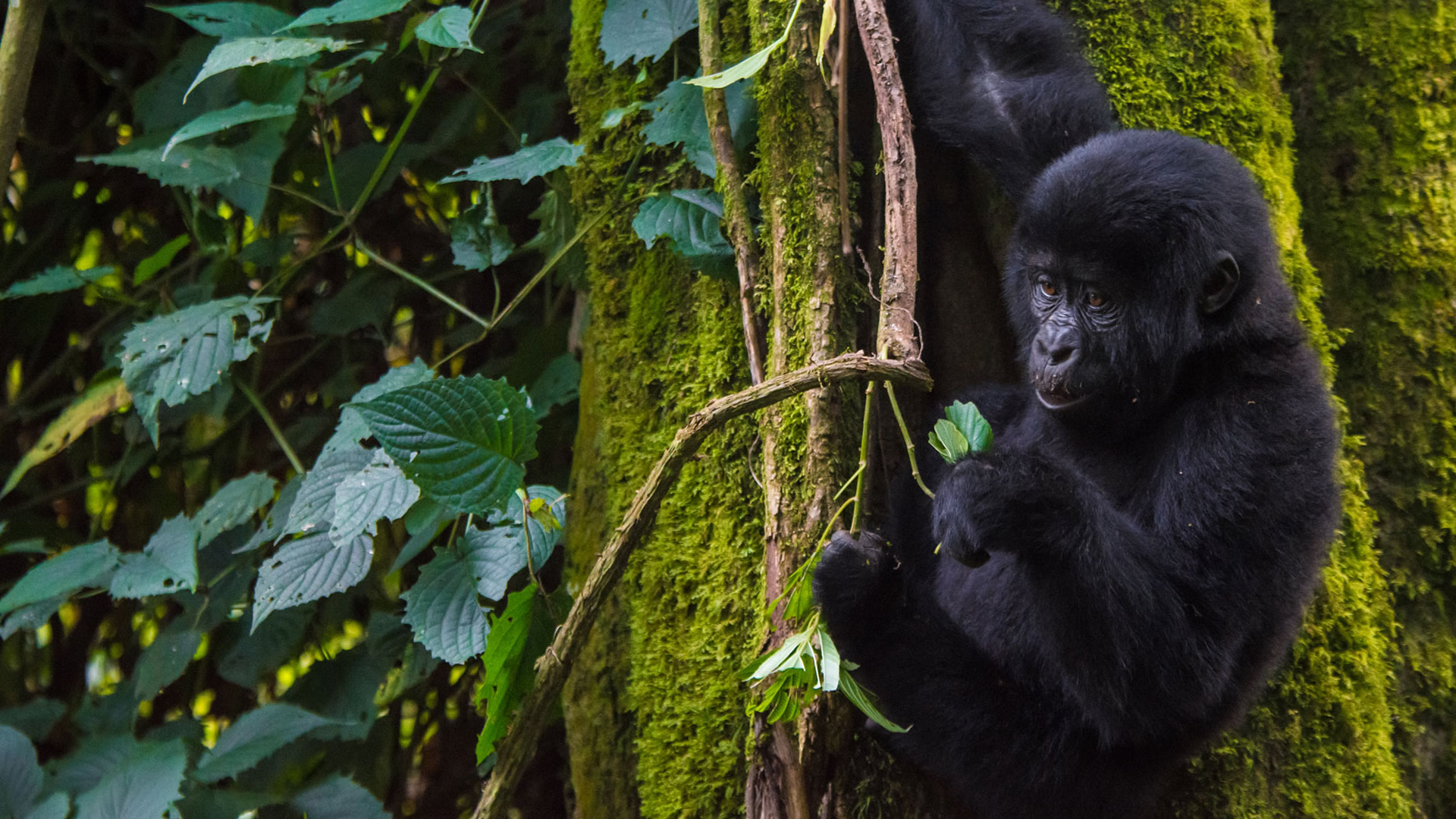
Rwanda's gorilla trek begins with a briefing at the park headquarters in Kinigi, followed by a drive to the trailhead and a hike into the forest to locate the assigned family. Treks typically last one to four hours each way depending on the family's location. The one-hour encounter is intimate and unhurried — silverbacks feed within metres, juveniles play in the undergrowth, and the volcanic setting provides clearings and light that make photography more rewarding than in denser lowland forests. Over 12 habituated families ensure variety across repeat visits.
A guided hike to the site of the Karisoke Research Center — where Dian Fossey lived and worked from 1967 until her murder in 1985 — ascends through bamboo and hagenia forest to the meadow between Mounts Karisimbi and Bisoke. Fossey's grave lies beside those of her favourite gorillas, including the silverback Digit, whose killing galvanised the global anti-poaching movement. The hike takes approximately five to seven hours round trip and is moderately strenuous. For visitors who know the story, it is a pilgrimage. For those who don't, the guides tell it with a depth that makes the forest personal.
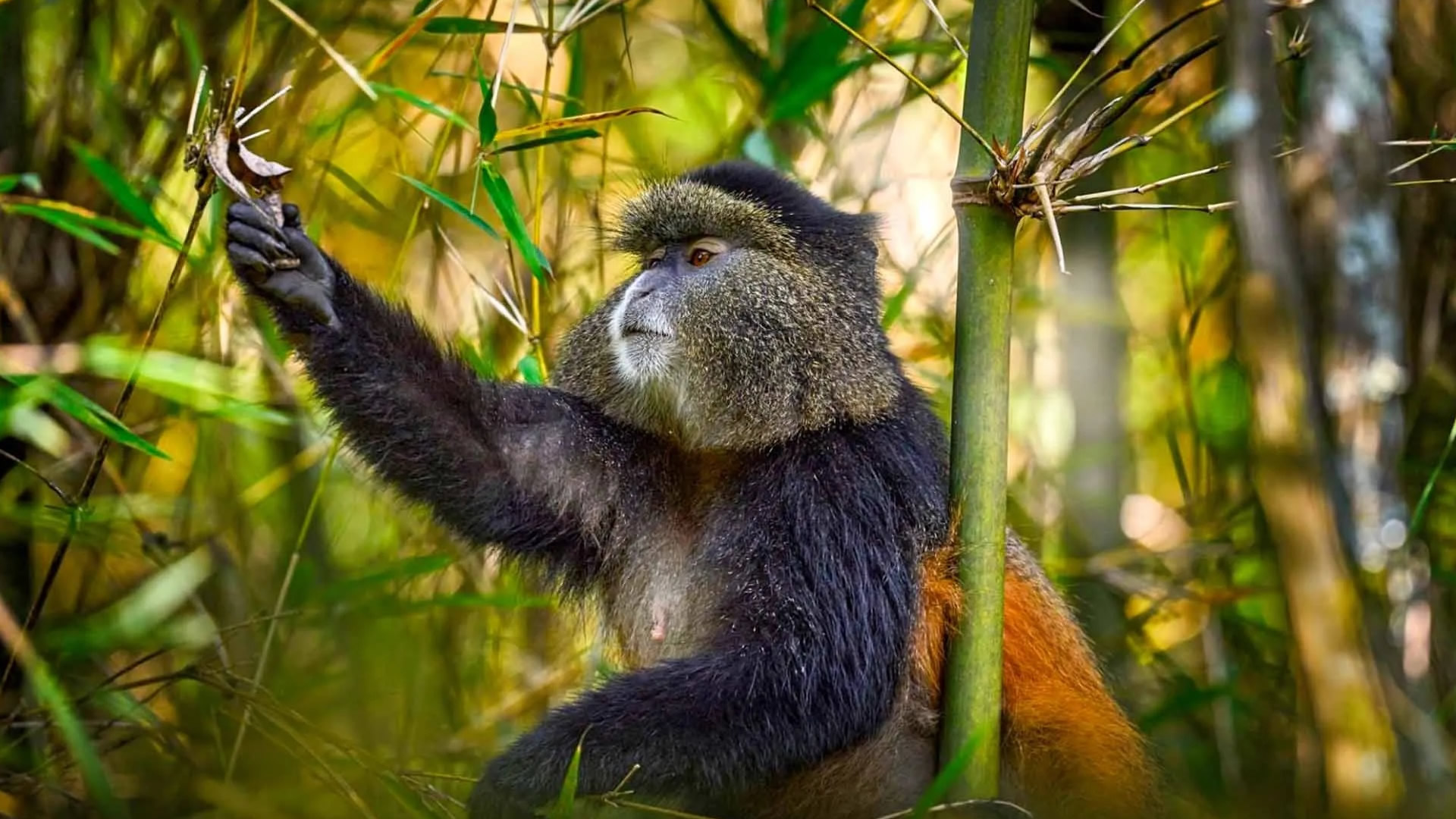
The golden monkey — endemic to the Virunga volcanoes — is tracked in the bamboo zone on the lower slopes. Rwanda's habituated group is large, active, and photogenic: bright orange-gold fur flashing through green stems, acrobatic leaps, and the constant chatter of a social troop. Tracking takes one to three hours and the encounter lasts one hour. The experience is lighter and faster-paced than the gorilla trek and pairs well as a second morning activity for visitors spending two or more nights at the park.
Mount Bisoke (3,711 m) — a half-day climb through bamboo and hagenia forest to a stunning crater lake at the summit — is the most popular volcano hike. Mount Karisimbi (4,507 m), the highest in the Virunga chain, is a two-day climb with a night at a mountain camp, demanding but rewarded with the broadest views in Rwanda. Both hikes traverse the same habitat zones the gorillas inhabit, offering a different perspective on the ecosystem — vertical rather than intimate. The volcano hikes are managed by RDB and require advance booking.
The Musinga Cave — a large volcanic cavern on the lower slopes — served as a refuge for the Rwandan king Musinga during colonial upheaval. A guided walk to the cave passes through farmland and forest edge, with commentary on the history of the Rwandan monarchy, local agriculture, and community life in the shadow of the volcanoes. The walk is gentle and provides a cultural counterpoint to the wildlife-focused activities higher on the mountain. Community visits to nearby villages can be arranged through lodges.
The Virunga forests support a range of Albertine Rift endemic birds including Rwenzori turaco, handsome spurfowl, Archer's robin-chat, Rwenzori batis, and the scarce Grauer's swamp warbler. Birding is best in the bamboo and hagenia zones between 2,400 and 3,200 metres. The forest canopy along the gorilla trekking trails is productive, and guides can tailor the pace of a post-trek walk to focus on bird species. For dedicated birders, Volcanoes NP adds the Virunga mountain endemics that the savannah parks cannot provide.
Gorilla trekking operates year-round. The dry months offer easier trails; the wet months bring fewer visitors and sometimes lower permit availability.
The best trekking conditions. Forest trails are drier and firmer, the gorillas tend to feed at lower altitudes, and the volcanic peaks are more likely to be clear for summit hikes and photography. Permits sell out furthest in advance during these months — booking six to twelve months ahead is standard for peak season. Morning mists clear earlier, and the quality of light during the gorilla hour is at its most favourable.
The rains make the volcanic trails muddy and slippery — gaiters, waterproof layers, and sturdy boots are non-negotiable. However, trekking continues throughout, gorilla sighting rates remain very high, and the forest is at its most lush and atmospheric. Permits may be slightly more available, and some lodges offer reduced rates. The Fossey tomb hike and the volcano climbs are more challenging in the wet but still operational. For visitors flexible on dates, the shoulder months of March and October can offer excellent conditions with fewer visitors.
Two hours from Kigali on an excellent road — one of the shortest and most comfortable transfers to any gorilla destination in Africa.
Kigali International Airport receives direct flights from Nairobi, Entebbe, Addis Ababa, Dar es Salaam, Dubai, Brussels, Amsterdam, and other major hubs. From Kigali, the drive to Musanze and the park takes approximately two hours — one of the shortest airport-to-gorilla transfers in Africa. Helicopter transfers from Kigali to lodges near the park can also be arranged, reducing the journey to approximately 30 minutes for those on tight schedules.
The drive from Kigali to Musanze (Ruhengeri) takes approximately two hours on excellent tarmac, passing through Rwanda's green, terraced highlands — some of the most densely cultivated and visually striking countryside in Africa. The road is smooth, safe, and scenic. From Musanze, the park headquarters at Kinigi is approximately 30 minutes. Many lodges sit in the foothills between Musanze and the park, with the volcanic peaks visible from arrival. The short transfer is one of Rwanda's significant advantages over Uganda's more remote gorilla destinations.
Volcanoes NP is the centrepiece of any Rwanda safari itinerary. A classic circuit runs Kigali (1 night) → Volcanoes NP (2–3 nights, gorilla trekking, golden monkey, Fossey hike) → Lake Kivu (1–2 nights, lakeside relaxation) → Nyungwe Forest (2 nights, chimpanzee trekking, canopy walkway) → Akagera (2 nights, Big Five savannah) → Kigali. This sequence covers mountain gorillas, chimpanzees, savannah Big Five, and lakeside downtime in a compact, efficiently routed itinerary. Cross-border combinations with Uganda's Bwindi and Mgahinga are also straightforward via the Cyanika border crossing.
Mountain gorillas, volcanic summits, golden monkeys, the Fossey legacy, and the park that proved conservation can pay for itself.
A gorilla trekking permit in Rwanda costs USD 1,500 per person per trek — the highest in Africa and more than double Uganda's USD 700. The premium reflects Rwanda's positioning as a luxury destination, the shorter and more comfortable access from Kigali, the polished infrastructure, and the comprehensive revenue-sharing model that channels tourism income to communities and conservation. The permit includes park entry and the services of guides and trackers. All permits on Kuldip's Touring Company itineraries are secured and included in the quoted price.
Both offer extraordinary encounters with the same species. Rwanda's advantages are the shorter transfer from Kigali (2 hours vs 8–10 from Kampala/Entebbe), the more polished infrastructure, the volcanic setting with more open forest and photogenic clearings, and the Fossey legacy. Uganda's advantages are the significantly lower permit cost (USD 700 vs USD 1,500), more habituated families across multiple sectors (Bwindi's four sectors plus Mgahinga), the Gorilla Habituation Experience (4 hours instead of 1), and the ability to combine gorillas with Uganda's broader circuit — chimps at Kibale, savannah at Queen Elizabeth, the Nile at Murchison. The "better" choice depends on budget, time, and what else you want to see.
Two nights is the standard allocation — allowing one gorilla trek and either golden monkey tracking or the Fossey tomb hike on the second morning. Three nights is ideal for visitors planning two gorilla treks (different families), the golden monkey experience, and a volcano hike. The proximity to Kigali (two hours) means that even a single-night stay with a morning gorilla trek is technically possible, but it sacrifices the overnight mountain atmosphere and the second-morning activity. Most visitors find two nights the right balance.
Moderate to strenuous, depending on the family assigned. The trailhead is already at approximately 2,400 metres, and treks ascend volcanic slopes through bamboo and montane forest — paths are narrow, often muddy, and can involve significant elevation gain. Some families range higher than others. Porters are available and strongly recommended — they carry bags, provide support on steep sections, and their hire directly supports the local community. Proper hiking boots, long trousers, gardening gloves, rain gear, and a walking stick (provided at the trailhead) are essential. A reasonable fitness level is needed, but the guides pace the group carefully.
As far as possible. Rwanda's gorilla permits sell out months in advance for the peak dry-season months (June to September and January to February). Booking six to twelve months ahead is standard advice for these periods. Shoulder and wet-season months (March, May, October, November) may have availability on shorter notice, but early booking is always recommended. Kuldip's Touring Company secures permits as soon as travel dates are confirmed and holds them as part of the package.
Gorilla trekking requires a strict minimum age of 15 years — no exceptions. Golden monkey tracking also requires a minimum age of 15. The Fossey tomb hike, the Musinga Cave walk, and community visits are open to younger visitors and provide engaging alternatives. The volcano hikes are demanding and best suited to fit teenagers and adults. For families with children aged 15 and above, the gorilla trek is a profoundly memorable experience. For families with younger children, the cultural walks and a stay at a volcano-view lodge provide a strong programme while adults trek. Some lodges offer family suites and childcare arrangements.
The crown jewel of Rwandan conservation and the original home of Dian Fossey's ground-breaking gorilla research on the Virunga volcanoes.
Explore Volcanoes NP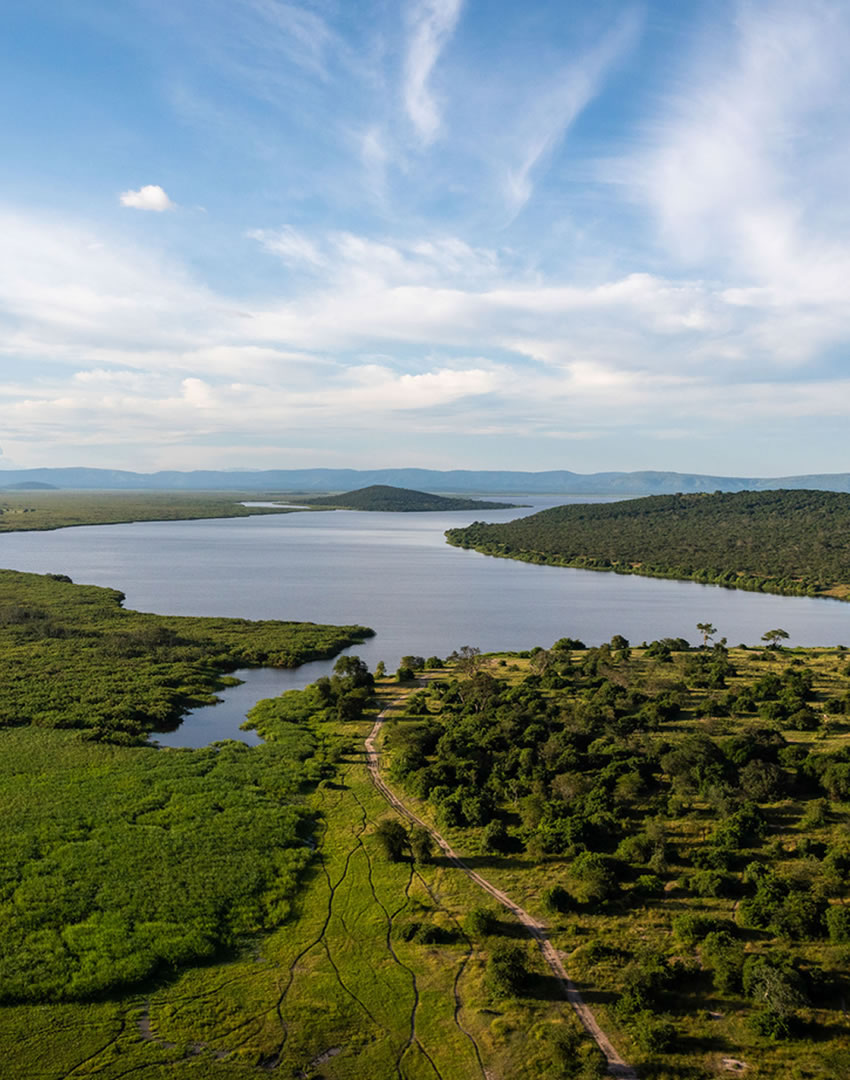
East Africa's greatest conservation comeback — a fully restored Big Five park with lions reintroduced in 2015 and black rhinos in 2017.
Explore Akagera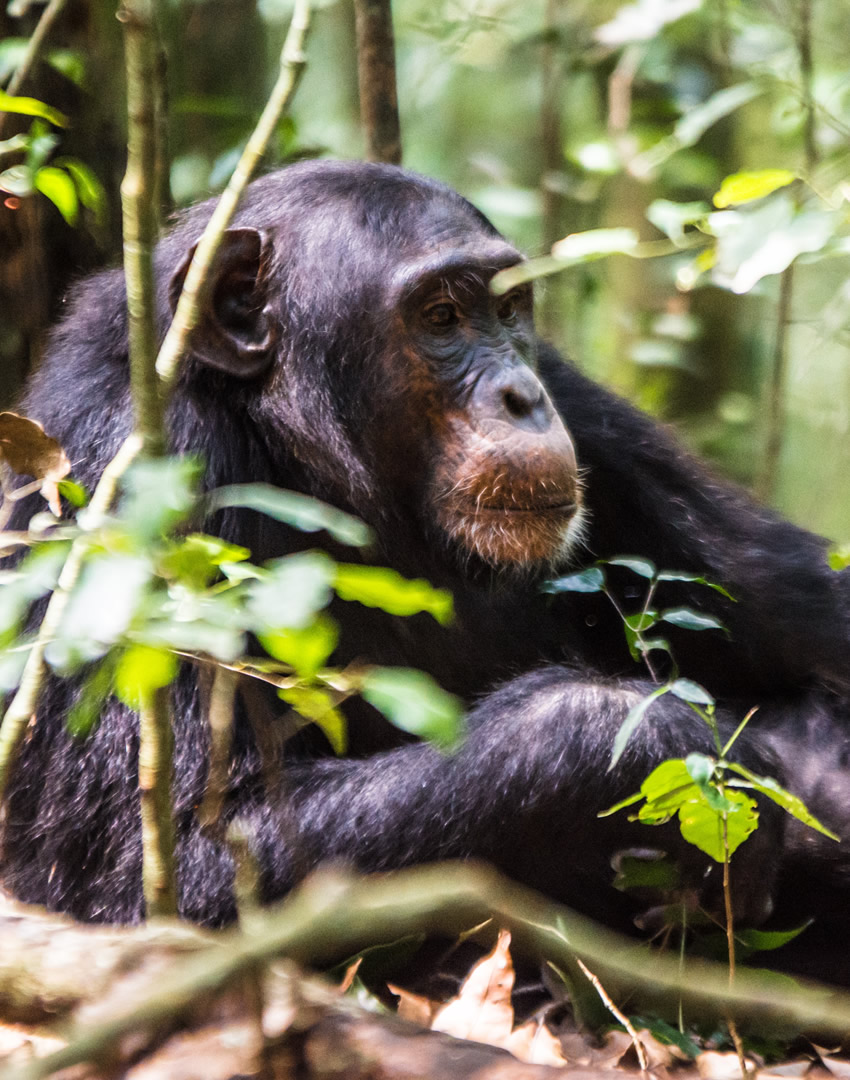
One of the oldest and most biodiverse montane rainforests in Africa. Rwanda's premier chimpanzee tracking destination with a canopy walkway.
Explore Nyungwe Forest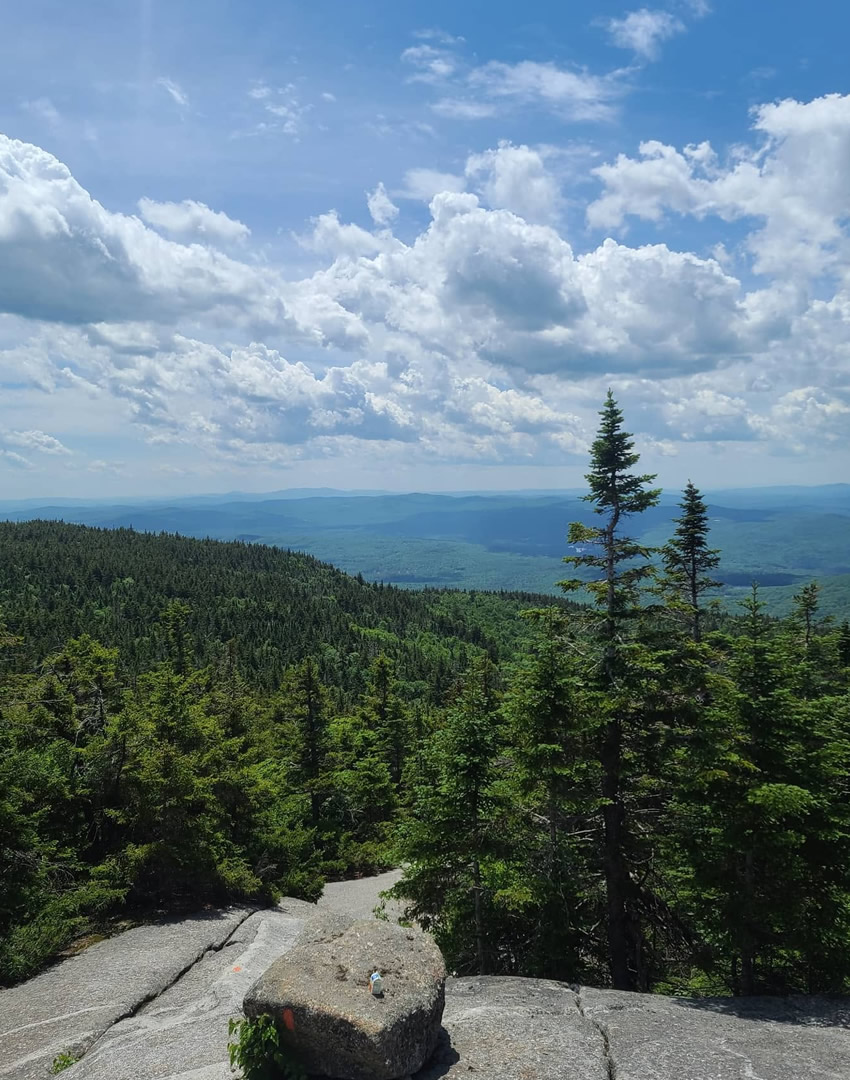
Rwanda's newest national park, home to a recovering population of eastern chimpanzees, golden monkeys and over 230 bird species.
Explore Gishwati Mukura