Uganda's largest and oldest national park — where the entire Victoria Nile forces through a rock cleft just seven metres wide, erupting into the most powerful waterfall in the world, surrounded by big-game savannah, Budongo chimpanzees, and the delta where the shoebill hides.
Murchison Falls National Park — at nearly 4,000 square kilometres, Uganda's largest — occupies a vast swathe of savannah, woodland, and riverine forest in the country's north-west, bisected by the Victoria Nile on its journey from Lake Victoria to Lake Albert. The park was established in 1952 and named after the falls that Sir Samuel Baker encountered in 1864 — a point where the full volume of the Nile is forced through a gap in the rock just seven metres wide before plunging 43 metres into the churning pool below. It is, by most measures, the most powerful waterfall in the world.
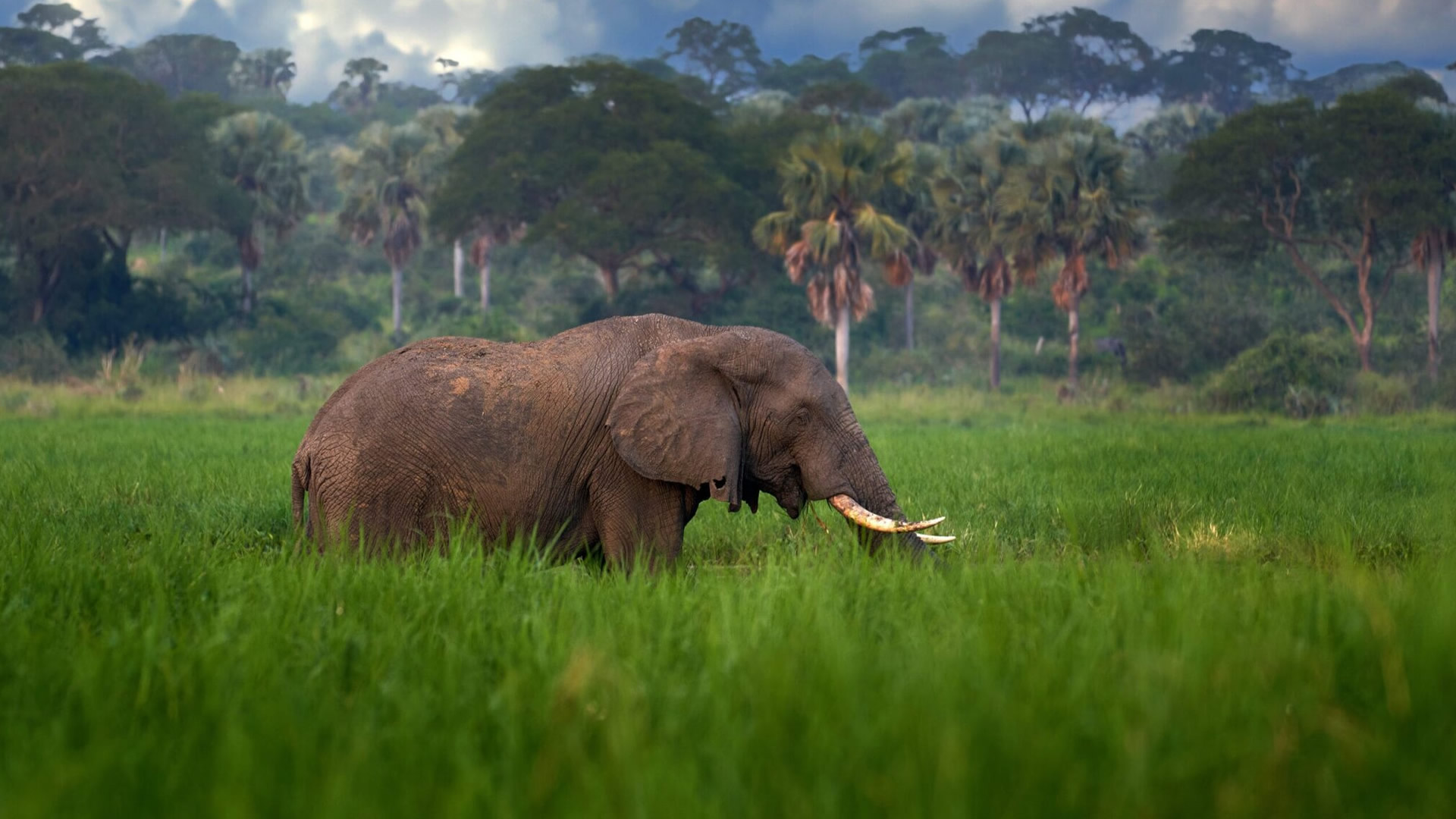
The Nile divides the park into two distinct zones. The northern bank — accessed by a ferry crossing at Paraa — is prime big-game country: rolling savannah and borassus palm woodland supporting large populations of elephant, Rothschild's (Nubian) giraffe, buffalo, lion, leopard, hartebeest, and Uganda kob. The southern bank is defined by the Budongo Forest Reserve — one of East Africa's finest mahogany forests, harbouring a habituated chimpanzee community and a rich assemblage of forest birds and primates.
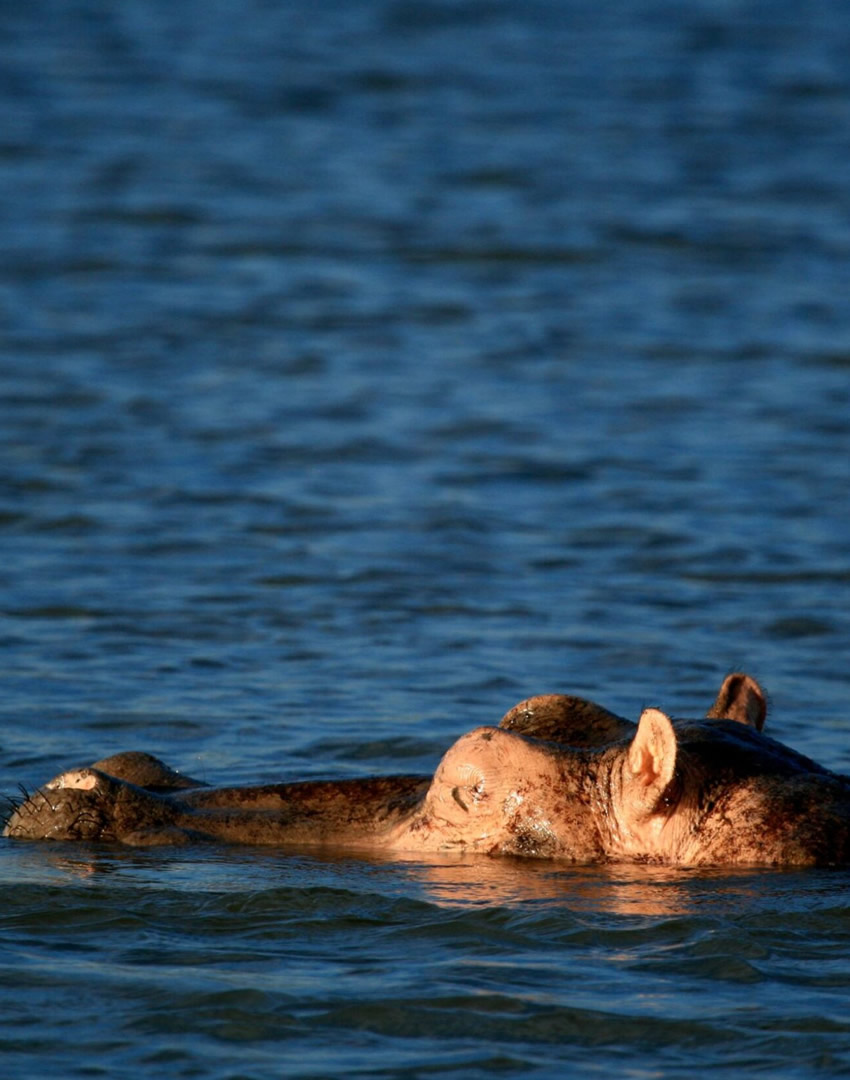
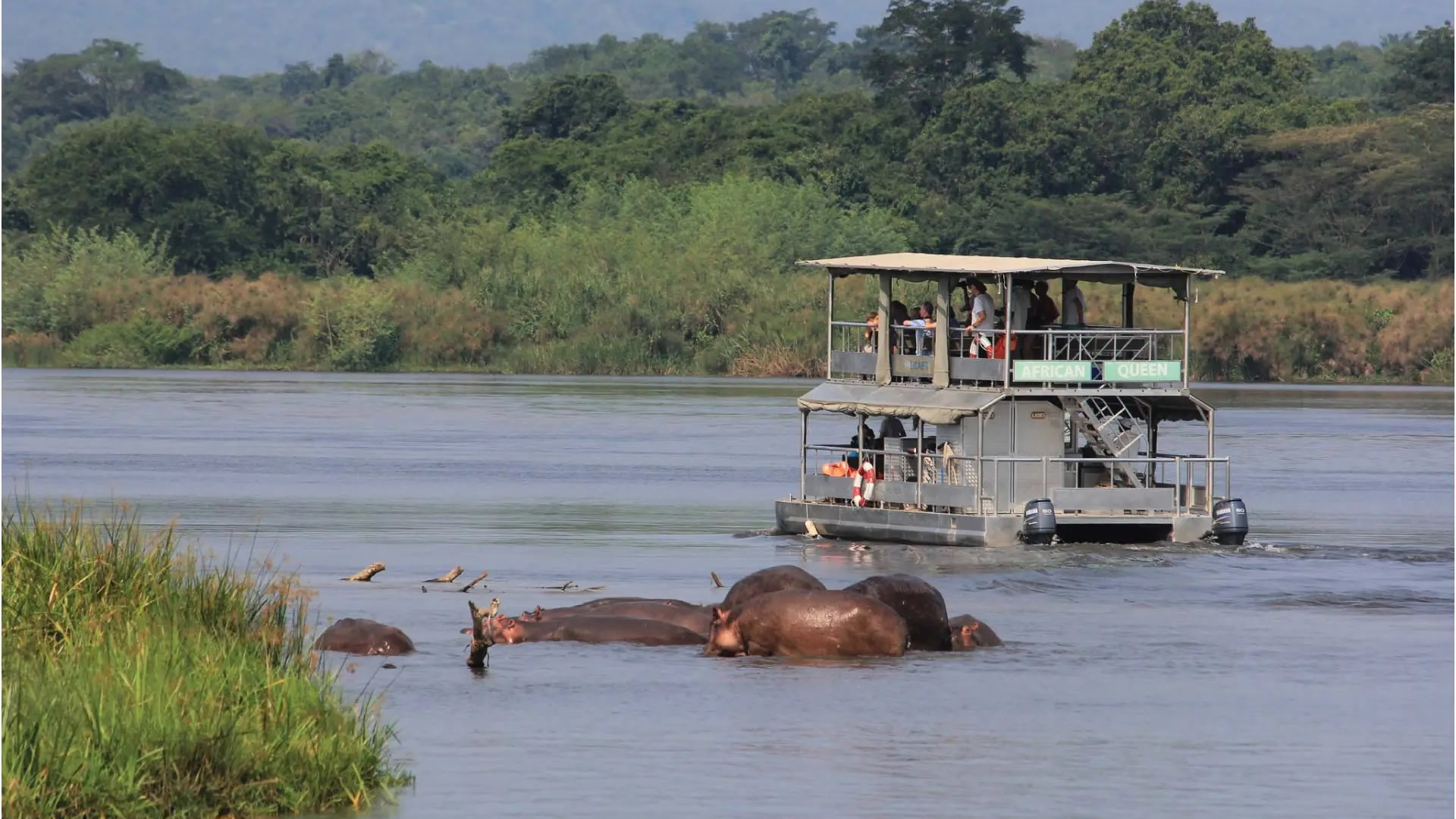
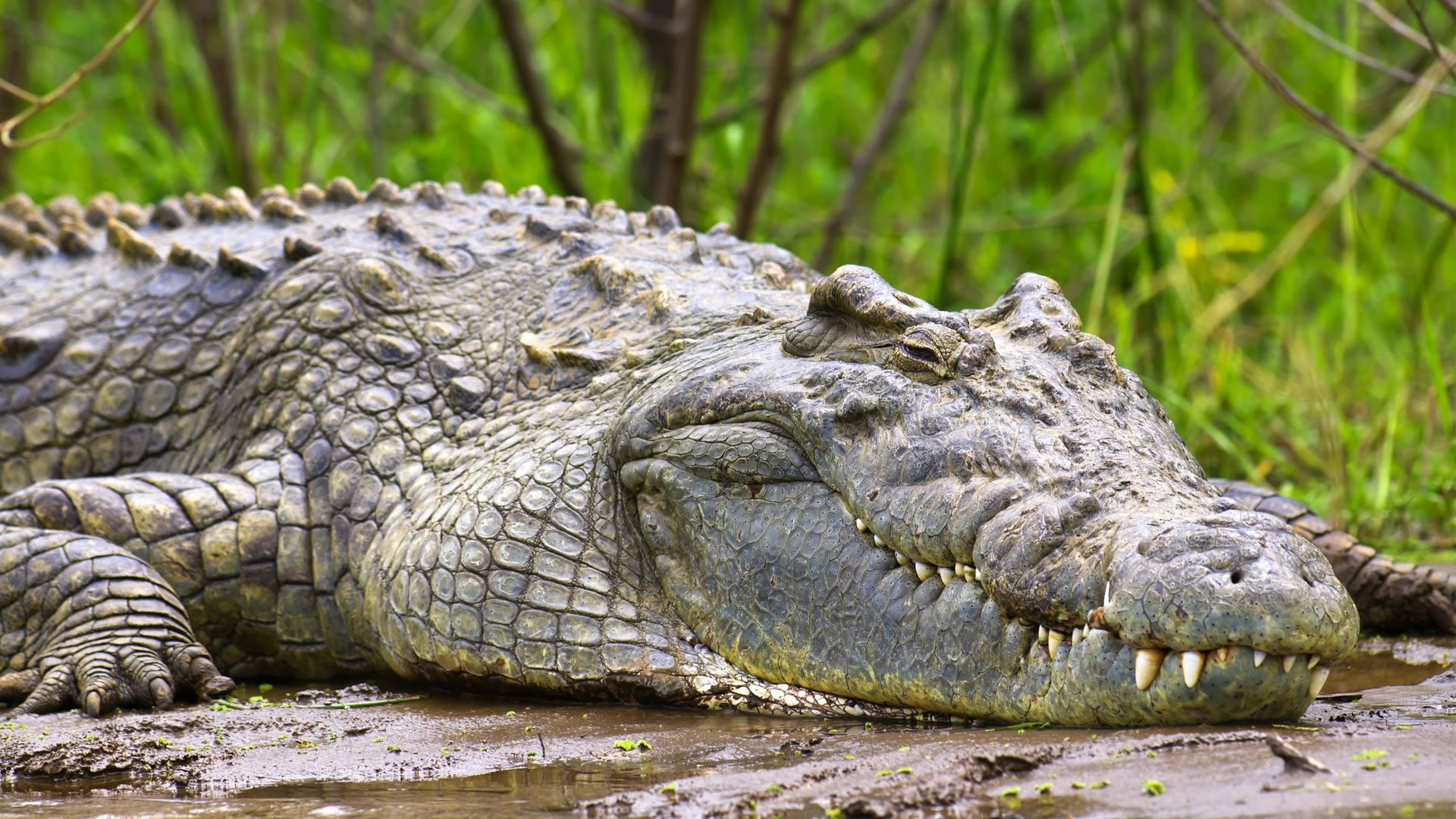
Between the two lies the river itself. The upstream boat cruise from Paraa to the base of the falls is the park's signature experience — a three-hour journey past hippo pods, Nile crocodiles, and cliffs of nesting bee-eaters that culminates in the spray-drenched spectacle of the falls thundering overhead. Downstream, the Nile broadens into the papyrus-fringed delta where it enters Lake Albert — one of the most reliable sites in East Africa for the shoebill, one of the continent's rarest and most sought-after birds. Murchison Falls is Uganda's most complete savannah park: big mammals, big river, big waterfall, chimpanzees, and the shoebill, all in a single, vast landscape.
The world's most powerful waterfall, a Nile boat cruise, Rothschild's giraffe, Budongo chimps, the shoebill delta, and Uganda's largest savannah landscape.
Murchison Falls is not the tallest waterfall in Africa, nor the widest. It is the most powerful — the entire volume of the Victoria Nile compressed into a rock gap seven metres wide and dropped 43 metres into the gorge below. The force is extraordinary: the spray rises 50 metres, the roar carries for kilometres, and the pool at the base boils with white water and mist. Viewing is possible both from the top — a short hike from the road — and from the base, arrived at by boat. Both perspectives are unforgettable.
The upstream cruise from Paraa to the base of the falls is routinely rated among the finest wildlife boat trips in Africa. Over three hours, the river narrows and the wildlife intensifies — hippo pods of 50 or more, four-metre Nile crocodiles, elephants bathing on the banks, and dense concentrations of waterbirds including goliath heron, African fish eagle, and colonies of red-throated bee-eaters nesting in the river cliffs. The cruise climaxes as the boat rounds the final bend and the falls come into view, spray drifting across the water.
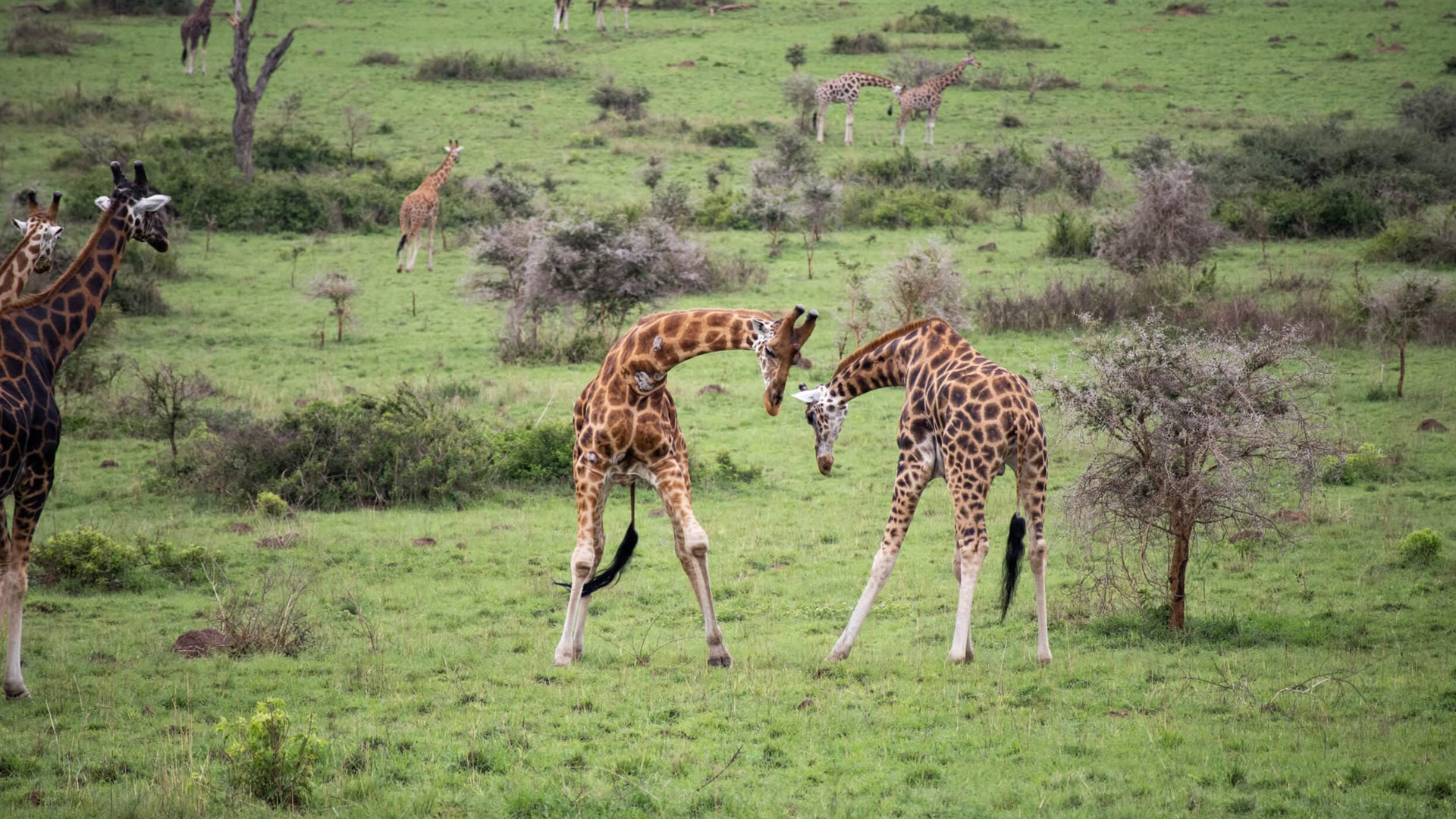
Murchison Falls is one of the last strongholds of the Rothschild's (Nubian) giraffe — one of the most endangered giraffe subspecies, with a global population of only around 1,600 individuals. Herds are regularly seen on the northern-bank game drives, moving through the borassus palm savannah in scenes that define the Murchison landscape. Seeing these tall, pale, elegantly patterned animals against the open grassland — often with the Nile visible in the distance — is a sighting exclusive to Uganda's northern parks.
The Budongo Forest Reserve, adjoining the park's southern boundary, shelters one of Uganda's best-habituated chimpanzee communities. The forest is lower and flatter than Kibale, with a high mahogany canopy that makes chimp observation more comfortable and photographic. Sighting rates are good — typically above 80 per cent — and the encounters are often extended, with chimps feeding at accessible heights in the large fruiting trees. Budongo adds a forest dimension to what is otherwise a savannah park, broadening the itinerary without requiring a separate destination.
Where the Victoria Nile enters Lake Albert, it spreads into a broad, papyrus-fringed delta — one of the most reliable sites in East Africa for the shoebill. This enormous, prehistoric-looking bird — standing over a metre tall with a shoe-shaped bill adapted for catching lungfish — is among the most sought-after species on any African birding list. Dedicated boat trips into the delta papyrus, guided by local fishermen who know the birds' favoured channels, offer sighting rates that justify the journey alone.
At nearly 4,000 square kilometres, Murchison Falls is Uganda's largest national park — and the only one that offers the broad, open savannah landscape typically associated with East African game viewing. The northern bank's rolling grassland and palm-dotted woodland support large elephant herds, lion prides, leopard, spotted hyena, Jackson's hartebeest, oribi, and waterbuck. Game drives here feel expansive in a way that the forest parks of the west cannot match. For visitors combining Murchison with Bwindi and Kibale, the contrast in landscape is dramatic.
Murchison Falls National Park lies in north-western Uganda, approximately 300 kilometres north of Kampala and 80 kilometres east of Lake Albert on the border with the Democratic Republic of Congo. The Victoria Nile flows through the park from east to west, entering from the direction of Lake Kyoga and exiting into Lake Albert via the delta at its western end. The falls themselves sit roughly at the park's centre, where the river drops off the Rift Valley escarpment.
The park is bordered by the Budongo Forest Reserve to the south and the Karuma Falls wildlife reserve to the east. The main access point is the town of Masindi, approximately 85 kilometres to the south-east, or the Karuma bridge on the Kampala–Gulu highway. The Paraa ferry crossing — connecting the southern and northern banks of the Nile within the park — is the operational hub, and most lodges are located on or near the northern bank within reach of the falls and the main game-drive circuits.
From the Nile boat cruise and the top-of-the-falls hike to northern-bank game drives, Budongo chimps, shoebill expeditions, and sport fishing below the falls.
The three-hour upstream cruise from Paraa to the base of the falls is Murchison's signature experience. The river narrows progressively, concentrating hippos, crocodiles, and waterbirds into increasingly dense encounters. Bee-eater colonies nest in the red clay cliffs. Elephants wade at the banks. The climax — rounding the final bend as the falls come into view, mist drifting across the water — is among the most dramatic moments on any African safari. Downstream cruises towards the Lake Albert delta offer a different, quieter experience focused on shoebill and papyrus birdlife.
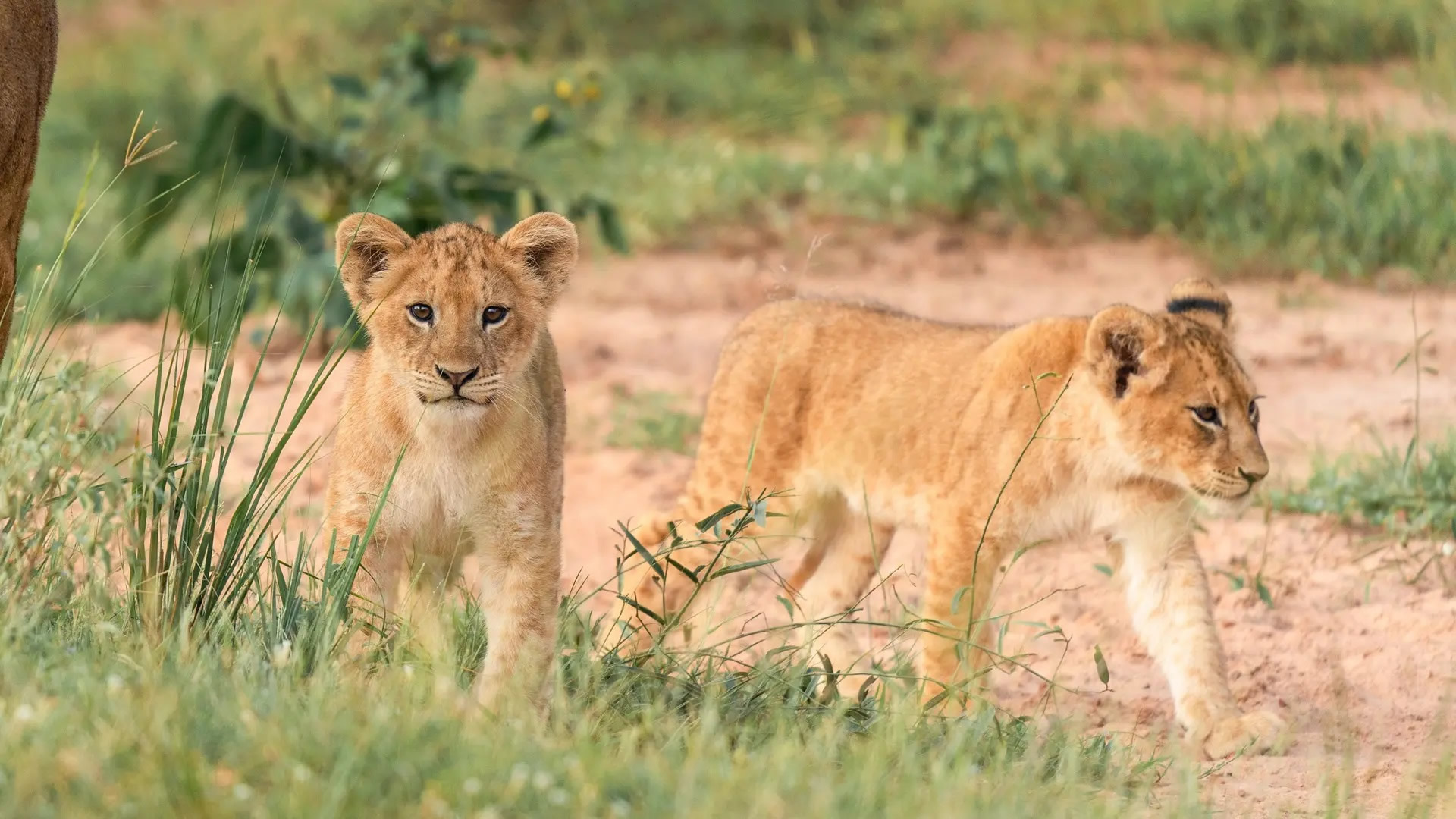
The northern bank offers Uganda's most expansive savannah game driving. Morning and afternoon circuits cover open grassland, borassus palm woodland, and riverine thicket supporting elephant, Rothschild's giraffe, buffalo, lion, leopard, Jackson's hartebeest, oribi, waterbuck, and Uganda kob. The Buligi peninsula — a wedge of land between the Nile and Lake Albert — is particularly productive, with broad views and high animal density. The landscape is flat and open, making wildlife easy to spot and photograph from distance.
A short guided hike from the road brings you to the rim of the gorge directly above the falls — looking straight down into the seven-metre gap where the Nile explodes through the rock. The power is visceral: the ground shakes, the spray soaks your clothes, and the noise fills every register. A longer trail follows the gorge downstream, passing viewpoints above the churning rapids and the plunge pool where the boat cruise turns around. The hike pairs perfectly with the boat cruise — experiencing the falls from below and above in the same day.
The Budongo Forest Reserve — adjoining Murchison's southern boundary — protects one of Uganda's finest mahogany forests and a well-habituated chimpanzee community. Guided tracking walks depart from the Kaniyo Pabidi sector and typically last two to four hours. The forest floor is relatively flat and the tall canopy allows more light than the dense forests of the west, making for comfortable walking and good photographic conditions. Budongo adds a forest-primate experience to Murchison's savannah programme without requiring a separate destination.
The papyrus delta where the Nile enters Lake Albert is one of East Africa's most reliable shoebill sites. Dedicated boat trips, guided by local fishermen who know the birds' territories, navigate the papyrus channels to locate these extraordinary, statue-still predators. Beyond the shoebill, the delta supports African finfoot, papyrus gonolek, white-winged warbler, Denham's bustard, and Abyssinian ground hornbill. Murchison's 451 recorded bird species make it one of Uganda's top three birding destinations.
The turbulent waters below Murchison Falls support some of the finest Nile perch fishing in Uganda. Catch-and-release fishing trips operate from boats positioned in the rapids downstream of the plunge pool, targeting perch that can exceed 100 pounds. The setting is extraordinary — fishing within sight of the falls, spray drifting overhead, hippos surfacing nearby. Fishing permits and tackle are arranged through lodges and tour operators. It is a niche activity, but for anglers, the combination of the species, the setting, and the river's power is unmatched.
Murchison operates year-round. The dry season offers the best game driving; the wet months bring peak birding and the falls at their most dramatic.
The best conditions for game drives on the northern bank. Vegetation is short, tracks are firm, and wildlife concentrates around the Nile and remaining water sources. Rothschild's giraffe, elephant, and lion are most visible in the dry months when the savannah opens up. The boat cruise operates year-round, but the dry-season river levels make bank wildlife easier to observe at close range. Budongo chimp tracking is more comfortable on dry trails. These are the busiest months; advance booking for lodges and the boat cruise is recommended.
The rains make the park lush and green, and the Nile swells — making the falls even more spectacular as the river's volume increases. Birding peaks during the wet months: migratory species arrive, and the delta and papyrus channels are at their most productive for shoebill. The northern-bank tracks can become muddy, and some areas may be temporarily impassable, but the main circuits and the boat cruise remain operational. Visitor numbers drop, lodge rates fall, and the photographic light in the breaks between showers — dramatic storm skies over the open savannah — can be extraordinary.
A scenic half-day drive north from Kampala — with a rhino stop en route — or a short charter flight direct to the park.
Charter and scheduled flights operate from Entebbe to airstrips within the park — Pakuba on the northern bank and Chobe on the southern bank. Flight time is approximately 1 to 1.5 hours. AeroLink Uganda operates scheduled services on some days; charter flights are available daily. Flying eliminates the long road transfer and delivers guests directly into the park, with game-drive transfers from the airstrip to the lodge.
The drive from Kampala to Murchison Falls takes approximately 4.5 to 5 hours via the Karuma route or 5 to 6 hours via Masindi. Both routes are tarmac for most of the distance. The Masindi route passes the Ziwa Rhino Sanctuary — the only place in Uganda where white rhinos can be seen, and a popular en-route stop that adds the missing Big Five member to the Uganda checklist. The final approach through the park gate is on murram and doubles as an introductory game drive.
Murchison Falls sits at the northern end of the Uganda safari circuit. A full Uganda itinerary runs Entebbe → Ziwa Rhino Sanctuary (en route, rhino tracking) → Murchison Falls (2–3 nights) → Kibale (1–2 nights, chimps) → Queen Elizabeth (2–3 nights) → Bwindi (2–3 nights, gorillas) → Lake Bunyonyi (1 night) → Entebbe. This sequence covers the full spectrum — rhinos, big savannah, the Nile, chimpanzees, tree-climbing lions, the Kazinga Channel, and mountain gorillas — in a single continuous itinerary.
The falls, the Nile cruise, Rothschild's giraffe, the shoebill delta, and Uganda's greatest savannah landscape.
Two to three nights is ideal. Two nights allows the upstream Nile boat cruise, a northern-bank game drive, and the top-of-the-falls hike — covering the park's three essential experiences. Three nights adds a Budongo chimp trek, a delta shoebill trip, or a sport-fishing excursion. One night is too tight given the distance from Kampala and the boat-cruise timing. Many itineraries pair Murchison with a stop at Ziwa Rhino Sanctuary en route, which adds the rhino encounter without requiring an extra night.
Murchison's Lake Albert delta is one of the most reliable shoebill sites in East Africa, but sightings depend on the day, the water level, and the birds' position in the papyrus. Dedicated delta boat trips — typically three to four hours, guided by local fishermen who know the territories — produce sighting rates that are strong but never guaranteed. The best months are during the dry season (January–February, June–September) when water levels drop and the birds are more concentrated. A patient visitor with a dedicated trip has a good chance; a casual visitor may miss them.
Murchison Falls has four of the Big Five — elephant, buffalo, lion, and leopard are all present and regularly seen on the northern-bank game drives. Rhino is the missing member within the park itself. However, the Ziwa Rhino Sanctuary — a reintroduction project approximately two hours south of the park on the Kampala road — is home to a small population of southern white rhinos and offers guided tracking on foot. Almost all overland itineraries to Murchison include Ziwa as an en-route stop, completing the Big Five for the trip.
The Paraa ferry crosses the Victoria Nile within the park, connecting the southern and northern banks. It operates at scheduled intervals throughout the day (typically every one to two hours) and is free for visitors with valid park entry. Vehicles drive onto the ferry for the short crossing. Lodges on the northern bank require the ferry, so timing your arrival to meet the schedule is important — your guide will coordinate this. The crossing itself is a miniature wildlife experience: hippos and crocodiles are regularly seen from the ferry deck.
Murchison Falls National Park charges USD 40.00 per non-resident adult per 24-hour period (as of 2024/2025). The upstream boat cruise is approximately USD 30 per person. Budongo chimpanzee tracking is approximately USD 90 per person. Ziwa Rhino Sanctuary tracking is approximately USD 50 per person (separate from the park). All park fees, activity fees, and applicable taxes on Kuldip's Touring Company safari packages are included in the quoted price.
Very much so — and children find the falls themselves electrifying. The boat cruise is engaging for all ages: hippos, crocodiles, and the climactic approach to the falls hold attention throughout. Game drives on the northern bank deliver consistent sightings of giraffe and elephant. The top-of-the-falls hike is short and dramatic. Budongo chimp tracking has a minimum age (usually 12–15), and the delta shoebill trip requires patience, but the park's other activities are fully accessible to families. Several lodges on the northern bank are family-friendly with swimming pools and flexible dining.
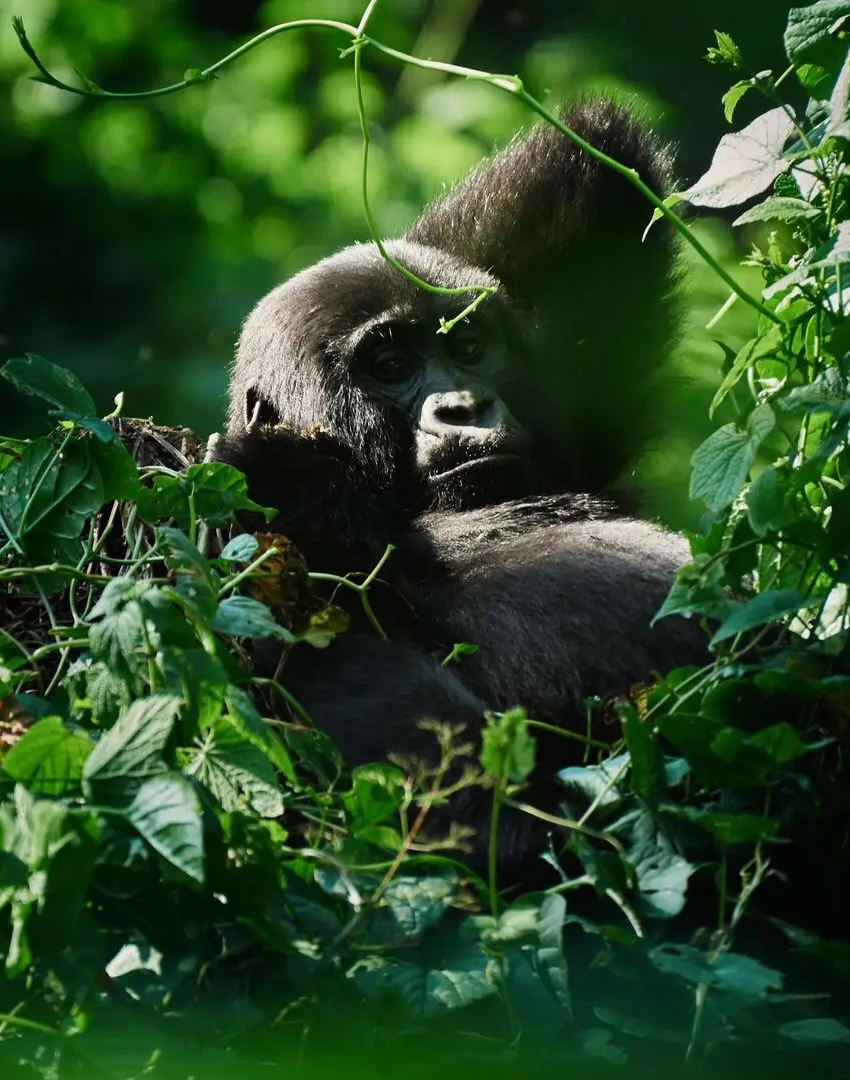
One of Africa's most ancient rainforests and home to roughly half the world's mountain gorillas. An extraordinary wildlife experience.
Explore BwindiUganda's largest national park, where the Victoria Nile forces itself through a narrow rock gap and plunges forty-three metres.
Explore Murchison Falls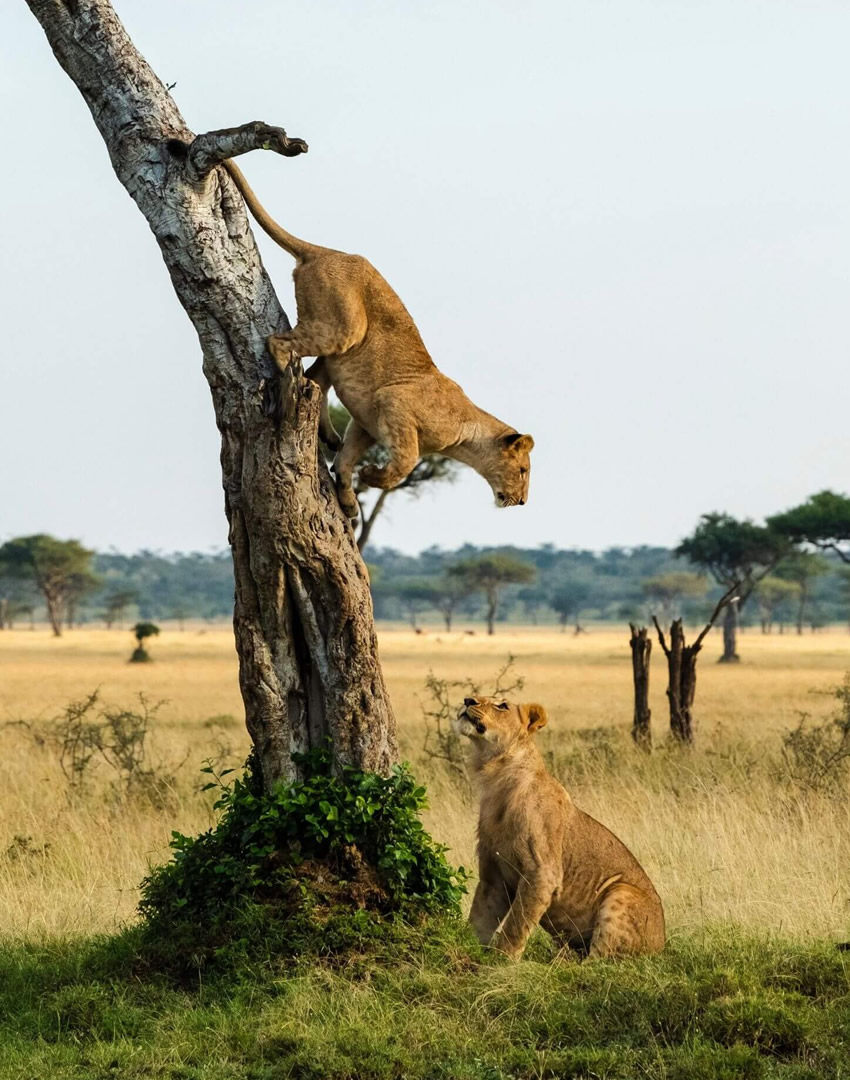
A mosaic of savannah, wetlands, crater lakes and tropical forest. Best known for tree-climbing lions and the Kazinga Channel boat safari.
Explore Queen Elizabeth NP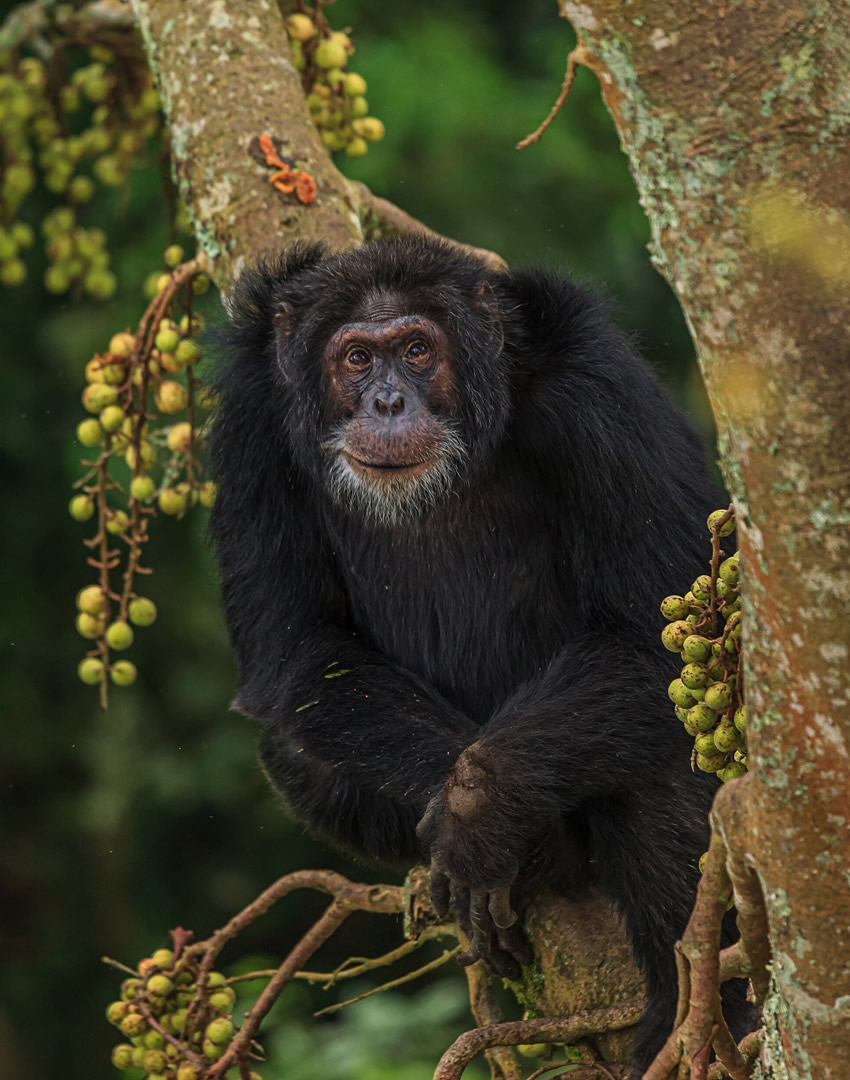
Africa's premier chimpanzee tracking destination, with the highest density and diversity of primates on the continent.
Explore Kibale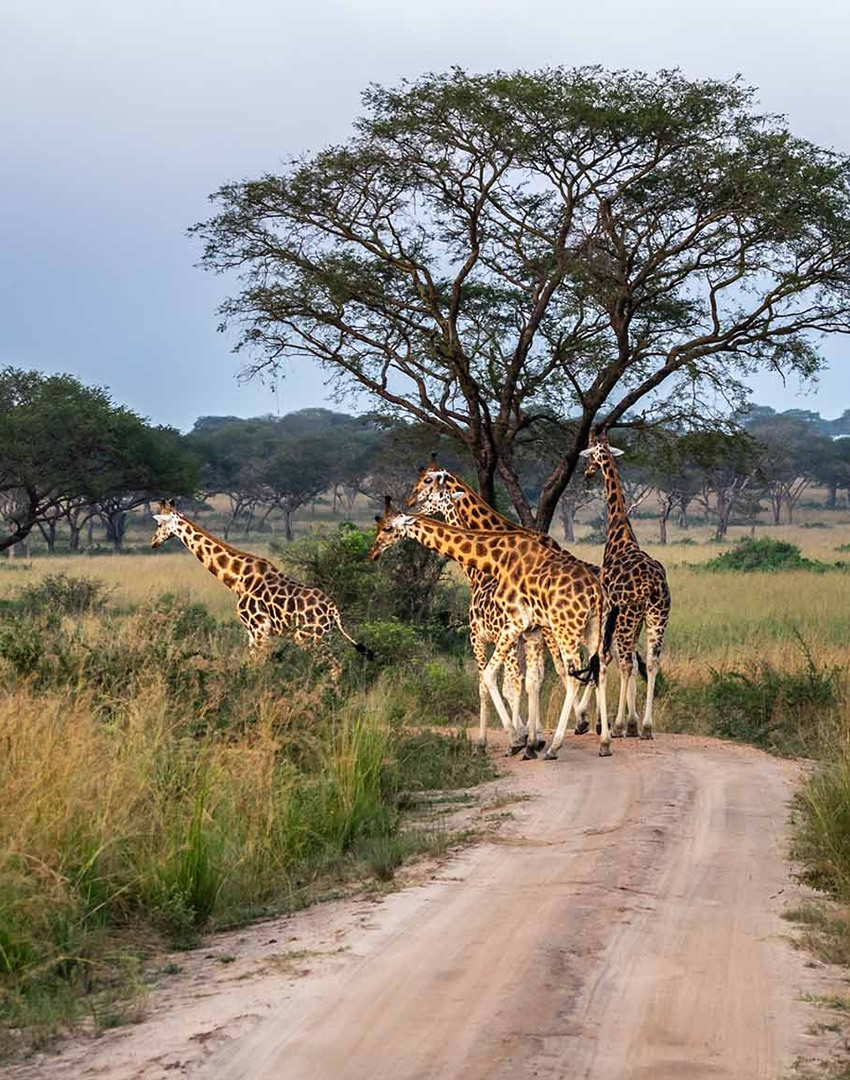
One of Africa's last true wilderness frontiers. Semi-arid savannah and rugged mountain scenery with species found nowhere else in Uganda.
Explore Kidepo Valley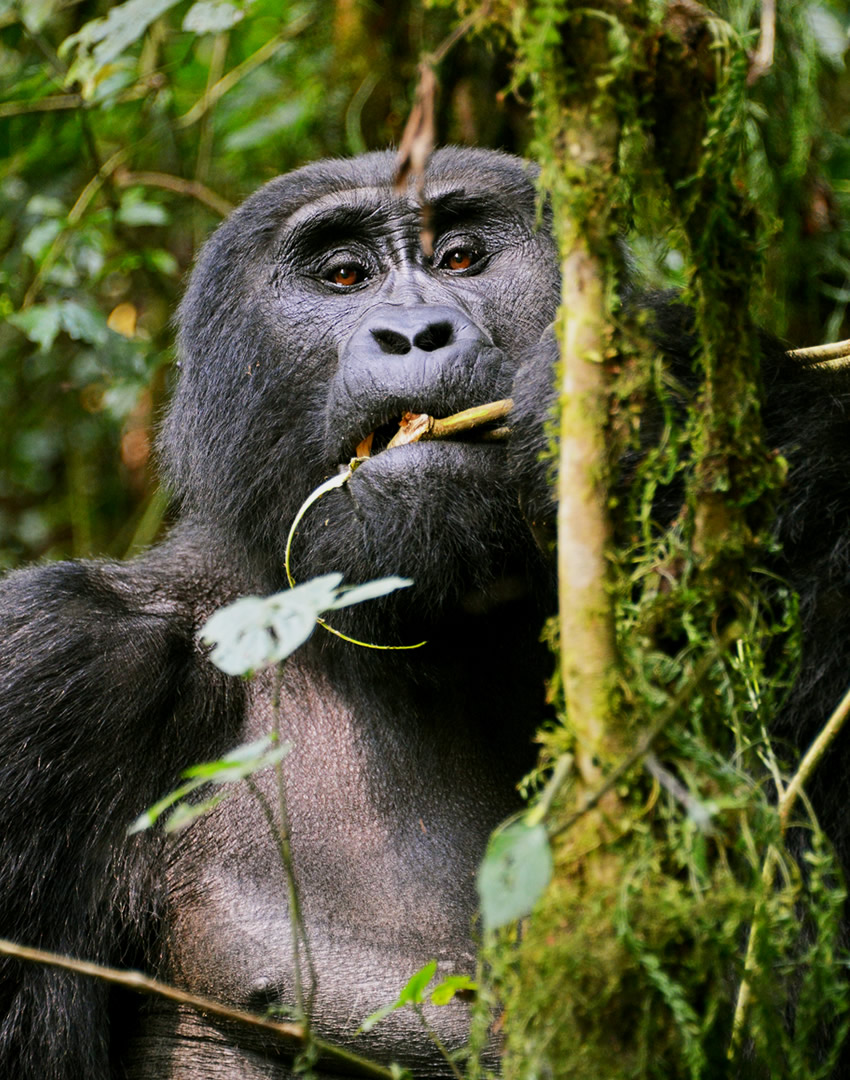
The smallest and most scenic of Uganda's gorilla parks, set on the slopes of the Virunga volcanoes at the meeting point of three countries.
Explore Mgahinga